Complete Guide to Torinji Temple | History, Cultural Assets, and Access Information for Yaeyama’s Oldest Temple
About Torinji Temple
Torinji Temple is a Rinzai Zen temple of the Myoshinji school located in Ishigaki City, Okinawa Prefecture. Its mountain name is Nankaizan, and it enshrines Kannon Bodhisattva as its principal image. It is known as the oldest Buddhist temple in the Yaeyama Islands. It is also famous as the southernmost Zen temple in Japan, and serves as an important spiritual center for tourists visiting Ishigaki Island and local residents.
Founded in 1614 (Keicho 19), Torinji Temple boasts a history of over 400 years, with an interesting historical background where the culture of the Ryukyu Kingdom and the influence of the Satsuma Domain intersect. Even today, it is located in the heart of Ishigaki City and is a popular tourist spot, attracting many visitors for New Year’s prayers and sightseeing.
History of Torinji Temple
Circumstances and Background of Founding
The founding of Torinji Temple was realized within the complex relationship between the Ryukyu Kingdom and the Satsuma Domain. Following the Satsuma invasion in 1609, the Ryukyu Kingdom came under the control of the Satsuma Domain. Amidst this political upheaval, the Satsuma Domain proposed the construction of temples and shrines in the Yaeyama Islands.
At that time, there were no Buddhist temples in the Yaeyama Islands, and the Satsuma Domain believed this situation needed to be improved. King Shō Nei, the seventh king of the Second Shō Dynasty of the Ryukyu Kingdom, accepted this proposal and decided to establish Tōrin-ji Temple in 1614.
The founding abbot was Kan’ō Saidō, who was selected by a council of resident monks from Engaku-ji Temple, a Rinzai Zen temple of the Myōshin-ji school located in Shuri. It is said that upon entering the temple, Kan’ō Saidō brought with him the bronze statue of Kannon, the principal image, and three sacred mirrors, the sacred objects of the adjacent Gongen-dō hall.
Conversion from Shingon to Rinzai Buddhism
Interestingly, Tōrin-ji Temple was initially founded as a Shingon Buddhist temple. However, it later converted to Zen Buddhism and currently belongs to the Myoshinji branch of the Rinzai school. This change in sect can be considered an important example illustrating the evolution of Buddhism in Ryukyu.
The “Ryukyu Kingdom Origin Records,” compiled in 1713, records Torinji Temple as a branch temple of Engakuji Temple. Engakuji Temple was a prestigious temple built near Shuri Castle as the family temple of the Ryukyu Kingdom, and the fact that Torinji Temple was its branch temple speaks to its importance in Yaeyama.
The Great Meiwa Tsunami and Reconstruction
The greatest challenge in Torinji Temple’s history was the massive tsunami caused by the Yaeyama earthquake in 1771 (Meiwa 8), the so-called “Great Meiwa Tsunami.” This colossal tsunami caused immense damage to the Yaeyama Islands, completely destroying the main hall and Gongen-do hall of Torinji Temple.
The two Nio statues, the oldest wooden carvings in Okinawa, enshrined at the temple gate, were swept away by the tsunami, but miraculously, they were discovered on the coast of Sakieda Bay. The discovery of these Nio statues is said to have become a symbol of great hope for the local residents.
The main hall of Torinji Temple was rebuilt the following year, 1772, and the Gongendo Hall was rebuilt in 1786 (Tenmei 6). This rapid reconstruction demonstrates the importance of Torinji Temple to the region and the strength of the people’s faith.
Changes Since the Modern Era
Even after the Meiji era, Torinji Temple has undergone several restorations to reach its present state. In particular, it has suffered damage from natural disasters such as typhoons, but each time, it has been restored through the efforts of the local people.
Today, Torinji Temple is carefully preserved as the oldest wooden structure in Okinawa Prefecture and a valuable cultural heritage that conveys the history of Yaeyama.
The Main Hall of Torinji Temple
Architectural Features
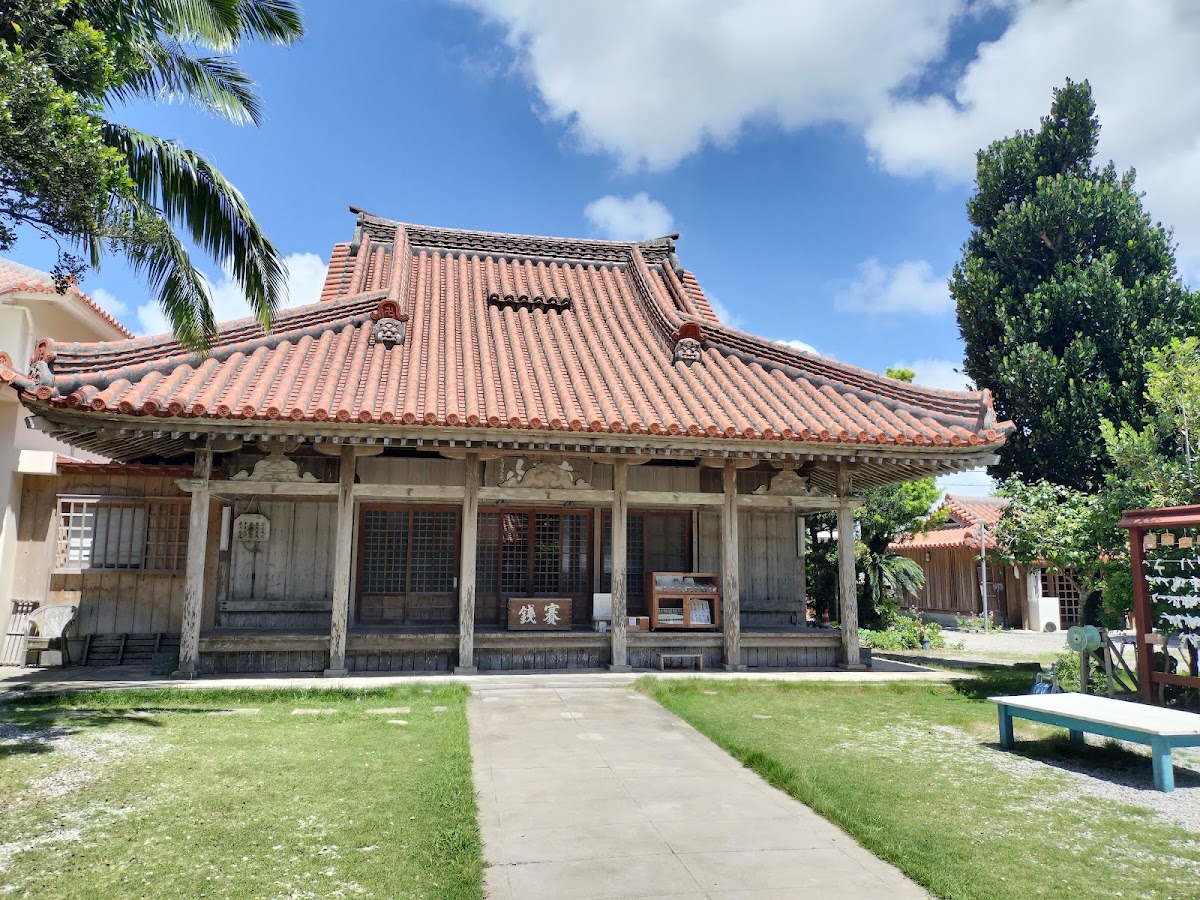
The main hall of Torinji Temple holds high historical value as the oldest wooden structure in Okinawa Prefecture. Rebuilt in 1772 after the Great Meiwa Tsunami, the current main hall possesses a unique style that blends Ryukyuan architecture with mainland Japanese temple architecture.
Inside the main hall, the principal image, Kannon Bodhisattva, is enshrined, allowing worshippers to find peace of mind in a tranquil space. A simple yet solemn atmosphere, characteristic of a Zen temple, permeates the space, serving as a place to escape the hustle and bustle of everyday life and confront oneself.
Kannon Bodhisattva Worship
The Kannon Bodhisattva, the principal image of Torinji Temple, is a bronze statue said to have been brought from Shuri by the temple’s founder, Kan’ō Seidō. Kannon Bodhisattva has been worshipped since ancient times as a symbol of compassion and a being who relieves people’s suffering.
For the people of Ishigaki Island, the Kannon Bodhisattva at Torinji Temple is a beloved object of prayer for safe voyages, family health, and bountiful harvests. Especially during the New Year period, many worshippers visit to pray for peace in the coming year.
Gongendo
Origin and Role of Gongendo
Gongendo, adjacent to Torinji Temple, was founded in 1614, the same year as Torinji Temple. According to the “Ryukyu Kingdom Origin Records,” Gongendo was positioned as a subsidiary shrine of Naminoue Shrine, embodying the syncretic idea of Shinto and Buddhism.
Gongendo is a shrine dedicated to Kumano Gongen, and its construction adjacent to the Buddhist temple Torinji Temple is an important example of the religious views in Ryukyu at that time. While the coexistence of shrines and temples was not uncommon in Japan before the Meiji-era separation of Shinto and Buddhism, this shows that this tradition was also carried on in Okinawa.
The Architecture and Cultural Value of Gongendo
Gongendo was destroyed in the Great Meiwa Tsunami, but was rebuilt in 1786. The current Gongendo is designated a National Important Cultural Property and is protected as a valuable structure that preserves Ryukyuan shrine architecture.
The architectural style of Gongendo is a fusion of unique Ryukyuan elements and elements of mainland Japanese shrine architecture, making it an important historical document that tells the story of cultural exchange. The three sacred mirrors, which serve as the sacred objects, are believed to have been brought from Shuri by Kan’ō Seidō and are considered to have high historical value.
Cultural Property
Nio Statues (Prefectural Designated Tangible Cultural Property)
The pair of Nio statues enshrined at the main gate of Tōrinji Temple are known as the oldest wooden sculptures in Okinawa Prefecture. These Nio statues were created in 1737 and were designated as Okinawa Prefecture Designated Tangible Cultural Properties in 1956.
The Nio statues consist of two figures, Agyo and Ungyo, and are positioned at the temple gate as guardian deities. Agyo has an open mouth and an angry expression, while Ungyo has a closed mouth and a dignified expression; they play a role in preventing evil from entering the temple.
As mentioned earlier, these Nio statues were swept away in the Meiwa tsunami, but were discovered in Sakieda Bay and still greet visitors at the temple gate today. Their high level of technical perfection as wooden sculptures makes them a valuable asset from an academic perspective.
Other Cultural Properties
Besides the Nio statues, Torinji Temple preserves other cultural properties of high historical value. The bronze statue of Kannon, the principal image, and the three sacred mirrors in the Gongendo hall are among the precious items that convey the beliefs of the Ryukyu Kingdom era and are carefully preserved.
These cultural properties are attracting attention from researchers not only as works of art, but also as important historical materials illustrating the history of cultural exchange between Ryukyu, mainland Japan, and even China. ## Highlights of Torinji Temple
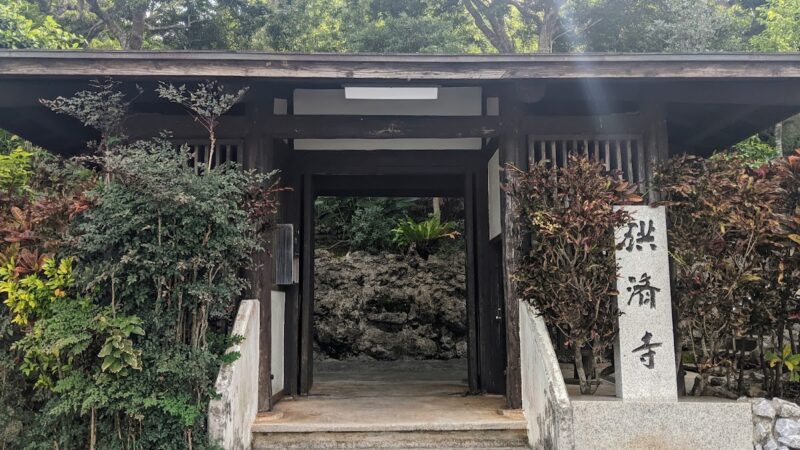
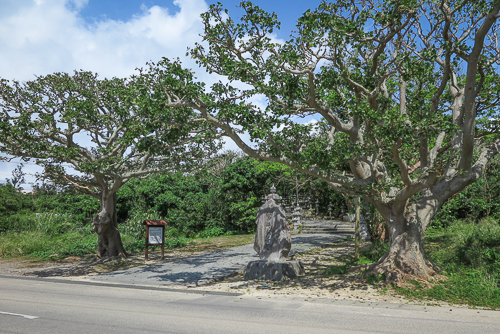
The Temple Gate and Nio Statues
The first thing you’ll notice when visiting Torinji Temple is the magnificent temple gate and the Nio statues placed on either side. These Nio statues, the oldest wooden sculptures in Okinawa, still exude a powerful presence even after approximately 300 years.
When passing through the temple gate, we recommend taking the time to carefully observe the expressions and detailed carving techniques of these Nio statues. The contrasting expressions of the A-form and Un-form statues are said to symbolize the beginning and end of the universe in Buddhism.
A Tranquil Temple Grounds
After passing through the temple gate, you’ll find yourself in a temple grounds enveloped in tranquility, despite its central location on Ishigaki Island. The simple and orderly space, typical of a Zen temple, brings peace of mind to visitors.
The grounds also feature a well-maintained garden where you can experience the changing seasons. Visiting during the quiet hours of early morning or evening will allow you to experience a deeper spirituality.
The Sacred Atmosphere of Gongendo
After visiting the main hall, be sure to also visit the adjacent Gongendo. Designated as a National Important Cultural Property, Gongendo possesses both the beauty of shrine architecture and a unique atmosphere that reflects the history of Shinto-Buddhist syncretism.
Standing before Gongendo, one can imagine the faith of the people during the Ryukyu Kingdom era.
Access Information
Location
Address: 285 Ishigaki, Ishigaki City, Okinawa Prefecture
Torinji Temple is located in the heart of Ishigaki Island, south of Ishigaki city center. It’s relatively close to the Ishigaki Port Ferry Terminal, making it easily accessible for tourists.
Access on Foot
Torinji Temple is approximately a 15-minute walk from the Ishigaki Port Ferry Terminal. The route passes through the central urban area of Ishigaki City, allowing you to enjoy local shopping streets and restaurants along the way.
Leaving the ferry terminal and heading south, you’ll see the main gate of Torinji Temple after passing through the city center. If you’re unsure of the directions, ask a local; they’ll be happy to help.
Access by Taxi
If you’re taking a taxi from Ishigaki Airport or Ishigaki Port, it takes about 30 minutes from Ishigaki Airport and about 5 minutes from Ishigaki Port Ferry Terminal. The taxi fare from the Ferry Terminal is approximately 1,000 yen.
Many Ishigaki Island taxi drivers are familiar with tourist areas, so simply telling them “Torinji Temple” will ensure smooth directions.
Access by Rental Car
If you’re using a rental car for sightseeing on Ishigaki Island, there are parking spaces around Torinji Temple, but they are limited, so be careful. Especially during busy periods like the New Year holidays, it’s recommended to visit earlier in the day.
You can enter “Torinji Temple” or its address into your car’s navigation system. Be careful when driving in Ishigaki city, as some roads are narrow.
Access by Local Bus
If you’re using Ishigaki Island’s local buses, you can take a bus route that passes through Ishigaki city to the bus stop nearest “Torinji Temple.” However, since bus services are limited, it is recommended to check the timetable in advance.
Etiquette and Manners for Visiting the Temple
Visiting Hours
Torinji Temple is generally open for free visits during the daytime. However, please avoid early mornings and late nights, and visit at reasonable times. The quiet morning hours are especially recommended, as you can fully appreciate the atmosphere of the Zen temple.
Dress Code and Behavior
When visiting a temple, please avoid revealing clothing and dress appropriately. Also, please refrain from speaking loudly or running around on the temple grounds; quiet behavior is expected.
Photography is generally permitted, but there are areas where photography is restricted, such as inside the main hall and the Gongen-do hall. If unsure, please check with temple staff before taking pictures.
Procedure for Visiting the Temple
- Bow at the temple gate before entering the grounds.
- If there is a water basin, purify your hands and mouth.
- Join your hands in prayer in front of the main hall and offer your prayers quietly.
- Visit the Gongen-do hall in the same way.
- When leaving the temple grounds, turn back to the temple gate and bow.
About Goshuin (Temple Seals)
You can receive a Goshuin at Torinji Temple. Goshuin are popular among many visitors as proof of their visit and as a memento of their journey.
When receiving a Goshuin, bring your Goshuincho (stamp book) and request one at the main hall or temple office. The offering fee for a Goshuin is generally around 300 yen, but you can also offer a larger amount as a token of your appreciation.
The Goshuin will bear the Torinji Temple seal and calligraphy such as “Nankai-zan Torinji.” As a Goshuin from Japan’s southernmost Zen temple, it will be a valuable memento.
Annual Events
New Year’s Visit
Torinji Temple is one of the most popular spots for New Year’s visits on Ishigaki Island. During the New Year’s period, many locals and tourists visit to pray for peace and happiness in the new year.
It gets especially crowded from New Year’s Eve to New Year’s Day, so if you want to visit at a more leisurely pace, it’s best to avoid the first three days of the year or choose an early morning visit.
Other Events
Torinji Temple holds various Buddhist events throughout the year. During the Obon period, memorial services for ancestors are held, attracting local residents.
As a Rinzai Zen temple, it also sometimes holds Zen meditation sessions and other spiritual experiences. If you wish to participate, it’s a good idea to inquire with the temple in advance.
Nearby Tourist Attractions
Ishigaki City
Torinji Temple is located in Ishigaki City, so there are many tourist attractions and restaurants nearby. After visiting the temple, you can enjoy local Ishigaki cuisine or browse souvenir shops.
At the public market, you can purchase fresh seafood and local specialties, experiencing Ishigaki Island’s food culture.
Ishigaki Port Ferry Terminal
The Ishigaki Port Ferry Terminal, within walking distance, is the gateway to remote islands such as Taketomi Island, Iriomote Island, and Kohama Island. You can also create an itinerary that combines a visit to Torinji Temple with sightseeing on the remote islands.
Other Historical Sites
Besides Torinji Temple, Ishigaki Island also has other historical sites from the Ryukyu Kingdom era, such as Miyara-dunchi. For those interested in history, a historical exploration trip visiting these sites is highly recommended.
Cultural Significance of Torinji Temple
A Center for Buddhism in the Yaeyama Islands
Torinji Temple has supported the spiritual culture of the Yaeyama Islands for over 400 years as a historical center of Buddhism. As the first Buddhist temple built in Yaeyama, where no temples previously existed, its cultural significance is immeasurable.
From the Ryukyu Kingdom era to the present day, Torinji Temple has continued to function as a spiritual haven for people. It is deeply rooted in the local community as a venue for religious ceremonies at important life events, such as funerals, memorial services, and ancestral worship.
Cultural Exchange between Ryukyu and Mainland Japan
While the founding of Torinji Temple was influenced by political factors, including a suggestion from the Satsuma Domain, it ultimately became a symbolic representation of cultural exchange between Ryukyu and mainland Japan.
The process by which the Rinzai sect of Myoshinji, a Buddhist sect from mainland Japan, was introduced to Ryukyu and merged with local beliefs is a fascinating subject of study from a cultural anthropological perspective. The coexistence of the temple with the Gongendo hall, embodying the idea of syncretism between Shinto and Buddhism, is also an important example in the history of Japanese religion.
History of Disaster and Reconstruction
The history of Torinji Temple’s reconstruction after the Great Meiwa Tsunami demonstrates its significance beyond that of a mere religious facility. Despite suffering immense damage, the efforts of the local people to rebuild the main hall in just one year speak to the strength of their faith and the solidarity of their community.
The discovery of the Nio statues, which had been swept away, and their subsequent re-placement in the temple gate, symbolizes the people’s unwavering hope even in the face of adversity. This history offers many valuable lessons for us living today.
The Future of Torinji Temple and Ishigaki Island
Efforts to Protect Cultural Properties
As the oldest wooden structure in Okinawa Prefecture, and a temple possessing prefecturally designated tangible cultural properties and nationally designated important cultural properties, Torinji Temple requires appropriate protection and maintenance.
Ishigaki City and cultural property protection organizations continue their efforts to pass on this valuable cultural heritage to future generations by carrying out regular restoration work and disaster prevention measures. Protecting wooden structures is not easy in Okinawa, which experiences frequent natural disasters such as typhoons, but there is a growing awareness throughout the community of protecting cultural properties.
Utilization as a Tourism Resource
Torinji Temple is positioned as an important cultural tourism resource in Ishigaki Island’s tourism industry. While Ishigaki Island is strongly associated with beach resorts, visiting historical sites like Torinji Temple offers a deeper cultural experience.
Going forward, it is crucial to balance cultural heritage preservation with tourism utilization, and to promote the value of Torinji Temple in a sustainable way. Various initiatives are being considered, such as installing multilingual signage and enhancing guided tours.
As a Center of the Local Community
In modern society, the role of temples is changing. However, Torinji Temple continues to function as a spiritual center of the local community.
Through annual events and memorial services, it provides a place for intergenerational exchange and strengthens community bonds. Furthermore, through Zen meditation sessions and Dharma talks, it is expected to serve as a place to address the spiritual issues faced by modern people.
Summary
Torinji Temple, with its history of over 400 years since its founding in 1614, is the oldest temple in the Yaeyama Islands and holds a special place as Japan’s southernmost Zen temple. Founded by King Shō Nei, the 7th king of the Second Shō Dynasty of the Ryukyu Kingdom, and influenced by the Satsuma Domain, Torinji Temple has a rich history, including its reconstruction after the Great Meiwa Tsunami.
This temple possesses valuable cultural assets, such as the Nio statues, the oldest wooden carvings in Okinawa Prefecture, and the Gongendō hall, a nationally designated Important Cultural Property, making it a temple of high academic value. When visiting Ishigaki Island, we recommend visiting not only the beautiful sea but also historical sites like Torinji Temple to experience the deep culture and spirituality of the Yaeyama Islands.
Conveniently located about a 15-minute walk from Ishigaki Port Ferry Terminal, it offers easy access. The tranquil grounds and the time spent reflecting on Ryukyu history will add depth to your travel memories.
Torinji Temple is both a legacy of the past and a living cultural heritage that continues to attract the faith of local people and will be passed down to future generations. Visit this precious temple and experience its history and culture.