Complete Guide to Fukai Shrine (Matsubara City, Osaka Prefecture) | History, Deities, Access, and Highlights Explained in Detail
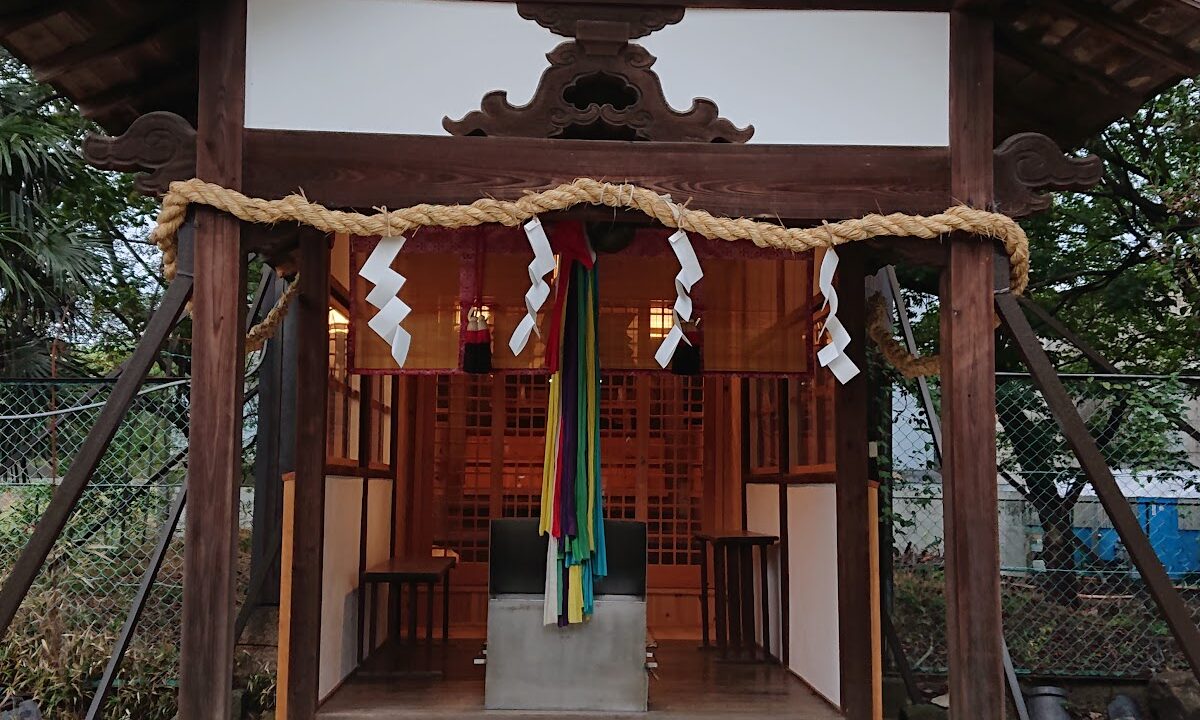
Fukai Shrine, located in Ogawa, Matsubara City, Osaka Prefecture, is a historical shrine said to have been founded in 717 AD. Situated just south of the Matsubara Junction, it has long been revered as the local tutelary deity. This article provides a detailed explanation of everything you need to know before visiting Fukai Shrine, including its history, enshrined deities, architectural value, highlights within the grounds, and access methods.
Basic Information about Fukai Shrine
Location: 5-26-4 Ogawa, Matsubara City, Osaka Prefecture
Deity Enshrined: Hondawake-no-Mikoto
Founded: 717 AD (Yōrō 1)
Annual Festival: October 15th
Coordinates: 135°34′47.21″E, 34°35′4.22″N
Fukai Shrine is located south of the Hanshin Expressway Matsubara Junction (Matsubara JCT) and maintains a tranquil atmosphere in the increasingly urbanized city of Matsubara. While the surrounding area is residential, stepping onto the shrine grounds evokes a solemn atmosphere.
History and Origins of Fukai Shrine
From Founding to the Middle Ages
Fukai Shrine is said to have been founded in 717 AD (Yōrō 1). This period, the early Nara period, was a time when Japan’s Ritsuryo system was being established. Initially, Fukai Shrine was revered as the principal tutelary deity of a wide area, encompassing Tsudo, Wakabayashi, Ohori, Ogawa, and Kawabe.
A tutelary deity is the guardian deity of a land, deeply intertwined with the lives of the local residents. Fukai Shrine was an important center of faith in the southern region of Kawachi Province, watching over the lives of people primarily engaged in agriculture.
The Genkō-Kenmu Wars and the Separation of the Shrine
A major turning point in the history of Fukai Shrine was the Genkō-Kenmu Wars (1331-1335). This turbulent period coincided with the Kenmu Restoration by Emperor Go-Daigo, a time of widespread political and military unrest throughout the country.
As a result of these wars, Fukai Shrine, which had previously been the principal tutelary deity of a wide area, separated and became the tutelary deity of Ogawa Town alone. This change is thought to reflect the reorganization of the local community and shifts in the parishioner group. It is a valuable example demonstrating the significant impact medieval warfare had on regional religious practices. ### Reconstruction in the Edo Period and the Present
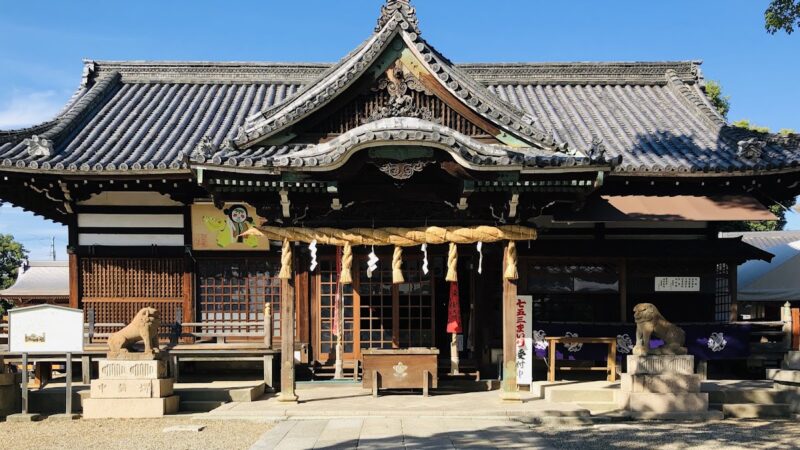
The current main hall of Fukai Shrine was built in 1660 (Manji 3). During this period, in the early Edo period, Fukai Shrine was revived as the center of local faith. The ridge beam inscription from the time of the main hall’s construction bears the names of “carpenters Matsumura Chōemon Masatsugu and Tsuchiya Chōkurō,” making it a valuable historical document for understanding the architectural techniques and craftsmen of the time.
Since then, Fukai Shrine has been protected by the local residents as the tutelary shrine of the Ogawa district, and continues to this day.
About the Deity: Hondawake-no-Mikoto
The deity enshrined at Fukai Shrine is Hondawake-no-Mikoto. Hondawake-no-Mikoto is another name for Emperor Ōjin and is a deity worshipped nationwide as Hachiman-sama.
Divine Aspects of Hachiman-no-Mikoto
Hachiman-no-Mikoto (Emperor Ojin) is believed to possess the following divine virtues:
- Long-lasting Military Fortune: Possesses the characteristics of a war god, leading to victory and success.
- National Protection: Revered as a god who protects the nation.
- Industrial Development: Assists in the development of industry and the prosperity of agriculture and commerce.
- Protection from Misfortune: Wards off disasters and brings peace.
Kawachi Province is the region where Emperor Ojin’s tomb (Homuda Gobyoyama Kofun) is located, and it is a region where the worship of Hachiman-no-Mikoto is particularly strong. The fact that Fukui Shrine enshrines Hachiman-no-Mikoto is deeply connected to the historical background of this region.
Architectural Value of Fukui Shrine’s Main Hall
The main hall of Fukui Shrine is a building of extremely important architectural value.
Architectural Style: Ikkensha Nagare-zukuri
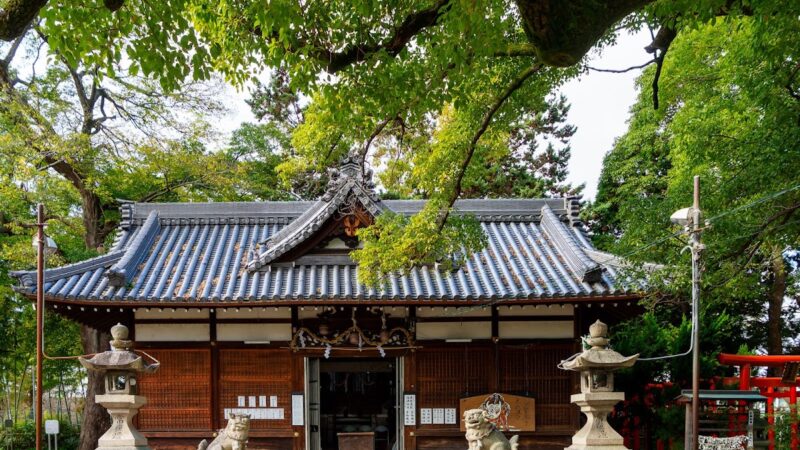
The main shrine building is constructed in the Ikkensha Nagare-zukuri style, a traditional style of shrine architecture.
Characteristics of Ikkensha Nagare-zukuri:
- The front bay is one ken (approximately 1.8 meters) wide.
- The roof slopes forward in a “Nagare-zukuri” style.
- It possesses a simple yet elegant form.
- A style often seen in small shrine main halls.
Characteristics of Kakibuki Roof
The roof is covered using the traditional Kokibuki method. Kakibuki is a technique of covering the roof with multiple layers of thin wooden boards, and has the following characteristics:
- Uses thin boards of wood (mainly Japanese cypress or hinoki).
- Highly durable and can be preserved for a long time with proper maintenance.
- Possesses a unique texture and beauty.
- Requires advanced craftsmanship.
In modern times, the number of Kakibuki craftsmen is decreasing, making buildings that preserve this technique important as cultural properties.
Ridgepole Inscription from Manji 3 (1660)
A ridgepole inscription from Manji 3 (1660) remains in the main hall, recording the following information:
- Year of Construction: Manji 3 (1660)
- Carpenters: Matsumura Chōemon Masatsugu, Tsuchiya Chōkurō
This ridgepole inscription is a valuable historical document for understanding the architectural techniques, craftsman organizations, and local community of the early Edo period. The fact that a building over 360 years old still exists is proof that the local people have carefully maintained it for many years.
Shrines and Points of Interest
In addition to the main hall, there are other shrines within the grounds of Fukui Shrine that are objects of worship.
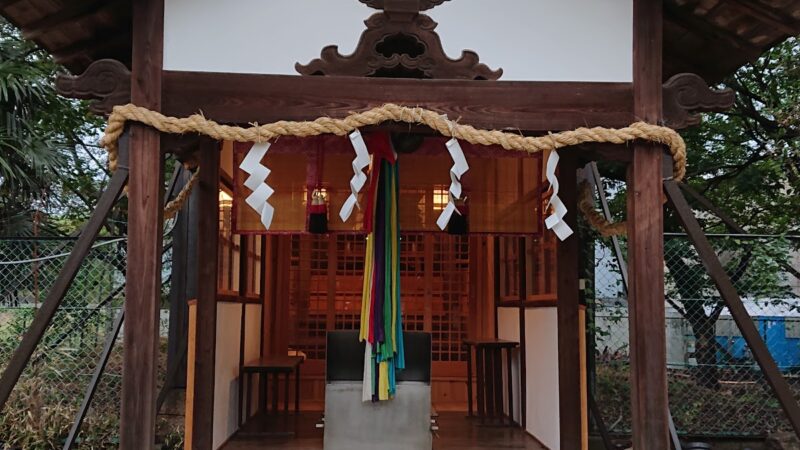
Inari Shrine
An Inari shrine is enshrined within the grounds. Inari is widely worshipped as the god of abundant harvests and business prosperity, and at Fukui Shrine, it is an object of worship closely intertwined with the lives of the local residents.
Tooth Shrine
A distinctive shrine within the grounds is the “Tooth God” shrine. A shrine dedicated to the god of dental health is rare throughout Japan, highlighting the unique character of Fukui Shrine. Visitors come to pray for relief from toothaches and for overall dental health.
The belief in the god of teeth stems from ancient wisdom that dental health is deeply connected to overall health, and this belief has been passed down as a folk religion.
Atmosphere of the Shrine Grounds
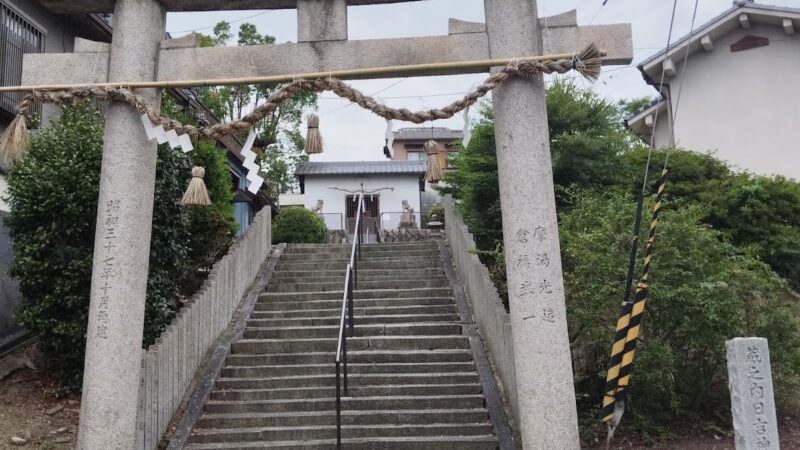
Despite its urban location near the Matsubara Junction, the shrine grounds maintain a tranquil atmosphere. Surrounded by ancient trees, the grounds offer a peaceful ambiance that makes one forget the hustle and bustle of the city.
Annual Festival and Events
Fukui Shrine’s annual festival is held every year on October 15th. This is the most important festival for the shrine, a time to express gratitude to the enshrined deity and pray for peace and prosperity in the community.
During the festival, Shinto priests perform rituals, and parishioners and local residents attend. It also serves as an opportunity to reaffirm the bonds of the community and pass on traditions to future generations.
How to Access Fukai Shrine
Access by Train
Nearest Station: Kintetsu Minami-Osaka Line, “Kawachi-Matsubara Station”
Fukai Shrine is approximately a 15-20 minute walk from Kawachi-Matsubara Station. Exit the station and head southwest; the shrine will be reached after passing through a residential area.
Access by Bus
If using Kintetsu Bus, the shrine is within walking distance from the nearest bus stop. Please check the Kintetsu Bus official website for the latest information on detailed routes.
Access by Car
Access from Major Roads:
- Approximately 1 km from Hanshin Expressway Route 14 Matsubara Line, “Matsubara JCT”
- Accessible from National Route 309
The area around the shrine is a residential area, so there are narrow roads in some places. Please drive carefully.
Parking: There may be parking spaces for visitors on the shrine grounds, but the number of spaces is limited. Please consider using nearby coin-operated parking lots.
Address and Navigation
Address: 5-26-4 Ogawa, Matsubara City, Osaka Prefecture 580-0016
You can find directions by entering “Fukai Shrine” or the above address into your car navigation system or smartphone map app. You can also search using coordinates (135°34′47.21″E, 34°35′4.22″N).
Attractions Around Fukai Shrine
Historical Background of Matsubara City
Matsubara City belonged to the ancient Kawachi Province and is a historically rich area with many ancient tombs and ruins. There are many historical sites around Fukai Shrine, making it a great place for a historical walk.
Visiting Ancient Shrines and Temples in Kawachi
When visiting Fukai Shrine, it is also recommended to visit other nearby shrines and temples. The Kawachi region has many temples and shrines that have existed since ancient times, each with its own unique history and charm.
Precautions and Manners When Visiting a Shrine
Basic Worship Etiquette
- Bow before passing through the torii gate: This is a courtesy before entering the sacred area.
- Walk along the edge of the path: The center is considered the path of the gods.
- Purify yourself at the water basin: Cleanse your hands and mouth before praying.
- Two bows, two claps, one bow: This is the basic etiquette before the shrine.
Regarding Photography
Photography is generally permitted on the shrine grounds, but please note the following:
- Refrain from photographing sacred areas such as the interior of the main hall.
- Be considerate of the privacy of other worshippers.
- Refrain from photography during festivals or obtain permission.
Worship in Silence
Shrines are sacred places. Please refrain from loud conversations and noisy behavior, and worship quietly.
Cultural Value of Fukai Shrine
The main hall of Fukai Shrine is highly valued as a cultural property for the following reasons:
- Clearness of Construction Date: The construction year is clearly established by a ridge beam inscription from Manji 3 (1660).
- Typical Architectural Style: It retains the traditional style of a one-bay nagare-zukuri (stream-style) building with a persimmon-bark roof.
- Witness to Local History: It conveys the history of the region, including the Genko-Kenmu War.
- Record of Craftsmanship: The names of carpenters from the Edo period are recorded.
This is an important building that may receive formal cultural property designation in the future.
Local Community and Fukai Shrine
Fukai Shrine is not merely a historical building; it continues to function as the center of the local community.
Role of the Parishioners’ Organization
The parishioners’ organization of the Ogawa district is responsible for the maintenance and management of the shrine and the operation of festivals. The continuation of such traditional communities even amidst increasing urbanization is invaluable.
Passing on to the Next Generation
Through events such as the annual festival, the history and traditions of the region are passed down to the next generation. It also provides children with opportunities to learn about local history.
Summary: The Charm of Fukui Shrine
Fukui Shrine boasts a long history, founded in 717 AD (Yōrō 1), and its main hall, built in 1660 AD (Manji 3), holds significant architectural value. Despite being located in an urban area near the Matsubara Junction, it maintains a tranquil atmosphere and historical significance.
Fukui Shrine, which enshrines Emperor Ōjin (Homudawake-no-Mikoto) as its main deity, and also houses an Inari shrine and a rare tooth shrine within its grounds, continues to attract the faith of the people as the local tutelary deity. It is also a valuable resource for conveying local history, including the changes in the parish area due to the Genkō-Kenmu Wars.
Whether you are interested in history, shrine architecture, or simply wish to worship in peace, this shrine is well worth visiting. When you visit Matsubara City, be sure to stop by Fukui Shrine.
Despite being located in the urban area of Matsubara City, Osaka Prefecture, Fukui Shrine boasts a history spanning over 1300 years. Why not experience the passage of time and the history of faith of the local people in its tranquil grounds?