Dainenbutsu-ji Temple Complete Guide | History, Events, Cultural Properties, and Access Information for the Head Temple of the Yuzu Nembutsu Sect
Located in Hirano Ward, Osaka City, Dainenbutsu-ji Temple is a renowned temple boasting a history of approximately 900 years as the head temple of the Yuzu Nembutsu sect. Known as Japan’s first Nembutsu training hall, it houses numerous valuable cultural properties, including the main hall, the largest wooden building in Osaka Prefecture. This article comprehensively introduces all the information visitors should know, from the history of Dainenbutsu-ji Temple and its highlights within the temple grounds to its annual events, cultural properties, and access methods.
What is Dainenbutsu-ji Temple?
Dainenbutsu-ji Temple is the head temple of the Yuzu Nembutsu sect, located in Hirano-Kamimachi 1-chome, Hirano Ward, Osaka City, Osaka Prefecture. Its mountain name is Daigenzan, and its official name is “Daigenzan Shobutsu Gonenin Dainenbutsu-ji Temple.” It was formerly known as “Kameganedera.” The main deity is the Eleven-Deity Tendoku Nyorai (a painted image), and it is said to have been founded in the second year of Daiji (1127) during the late Heian period.
It is also counted as one of the “Seven Lucky Pilgrimages of Naniwa” and is affectionately known locally as “Hirano’s Great Nembutsu.” The temple grounds are free to enter and open to the public, and it is an important religious and cultural facility in Osaka, attracting many visitors throughout the year.
History of Dainenbutsu-ji Temple
Founder Ryōnin Shōnin and the Beginning of Yūzū Nembutsu
Ryōnin Shōnin, the founder of Dainenbutsu-ji Temple, was a high-ranking priest who founded Raigōin and Jōrengein in Ōhara, Kyoto. It is said that on May 15th, the fifth year of Eikyū (1117), while Ryōnin Shōnin was meditating on the Nembutsu, he received the Nembutsu for swift rebirth from Amida Buddha and attained the realization of Yūzū Nembutsu. The verses bestowed by Amida Buddha teach that “one person’s recitation of the Buddha’s name resonates with the recitation of all people, and the recitation of all people resonates with one person’s recitation,” and this became the fundamental philosophy of the Yuzu Nembutsu sect. This teaching expresses the spirit of mutual assistance, where the recitation of the Buddha’s name by an individual blends with the recitation of others, leading to the attainment of rebirth in paradise for all people.
Founding and the Imperial Request of Emperor Toba
It is said that in 1127, at the request of Emperor Toba, Ryōnin Shōnin received a divine message in a dream from Prince Shōtoku and founded Dainenbutsu-ji Temple as the main training hall in what is now Hirano Ward, Osaka City. This marked the birth of Japan’s first Nembutsu training hall.
The late Heian period was an era filled with anxiety and suffering due to the decline of aristocratic society, the rise of the samurai class, and repeated disasters and epidemics. In this historical context, the Nembutsu faith, which held that everyone could be saved equally, became a source of spiritual support for many people.
Transition from the Medieval to the Early Modern Period
Since its founding, Dainenbutsu-ji Temple has been repeatedly destroyed and rebuilt due to fires. However, each time, it has been restored with the support of its followers and parishioners, preserving and passing down many cultural assets.
From the Muromachi period to the Sengoku period, the temple flourished along with the development of Hirano-go, functioning as a religious center of the region. During the Edo period, it established its position as the head temple of the Yuzu Nembutsu sect within the shogunate’s religious policies, and expanded its branch temples throughout the country.
Development in the Modern Era
Despite the impact of the anti-Buddhist movement of the Meiji era, Dainenbutsu-ji Temple survived due to its strong ties with the local community. From the Showa to the Heisei period, major buildings, including the main hall, were restored and renovated, resulting in its current appearance.
Even after the Heisei era, while preserving traditional religious ceremonies, the temple has deepened its interaction with people through various lectures and events, becoming an open temple to modern society.
Highlights of the Temple Grounds
Main Hall (Largest Wooden Building in Osaka Prefecture)
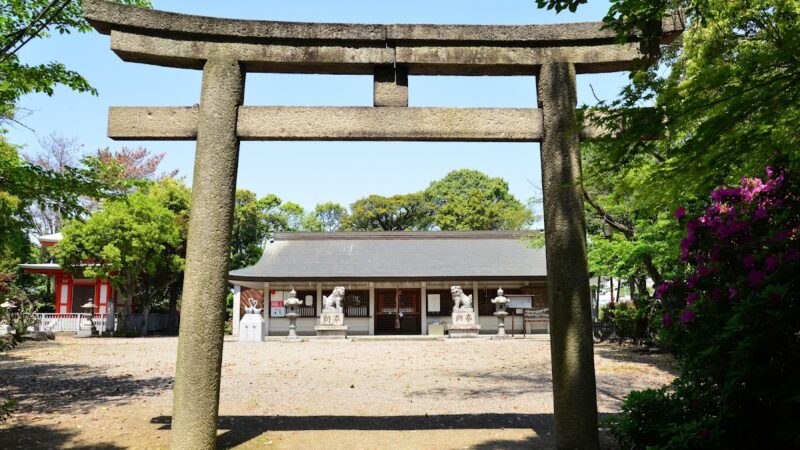
The main hall of Dainenbutsu-ji Temple is known as the largest wooden building in Osaka Prefecture. A magnificent structure rebuilt during the Edo period, it boasts a heavy, imposing structure with a hipped roof and tiled roof. Inside, the principal image, a painting of the Eleven-Deity Tendoku Nyorai, is enshrined, creating a solemn atmosphere.
The main hall covers approximately 500 tatami mats, accommodating many monks and worshippers during large-scale Buddhist ceremonies such as the Manbu Oneri. Beautifully colored paintings adorn the ceiling, and intricate carvings adorn the pillars and beams, showcasing the finest Edo-period temple architecture.
Other Halls and Temple Facilities
In addition to the main hall, several other halls are located within the temple grounds. The temple grounds include an Amida Hall, a Founder’s Hall, a bell tower, and a sutra repository, each serving a religious role.
The grounds are spacious, allowing visitors to enjoy the changing seasons. Cherry blossoms in spring, lush greenery in summer, vibrant autumn leaves, and tranquility in winter—each season offers a distinct and beautiful scene.
Gardens and Stone Structures
The temple grounds are dotted with historical stone lanterns, Buddha statues, and memorial towers. Some of these stone structures date back to before the Edo period, testifying to the long history of Dainenbutsu-ji Temple.
Cultural Properties
Dainenbutsu-ji Temple possesses numerous valuable cultural properties, including national treasures and important cultural properties.
National Treasure “Fragments of the Mao Shi Zheng Jian”
The “Fragments of the Mao Shi Zheng Jian,” designated a national treasure, is a part of a commentary on the classic Chinese text, the “Book of Songs” (Shijing). Copied during the Heian period, it is considered a highly valuable work in the history of calligraphy. ### Important Cultural Property: “Yuzu Nembutsu Kanjincho”
The “Yuzu Nembutsu Kanjincho,” designated as an Important Cultural Property, is a fundraising document created to spread the teachings of Yuzu Nembutsu. It is a valuable historical document illustrating the spread of Nembutsu faith in the medieval period. It is an important resource for understanding the social conditions and religious practices of the time.
Other Temple Treasures
In addition to these, many other temple treasures are preserved, including Buddhist statues, paintings, scriptures, and ancient documents. These are usually not open to the public, but may be displayed during special exhibitions.
Annual Events
Dainenbutsu-ji Temple holds various events throughout the year. These events serve to preserve and pass on the traditions of the Yuzu Nembutsu sect, and are important opportunities to deepen ties with believers and local residents.
Manbu Oneri (Manbu Buddhist Ceremony)
The most famous event at Dainenbutsu-ji Temple is the “Manbu Oneri,” held annually from May 1st to 5th. Officially called the “Manbu Hōyō,” it is designated as an Intangible Folk Cultural Property by Osaka City.
In this ceremony, monks and believers dressed as 25 Bodhisattvas recreate the scene of welcoming the deceased from the Pure Land to the Saha world, parading through the main hall. The vibrant Bodhisattva costumes and the sound of Buddhist chanting truly evoke the world of the Pure Land, captivating many worshippers.
The Manbu Oneri is a ceremony to pray for the repose of ancestors and the happiness of the living, embodying the spirit of the Yūzū Nembutsu teaching that “one recitation of the Nembutsu resonates with all.”
Hyakumanben-e Daiju Kuri
The “Hyakumanben-e Daiju Kuri,” held annually on the 16th of January, May, and September, is also a representative event of Dainenbutsu-ji Temple. This ceremony involves all participants chanting Buddhist prayers while passing around a gigantic rosary, several meters in diameter, allowing them to experience the teaching that each individual’s chanting is interconnected and resonates with the others.
This large rosary contains 1,200 beads, and it is believed that when participants pass it around in a circle, it is equivalent to countless chantings.
Ten Nights’ Gathering
The Ten Nights’ Gathering, held in autumn, is a Buddhist service that praises the virtues of Amida Buddha and commemorates ancestors. It is called the “Ten Nights’ Gathering” because the chanting of Buddhist prayers continues for ten days and ten nights, and participants pray together for rebirth in paradise.
Other Events
- New Year’s Day Service: A Buddhist service praying for happiness in the new year.
- Spring and Autumn Equinox Services: Memorial services for ancestors.
- Obon Festival: Memorial service for ancestors during the Obon festival.
- Goezai (Visiting the Temple): Missionary activities traveling to various regions.
- Various Prayers: Prayers for individuals and families.
All of these events are based on the teachings of Yuzu Nembutsu and aim to honor ancestors and pray for worldly benefits.
Buddhist Chanting and Musical Culture
At Dainenbutsu-ji Temple, the traditional Buddhist music of Shomyo is carefully preserved. Shomyo involves chanting scriptures and verses to a unique melody and is considered one of the origins of Japanese musical culture.
During Buddhist services, including the Manbu Oneri, the solemn Shomyo chanting by monks resonates, leading worshippers to a religious uplift. The Buddhist chanting at Dainenbutsu-ji Temple has a unique melody and style specific to the Yuzu Nembutsu sect, setting it apart from other Buddhist sects.
In recent years, the cultural value of Buddhist chanting has been re-evaluated, and it is sometimes performed at concerts and cultural events.
Naniwa Seven Lucky Gods Pilgrimage
Dainenbutsu-ji Temple is one of the seven temples and shrines included in the “Naniwa Seven Lucky Gods Pilgrimage.” This pilgrimage involves visiting seven temples and shrines in Osaka City to receive blessings from each.
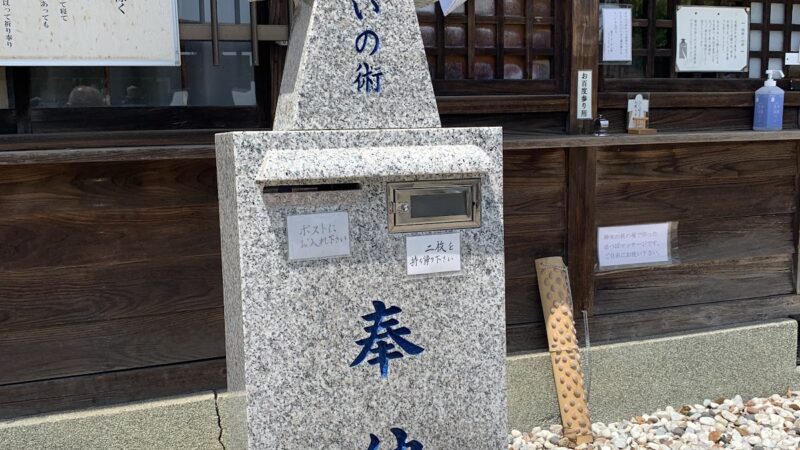
Dainenbutsu-ji Temple is believed to offer blessings for “improvement in various arts,” attracting visitors seeking advancement in their artistic pursuits and academic studies. There are also special stamp books and calligraphic works for the Seven Lucky Gods Pilgrimage, and visiting all the temples and shrines allows for a deeper understanding of Osaka’s history and culture.
The other six temples and shrines are as follows:
- Shitennoji Temple (Good health and protection from illness)
- Sumiyoshi Taisha Shrine (Family safety)
- Imamiya Ebisu Shrine (Business prosperity)
- Taiyuji Temple (Good fortune and wealth)
- Hozenji Temple (Matchmaking)
- Shijonawate Shrine (Academic success)
Surrounding Area Information and Hirano-go
Hirano Ward, where Dainenbutsu-ji Temple is located, is a historical area formerly known as “Hirano-go.” From the medieval to the early modern period, it flourished as an autonomous city and was a center of commerce and industry.
Historic Streetscape of Hirano-go
Hirano-go still retains old townhouses and temples and shrines, allowing visitors to feel the historical atmosphere. A stroll around Dainenbutsu-ji Temple will reveal streetscapes that retain the appearance of yesteryear.
Nearby Temples and Shrines
Besides Dainenbutsu-ji Temple, there are many other temples and shrines in Hirano-go. You can visit temples and shrines, each with its own unique characteristics, such as Kumata Shrine, Senkoji Temple, and Chohoji Temple.
Hirano-go Town Development
Currently, Hirano-go is undergoing town development that preserves and utilizes its historical streetscape. Local events and festivals are also thriving, with Dainenbutsu-ji Temple playing a central role.
Access
Public transportation is the most convenient way to access Dainenbutsu-ji Temple.
Access by Train
JR Yamatoji Line
- Get off at “Hirano Station” and walk south for approximately 5 minutes.
Osaka Metro Tanimachi Line
- Get off at “Hirano Station” and walk south from Exit 4 for approximately 8 minutes.
Both stations are within walking distance, and directions are clearly marked with signs.
Access by Bus
Osaka City Buses are also available. Get off at the “Hirano-ichi-machi” bus stop and walk for approximately 3 minutes.
Access by Car
By car, it’s approximately 5 minutes from the Hirano Exit of the Hanshin Expressway Matsubara Line. There is a parking lot for visitors on the temple grounds, but it can get crowded during events, so we recommend using public transportation.
Address and Contact Information
Address: 1-7-26 Hirano-Kamimachi, Hirano-ku, Osaka City, Osaka Prefecture 547-0045
Phone: Please refer to the official website.
Visiting Information
Visiting Hours and Admission Fee
Dainenbutsu-ji Temple is free to visit. The temple grounds are generally open during the day, and you can visit freely. However, there may be time restrictions or entry restrictions for entering the main hall or during special religious ceremonies.
Temple Visiting Etiquette
- Please maintain silence within the temple grounds and avoid disturbing other visitors.
- Please take photographs only in designated areas and refrain from using flash.
- Please remove your hat and set your mobile phone to silent mode inside the main hall.
- Please smoke only in designated areas and take your trash with you.
Goshuin (Temple Seal)
You can receive a Goshuin at Dainenbutsu-ji Temple. It is available at the Goshuin office, and Goshuin for the Naniwa Seven Lucky Gods Pilgrimage are also available.
Courses and Experience Programs
Dainenbutsu-ji Temple offers a variety of courses and experience programs. Opportunities to become familiar with Buddhism are provided through sutra copying sessions, Dharma talks, and chanting sessions, making it easy for beginners to participate.
Sutra Copying Sessions
Regularly held sutra copying sessions allow you to calm your mind and connect with Buddhist teachings by quietly copying scriptures such as the Heart Sutra.
Dharma Talk
At the Dharma talks led by monks, you can learn about the teachings of Yuzu Nembutsu and Buddhist wisdom in an easy-to-understand way. You can hear Buddhist teachings that can be applied to daily life.
Summary
Dainenbutsu-ji Temple, as the head temple of the Yuzu Nembutsu sect with a history of approximately 900 years, is an important center of Japanese Buddhist culture. The teachings of Yuzu Nembutsu, founded by Ryōnin Shōnin, preach the spirit of mutual assistance, stating that “one person’s recitation of the Nembutsu resonates with all,” and continue to be a source of spiritual support for many people.
Dainenbutsu-ji Temple is full of attractions, including the main hall, the largest wooden building in Osaka Prefecture, valuable cultural assets such as national treasures and important cultural properties, traditional events such as the Manbu Oneri, and community-based activities.
It is also known as one of the Seven Lucky Gods of Naniwa, and visitors seeking blessings for improvement in various arts continue to flock there. Along with the historical townscape of Hirano-go, it is a valuable place to experience the history and culture of Osaka.
Dainenbutsu-ji Temple is an open temple that is free to enter and enjoy by people of all ages. If you are visiting Osaka, be sure to stop by. You can find inner peace by chanting Buddhist prayers in the tranquil temple grounds.