Nishinomiya Shrine (Saga City, Saga Prefecture) Complete Guide | Kyushu’s Oldest Ebisu Worship and the Path to Reconstruction
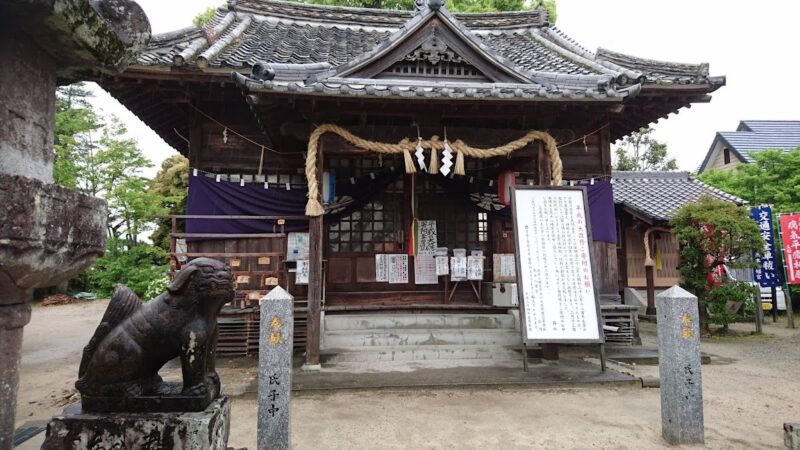
Nishinomiya Shrine, located in Mitsunori, Kitakawazoe-cho, Saga City, Saga Prefecture, is a historic shrine that can be considered the origin of Ebisu worship in Kyushu. Since its founding in 1172, it has attracted the faith of local people for over 850 years. This article provides a detailed explanation of Nishinomiya Shrine’s history, enshrined deities, the 2020 fire and reconstruction efforts, and information on visiting the shrine.
History and Origins of Nishinomiya Shrine
Kyushu’s First Branch Shrine of Nishinomiya Shrine
Nishinomiya Shrine is known as the first shrine in Kyushu to be branched off from Nishinomiya Shrine (the head shrine of Ebisu) in Nishinomiya City, Hyogo Prefecture. Its history dates back to the late Heian period.
In May of the first year of the Heiji era (1159), Honda Yamato-no-kami Akimo, a retainer of Minamoto no Tameyoshi, brought a divided spirit of Nishinomiya Shrine to Yamaguchi in Kishima District (present-day Saga Prefecture). Later, in the second year of the Shoan era (1172), during the reign of Emperor Takakura, the 80th emperor, Nishinomiya Shrine was established in Mitsunori-go, Kawazoe-no-sho, Saga District (present-day Mitsunori, Kitakawazoe-cho, Saga City).
This founding date is based on reliable records and is considered the oldest Ebisu worship shrine in Kyushu.
Deep Connections with the Ryuzoji and Nabeshima Families
Nishinomiya Shrine has deep ties to the samurai families that played a significant role in Saga’s history. During the Sengoku period, the Ryuzoji family held the shrine in high esteem and dedicated themselves to maintaining its buildings.
During the Edo period, the Nabeshima family, who became the lords of the Saga Domain, held Nishinomiya Shrine in high esteem, and in 1604 (Keicho 9), they undertook a large-scale renovation of the shrine buildings. This renovation established Nishinomiya Shrine’s status as an important shrine within the Saga Domain.
The Nabeshima family’s patronage continued throughout the Edo period, including the repair of the shrine buildings and support for festivals. For this reason, Nishinomiya Shrine is also positioned as an important historical site that tells the story of Saga’s history and culture.
Role as the Head Shrine of Saga Ebisu Shrines
Nishinomiya Shrine is also known as the “Head Shrine of Saga Ebisu Shrines” and has functioned as a central figure in Ebisu worship within Saga Prefecture. Worshippers from both within and outside the prefecture visit to pray for business prosperity, abundant harvests, and fishing safety.
Especially during the Ebisu Festival, it is bustling with many worshippers and has been cherished as an important place of worship in the region.
Deities and Blessings
Main Deity: Ebisu-no-Mikoto
The main deity of Nishinomiya Shrine is Ebisu-no-Mikoto. In Japanese mythology, Ebisu-no-Mikoto is considered the first child born to Izanagi-no-Mikoto and Izanami-no-Mikoto.
He is widely worshipped as Ebisu-sama and is also known as one of the Seven Lucky Gods. He is often depicted holding a fishing rod in his right hand and a sea bream in his left, and is revered as the god of the sea and the god of business prosperity.
Expected Benefits
Visiting Nishinomiya Shrine is believed to bring the following benefits:
- Business Prosperity: As the god of commerce, prayers are offered for business success and prosperity.
- Abundant Harvest: A belief in praying for a bountiful harvest.
- Safety in Fishing and Abundant Catch: As a god of the sea, it is deeply revered by those involved in the fishing industry.
- Family Safety: Prayers are offered for the health and peaceful lives of family members.
- Good Fortune and Prosperity: Overall improvement of luck and the arrival of happiness.
Highlights of the Shrine Grounds
Hizen Torii Gate and Approach
Within the grounds of Nishinomiya Shrine stands a “Hizen Torii,” a type of gate unique to Saga Prefecture. The Hizen Torii is characterized by a base ring between the kasagi (top beam) and shimaki (bottom beam), and its thick, stable pillars give it a distinctive shape.
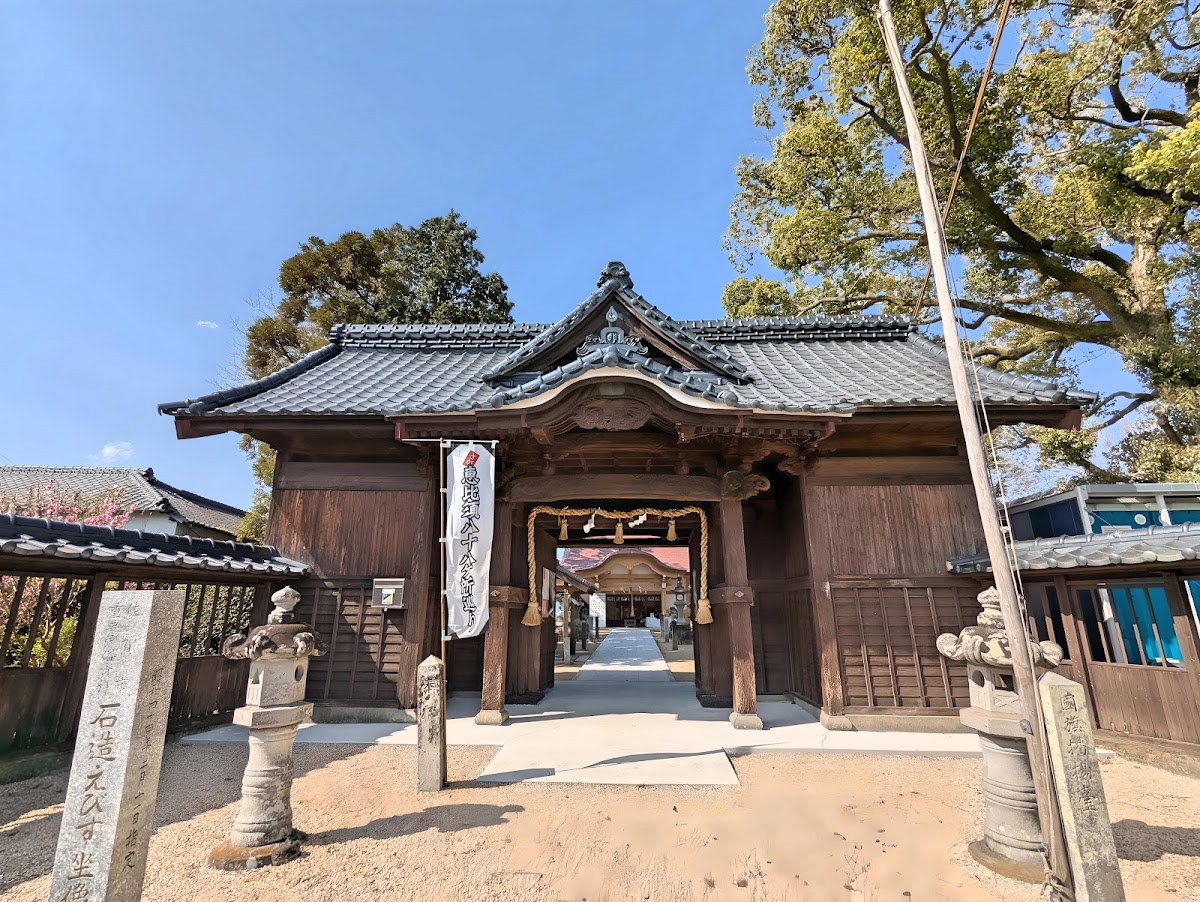
Proceeding along the approach from the first torii gate, you will find the second Hizen Torii gate, beyond which stands the main gate. Walking along the approach to the shrine allows you to purify your mind and offer your prayers in a solemn atmosphere.
Stone Ebisu Statue
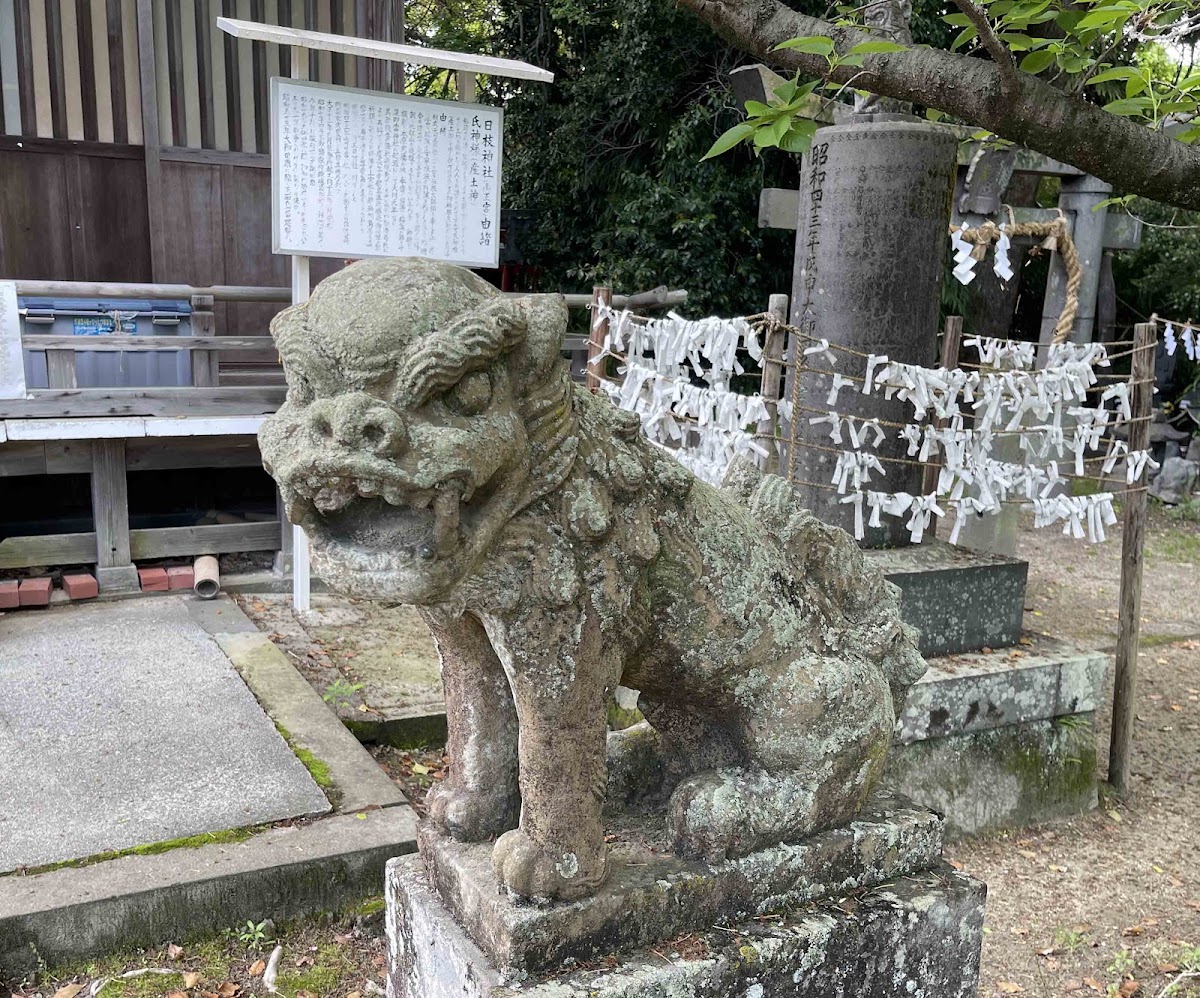
Within the shrine grounds is a stone seated statue of Ebisu, created in 1731 (Kyoho 16). This is considered one of the oldest Ebisu statues in Saga Prefecture and is a culturally significant artifact of high historical value.
The stone statue, with Ebisu’s gentle smile carved into it, continues to warmly welcome visitors even after many years.
Nishinomiya Daimyojin Lower Shrine Tower (Hiruko-son)
Within the shrine grounds is the Nishinomiya Daimyojin Lower Shrine Tower, where Hiruko-son is enshrined. This tower is an important structure representing the core of the faith of Nishinomiya Shrine.
Shrines within the Precincts and Subsidiary Shrines
Within the grounds of Nishinomiya Shrine, several subsidiary shrines and minor shrines are located:
- Inari Shrine: Deity of abundant harvests and business prosperity
- Tenman Shrine: Dedicated to Sugawara no Michizane, the god of learning
- Subsidiary Shrine of Tsukuyomi-no-Mikoto: Worshipped as the god of the moon and agriculture
- Other Subsidiary Shrines: Dedicated to local guardian deities and various other gods
These subsidiary shrines demonstrate that Nishinomiya Shrine has functioned as a comprehensive place of worship for the region.
Kagura Hall and Giant Trees
Within the grounds is a Kagura Hall, where Kagura (sacred dance and music) are performed during festivals. Furthermore, giant trees, estimated to be several hundred years old, stand tall within the grounds, telling the story of the shrine’s long history.
The presence of these large trees enhances the sacredness of the shrine and is an important element that allows visitors to feel harmony with nature.
The 2020 Fire and Reconstruction Efforts
Fire on November 8, 2020
Around 11:10 PM on November 8, 2020 (Reiwa 2), a fire broke out at Nishinomiya Shrine. A nearby resident called 119 (emergency number) reporting a loud bang and fire, prompting the fire department to respond.
The fire raged rapidly and was extinguished approximately 3.5 hours later, around 2:40 AM the following day. Fortunately, there were no injuries, but part of the shrine building suffered damage.
The Saga Minami Police Station investigated the cause of the fire, but the detailed cause has not been made public. The damage to the shrine, with its history of over 850 years, deeply shocked local residents.
Launch of the Reconstruction Project
Following the fire, a project titled “Toward the Reconstruction of Chinzei Nishinomiya Shrine” was launched. With the cooperation of local residents, parishioners, and people nationwide interested in Nishinomiya Shrine and Ebisu worship, efforts toward reconstruction are underway.
The reconstruction project is undertaking the following activities:
- Fundraising for reconstruction
- Consideration of shrine building design based on historical value
- Preservation of cultural property value
- Strengthening cooperation with the local community
Information regarding the reconstruction is published on a dedicated website and is updated regularly for those who wish to support the project.
Current Visiting Status
Even after the fire, it is possible to visit Nishinomiya Shrine. While the shrine is generally unmanned, pre-written goshuin (shrine seals) are available for visitors to receive freely.
The chief priest is busy and not permanently stationed, but the shrine grounds are maintained and ready to welcome visitors.
Goshuin Information
Regarding the Issuance of Goshuin
Nishinomiya Shrine offers goshuin. However, since the chief priest is not permanently stationed, pre-written goshuin are generally available.
You can receive a pre-written goshuin at the shrine office or a designated location during your visit. The Goshuin (temple/shrine stamp) bears the calligraphy of “Nishinomiya Shrine” and the shrine’s seal, and is cherished as a memento of one’s visit.
Etiquette for Receiving a Goshuin
When receiving a Goshuin, please observe the following etiquette:
- Complete your prayers first before receiving the Goshuin.
- Bring your Goshuincho (stamp book) (if it’s a pre-printed stamp, you can paste it in later).
- Offer a donation (whatever you feel is appropriate).
- Handle it quietly and respectfully.
A Goshuin is not a stamp rally; it’s proof of your visit and a way to forge a connection with the shrine. Please receive it with respect.
Visiting Information and Access
Basic Information
- Shrine Name: Nishinomiya-sha
- Alternate Names: Chinzei Nishinomiya-sha, Saga Ebisu-gu Head Shrine
- Location: 1425, Kakumachi, Mitsuho, Kitakawazoe-cho, Saga City, Saga Prefecture
- Deity Enshrined: Ebisu-no-mikoto
- Founded: 1172 (Shoan 2)
- Shrine Building Reconstruction: 1604 (Keicho 9)
- Visiting Hours: Open all day (Shrine office hours are irregular)
- Parking: Available (Limited number of spaces)
Access by Train and Bus
From JR Saga Station:
- Walking: Approximately 1 hour 3 minutes (approximately 5 km)
- Bus: Use Saga City Bus or Showa Bus
- Get off at “Yamaryo Kita Bus Stop” and walk approximately 7 minutes (546m).
- Get off at “Mitsunori Danchi-mae Bus Stop” and walk approximately 9 minutes (705m).
Public transportation is limited, so we recommend checking the timetable in advance.
Access by Car
- From Nagasaki Expressway Saga Yamato IC: Approximately 20 minutes
- From Saga Station: Approximately 15 minutes
- From Saga Airport: Approximately 20 minutes
You can find the address by searching for “1425 Mitsunori, Kitakawazoe-cho, Saga City” or “Nishinomiya Shrine” on your car navigation system.
Nearby Tourist Attractions
When visiting Nishinomiya Shrine, you can also visit nearby tourist attractions:
- Saga Castle Honmaru History Museum: A facility where you can learn about the history of the Saga Domain (approx. 15 minutes by car)
- Saga Prefectural Museum & Art Museum: Experience the culture and art of Saga (approx. 15 minutes by car)
- Yoshinogari Historical Park: A large-scale settlement site from the Yayoi period (approx. 25 minutes by car)
- Chikugo River Lift Bridge: A movable iron bridge designated as a National Important Cultural Property (approx. 20 minutes by car)
Annual Events at Nishinomiya Shrine
Ebisu Festival
Nishinomiya Shrine holds a special festival during the Ebisu Festival. The Ebisu Festival is a traditional event praying for business prosperity and a bountiful harvest, attracting many worshippers.
Other Festivals
Throughout the year, the following festivals are held:
- New Year’s Day Festival (January 1st): A festival celebrating the New Year
- Spring Grand Festival: A festival giving thanks for the spring harvest
- Autumn Grand Festival: A festival giving thanks for the autumn harvest
Specific dates may change from year to year, so it is recommended to check before visiting.
Guidelines for Visiting Nishinomiya Shrine
Etiquette for Worship
Please observe the basic etiquette for visiting a shrine and worship with sincerity:
- Bow before passing through the torii gate: A courtesy before entering the sacred area
- Avoid walking in the center of the approach: The center is the path of the gods
- Purify yourself at the water basin: Purify your left hand, right hand, and mouth in that order
- Bow twice, clap twice, and bow once in front of the main hall: Basic Shinto etiquette
- State your wishes specifically and express your gratitude
- Bow once again at the torii gate when leaving: A courtesy when leaving the sacred area
Photography Etiquette
Photography is generally permitted on the shrine grounds, but please note the following:
- Do not take photos in areas where photography is prohibited, such as inside the main hall
- Be considerate of other worshippers
- Take photos quietly and without shouting
- Use a tripod only after assessing the surrounding situation
Nishinomiya Shrine and the Local Community
Center of the Local Community
For over 850 years, Nishinomiya Shrine has functioned as the center of the community in the Mitsunori district of Kitagawazoe-cho. Through festivals, it deepens the bonds among local residents and serves as a place for the transmission of traditional culture.
Value as a Cultural Property
Nishinomiya Shrine possesses cultural property value in the following respects:
- Historical value as the oldest Ebisu shrine in Kyushu
- Saga’s unique architectural style, such as the Hizen-style torii gate
- Artistic value, such as the stone seated statue of Ebisu created in 1731 (Kyoho 16)
- Historical materials showing its relationship with the Ryuzoji and Nabeshima families
Preserving and passing on these cultural property values was a crucial challenge in its reconstruction after the fire.
Spread of Ebisu Worship
Nishinomiya Shrine has played a significant role in the spread of Ebisu worship within Saga Prefecture. With the development of commerce, Ebisu became widely worshipped as the god of business prosperity, and served as a model for the construction of Ebisu shrines throughout the prefecture.
Summary: The Charm and Future of Nishinomiya Shrine
Nishinomiya Shrine, located in Kitakawazoe-cho, Saga City, boasts a history of over 850 years, as the oldest Ebisu shrine in Kyushu, founded in 1172. It is a prestigious shrine, the first to be branched off from Nishinomiya Shrine in Hyogo Prefecture, and has flourished under the patronage of the Ryuzoji and Nabeshima families.
Although part of the shrine building was damaged by fire in November 2020, a reconstruction project is currently underway. While the shrine is unmanned, pre-printed goshuin (shrine stamps) are available to welcome visitors.
The shrine grounds offer many points of interest, including a Hizen-style torii gate, one of the oldest stone statues of Ebisu in the prefecture, and several smaller shrines, creating a space where one can feel history and culture. Many people still visit seeking blessings for business prosperity, abundant harvests, and fishing safety.
Access is by bus or car from JR Saga Station. Why not visit Nishinomiya Shrine as a valuable opportunity to experience Saga’s history and the worship of Ebisu?
Supporting the reconstruction efforts and passing on this precious cultural heritage to future generations is our mission as those living in the present. We hope that the future of Nishinomiya Shrine will be brightly illuminated by the hands of the local people and those throughout Japan who cherish the worship of Ebisu.