Shirahige Shrine (Saga City, Saga Prefecture) | Complete Guide to the Highlights of Goshuin, Dengaku, and the Sacred Tree
Shirahige Shrine, located at 3466 Kawakubo, Kuboizumi-cho, Saga City, Saga Prefecture, is a historic shrine that was established by inviting a deity from Omi Province (present-day Shiga Prefecture). It is known as an ancient shrine with many attractions, including Dengaku, a nationally designated Important Intangible Folk Cultural Property, and a sacred tree over 410 years old. This article provides detailed information useful for visitors, from the history of Shirahige Shrine to how to receive a Goshuin (shrine stamp) and annual festivals.
Shirahige Shrine, located at 3466 Kawakubo, Kuboizumi-cho, Saga City, Saga Prefecture, is a historic shrine that was established by inviting a deity from Omi Province (present-day Shiga Prefecture). ## Basic Information and Access to Shirahige Shrine
Location and Contact Information
Location: 3466 Kawakubo, Kuboizumi-cho, Saga City, Saga Prefecture 849-0915
Phone Number: 0952-98-0164
Shrine Rank: Former Village Shrine
Access Method
Access to Shirahige Shrine is convenient by public transport or private car.
Access by Bus:
- Approximately 3 minutes on foot from the “Kamibun Community Center” bus stop (Saga City Bus)
- Approximately 30 minutes by bus from JR Saga Station
Access by Private Car:
- Approximately 20 minutes from central Saga City via National Route 263
- Approximately 15 minutes from the Nagasaki Expressway Saga Yamato Interchange
- Parking available (parking spaces around the shrine grounds)
Visiting Hours
Shirahi Shrine is an unmanned shrine, and the grounds are generally open for free worship. However, it is recommended to refrain from visiting at night and to visit during daylight hours.
History and Origins of Shirahi Shrine
Origin of Founding and Invitation from Omi Province
Several legends remain regarding the founding of Shirahi Shrine. The main theories are as follows:
- Theory of the 18th year of Emperor Keitai’s reign (527 AD): This is considered the oldest tradition.
- Theory of the 3rd year of Emperor Bidatsu’s reign (574 AD): Another strong tradition.
In both theories, it is said that a divided spirit was invited from Shirahige Daimyojin Shrine in Fukishita Village, Shiga District, Omi Province (present-day Shiga Prefecture). Shirahige Shrine in Omi Province is known as the oldest grand shrine in Omi, located on the shores of Lake Biwa, and it is believed that the deity was invited to Saga to bring its divine blessings to the region.
About the enshrined deities
While there are slight differences in the enshrined deities of Shirahige Shrine depending on the source, the main deities are as follows:
Main Deity:
- Sarutahiko-no-Mikoto: Revered as the god of opening paths and guidance.
Enshrined Deities:
- Toyouke-hime-no-Mikoto
- Emperor Nintoku
- Susanoo-no-Mikoto
- Yamato Takeru-no-Mikoto
- Takaokami-no-Kami
- Sugawara-no-Michizane
- Oyamatsumi-no-Mikoto
Sarutahiko-no-Mikoto is known as the god who guided the descent of the heavenly grandchild, and is believed to bestow divine blessings such as traffic safety, protection from misfortune, and good fortune.
Relationship with the Sacred Mountain, Suzukuma-yama
The sacred mountain of Shirahige Shrine is Suzukuma-yama, which rises behind the shrine building. Since ancient times, this mountain has been associated with mountain worship, and the mountain itself has been revered as a sacred object. This form of worship, where the shrine and the mountain behind it are integrated, is a common characteristic of ancient Japanese shrines and speaks to the depth of faith at Shirahige Shrine.
History since the Meiji Era
In December 1871 (Meiji 4), Shirahige Shrine was designated a village shrine. This was part of the Meiji government’s reorganization of the shrine system, signifying its official recognition as the guardian shrine of the region. Since then, it has been revered by local residents as the tutelary deity of the Kawakubo district of Kuboizumi-cho.
Shirahige Shrine’s Dengaku | Nationally Designated Important Intangible Folk Cultural Property
What is Shirahige Shrine’s Dengaku?
The most distinctive feature of Shirahige Shrine is “Shirahige Shrine’s Dengaku,” which was designated a Nationally Important Intangible Folk Cultural Property on December 27, 2000 (Heisei 12). This Dengaku is a traditional performing art offered at the annual festival on October 18th and 19th, and is also known as Chigo Dengaku.
Maru Matsuri and the Nineteen Maru Serving Groups
The annual festival of Shirahige Shrine is called “Maru Matsuri” and is conducted by a unique shrine guild organization. In this region, there are 19 families with the character “Maru” in their surname, and these families are called “Marumochi” or “Nineteen Maru,” and they form a shrine guild.
This Nineteen Maru Serving Group has been responsible for the rituals and the Dengaku tradition for generations. This kind of inheritance of rituals by specific family lines is a remnant of the shrine guild system from the Middle Ages and is considered a valuable example from a folkloric perspective.
Characteristics and Performances of Chigo Dengaku
The Dengaku of Shirahige Shrine is characterized by “Chigo Dengaku,” which is primarily performed by children. Dengaku originally began as a performance to pray for a bountiful harvest during rice planting, but at Shirahige Shrine, it has been refined and passed down as a sacred ritual performance.
Dengaku performances include dances and movements accompanied by the sounds of drums and flutes, and the sight of children dressed in traditional costumes captivates visitors. The tradition is passed down to the next generation through the participation of local children from a young age.
Cultural Value of Dengaku
The reasons why Shirahige Shrine’s Dengaku has been designated as an Important Intangible Folk Cultural Property are as follows:
- Preservation of Ancient Forms: The form of Dengaku (a type of traditional Japanese dance) from the Middle Ages remains strongly preserved.
- Connection with the Miyaza System: A tradition integrated with the unique Miyaza organization known as Jūkyūmaru.
- Regional Solidarity: A festival symbolizing the unity of the local community.
- Educational Significance: A place for passing on traditional culture to children.
Highlights of the Shrine Grounds
Sacred Tree Over 410 Years Old
Within the grounds of Shirahige Shrine stands a sacred cypress tree over 410 years old. This sacred tree is designated as a famous and ancient tree of Saga Prefecture and is a symbolic presence of Shirahige Shrine.
Characteristics of the Sacred Tree:
- Tree Species: Japanese Cypress (Hinoki)
- Age: Over 410 years (estimated)
- Designation: Saga Prefecture’s Famous Tree/Ancient Tree
- Highlights: Thick trunk and spreading branches, sacred atmosphere
This sacred tree, having grown over many years, is a living witness that has watched over the history of the shrine. When visiting, please be sure to put your hands together in front of this sacred tree and feel its power.
Style of the Shrine Building
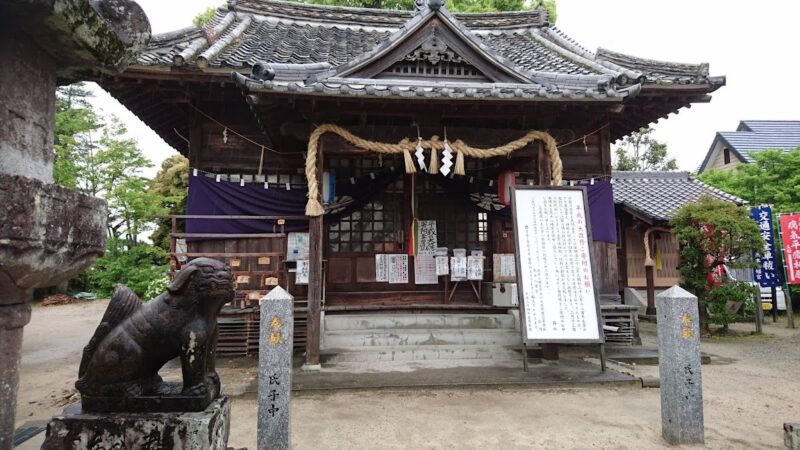
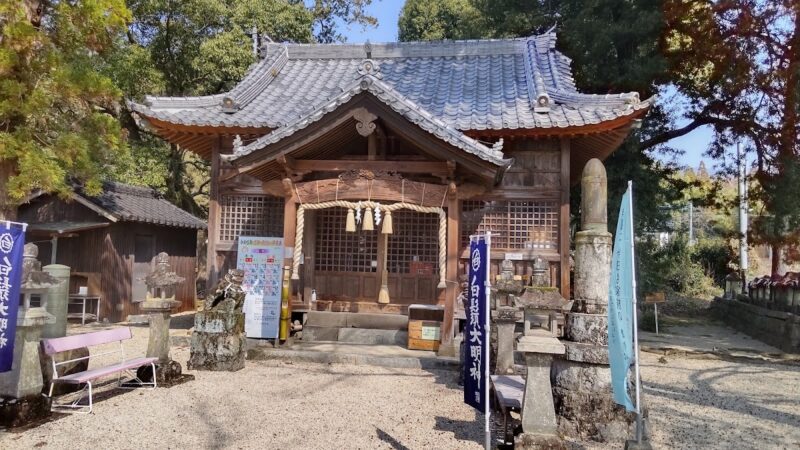
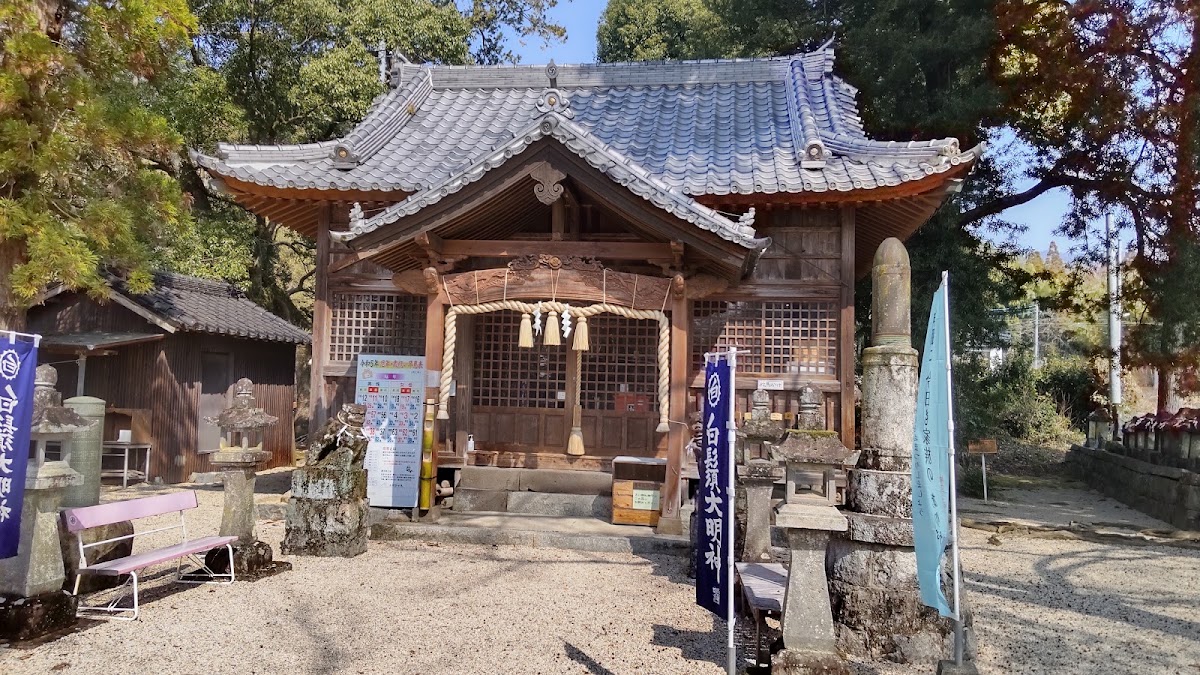
The shrine building of Shirahige Shrine is simple yet exudes a sense of dignity. Although it is an unmanned shrine, it is carefully maintained and kept clean by the local people.
The main hall is built with Mount Suzukuma as its backdrop, and its layout is characterized by its integration with mountain worship. From the worship hall, you can see the entire shrine grounds, enveloped in a tranquil atmosphere.
Atmosphere of the Shrine Grounds
The grounds of Shirahige Shrine are located in a quiet mountainous area, offering a peaceful space away from the hustle and bustle of the city. Surrounded by trees, the grounds display different expressions throughout the seasons, and you can enjoy particularly beautiful scenery during the fresh green season and the autumn foliage season.
How to Obtain a Goshuin (Shrine Seal)
Pre-printed Goshuin
As Shirahige Shrine is an unmanned shrine, only pre-printed goshuin are available. Those wishing to receive a goshuin can do so using the following method:
How to Obtain:
- Find the “Goshuin Box” located near the offering box on the shrine grounds.
- Pre-printed goshuin are available inside the box.
- Place the offering fee (usually around 300 yen) in the offering box.
- Receive one goshuin.
Features of the Goshuin
The goshuin of Shirahige Shrine includes the shrine’s name and the date of visit. With its simple yet dignified design, this is a fitting addition to your goshuincho (stamp book) collection.
Notes:
- Only pre-printed stamps are available; direct writing is not offered.
- Stamps may be out of stock.
- Please be sure to pay the offering fee (suggestion: 300 yen).
- Stamps are a symbol of faith, so please handle them with care.
Annual Festivals and the Annual Festival
Dates of the Annual Festival (Maru Matsuri)
The most important festival at Shirahige Shrine is the Annual Festival (Maru Matsuri), held annually on October 18th and 19th. During this two-day festival, the Dengaku, a nationally designated Important Intangible Folk Cultural Property, is performed, attracting many spectators.
Main Contents of the Annual Festival:
- Shinto Ritual (Festival Ceremony)
- Dedication of Chigo Dengaku (Children’s Dance)
- Ritual by Jukumaru
- Participation of Local Residents
Other Festivals
In addition to the annual festival, various festivals are held throughout the year at Shirahige Shrine.
- New Year’s Day Festival: Prayers for the New Year
- Spring Annual Festival: Prayers for a Bountiful Harvest
- Autumn Annual Festival: Thanksgiving for the Harvest
For specific dates and details, please contact your local parishioner organization or the Saga Prefecture Shrine Association.
Divine Virtues and Faith of Shirahige Shrine
Main Divine Virtues
Shirahige Shrine is believed to possess the following divine virtues:
Opening the Way and Guidance:
The main deity, Sarutahiko-no-Mikoto, is known as the god of opening the way, and is believed to guide people to the right path when they stand at a crossroads in life.
Traffic Safety: Sarutahiko-no-Mikoto, the god of roads, is also worshipped as a guardian deity of traffic safety.
Protection from Unfavorable Directions: Due to his role as a god who governs directions, he is also believed to offer protection from unfavorable directions.
Educational Safety for Children: Known since ancient times as a shrine where people pray for the educational safety of children, many visitors come to pray for the healthy growth of their children.
Role as a Local Guardian Shrine
Shirahi Shrine has been deeply intertwined with the lives of local residents as the tutelary deity of the Kawakubo district of Kuboizumi-cho. Through festivals, community solidarity is strengthened, and it plays an important role as a place for the transmission of traditional culture.
Places to Visit Along with Nearby Tourist Spots
Highlights of Kuboizumi-cho
Kuboizumi-cho, Saga City, where Shirahi Shrine is located, has other places worth visiting.
Kuboizumi Maruyama Site:
A Yayoi period moated settlement site, an important archaeological site for understanding the ancient history of the Saga Plain.
Kinryu Mountain:
A mountain with an elevation of 502m, popular as a hiking course. The summit offers a panoramic view of the Saga Plain.
Shrines and Temples in Saga City
Saga Shrine:
A shrine dedicated to the Nabeshima family, the lords of the Saga Domain, located in the center of Saga City.
Yodohime Shrine:
An ancient shrine situated on the banks of the Kase River, known as the Ichinomiya (first-ranked shrine) of Hizen Province.
Precautions and Manners for Visiting Shrines
Basic Manners for Visiting Shrines
Although Shirahige Shrine is an unmanned shrine, please observe the following manners when visiting.
- When passing through the torii gate: Bow before entering the shrine grounds.
- How to walk along the approach to the shrine: Walk along the sides, as the center is the path for the gods.
- How to purify your hands and mouth at the purification fountain: If there is a purification fountain, purify your hands and mouth.
- How to worship: Two bows, two claps, one bow (two bows, two claps, one bow).
- Photography: Photographs are permitted, but remember that this is a sacred place.
Points to note unique to unmanned shrines
- Take your trash home: Keep the shrine grounds clean.
- No open flames: Absolutely avoid using fire.
- Do not make noise: Worship quietly.
- Entering private property: Do not enter areas outside the shrine grounds.
- Offering for Goshuin (shrine stamp): Be sure to offer an offering.
Planning a visit to Shirahige Shrine
Recommended Times to Visit
During the Annual Festival (October 18th & 19th):
This is a rare opportunity to see Dengaku (traditional dance and music). However, crowds are expected.
Season of Fresh Greenery (April-May):
The trees in the shrine grounds are a beautiful green, creating a refreshing atmosphere.
Season of Autumn Leaves (November):
The autumn foliage is beautiful, and its harmony with the sacred tree is magnificent.
Estimated Time Required for Visiting
It’s generally recommended to allow 30 minutes to an hour for sightseeing and worshipping at the shrine. Including time to admire the sacred tree and soak up the atmosphere of the grounds, about an hour is appropriate.
Attire and Items to Bring
- Attire: Casual attire is acceptable, but please dress neatly and appropriately for a shrine.
- Shoes: Since some areas of the shrine grounds are unpaved, comfortable walking shoes are recommended.
- Items to Bring: Goshuincho (stamp book) (if you wish to receive a Goshuin stamp), small change (for the offering), and a drink.
- Summer: Insect repellent, hat, and sunscreen.
- Winter: Warm clothing (it is colder than urban areas due to its mountainous location).
Summary of the Charms of Shirahige Shrine
Shirahige Shrine, located in Kuboizumi-cho, Saga City, Saga Prefecture, is a shrine with many attractions, including its Dengaku (a nationally designated important intangible folk cultural property), a sacred tree over 410 years old, and a history of being established through a branch shrine from Omi Province. Although it is an unmanned shrine, it is carefully preserved by the local people and continues to attract unwavering devotion.
Especially during the annual festival in October, the Chigo Dengaku (children’s dance and music) performed by the Nineteen Maru procession is offered, allowing visitors to witness firsthand the enduring tradition dating back to the Middle Ages. Standing before the sacred tree in the tranquil mountain grounds, you can feel the spirit of ancient faith.
When you visit Saga, be sure to visit Shirahige Shrine and experience its history and culture. The pre-printed goshuin (shrine stamp) will also make a cherished memento of your trip.
—
Summary of Visiting Information:
- Location: 3466 Kawakubo, Kuboizumi-cho, Saga City, Saga Prefecture
- Phone: 0952-98-0164
- Visiting Hours: Open (Daytime recommended)
- Goshuin (Shrine Seal): Pre-printed only (Goshuin box next to the offering box)
- Parking: Available
- Annual Festival: October 18th and 19th every year
- Cultural Property: Shirahige Shrine’s Dengaku (Nationally Designated Important Intangible Folk Cultural Property)
- Highlights: Sacred tree over 410 years old (Designated as a Famous Tree and Ancient Tree of Saga Prefecture)
Shirahige Shrine is a valuable shrine where you can experience the history and culture of Saga. It will surely provide visitors with a quiet tranquility and convey the splendor of traditional Japanese culture.