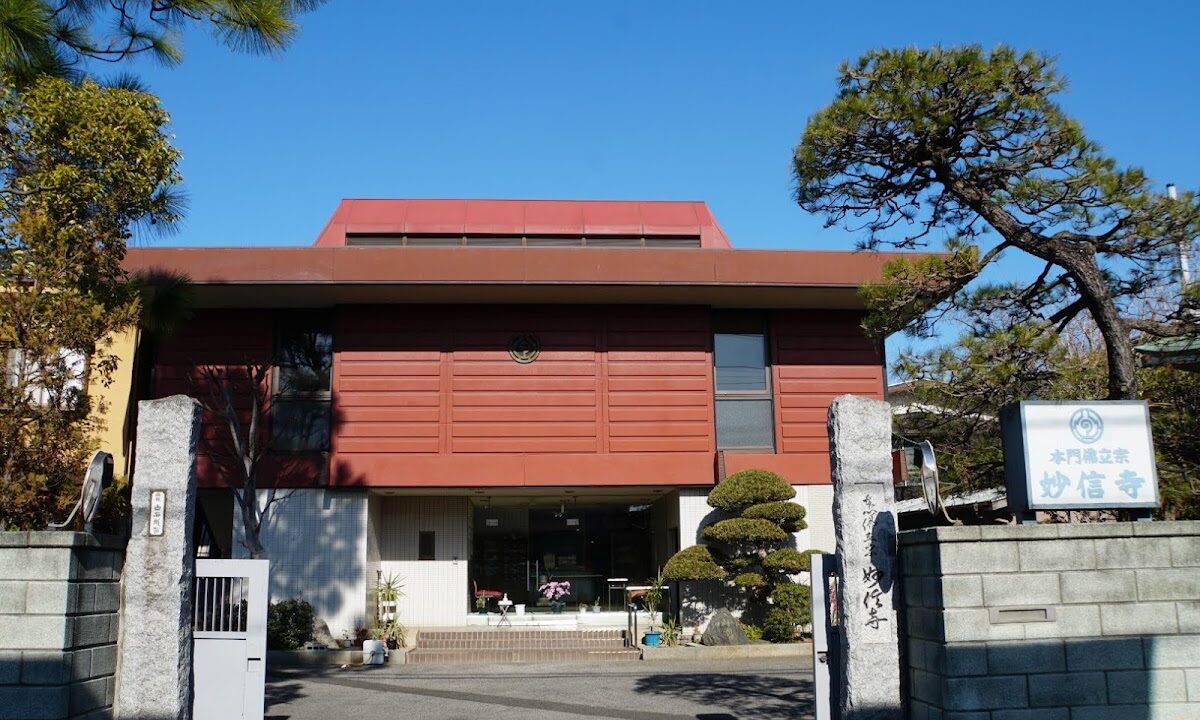
Myoshinji Temple (Kasugabe City, Saitama Prefecture) Complete Guide | History, Access, and Perpetual Memorial Services: A Thorough Explanation
Myoshinji Temple, located in Kasukabe, Kasugabe City, Saitama Prefecture, is a historic temple belonging to the Honmon Butsuryu sect. It is a center of local faith and is cherished by many as a temple offering perpetual memorial services and a columbarium. This article provides a detailed explanation of Myoshinji Temple’s history, features, access methods, and information regarding memorial services.
Basic Information about Myoshinji Temple
Location and Access
Address: 6882 Kasukabe, Kasugabe City, Saitama Prefecture 344-0061
Phone Number: 048-761-4250
FAX: 048-763-7444
The most convenient way to access Myoshinji Temple is via the Tobu Line. It is approximately a 15-minute walk from Kasugabe Station and approximately a 5-minute walk from Yagisaki Station. Yagisaki Station is the nearest station, making it easily accessible.
Kasugabe City is located in eastern Saitama Prefecture, relatively close to central Tokyo. Therefore, it is known as a temple easily accessible from Tokyo and neighboring prefectures.
Sect and Affiliation
Myoshinji Temple belongs to the Honmon Butsuryu-shu sect and is affiliated with the 6th branch office, Saitama missionary district. The Honmon Butsuryu-shu sect is based on the teachings of Nichiren Shonin and considers the Lotus Sutra as its fundamental scripture.
The Honmon Butsuryu-shu sect is a relatively new sect, founded in Kyoto in 1861 during the late Edo period. It emphasizes practicing Nichiren Shonin’s teachings in a way that is relevant to modern life. It conducts religious activities centered on “chanting the sacred title,” and values practicing Buddhist teachings in daily life.
About the Chief Priest
The current chief priest is Reverend Shiraishi Nichiju. The head priest of a temple has a wide range of responsibilities, including not only managing the temple but also advising parishioners on their faith, performing memorial services, and engaging with the local community.
The head priest of the Honmon Butsuryu sect not only performs rituals but also values supporting the deepening of each parishioner’s faith and carefully addressing their worries and questions in their daily lives.
History and Origins of Myoshinji Temple
Founding History
Regarding the founding date and detailed history of Myoshinji Temple, since the Honmon Butsuryu sect was established at the end of the Edo period, it is believed that the temple was founded after the Meiji era. The Kasukabe area has a history of flourishing as a post town on the Nikko Kaido during the Edo period, and many temples and shrines were built there.
The Honmon Butsuryu sect was founded in Kyoto by Nagamatsu Seifu, aiming to spread the teachings of Nichiren Shonin in a more practical way, rooted in the lives of ordinary people. It is presumed that Myoshinji Temple was established as a base for spreading this teaching in Saitama Prefecture.
Historical Background of the Kasukabe Area, Kasukabe City
Kasukabe in Kasukabe City developed as the fourth post town on the Nikko Kaido during the Edo period. It was a bustling area with many travelers and a thriving commercial sector. Due to this historical background, many temples existed in the Kasukabe area, supporting the religious lives of the local residents.
After the Meiji era, with the opening of the railway, Kasukabe developed as a residential area near Tokyo, and its population increased. In this context, Myoshinji Temple played an important role as a center of local faith and a source of spiritual support for the people.
Teachings and Characteristics of the Honmon Butsuryu Sect
What is the Honmon Butsuryu Sect?
The Honmon Butsuryu Sect is based on the teachings of the Lotus Sutra expounded by Nichiren Shonin and practices faith centered on chanting the sacred title “Nam Myoho Renge Kyo.” A distinctive feature is the emphasis on practical application in daily life rather than formal rituals.
The name of the sect, “Butsuryu,” means “the Buddha stands,” representing the idea that the Buddha’s teachings live and work in real life. Followers are expected to chant the sacred title (Odaimoku), cultivate gratitude, and practice compassion for others in their daily lives.
Practice of Chanting the Sacred Title
In the Honmon Butsuryu sect, “chanting the sacred title” is central to faith. This is not simply chanting “Nam Myoho Renge Kyo,” but rather emphasizing understanding its meaning and practicing it in daily life.
Through morning and evening services called “Okankin,” the sacred title is chanted and the Lotus Sutra is recited. This forms the basis of faith practice at home and also provides an opportunity to deepen family bonds.
Consultation on Faith and the Role of Temples
Temples of the Honmon Butsuryu sect value consultations from followers regarding their faith. The head priest offers advice based on Buddhist teachings regarding life’s worries and suffering, as well as questions and concerns in daily life.
At Myoshinji Temple, the head priest also provides consultation to parishioners, supporting the deepening of their faith. This is not merely religious instruction, but rather a distinctive approach of being a companion on life’s journey.
Myoshinji Temple’s Facilities and Activities
Main Hall and Temple Grounds
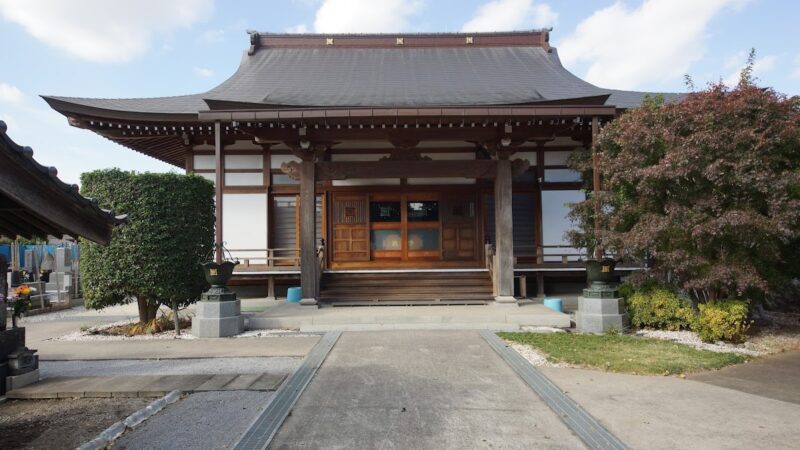
Daily services and religious ceremonies are held in the main hall of Myoshinji Temple. In temples of the Honmon Butsuryu sect, a large mandala is enshrined as the principal image in the main hall, and parishioners chant the sacred mantra in front of it.
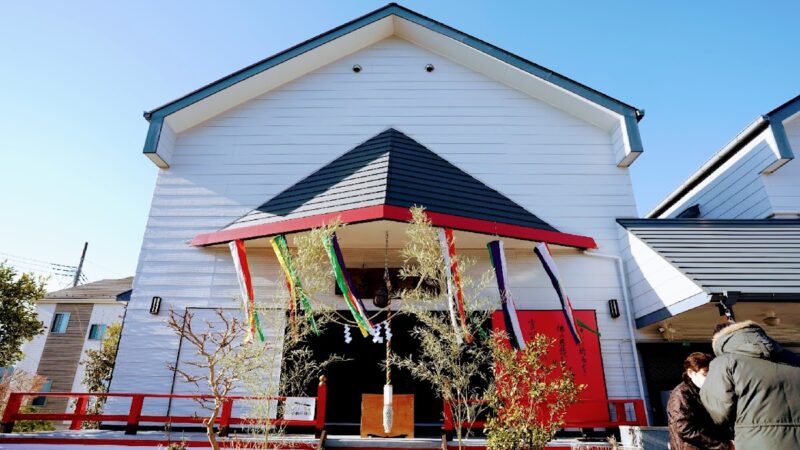
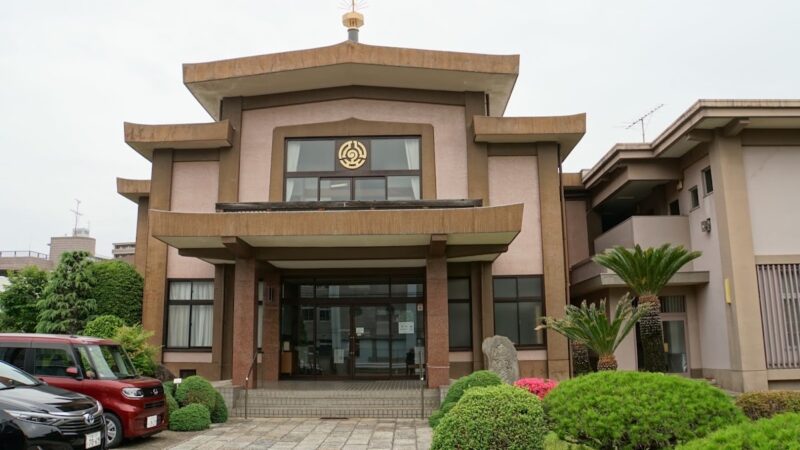
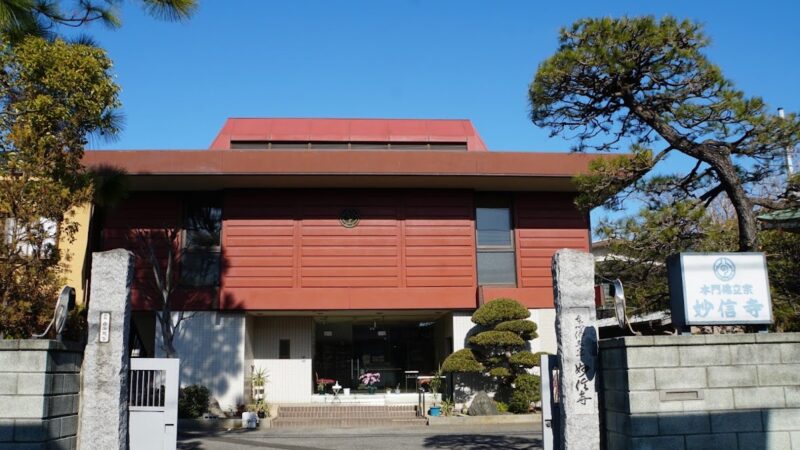
The temple grounds are kept clean, providing an environment where visitors can pray in peace. It is also a place of solace for local residents.
Regular Services and Events
Myoshinji Temple holds various services and events throughout the year. At the monthly memorial service called Okō, believers gather to listen to the head priest’s sermon and chant the sacred mantra together.
Furthermore, traditional Buddhist events such as the spring and autumn equinox services, the Obon memorial service, and the year-end Oeshiki service are also highly valued. Through these events, interactions among believers deepen, and a community centered around the temple is formed.
Believer Education and Learning Opportunities
The Honmon Butsuryu-shu sect places great emphasis on the education of its believers. Myoshinji Temple also provides opportunities to learn about the fundamental teachings of Buddhism, the history of the Honmon Butsuryu-shu sect, and the significance of the sacred mantra.
In particular, for those encountering the Honmon Butsuryu-shu sect for the first time, courses explaining the basic teachings in an easy-to-understand manner and opportunities for dialogue with the head priest are available. This allows believers not only to deepen their faith but also to gain wisdom that enriches their lives through Buddhism.
About Perpetual Memorial Services and Columbariums
Significance of Perpetual Memorial Services
In modern society, due to declining birth rates, an aging population, and the rise of nuclear families, the inheritance of family graves is becoming increasingly difficult. To address this situation, many temples now offer perpetual memorial services.
Perpetual memorial services are a system where the temple takes responsibility for performing perpetual memorial services for the deceased. This provides peace of mind for those without successors to their graves or those who do not want to burden their descendants.
Myoshinji Temple’s Columbarium
Myoshinji Temple has a columbarium and offers perpetual memorial services. The columbarium is a facility for housing cremated remains and, being indoors, offers the advantage of being able to visit regardless of the weather.
Memorial services in the columbarium can accommodate various forms, from individuals to large families. Pet memorial services may also be available; please contact the temple directly for details.
Details and Costs of Memorial Services
The specific details and costs of perpetual memorial services vary depending on the temple. Generally, an initial cost of several hundred thousand yen is often required, and while there may be no annual maintenance fees afterward, there may also be small maintenance fees.
If you are considering perpetual memorial services at Myoshinji Temple, we recommend that you consult with the head priest to confirm the details of the memorial service, costs, and contract terms. Inquiries can also be made by phone (048-761-4250).
Memorial Services and Annual Memorial Services
Even if you choose perpetual memorial services, it is possible to hold individual memorial services such as annual memorial services. At milestones such as the third and seventh anniversaries, the bereaved family can gather to remember and commemorate the deceased.
Myoshinji Temple also offers consultations regarding such memorial services, and can perform memorial services for the deceased in a way that meets the wishes of the bereaved family.
How to Visit Myoshinji Temple
First Visit
Those visiting Myoshinji Temple for the first time should first pay their respects at the main hall. In the Honmon Butsuryu sect, the basic practice is to chant “Namu Myoho Renge Kyo” facing the principal image of worship.
Regarding proper etiquette for worship, the head priest or temple staff will kindly explain it to you. The Honmon Butsuryu sect values the heart more than form, so even first-time visitors can feel at ease.
Becoming a Temple Member
If you wish to become a temple member (follower) of Myoshinji Temple, please consult with the head priest. The Honmon Butsuryu sect values a sincere desire to deepen one’s faith and will carefully explain the procedures for joining and the teachings.
Becoming a temple member allows you to participate in temple events and receive direct guidance from the head priest. It also becomes possible to hold funerals and memorial services at the temple.
Consulting with the Temple
Myoshinji Temple offers consultations on a variety of topics. You can consult on a wide range of issues, including questions about faith, life problems, family issues, and matters related to memorial services.
If you wish to consult, it is recommended to make a reservation by phone in advance. By checking the priest’s availability and scheduling a time for a thorough discussion, you can have a more fulfilling consultation.
Temple Culture in Kasukabe City and Myoshinji Temple
Religious Background of Kasukabe City
Besides Myoshinji Temple, Kasukabe City has many other temples and shrines. There are temples of various sects, including Nichiren Buddhism, Shingon Buddhism, Tendai Buddhism, and Jodo Buddhism, and diverse beliefs coexist.
This religious diversity stems from Kasukabe City’s historical status as a transportation hub, a place where many people passed through. Each temple has supported local faith and passed down its culture.
Engagement with the Local Community
Myoshinji Temple values not only its religious activities but also its engagement with the local community. It plays an open role as a temple by participating in local events and opening its temple facilities to the public.
Especially in today’s aging society, the role of temples as a spiritual anchor for local residents is becoming increasingly important. Myoshinji Temple also aims to remain a place where local residents can easily visit and find peace of mind.
Temple Pilgrimage and Myoshinji Temple
Kasugabe City and the surrounding areas are home to many historical temples. For those who enjoy temple pilgrimages, Myoshinji Temple, belonging to the distinctive Honmon Butsuryu-shu sect, is a place worth visiting.
Honmon Butsuryu-shu temples are relatively few throughout Japan, and learning about its teachings and practices is a good opportunity to deepen one’s understanding of Buddhism. When you visit Kasugabe, please be sure to visit Myoshinji Temple.
The Nationwide Network of Honmon Butsuryu-shu
Headquarters and Kyoto Butsuryu Museum
The headquarters of the Honmon Butsuryu-shu sect is located in Kyoto and oversees temples throughout the country. Also in Kyoto, there is the “Kyoto Butsuryu Museum,” where you can learn about the history and teachings of the Honmon Butsuryu-shu sect.
This facility offers opportunities to learn deeply about Buddhism and the Honmon Butsuryu-shu sect through exhibitions and lectures, and is open to both followers and the general public.
Butsuryu App and Digitalization
The Honmon Butsuryu-shu sect is also engaged in missionary activities utilizing modern technology. The “Butsuryu App,” a smartphone application, allows users to access information on chanting the sacred mantra, sermons, and temple information.
The use of such digital tools creates an environment where followers living far away and busy modern people can easily practice their faith.
International Expansion
The Honmon Butsuryu-shu sect has temples not only in Japan but also overseas. It has followers in various parts of the world, including the United States, Brazil, and India, forming an international network.
An English site is also available, demonstrating efforts to communicate the teachings to English speakers. This international perspective is one of the characteristics of the Honmon Butsuryu-shu sect.
Things to Know Before Visiting Myoshinji Temple
Visiting Hours and Contact Information
When visiting Myoshinji Temple, it is recommended to contact them by phone in advance. The head priest may be absent due to memorial services or events, so making a reservation is recommended to ensure you can visit or consult with them.
Phone Number: 048-761-4250
Temples are usually open during the day, but it is considered good manners to avoid visiting early in the morning or late at night.
Dress Code and Manners
There are no specific dress code requirements for visiting a temple, but clean and subdued attire is desirable. For memorial services, semi-formal attire or subdued colors are appropriate.
Please behave quietly within the temple grounds and be considerate of other visitors. It is polite to obtain permission before taking photographs.
Parking
It is recommended to check in advance whether Myoshinji Temple has parking. Some temples have limited parking spaces for visitors, so please consider using public transportation.
Taking advantage of its excellent location, just a 5-minute walk from Yagisaki Station, Myoshinji Temple is easily accessible by train.
Summary: The Charm and Significance of Myoshinji Temple
Located in Kasukabe City, Saitama Prefecture, Myoshinji Temple practices the teachings of the Honmon Butsuryu sect and plays an important role as a center of faith in the region. Under the leadership of Chief Priest Shiraishi Nichiju, the temple provides consultations on the faith of its parishioners and responds to modern needs through perpetual memorial services and a columbarium.
As a temple of the distinctive Honmon Butsuryu sect, it values practical faith centered on chanting the sacred mantra and emphasizes applying Buddhist teachings to daily life.
It boasts excellent access, being a 15-minute walk from Kasukabe Station and a 5-minute walk from Yagisaki Station. Inquiries regarding faith consultations, perpetual memorial services, and the columbarium are accepted by telephone (048-761-4250).
If you are visiting Kasukabe City, or if you are interested in the teachings of the Honmon Butsuryu sect, or if you are considering perpetual memorial services, please do visit Myoshinji Temple. The head priest and temple staff will warmly welcome you.
Myoshinji Temple, while keeping traditional Buddhist teachings relevant to the modern age, continues to be a temple that walks hand in hand with the local community, providing spiritual support to many people.