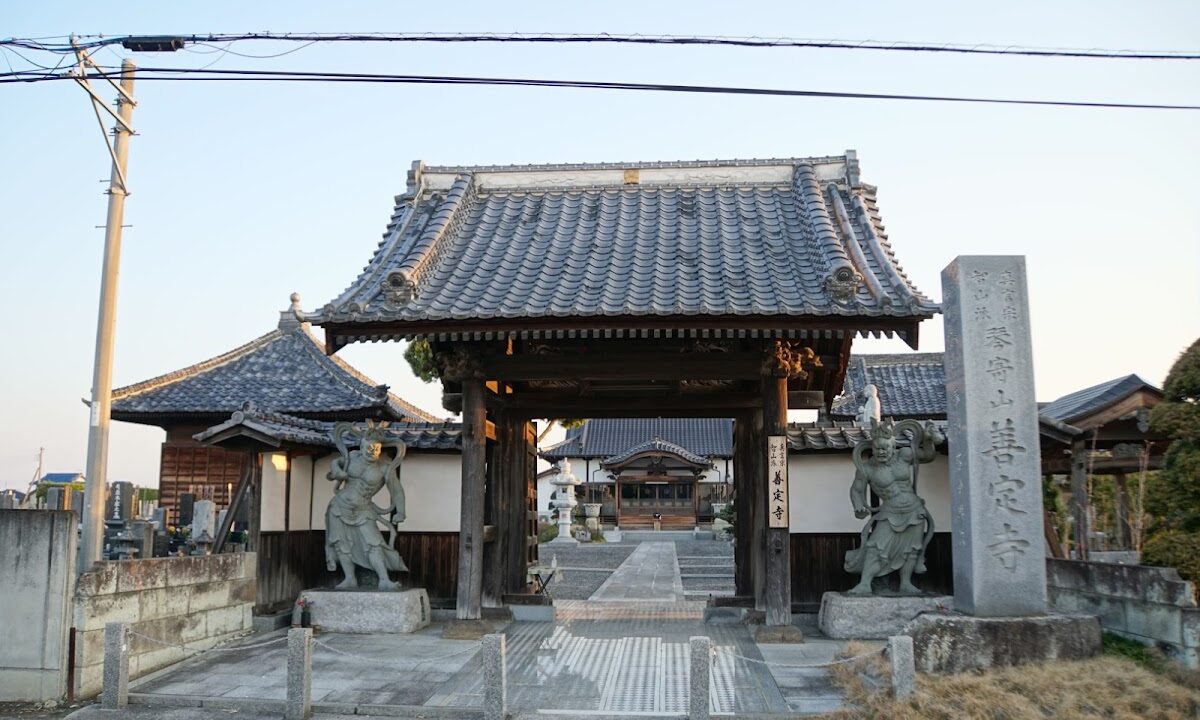
Zenjoji Temple (Kazo City, Saitama Prefecture) | Complete Guide to History, Cultural Properties, and Access
Zenjoji Temple is an ancient temple of the Buzan branch of the Shingon sect, located in Kotoyori, Kazo City, Saitama Prefecture. Known as a historical temple founded in 1294 (Einin 2) during the Kamakura period, it is a prestigious temple that received a vermilion seal certificate granting it 7 koku of land from the shogunate during the Edo period. This article provides a detailed explanation of Zenjoji Temple’s history, cultural properties, access, and visiting information.
Basic Information about Zenjoji Temple
Official Name: Kinkisan Amidain Zenjoji Temple
Sect: Shingon-shu Buzan-ha
Location: 194 Kinkisan Amidain Zenjoji, Kazo City, Saitama Prefecture (Some sources list 195)
Corporate Number: 5030005005342
Phone Number: 0480-72-2941
Nearest Station: Kurihashi Station (Tobu Nikko Line/JR Utsunomiya Line)
Zenjoji Temple is located in Kazo City, in the northeastern part of Saitama Prefecture, in a quiet environment near the Tone River. Belonging to the Shingon-shu Buzan-ha sect, it has a long history as a center of local faith.
History of Zenjoji Temple
Founded in the Kamakura Period
Zenjoji Temple was founded in 1294 (Einin 2). This period corresponds to the late Kamakura period, a time when Buddhist culture flourished throughout Japan. Zenjo-ji Temple, with a history of over 730 years since its founding, is known as one of the oldest temples in Saitama Prefecture.
The Einin era of the Kamakura period was when Hojo Sadatoki ruled the Kamakura Shogunate as regent. During this time, many temples were founded in the Kanto region, supported by the faith of the samurai class. It is believed that Zenjo-ji Temple was also founded within this historical context, with the support of local influential figures and believers.
Development in the Edo Period
In the Edo period, Zenjo-ji Temple established an important position as a temple officially recognized by the shogunate. The Tokugawa shogunate had a system of issuing vermilion seal documents to major temples and shrines throughout the country, guaranteeing their land holdings. Zenjo-ji Temple was issued a vermilion seal document granting it 7 koku of land, and this document is still carefully preserved at the temple today.
A vermilion seal document is an official document bearing the shogun’s seal, guaranteeing the land holdings and privileges of temples and shrines. While the temple’s territory of 7 koku is not particularly large, it demonstrates its status as a central temple in the region. The existence of this vermilion seal document is an important historical document proving that Zenjo-ji Temple was a historically significant temple officially recognized by the Edo Shogunate.
History Since the Meiji Era
Despite the impact of the anti-Buddhist movement and the separation of Shinto and Buddhism during the Meiji era, Zenjo-ji Temple continued to protect the local faith. After the war, it was officially registered as a religious corporation, and its corporate registration was renewed on November 6, 2015. Currently, supported by local parishioners and believers, it continues to operate as a temple of the Shingon-shu Buzan sect.
Cultural Properties and Temple Treasures
Edo Shogunate Vermilion Seal Document
The most important cultural property held by Zenjo-ji Temple is the vermilion seal document issued by the Edo Shogunate. This document guarantees the temple’s territory of 7 koku and is a valuable historical document bearing the vermilion seal of the Tokugawa Shogun.
A vermilion seal document is an official document written in ink on Japanese paper and stamped with the shogun’s vermilion seal, serving as evidence of the status and importance of a temple at the time. The vermilion seal document of Zenjoji Temple is a valuable historical document for studying the temple system and religious policies of the Edo period in the eastern Saitama Prefecture region.
This document is still carefully preserved at Zenjoji Temple and is positioned as an important cultural heritage that conveys the history of the region.
Buildings and Grounds
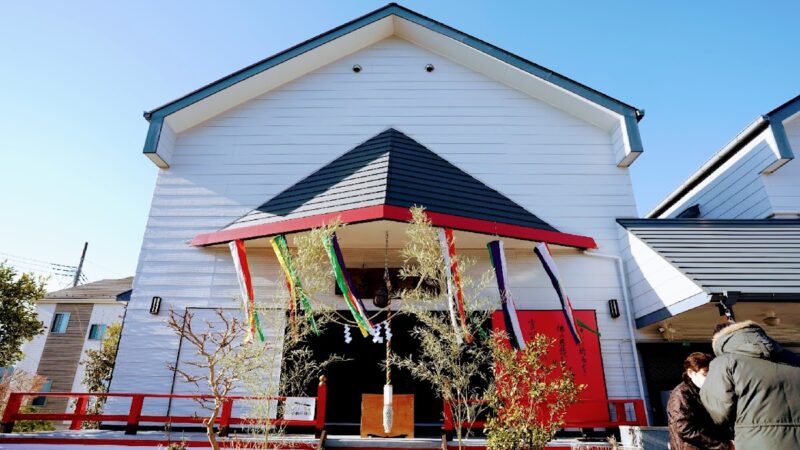
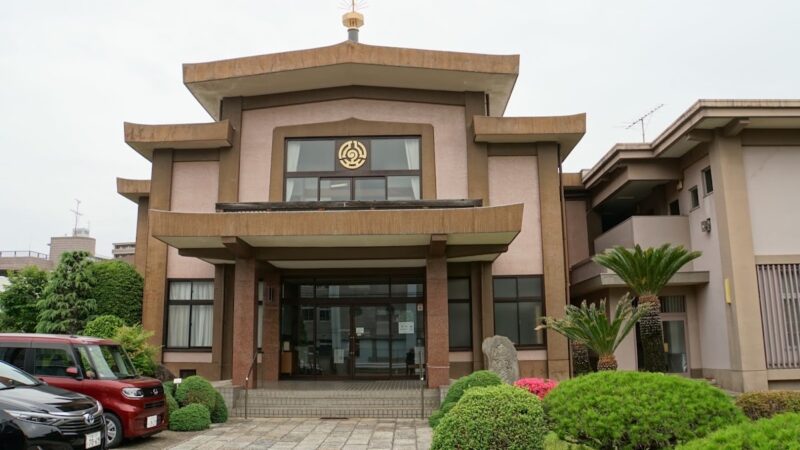
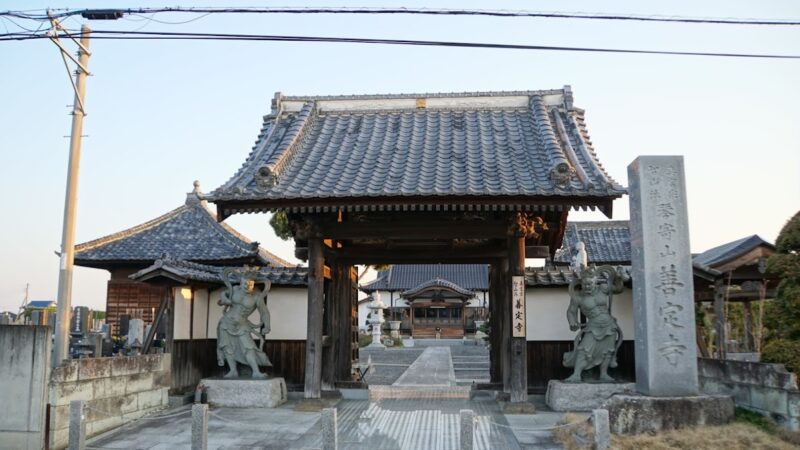
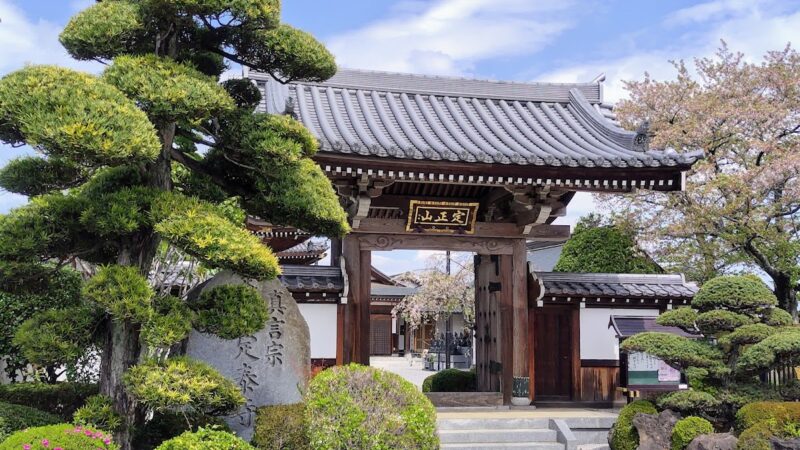
The grounds of Zenjoji Temple feature traditional Buddhist architecture, including the main hall. As a Shingon Buddhist temple, in addition to the main hall where the principal image is enshrined, the temple has also cherished the worship of Amida Buddha, as indicated by its temple name, Amida-in.
The atmosphere of the grounds is tranquil, allowing visitors to find peace and solace in a calm environment. The solemn atmosphere, characteristic of a temple with a long history, welcomes visitors.
Zenjoji Pond
To the northeast of Zenjoji Temple is a pond called “Zenjoji Pond.” This pond has long been associated with Zenjoji Temple and has been cherished by the local people. The existence of a pond named after the temple speaks to the temple’s long-standing importance in this region.
Zenjoji Pond is an integral part of the local landscape and, as a natural environment closely linked to the temple’s history, is still cherished by local residents.
About the Shingon-shu Buzan School
The Shingon-shu Buzan School, to which Zenjoji Temple belongs, is a branch of the Shingon sect, with Hase-dera Temple in Sakurai City, Nara Prefecture, as its head temple. It inherits the teachings of the Shingon sect founded by Kobo Daishi Kukai during the Heian period and emphasizes the practice and training of esoteric Buddhism.
Characteristics of the Shingon-shu Buzan School
The Shingon-shu Buzan School is a sect that separated from the Shingon sect during the Edo period and is characterized by its emphasis on both scholarship and practice. Its principal deity is Dainichi Nyorai, and it practices and performs rituals based on the doctrines of esoteric Buddhism.
At temples of the Buzan sect, Goma rituals and various Buddhist ceremonies are strictly performed, and prayers are offered for the ancestors of parishioners and for worldly benefits. Zenjoji Temple also conducts ceremonies and rituals in accordance with the traditions of the Buzan sect of Shingon Buddhism.
Buzan Sect Shingon Temples in Saitama Prefecture
There are many Buzan sect Shingon temples in Saitama Prefecture, and Zenjoji Temple is one of the oldest among them. Several temples of the same sect exist around Kazo City, and they support the local Buddhist culture through mutual interaction.
Visiting Information and Annual Events
Visiting Etiquette
When visiting Zenjoji Temple, please follow the general etiquette for visiting Buddhist temples. Bow before entering the temple gate, and if there is a water basin, purify your hands and mouth. Before the main hall, quietly join your hands in prayer and offer your prayers with sincerity.
In Shingon Buddhist temples, it is common to chant “Namu Daishi Henjo Kongo” in front of the main image of Buddha. This is a phrase expressing devotion to Kobo Daishi Kukai.
When offering incense, the proper etiquette is to light three sticks and arrange them in an equilateral triangle. Place one stick at the back and the remaining two on the left and right in front.
Annual Events
At Zenjoji Temple, various Buddhist ceremonies are held according to the annual events of the Buzan branch of the Shingon sect. The main events include the following:
- New Year’s Memorial Service: A memorial service to pray for the New Year and the safety of parishioners.
- Spring and Autumn Equinox Memorial Services: Memorial services for ancestors.
- Obon: A memorial service to welcome the spirits of ancestors as part of the Obon festival.
- Kobo Daishi Memorial Service: A memorial service for Kobo Daishi, the founder of the Shingon sect (held on the 21st of each month).
For detailed dates and times of these events, we recommend contacting the temple in advance.
About Perpetual Memorial Services and Cemeteries
Zenjoji Temple manages cemeteries and provides perpetual memorial services based on the danka (parishioner) system. In recent years, due to the declining birthrate, aging population, and the rise of nuclear families, interest in perpetual memorial services has increased, and Zenjoji Temple offers consultations.
For specific details, costs, and application procedures regarding cemeteries and perpetual memorial services, it is necessary to contact the temple directly. Visits are often possible, so we recommend visiting in person to get a feel for the atmosphere.
Transportation Access
Access by Train
Nearest Station: Kurihashi Station (Tobu Nikko Line/JR Utsunomiya Line)
Kurihashi Station is served by the Tobu Nikko Line and the JR Utsunomiya Line (Tohoku Main Line), making it relatively convenient to access from central Tokyo.
- From Tokyo: Approximately 1 hour to 1 hour 20 minutes via the JR Ueno-Tokyo Line or Utsunomiya Line
- From Asakusa: Approximately 1 hour to 1 hour 15 minutes via the Tobu Skytree Line (Isesaki Line) or Nikko Line
From Kurihashi Station to Zenjoji Temple, you can travel on foot or by taxi. The distance is approximately 2-3 km, taking about 25-30 minutes on foot. A taxi will get you there in about 5-10 minutes.
Minami-Kurihashi Station is also relatively close and can be used as a station on the Tobu Nikko Line.
Access by Car
Access from Major Roads:
- Tohoku Expressway: Approximately 15-20 minutes from Kazo IC
- Ken-O Expressway: Approximately 20-25 minutes from Satte IC
The area around Zenjoji Temple is located in the northeastern part of Saitama Prefecture and is accessible from national and prefectural roads. When using a car navigation system, it is convenient to search for “194 Kotoyori, Kazo City, Saitama Prefecture” or the phone number “0480-72-2941”.
We recommend checking with the temple in advance regarding parking availability and capacity.
Nearby Tourist Attractions
When visiting Zenjoji Temple, you can also visit other tourist attractions around Kazo City:
- Kazo Mirai-kan: A facility with a science museum and planetarium
- Kisai Castle Ruins: A place where you can feel the history of a medieval castle
- Tone River Riverbed: A nature-rich walking spot
- Kazo City’s Koinobori (Carp Streamers): At the Kazo Citizens’ Peace Festival held every May, one of the world’s largest carp streamers is flown.
Regional Positioning of Kazo City and Zenjoji Temple
About Kazo City
Kazo City is located in the northeastern part of Saitama Prefecture, a naturally rich area facing the Tone River. In 2010, the former Kazo City, Kisai Town, Kitakawabe Town, and Otone Town merged to form the current Kazo City.
The population is approximately 110,000, and the area is a thriving agricultural region. Rice and vegetable cultivation are particularly prevalent, and it plays a role as a food supply area for the Tokyo metropolitan area. ### History of the Kotoyori District
The Kotoyori district, where Zenjoji Temple is located, is an area within Kazo City with many ancient settlements. While the origin of the place name is unclear, the elegant name “Kotoyori” evokes the cultural background of this region.
Zenjoji Temple is one of the oldest temples in the Kotoyori district, with a history dating back to the Kamakura period, and has functioned as a spiritual pillar of the community. The continued existence of the place name Zenjoji Pond indicates the temple’s important role as a local landmark.
Future Prospects of Zenjoji Temple
Zenjoji Temple renewed its registration as a religious corporation in 2015 and continues its activities in modern times. In rural areas facing declining birth rates, an aging population, and depopulation, the role of temples is expected not only to honor ancestors but also to function as a center of the local community.
Preservation and Inheritance of Cultural Properties
Zenjoji Temple, which possesses valuable cultural properties including a vermilion seal document from the Edo Shogunate, has a responsibility to properly preserve these and pass them on to future generations. Efforts to widely publicize the value of these cultural assets, which serve as important historical materials conveying the region’s history, are also expected.
Collaboration with the Community
Modern temples are required to function as open temples, collaborating not only with parishioners and believers but also with the wider community. Zenjoji Temple is also expected to contribute to the community through various activities as a center of local history and culture.
Summary
Zenjoji Temple is an ancient temple of the Shingon-shu Buzan sect located in Kotoyori, Kazo City, Saitama Prefecture. It is a venerable temple with a history of over 730 years since its founding in 1294 (Einin 2). As a prestigious temple that received a vermilion seal certificate granting it 7 koku of temple land from the Edo shogunate, it has played a central role in local faith.
The vermilion seal certificate, which is still preserved today, is an important cultural asset that proves the historical value of Zenjoji Temple and is a valuable historical document for understanding the temple system of the Edo period in the eastern Saitama region.
Located relatively close to Kurihashi Station, Zenjoji Temple offers a tranquil environment for worshippers and is a temple worth visiting for those interested in history or those who practice Shingon Buddhism. When visiting Kazo City, we highly recommend a visit to Zenjoji Temple.
Before visiting, we recommend calling ahead to confirm details. For information regarding memorial service and event schedules, parking availability, and visitor status, please contact the temple directly.
Through the history and culture of Zenjoji Temple, you can gain insight into the Buddhist culture and local history of Saitama Prefecture.