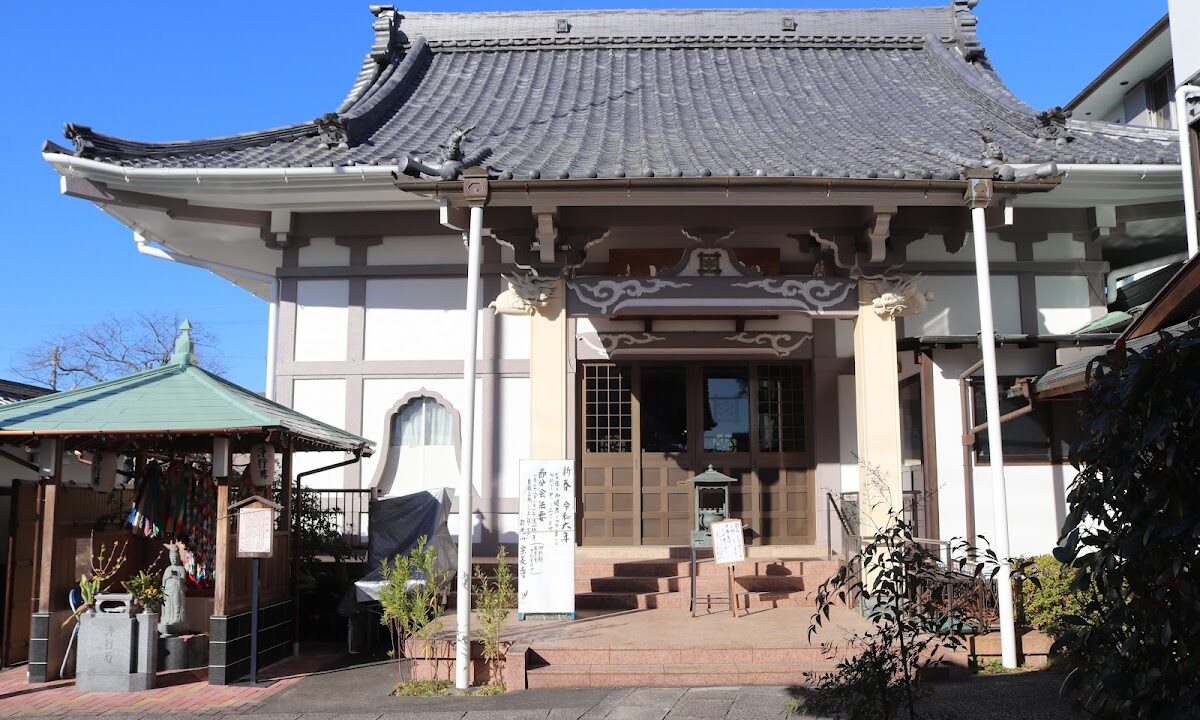
Complete Guide to Sochoji Temple (Shizuoka City, Shizuoka Prefecture) | History and Access to a Nichiren Buddhist Temple Associated with the Renga Poet Socho
Sochoji Temple, located in Kutsuya, Aoi Ward, Shizuoka City, Shizuoka Prefecture, is a Nichiren Buddhist temple deeply associated with Socho, a renowned renga poet of the Muromachi period. This article comprehensively introduces this temple, from its history from its founding to the present day, the characteristics of its grounds, its efforts regarding perpetual memorial graves in modern times, and detailed access information.
Basic Information on Sochoji Temple
Sochoji Temple is a Nichiren Buddhist temple located at 1316-9 Kutsuya, Aoi Ward, Shizuoka City. Its mountain name is Shinkozan, and it was formerly known as “Kurachoji.” Its former head temple was Shizuoka Kannoji Temple, and it belongs to the Datsushi lineage.
Many Nichiren Buddhist temples are concentrated in the surrounding area, including the historic Ren’eiji Temple, Myozoji Temple, Joyuji Temple, Renchoji Temple, and Sorinji Temple. These temples form a historical center of the Nichiren sect in Shizuoka, making it a religiously and culturally significant area.
History of Sochoji Temple
Founding and the Renga Poet Socho
Sochoji Temple was founded by Byodoin Nichigo Shonin, who passed away in 1594. The temple’s name originates from Socho (1448-1532), a leading renga poet of the Muromachi period.
Socho had a residence in Suruga Province (present-day Shizuoka City), known as “Rinsen-an.” Socho was a renga master, a disciple of Sogi, and later a central figure in the renga world. He served Imagawa Ujichika and conducted renga instruction and creative activities in Suruga Province.
After Socho’s death, the site of Rinsen-an was converted into a temple, which is considered the origin of Sochoji Temple. As a temple named after a renga poet, it is a culturally and historically interesting entity.
From Kuracho-ji to Socho-ji
Interestingly, Socho-ji was also known as “Kuracho-ji” for a time. While detailed records of this name change are lacking, it’s possible both names were used from the Edo period to the Meiji period. Ultimately, the name “Socho-ji” became established and remains so to this day.
Post-War Relocation
Socho-ji was formerly located in Teramachi 3-chome, Shizuoka City (near the current Tokiwa Park). However, due to urban planning after World War II, it was relocated to its current location in Kutsuya.
Post-war Shizuoka City underwent large-scale urban planning aimed at reconstruction from war damage and development into a modern city. Many temples were forced to relocate during this process, and Socho-ji was one of them. The current location in Kutsuya is known for its scenic beauty overlooking Mount Fuji.
Features of the Temple Grounds
Location and Environment
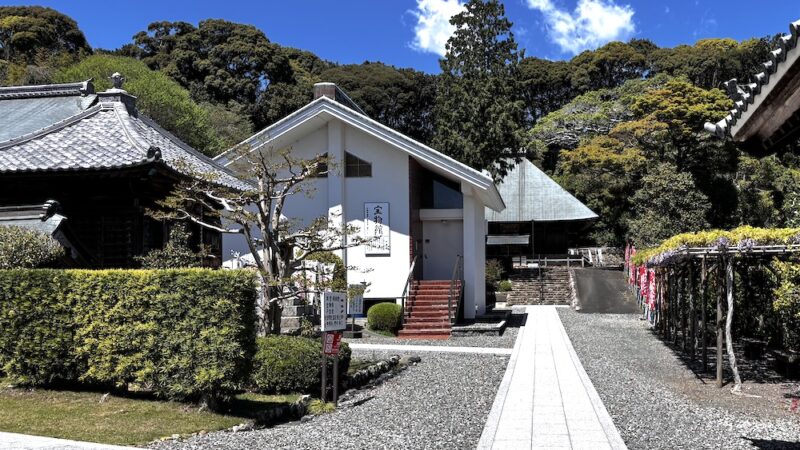
The current Sochoji Temple is located in a quiet residential area of Kutsuya, Aoi Ward, Shizuoka City. The surrounding area has a peaceful atmosphere, providing a tranquil environment for visitors to offer their prayers in quiet contemplation.
From the temple grounds, on clear days, one can see the sacred Mount Fuji, creating a space where the solemn atmosphere of a Nichiren Buddhist temple harmonizes with the beauty of nature.
Main Hall and Other Buildings
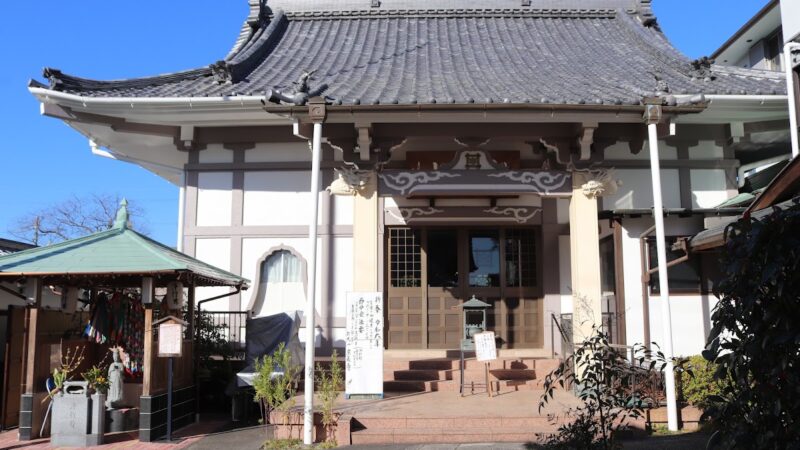
The main hall of Sochoji Temple was rebuilt after the temple’s relocation. While adhering to the traditional architectural style of the Nichiren sect, it also incorporates modern elements.
The main hall houses the Shakyamuni Buddha, the principal deity of the Nichiren sect, and serves as the center of faith for parishioners and visitors.
Sochoji Temple Yasuragi Mausoleum (Perpetual Memorial Grave)
Perpetual Memorial Service to Meet Modern Needs
To meet the needs of modern society, Sochoji Temple has established a perpetual memorial grave called the “Yasuragi Mausoleum.” Amidst declining birth rates, an aging population, and the rise of nuclear families, perpetual memorial graves have become an important option for those without heirs to their family graves or those who wish to avoid burdening their descendants.
Features of Yasuragi Mausoleum
At Sochoji Temple’s Yasuragi Mausoleum, the posthumous Buddhist name (kaimyo), secular name, and date of death of those interred are recorded in a register, and the temple takes responsibility for perpetual memorial services.
A major feature is that there is no need for individual gravestones, reducing the burden of management and costs. Furthermore, many mausoleums accept people of all religious denominations, making them accessible to a wide range of individuals.
Form of Memorial Service
Sochoji Temple regularly holds joint memorial services to pray for the peaceful repose of those interred. Traditional Nichiren Buddhist chanting and memorial ceremonies are performed to ensure that the spirits of the deceased can rest in peace.
Access Information
Access by Train
Sochoji Temple is accessible from several train stations.
The nearest station is Naganuma Station on the Shizuoka Railway Shizuoka-Shimizu Line, approximately a 7-minute walk (about 489m). Exit the station and head north; after passing through the residential area, you will arrive at Sochoji Temple.
From JR Higashi-Shizuoka Station, it’s approximately a 10-11 minute walk (about 859m). Head north along the main street in front of the station; you’ll see signs for Sochoji Temple as you enter the residential area.
From Furushō Station on the Shizuoka Railway Shizuoka-Shimizu Line, it’s also accessible in approximately an 11-minute walk (about 862m).
Access by Bus
From the Chiyoda Elementary School bus stop on the Shizutetsu Justline Kitakaidō Line, it’s approximately a 5-minute walk. This bus stop is the closest to Sochoji Temple and most convenient if using the bus.
From the Kutsuya bus stop on the Shizutetsu Justline Shin-Shizuoka-Shinjuku Line, it’s also accessible, just a few minutes’ walk away.
Access by Car
Approximately 15 minutes by taxi from the North Exit of JR Shizuoka Station. The travel time by private car is about the same.
The most common route is from central Shizuoka City towards National Route 1, via Kitakaido. Entering “1316-9 Kutsuya, Aoi-ku, Shizuoka City” or “Sochoji Temple” into your car navigation system will guide you.
Parking
The temple has parking spaces for visitors, but it may be crowded during religious services and events. It is recommended to check with the temple in advance.
Nearby Nichiren Buddhist Temples
Ren’eiji Temple
Nearby Sochoji Temple is the historic Ren’eiji Temple. Ren’eiji Temple is one of the important Nichiren Buddhist temples in Shizuoka and houses historical cultural artifacts.
Other Nearby Temples
Many Nichiren Buddhist temples are concentrated around Sochoji Temple, including Myozoji Temple, Joyuuji Temple, Renchoji Temple, and Sorinji Temple. A temple pilgrimage to these temples would be an interesting experience for understanding Shizuoka’s religious culture.
The concentration of Nichiren Buddhist temples in this region stems from the history of Suruga Province’s Fuchu, which developed as an important city from the Sengoku period to the Edo period, leading to the establishment of many temples.
Annual Events at Sochoji Temple
Major Events of the Nichiren Sect
At Sochoji Temple, various memorial services and events are held throughout the year in accordance with Nichiren Buddhist tradition.
Oeshiki is the most important event, held around October 13th, the anniversary of Nichiren Shonin’s death. Many parishioners attend to commemorate the virtues of Nichiren Shonin.
The Obon Segaki Memorial Service is a service held to honor the spirits of ancestors and to save all spirits suffering in the realm of hungry ghosts.
The Spring and Autumn Equinox Services are also important events, where parishioners gather to honor their ancestors.
Monthly Memorial Services
Monthly memorial services are held on the anniversary of each death, and parishioners visit to pay their respects. Joint memorial services for the perpetual memorial graves are also held regularly.
About the Nichiren Sect
Teachings of the Nichiren Sect
The Nichiren Sect, to which Sochoji Temple belongs, is a Buddhist sect founded by Nichiren (1222-1282), a monk of the Kamakura period. It considers the Lotus Sutra as its fundamental scripture and teaches that one can attain Buddhahood by chanting the title “Namu Myoho Renge Kyo.”
A characteristic of the Nichiren Sect is its faith based on the conviction that the Lotus Sutra is the true teaching of Shakyamuni Buddha. Nichiren wrote “Rissho Ankoku Ron” (Treatise on Establishing Righteousness and Securing the Peace of the Nation), advocating for national peace and security through correct Buddhist law.
What is the Datsushi Hōen (Dropping the Master’s Lineage)?
Sōchōji Temple belongs to the Datsushi Hōen. The Nichiren sect has several lineages (systems based on master-disciple relationships), and the Datsushi Hōen is one of them. This lineage is descended from Nichirō, one of Nichiren’s six senior disciples, and many temples in the Kanto and Tōkai regions belong to it.
The Achievements of Renga Poet Sōchō
The Life of Sōchō
Sōchō (1448-1532) was a leading renga poet of the late Muromachi period. Born in Suruga Province, he went to Kyoto in his youth and studied under Sōgi, a leading figure in renga.
After Sōgi’s death, he became a central figure in the renga world and returned to Fuchū in Suruga Province, serving Imagawa Ujichika. In Fuchū, he established Rinsen-an and devoted himself to the creation and instruction of renga.
Works of Sōchō
Sōchō left behind many renga (linked verse) works, and records such as the “Sōchō Memoirs” and “Sōchō Diary” still exist. These records are valuable historical materials for understanding the culture and society of the Muromachi period.
Sōchō’s renga is praised for inheriting the elegant style of his teacher, Sōgi, while also developing his own unique style.
Rinkawa-an and Sōchō-ji Temple
Rinkawa-an, which Sōchō established in Fuchu, was not merely a residence but also functioned as a cultural salon. Many cultural figures and samurai visited, and renga gatherings were held there.
The fact that Rinkawa-an was converted into Sōchō-ji Temple after Sōchō’s death is of great significance in passing on Sōchō’s cultural achievements to future generations.
Temple Culture of Shizuoka City
Sunpu and Temples
Sunpu, the predecessor of Shizuoka City, developed as an important city from the Sengoku period to the Edo period. This area is particularly known as the place where Tokugawa Ieyasu spent his later years, and many temples were built here.
Present-day Shizuoka City has numerous temples of various sects, forming a rich religious culture.
Concentration of Nichiren Sect Temples
The concentration of Nichiren sect temples around Sochoji Temple is due to the fact that this area was considered an important center for the propagation of Nichiren Buddhism from the Sengoku period to the Edo period.
Through the eras of the Imagawa and Tokugawa clans, many Nichiren sect temples were protected and developed. These temples played an important role as spiritual pillars of the local community.
Etiquette for Visiting a Temple
How to Visit a Nichiren Sect Temple
Here are the basic etiquette rules for visiting Sochoji Temple, a Nichiren sect temple.
- Bow at the Temple Gate: Before entering the temple grounds, bow at the temple gate.
- Purify at the Water Basin: If there is a water basin, purify your hands and mouth.
- Worship at the Main Hall: Join your hands in prayer in front of the main hall and silently chant “Namu Myoho Renge Kyo” (Homage to the Lotus Sutra).
- Offering a Coin: If offering a coin, quietly place it in the offering box.
- Bow Upon Departure: Bow at the temple gate when leaving the grounds.
Attire and Belongings
No special attire is required, but clean, understated clothing appropriate for the sacred place of a temple is desirable.
If attending a memorial service, semi-formal attire or clothing in subdued colors is appropriate. Bringing prayer beads is recommended.
Contact Information for Sochoji Temple
Contact Details
Inquiries to Sochoji Temple are accepted at the following contact information.
Phone Number: 054-261-3338
Address: 1316-9 Kutsuya, Aoi-ku, Shizuoka City, Shizuoka Prefecture 420-0816
Inquiry Details
We handle various inquiries, including consultations regarding the “Yasuragi-byo” perpetual memorial grave, requests for memorial services, and confirmation of visiting hours.
Especially for those considering using the perpetual memorial grave, we recommend contacting us by phone beforehand and visiting the site in person. You can receive detailed explanations regarding costs and memorial services.
Summary
Sochoji Temple is a Nichiren Buddhist temple built on land associated with Socho, a renga poet from the Muromachi period, and is a temple of historical and cultural value. After relocating after the war, it is now located in Kutsuya, and continues traditional Buddhist activities in a scenic environment overlooking Mount Fuji.
While responding to modern needs, such as the establishment of the “Yasuragi-byo” perpetual memorial grave, it plays a role as a spiritual pillar in the local community.
When visiting Shizuoka City, why not explore Sochoji Temple and other Nichiren Buddhist temples in the surrounding area to experience the rich religious culture and history of this region? Its convenient location, within walking distance of Shizuoka Railway’s Naganuma Station, makes it easily accessible.
Sochoji Temple, which preserves the cultural legacy of the renga poet Socho, is an indispensable part of Shizuoka’s history and will undoubtedly continue to serve as a center of faith and memory for many people.