Complete Guide to Kozanji Temple (Izunokuni City, Shizuoka Prefecture) | A Zen Temple Tracing the History of Minamoto no Yoritomo’s Uprising and Yamaki Kanetaka
Kozanji Temple, located in Nirayama Yamaki, Izunokuni City, Shizuoka Prefecture, is an ancient temple of the Kenchoji branch of the Rinzai school, dating back to the late Heian period. Known as a temple founded by Yamaki Kanetaka, who played a significant role in the turning point of Japanese history—Minamoto no Yoritomo’s uprising—the temple grounds boast numerous historical sites, including a memorial tower and a stone arch gate relocated from the Nirayama Prefectural Office during the Meiji era.
This article provides detailed information you should know before visiting, from the history of Kozanji Temple to its highlights and access information.
History of Kozanji Temple | A Temple with a Turbulent History Since the Late Heian Period
Founding and Yamaki Kanetaka
Kozanji Temple was founded in 1154 (Kyuju 1) by Yamaki Kanetaka, also known as Hachimaki Hangan Taira Kanetaka, who served as the Mokudai (deputy governor) of Izu Province. A Mokudai was an official position responsible for practical affairs on behalf of the provincial governor, and Yamaki Kanetaka wielded considerable influence in Izu Province, backed by the power of the Taira clan.
It is believed that Kozanji Temple was originally a temple of Esoteric Buddhism, not Zen Buddhism. Yamaki Kanetaka passed away on August 4, 1180 (Jisho 4), and his posthumous Buddhist name is said to be “Kozanji-dono Kohō Kanetaka Daizenjōmon.”
Minamoto no Yoritomo’s Uprising and Yamaki Kanetaka’s End
An essential event in discussing the history of Kozanji Temple is Minamoto no Yoritomo’s uprising in August 1180 (Jisho 4). Minamoto no Yoritomo, exiled to Izu, decided to raise an army to overthrow the Taira clan, and his first target was Yamaki Kanetaka.
Yamaki Kanetaka was in a position to monitor Yoritomo as a Taira clan overseer, and was the biggest obstacle that would determine the success or failure of Yoritomo’s uprising. On the night of August 17th, Yoritomo, along with Hojo Tokimasa and others, attacked Yamaki Kanetaka’s residence and killed him. The site of this Yamaki residence is believed to be the current location of Kozanji Temple, and a memorial tower for Yamaki Kanetaka stands within the temple grounds.
This event holds extremely important significance in Japanese history as the de facto starting point of the Genpei War, which led to the establishment of the Kamakura Shogunate.
History of Ruin and Restoration
After Minamoto no Yoritomo’s uprising, Kozanji Temple went through a period of ruin. However, it was restored many times throughout the subsequent eras.
During the Sengoku period, it received the protection of the Later Hojo clan, who ruled Izu. Under the protection of figures such as Naito Nobunari, who served as the lord of Nirayama Castle, the temple was maintained. It is also known as a temple associated with Hojo Soun (Ise Sozui) and was one of the centers of Zen Buddhist culture in Izu during the Sengoku period.
Through the Edo period and into the Meiji era, it survived despite the effects of the anti-Buddhist movement and continues to uphold its Buddhist traditions in Nirayama to this day. It is a historical temple that has overcome numerous hardships from the late ancient period to the present day.
Highlights of Kozanji Temple | Historical Buildings Adorning the Temple Grounds
1. The Stone Arch Gate (Main Gate) of the Nirayama Prefectural Office
The first thing that catches the eye when visiting Kozanji Temple is the imposing stone arch gate. This gate was actually the main gate of the Nirayama Prefectural Office, built in 1879 (Meiji 12).
In the early Meiji era, following the abolition of the feudal domains and the establishment of prefectures, Nirayama Prefecture was temporarily established, with its prefectural office located at the Egawa Residence (Nirayama Magistrate’s Office). This stone gate was constructed at that time. Although Nirayama Prefecture was abolished after a short period, the prefectural office gate was later moved to Kozanji Temple, and now serves as the temple’s main gate, welcoming visitors.
This modern, Western-style stone arch, unlike that of a typical temple, is a valuable structure that conveys the spirit of Meiji-era modernization. The gate, incorporating Western architectural techniques, contributes to the unique atmosphere of Kozanji Temple.
2. Yamaki Kanetaka Memorial Tower
Within the temple grounds stands a memorial tower for Yamaki Kanetaka, the temple’s founder. Despite being killed by Minamoto no Yoritomo, this memorial tower, erected to mourn his passing, evokes a sense of the complexity of history and the compassion of the people.
Standing before the memorial tower, one can reflect on the turbulent times of the late Heian period and the fateful night that marked the beginning of the Genpei War. It’s a must-see spot for history buffs.
3. A Beautiful Zen Temple Garden
Kozanji Temple, a Zen temple of the Kenchoji branch of the Rinzai school, boasts a beautifully maintained garden. The tranquil garden, expressing the spirit of Zen Buddhism, soothes the hearts of visitors.
The garden, displaying different expressions throughout the seasons, is particularly beautiful during the fresh green season and the autumn foliage season. You can spend time peacefully in this simple yet profoundly atmospheric space, typical of a Zen temple.
4. The Atmosphere of the Main Hall and Temple Grounds
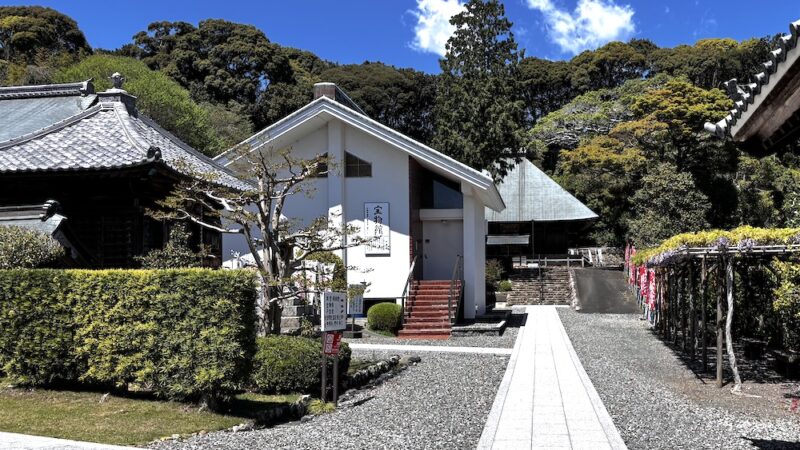
The main hall has a calm and serene appearance, typical of a Zen temple, providing a space for quiet worship. The entire temple grounds are meticulously maintained, and a refreshing atmosphere permeates the air.
While conveying the weight of history, you can feel the presence of a living temple that still functions as a place of faith for the local people.
The Sect and Rank of Kozanji Temple
Kozanji Temple belongs to the Kenchoji branch of the Rinzai school of Zen Buddhism. Its mountain name is Keiunzan.
The Kenchoji branch of the Rinzai school is a branch of Zen Buddhism with Kenchoji Temple in Kamakura as its head temple. Kenchoji Temple, founded in 1253 by Hojo Tokiyori, is Japan’s first full-fledged Zen temple and is ranked first among the Five Great Zen Temples of Kamakura.
The reason Kozanji Temple came to belong to the Kenchoji branch is thought to be that, although it was originally a esoteric Buddhist temple, it was reorganized as a Zen temple during the revival process in the medieval period and beyond. This is due to the widespread acceptance of Zen Buddhism in samurai society from the Kamakura period onward.
Historical Figures Associated with Kozanji Temple
Yamaki Kanetaka (Yamaki Hangan Taira Kanetaka)
He was the founder of Kozanji Temple and the first target of Minamoto no Yoritomo’s uprising. He held real power as the deputy governor of Izu Province, backed by the power of the Taira clan, but was killed in an attack by Yoritomo and others on August 17, 1180.
Minamoto no Yoritomo
The first shogun of the Kamakura Shogunate. Exiled to Izu, Yoritomo began his uprising by defeating Yamaki Kanetaka, eventually destroying the Taira clan and establishing a samurai government. The site of Kozanji Temple marks the historical first step of this transformation.
Hojo Tokimasa
Yoritomo’s father-in-law and a participant in the subjugation of Yamaki Kanetaka. He later became the first regent of the Kamakura Shogunate. Nirayama was the base of the Hojo clan, and many sites associated with the Hojo clan remain around Kozanji Temple.
Hojo Soun (Ise Sozui)
A figure who conquered Izu during the Sengoku period and laid the foundation for the Later Hojo clan. Kozanji Temple is also known as a temple associated with Hojo Soun. ### Naito Nobunari
A senior retainer of the Later Hojo clan and lord of Nirayama Castle. He contributed to the maintenance of Kozanji Temple as its patron.
Basic Information and Access to Kozanji Temple
Location and Contact Information
- Address: 868-1 Nirayama Yamaki, Izunokuni City, Shizuoka Prefecture 410-2141
- Phone Number: 055-949-2905
- Sect: Rinzai Zen Kenchoji School
- Mountain Name: Keiunzan
Access Methods
Access by Train
- Approximately 15 minutes on foot from Nirayama Station on the Izuhakone Railway Sunzu Line
- Nirayama Station is approximately 20 minutes from Mishima Station on the Izuhakone Railway
Access by Car
- Approximately 30 minutes from Numazu IC on the Tomei Expressway via the Izu Jukan Expressway
- Approximately 30 minutes from Nagaizumi Numazu IC on the Shin-Tomei Expressway
- Parking: Several parking spaces available on the temple grounds
Access by Bus
- Take the Izu Hakone Bus and get off at the “Yamaki” bus stop, then walk for about 5 minutes.
Visiting Information
- Visiting Hours: Grounds are freely accessible (please check for the main hall’s interior)
- Admission Fee: Free
- Goshuin (Temple Stamp): Available (advance confirmation recommended)
Recommended Tourist Spots Around Kozanji Temple
Nirayama Reverberatory Furnace
A World Heritage Site located about 5 minutes by car from Kozanji Temple. Built by Egawa Hidetatsu, the Nirayama magistrate during the late Edo period, it is an industrial heritage site and is registered as a World Cultural Heritage site as part of the “Sites of Japan’s Meiji Industrial Revolution.”
Egawa Residence (Site of Nirayama Magistrate’s Office)
The residence of the Egawa family, who served as Nirayama magistrates, is designated as a National Important Cultural Property. It was also the location of the Nirayama Prefectural Office in the early Meiji period and the original location of Kozanji Temple’s main gate.
Hojo-ji Temple
A temple associated with Hojo Yoshitoki, and the family temple of the Hojo clan. Recommended for those interested in the history of the Kamakura period.
Hirugakojima Island
The site believed to be the residence of Minamoto no Yoritomo during his exile in Izu. Statues of Yoritomo and Hojo Masako are erected here.
Ganjoju-in Temple
A temple built by Hojo Tokimasa, housing national treasure Buddhist statues. The seated Amida Buddha statue by Unkei is a must-see.
For those seeking perpetual memorial services and burial plots at Kozan-ji Temple
Kozan-ji Temple also accepts consultations regarding perpetual memorial services. Those considering ancestral memorial services at this historic Zen temple should contact the temple directly.
With its tranquil environment, meticulous management, and deep history, Kozan-ji Temple is a temple you can confidently entrust with perpetual memorial services.
Points and Manners for Visiting Kozanji Temple
Attire for Visitors
There are no specific dress code requirements, but considering that it is a religious facility, it is advisable to avoid revealing clothing.
Photography
Photography is generally permitted on the temple grounds, but please be considerate of the privacy of those inside the main hall and other visitors. It is recommended to check with the temple if you have any questions.
Quiet Worship
This temple still functions as a place of worship. Please refrain from loud conversations and noisy behavior, and worship quietly.
Receiving a Goshuin (Temple Stamp)
If you wish to receive a Goshuin, it is recommended to check in advance whether it is possible. Please bring your Goshuincho (stamp book) and make your request politely.
Kozanji Temple and the History and Culture of Izu
The Izu Peninsula holds an important position in Japanese history as the site where Minamoto no Yoritomo raised his army. Kozanji Temple is the starting point of that history and is an indispensable spot for understanding the history and culture of Izu.
The area around Nirayama is home to numerous historical sites associated with Minamoto no Yoritomo and the Hojo clan, and has gained attention through historical dramas such as “The 13 Lords of Kamakura.” By incorporating Kozanji Temple into a historical walking tour, you can experience the history of Izu more deeply.
Summary | A Journey to Visit Turning Points in History
Kozanji Temple, located in Izunokuni City, Shizuoka Prefecture, is an ancient temple of the Kenchoji branch of the Rinzai school, which has experienced a turbulent history from its founding in the late Heian period to the present day. As a temple deeply involved in the major turning point in Japanese history—Minamoto no Yoritomo’s uprising—it is a particularly recommended spot for history buffs.
There are many sights to see, including a stone arch gate relocated from the Nirayama Prefectural Office, a memorial tower for Yamaki Kanetaka, and a beautiful Zen garden. The surrounding area boasts numerous historical sites, including the Nirayama Reverberatory Furnace, the Egawa Residence, and other sites associated with the Hojo clan, making it a perfect place to spend a full day exploring history.
When visiting Izu, be sure to stop by Kozanji Temple and reflect on the historical drama that unfolded over 800 years ago. In its tranquil grounds, you’ll feel the weight of history passed down through generations.