Complete Guide to Yasukuni Shrine (Tokyo): A Thorough Explanation of History, How to Worship, Highlights, and Surrounding Area Information
Located in Kudan-Kita, Chiyoda-ku, Tokyo, Yasukuni Shrine is one of Japan’s most representative shrines, founded in 1869 (Meiji 2) by the will of Emperor Meiji. Enshrining over 2,466,000 war dead from the end of the Edo period to the last war, and bearing a name that carries the profound meaning of “peace and tranquility for the nation,” this shrine is a historically and culturally significant place, attracting many visitors.
This article provides a thorough explanation of everything you need to know before visiting Yasukuni Shrine, from its history and how to worship, to its highlights, access information, and recommended nearby spots.
History and Origins of Yasukuni Shrine
Founding as Tokyo Shokonsha
The history of Yasukuni Shrine dates back to June 29, 1869 (Meiji 2). At the behest of Emperor Meiji, the Tokyo Shokonsha Shrine was established in Kudan, Tokyo, to mourn the soldiers of the Imperial Army who died in the Boshin War. Initially, its main purpose was to comfort the spirits of the patriots who perished during the turbulent Bakumatsu period.
A Shokonsha Shrine is a facility that invites the spirits of those who sacrificed their lives for the nation and enshrines them in recognition of their achievements. During the great upheaval of the Meiji Restoration, the driving force behind the establishment of this shrine was a sense of gratitude and remembrance for those who sacrificed their lives for the construction of a new nation.
Renaming to “Yasukuni Shrine”
On June 4, 1879 (Meiji 12), the Tokyo Shokonsha Shrine was renamed “Yasukuni Shrine.” The name “Yasukuni” was given by Emperor Meiji and means “to pacify the nation.” This embodies the wish to “bring peace to the homeland” and “build a peaceful nation,” clearly establishing its character not merely as a memorial facility, but as a shrine imbued with prayers for peace.
Status as a Special Imperial Shrine
Yasukuni Shrine was formerly classified as a Special Imperial Shrine, placed under state control. While now an independent religious corporation, it maintains a special status as an Imperial Shrine, receiving an imperial envoy from the Emperor during its festivals. Imperial envoys still attend the Spring Grand Festival (April) and the Autumn Grand Festival (October).
About the Enshrined Deities
The Spirits of the War Dead
Yasukuni Shrine enshrines the spirits of over 2,466,000 war dead who sacrificed their lives for the nation since 1853 (the end of the Edo period), including those who died in the Meiji Restoration, the Boshin War, the Satsuma Rebellion, the First Sino-Japanese War, the Russo-Japanese War, World War I, the Manchurian Incident, the Second Sino-Japanese War, and the Greater East Asia War (World War II).
These enshrined deities include not only soldiers, but also military nurses who provided aid on the battlefield, students who died during student mobilization, and civilians who died in wartime. A key characteristic is that the spirits of all people who served their country, regardless of status, class, or gender, are enshrined equally.
Criteria for Enshrinement
Enshrinement at Yasukuni Shrine is based on the criterion of having sacrificed one’s life for the nation. It is carried out based on applications from the bereaved families of war dead, and after receiving a list of enshrined deities from the Ministry of Health, Labour and Welfare. The spirits of the war dead enshrined here are not worshipped as individual spirits, but as a unified entity, the “Great God of Yasukuni.”
Highlights of the Shrine Grounds
The Grand Torii Gate and Approach
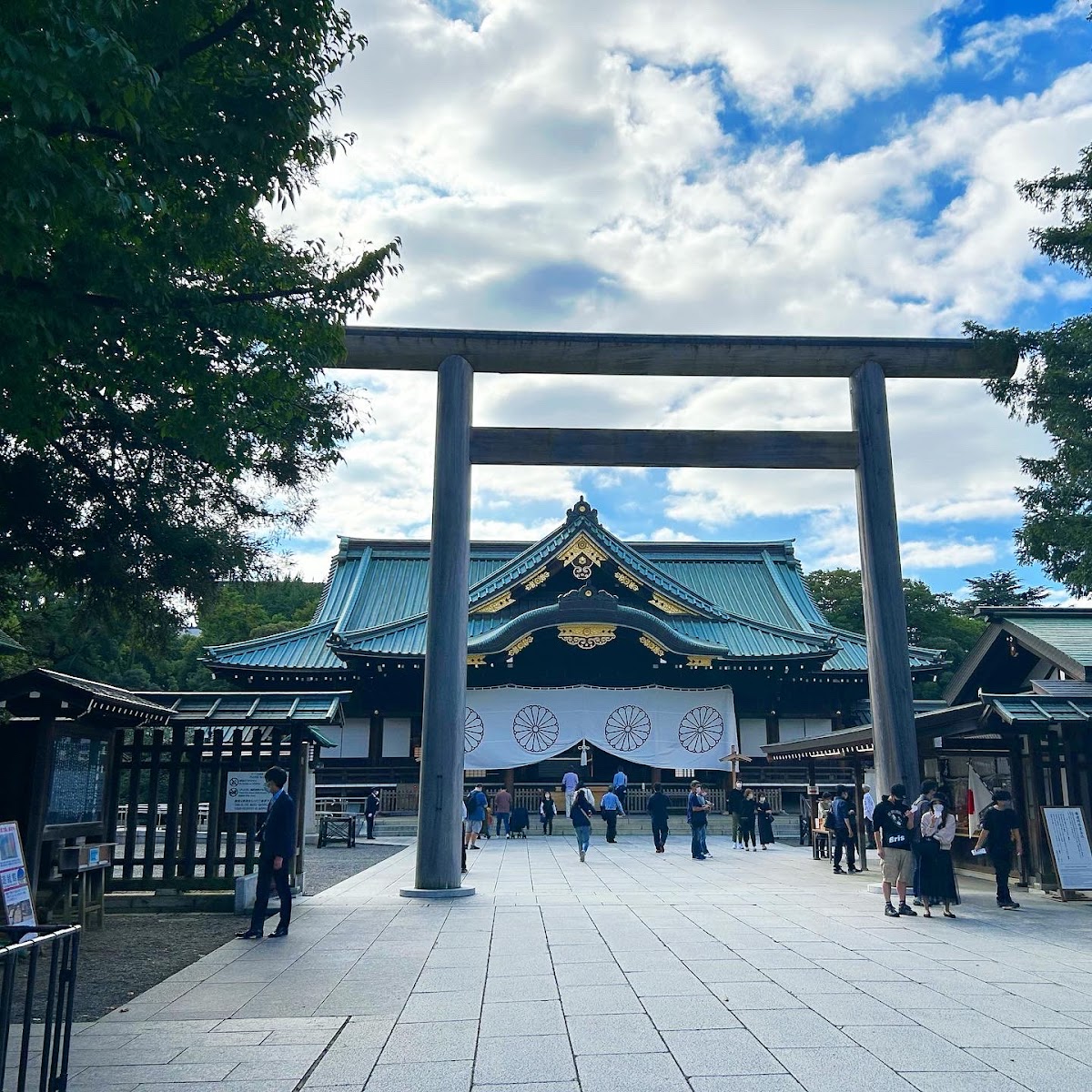
Upon entering the grounds of Yasukuni Shrine, the first thing that catches the eye is the largest torii gate in Japan, standing 25 meters tall with pillars 3 meters in diameter. Built in 1974, this bronze torii is one of the largest in Japan, and its imposing presence overwhelms visitors.
Passing through the grand torii gate, a 200-meter-long approach leads to the main hall. Cherry trees line both sides of the approach, creating a magnificent tunnel of cherry blossoms in spring.
The Main Hall and Honden (Inner Sanctuary)
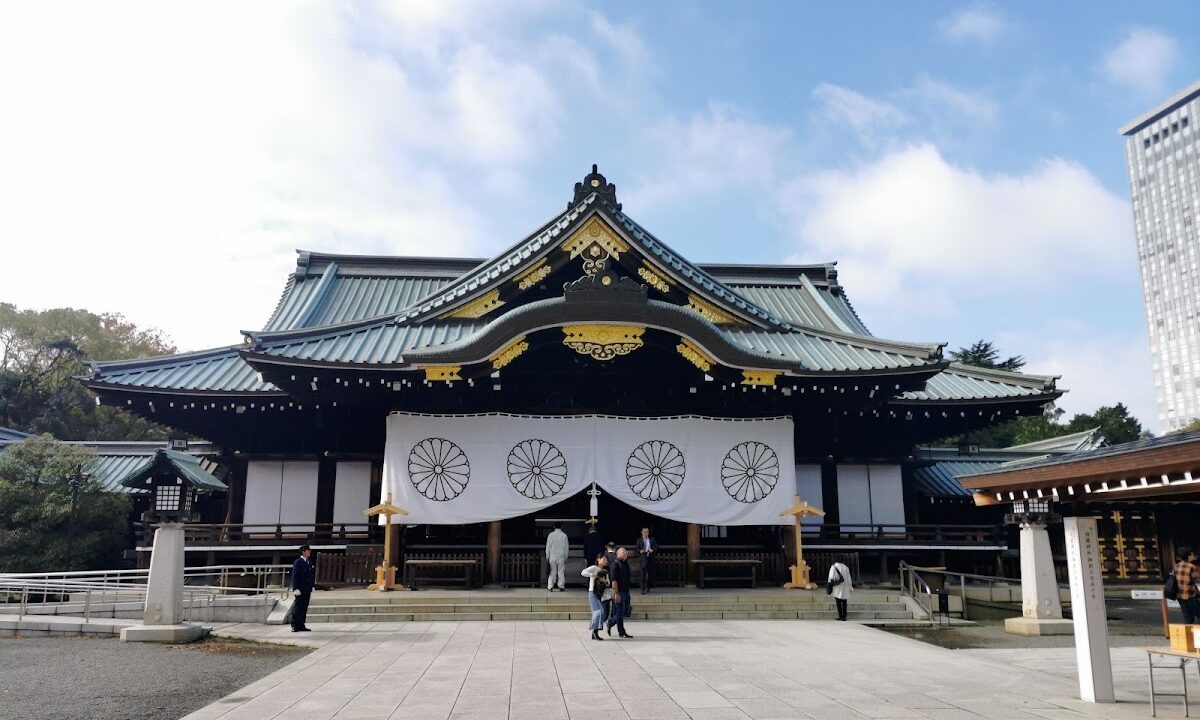
The main hall, rebuilt in 1961, boasts a majestic appearance constructed of cypress wood. The inner sanctuary is located behind the main hall, and general visitors pray at the main hall.
The method of worship is the same as at any other shrine: two bows, two claps, and one bow. Quietly and sincerely, offer your gratitude to the war dead and your prayers for peace.
The Sample Cherry Tree
Within the grounds of Yasukuni Shrine is the “sample tree” used by the Japan Meteorological Agency as the standard for declaring the cherry blossom season in Tokyo. Every spring, Japan Meteorological Agency officials check the blooming status of this Somei Yoshino cherry tree, and the declaration is made when 5-6 blossoms have opened.
Yasukuni Shrine is known as one of Tokyo’s leading cherry blossom viewing spots, with approximately 500 Somei Yoshino cherry trees planted on the grounds. During cherry blossom season, it is bustling with many visitors, and the trees are illuminated at night.
The Main Gate and Middle Gate Torii
As you proceed along the approach to the shrine, you will come across the main gate (Shinmon). This gate was built in 1934 and boasts a magnificent structure made of cypress wood. After passing through the main gate, you’ll find another torii gate, and beyond that, the main hall comes into view.
Noh Theater
Within the shrine grounds is a Noh theater built in 1903 (Meiji 36). It’s an authentic Noh stage constructed of cypress wood, and Noh performances are held there during the spring and autumn festivals. It’s a valuable opportunity to appreciate traditional Japanese performing arts up close.
Yushukan Museum: A Treasure Museum for Learning History
Overview of the Yushukan Museum
Within the grounds of Yasukuni Shrine is the Yushukan Museum, Japan’s oldest military museum. Opened in 1882 (Meiji 15), this facility exhibits historical materials and artifacts related to war, aiming to honor the virtues of those who died in battle and to convey the realities of war to future generations.
The name “Yūshūkan” originates from a passage in the Chinese classic *Xunzi*: “A gentleman chooses his place of residence carefully, and when he travels, he always seeks out scholars.” It embodies the meaning of “a place to learn morality.”
Exhibition Contents
The Yūshūkan Museum houses approximately 100,000 valuable historical materials. The permanent exhibition allows visitors to trace the modern history of Japan from the end of the Edo period to the Greater East Asia War in chronological order.
The main exhibits include the following:
- Zero Fighter (A6M5): A real Zero Fighter Type 52 is on display, allowing visitors to see its exquisite craftsmanship up close.
- Last Letters of Kamikaze Pilots: Numerous letters and last letters written to families before sorties are on display, conveying the tragedy of war and the feelings of these young men.
- Military Uniforms and Equipment: Military uniforms and equipment from various eras are on display, allowing visitors to learn about the appearance of soldiers at that time.
- Weapons and Armaments: Real swords, guns, cannons, and other weapons are on display.
- Letters from the Battlefield: Letters sent by soldiers to their families from the battlefield are on display, offering insights into their lives and feelings at the time.
Visitor Information
Opening Hours:
- January to February: 9:00 AM to 4:30 PM
- March to October: 9:00 AM to 5:00 PM
- November-December: 9:00 AM – 4:30 PM
Closed Days: Open year-round (however, temporary closures may occur)
Admission Fee:
- Adults: 1,000 yen
- University Students: 500 yen
- Junior and Senior High School Students: 300 yen
- Elementary School Students: Free
There is a tea room inside the Yushukan Museum, allowing visitors to relax and enjoy their visit.
Annual Events and Festivals
Spring Grand Festival (April 21st-23rd)
The Spring Grand Festival is one of the most important festivals at Yasukuni Shrine. On the 22nd, the day of the festival, an imperial envoy from His Majesty the Emperor attends and offers sacred offerings to the enshrined deities in place of His Majesty’s personal visit. Various dedication ceremonies are held on the shrine grounds during this period, attracting many worshippers.
Autumn Grand Festival (October 17th-20th)
The Autumn Grand Festival, like the Spring Grand Festival, is an important festival, and an imperial envoy attends the main ceremony on the 18th. The festival, held in the crisp autumn air, is enveloped in a solemn atmosphere.
Mitama Festival (July 13th-16th)
Known as a summer tradition, the Mitama Festival began in 1947. Approximately 30,000 lanterns are hung on the temple grounds, creating a fantastical scene. Many stalls are set up during the festival, and Bon Odori dances and devotional performances are held, making it a representative event of Tokyo’s summer festivals.
New Year’s Visit
Many visitors come for their first shrine visit of the year during the New Year period. Worship is possible throughout the night from New Year’s Eve to New Year’s Day, and many worshippers gather at the moment the new year arrives. Approximately 250,000 people visit during the first three days of the year, making it a popular New Year’s visit spot in Tokyo. ### Goryo Matsuri (Late April – Early May)
The Goryo Matsuri, held during Golden Week, features performances of devotional arts and traditional performing arts. Enjoy Noh performances at the Noh theater and various events within the temple grounds.
Basic Information and Access
Location and Contact Information
Address: 3-1-1 Kudan-Kita, Chiyoda-ku, Tokyo 102-8246
Phone: 03-3261-8326
Official Website: https://www.yasukuni.or.jp/
Visiting Hours
Shrine Gate Opening Hours:
- January-February: 6:00-17:00
- March-October: 6:00-18:00
- November-December: 6:00-17:00
Visiting Hours:
- Normal: 8:00-16:30
- Extended hours during the New Year holidays
Closed Days: None (Open all year round)
Access Method
Access by Train
Nearest Station:
- Tokyo Metro Tozai Line/Hanzomon Line, Toei Shinjuku Line “Kudanshita Station”
- Approximately 5 minutes on foot from Exit 1 (most convenient)
- Exit the ticket gate and turn right. Cross Yasukuni-dori Street and you will see the large torii gate.
- JR Chuo/Sobu Line Local Train “Iidabashi Station”
- Approximately 10 minutes on foot from the West Exit
- Proceed along Sotobori-dori Street towards Kudan
- JR Chuo/Sobu Line Local Train “Ichigaya Station”
- Approximately 10 minutes on foot
- Proceed along Yasukuni-dori Street towards Kudan
Access by Bus
Toei Buses and Tokyo Metro Buses stop at the “Kudanshita” bus stop. Approximately 5 minutes on foot from the bus stop.
Access by Car
Approximately 5 minutes from the “Kandabashi Exit” or “Daikanchō Exit” of the Metropolitan Expressway Inner Circular Route.
Parking:
- Parking available for visitors (approximately 100 spaces)
- Hours: 8:00 AM – 6:00 PM (may vary seasonally)
- Fee: 400 yen for the first hour, 200 yen for every 30 minutes thereafter
- Parking available for large buses (reservations required)
Notes for Visitors
- The shrine grounds are a sacred place; please visit in silence.
- Photography is permitted, but please be considerate of other visitors.
- Please refrain from bringing pets to the shrine.
- Smoking is permitted only in designated areas.
- Eating and drinking are generally prohibited on the shrine grounds (except in designated rest areas).
Recommended Nearby Spots
Kitanomaru Park
Kitanomaru Park, adjacent to Yasukuni Shrine, is a vast metropolitan park located north of the Imperial Palace. It is the site of the former Kitanomaru of Edo Castle, and retains abundant nature. Walking paths are maintained, allowing visitors to enjoy the changing seasons.
Main Facilities:
- Nippon Budokan: Known as a sacred place for martial arts, and also famous as a concert venue.
- Science Museum: A museum where you can learn about science and technology through hands-on experiences.
- National Archives of Japan: Stores and exhibits historically important public documents.
Chidorigafuchi
Located on the southwest side of Kitanomaru Park, Chidorigafuchi is one of Tokyo’s most famous cherry blossom viewing spots. Approximately 260 cherry trees bloom along the moat of the Imperial Palace, and the beauty of the cherry blossoms reflected on the water’s surface is exceptional. You can also enjoy the cherry blossoms from the water by boat.
The National Museum of Modern Art, Tokyo
This national art museum, located within Kitanomaru Park, mainly exhibits modern Japanese art from the Meiji era onward. It boasts a collection of approximately 13,000 works, including important cultural properties, and also has a rich history of special exhibitions.
East Garden of the Imperial Palace
Located about a 15-minute walk from Yasukuni Shrine, the East Garden of the Imperial Palace is a garden situated on the site of the former Honmaru, Ninomaru, and Sannomaru of Edo Castle. Entry is free, and you can stroll through the beautiful Japanese garden while feeling the history of Edo Castle.
Recommended Restaurants in the Area
Restaurants around Kudanshita
The Kudanshita area around Yasukuni Shrine has a variety of restaurants.
Japanese Food/Soba Noodles:
- Many long-established soba noodle restaurants, perfect for a meal after visiting the shrine.
- There are also famous Edo-style sushi restaurants, and you can enjoy affordable set menus during lunchtime.
Western Food/Cafes:
- As it is also a business district, there are plenty of cafes and restaurants.
- There are also many cafes with a relaxed atmosphere.
Ramen/Set Meals:
- Many reasonably priced restaurants popular with students and office workers.
- There are also plenty of restaurants serving hearty set meals.
Dining Options within the Shrine Grounds
There is a cafe inside the Yushukan Museum where you can enjoy light meals and drinks. It is convenient for a break after viewing the exhibits.
Hotels and Accommodations in the Area
Hotels in the Kudanshita/Iidabashi Area
There are various accommodations around Yasukuni Shrine, from business hotels to city hotels.
Hotels with Good Access:
- Several business hotels are within walking distance of Kudanshita Station.
- There are many city hotels and business hotels around Iidabashi Station.
- There are also accommodations around Ichigaya Station.
Price Range:
- Business Hotels: Approximately 7,000 to 12,000 yen per night
- City Hotels: Approximately 15,000 to 30,000 yen per night
Due to congestion during tourist seasons and the annual festival period, early reservations are recommended.
Facilities Related to Yasukuni Shrine
Yasukuni Kaikan
Within the shrine grounds is the Yasukuni Kaikan, a facility used for weddings and various events. You can hold a Shinto wedding ceremony here, celebrating the beginning of your life in a solemn atmosphere.
Shrine Office/Gift Shop
You can receive Goshuin (shrine stamps), amulets, and talismans at the gift shop. The Yasukuni Shrine’s original Goshuin notebook is also popular.
Main Items Available:
- Amulets: Various types including traffic safety, family safety, and protection from evil.
- Goshuin: Both pre-printed and handwritten stamps are available.
- Ema (votive tablets): You can write your wishes on them and offer them.
- Talismans: Sacred talismans to be placed on your household altar.
Assembly Hall
The assembly hall is a facility used for visitors to rest and for various events. It has a large hall inside and is also used as a waiting room for group visits.
Manners When Visiting Yasukuni Shrine
Regarding Clothing
While there are no particularly strict dress code regulations, it is desirable to dress appropriately, keeping in mind that this is a sacred place. Avoid excessive exposure and aim for clean and presentable attire.
Etiquette for Visiting the Shrine
- Before passing through the torii gate: Bow before entering the shrine grounds.
- Purification at the water basin: Purify your left hand, then your right hand, then your mouth.
- Walking along the approach: Walk along the sides, as the center is considered the path of the gods.
- Worship at the main hall: Worship using the two bows, two claps, and one bow ritual.
- Upon leaving: Turn around and bow after exiting the torii gate.
Photography Etiquette
Photography is generally permitted on the shrine grounds, but please note the following:
- Be considerate and avoid including other worshippers in your photos.
- Photography inside the main hall may be prohibited.
- Avoid using tripods during crowded times.
- Use flash photography with consideration for those around you.
Yasukuni Shrine’s Cherry Blossoms: The standard tree used for Tokyo’s cherry blossom declaration.
Role as a Specimen Tree
The Somei Yoshino cherry tree located within the grounds of Yasukuni Shrine is designated as the “specimen tree” used by the Japan Meteorological Agency when declaring the cherry blossom season in Tokyo. Every spring, JMA staff check the tree’s blooming status, and the declaration is issued when 5-6 blossoms have opened.
This specimen tree is a symbolic presence announcing the arrival of spring in Tokyo and attracts the attention of many people.
Best Time to See Cherry Blossoms and Cherry Blossom Viewing
The best time to see the cherry blossoms at Yasukuni Shrine is usually from late March to early April. Approximately 500 cherry trees are planted on the grounds, creating a magnificent tunnel of blossoms when in full bloom.
How to Enjoy Cherry Blossom Viewing:
- Enjoy the cherry blossoms in conjunction with daytime visits to the shrine
- Nighttime illumination (during special periods such as the Mitama Festival)
- Stroll along the approach to the shrine
- A popular photo spot
The shrine gets particularly crowded during cherry blossom season, so weekday mornings and evenings are relatively less crowded for viewing.
The Modern Significance of Yasukuni Shrine
A Place of Prayer for Peace
Yasukuni Shrine is a place to commemorate those who died in war and to offer prayers for peace, ensuring that war is never repeated. The wish to “bring peace to the nation,” embodied in the name “Yasukuni,” remains an important message conveying the preciousness of peace even in modern times.
A Place for Historical Education
Facilities such as the Yushukan Museum allow visitors to learn about the history of modern Japan. It is frequently used for school trips and field trips as a place to learn about the realities of war and reflect on the importance of peace.
Value as a Cultural Asset
Many of the buildings and artifacts within the shrine grounds are historically and culturally valuable. They are important cultural heritage sites that should be passed down to future generations as historical materials that tell the story of Japan’s history since the Meiji era.
Summary: The Significance of Visiting Yasukuni Shrine
Yasukuni Shrine is not merely a tourist spot, but a historical place deeply intertwined with modern Japanese history. Founded by the will of Emperor Meiji, this shrine, which enshrines the spirits of over 2,466,000 people who served their country, simultaneously conveys the tragedy of war and the preciousness of peace.
The solemn atmosphere of the grounds, the cherry blossoms in spring, the valuable historical materials in the Yushukan Museum, and the various festivals and events held throughout the year invite visitors to reflect on many things. Located in the heart of Tokyo’s Chiyoda Ward, Kudan-Kita, the grounds are enveloped in a tranquil atmosphere, making it a precious place that gives us, living in the modern age, an opportunity to confront history.
Conveniently located just a 5-minute walk from Kudanshita Station, it’s easy to stop by during your Tokyo sightseeing. There are also many other tourist attractions nearby, such as Kitanomaru Park and Chidorigafuchi, making it a great place to spend a leisurely day exploring.
When visiting Yasukuni Shrine, understanding its historical background and offering quiet prayers will allow for a deeper experience. Please visit at least once, with a prayer for peace in mind.