Kasuga Myojin Shrine (Tokyo) Complete Guide – History, Deities, and Access Information for Kasuga Shrines in Various Locations
There are several shrines in Tokyo bearing the names “Kasuga Myojin Shrine” and “Kasuga Shrine,” each with a long history as a local tutelary deity. This article provides detailed information on each shrine, focusing on those registered with the Tokyo Metropolitan Shrine Association, including their history, enshrined deities, cultural properties, and access methods.
What is Kasuga Myojin Shrine? – A Shrine Dedicated to the Fujiwara Clan’s Tutelary Deity
Kasuga Myojin Shrine (Kasuga Shrine) is a shrine whose head shrine is Kasuga Taisha in Nara Prefecture. Kasuga Taisha was founded as the tutelary shrine of the Fujiwara clan, and its main deity is Amenokoyane-no-Mikoto. Amenokoyane-no-Mikoto is known as the god who recited prayers during Amaterasu Omikami’s hiding in the rock cave, and is revered as the god of learning, wisdom, and politics.
Kasuga Shrines in Tokyo were founded from the Heian period to the Edo period by local lords and residents who invited divided spirits from Kasuga Taisha Shrine. During the Edo period, they were highly revered by the Tokugawa shogunate, who were descendants of the Fujiwara clan. The Kasuga Shrine in Mita, Minato Ward, in particular, held a special status as “the only Kasuga Shrine within Edo (Tokyo).”
List of Major Kasuga Shrines in Tokyo
Several Kasuga Shrines are located throughout Tokyo, from the central wards to the Tama region. Below, we introduce the major Kasuga Shrines by area.
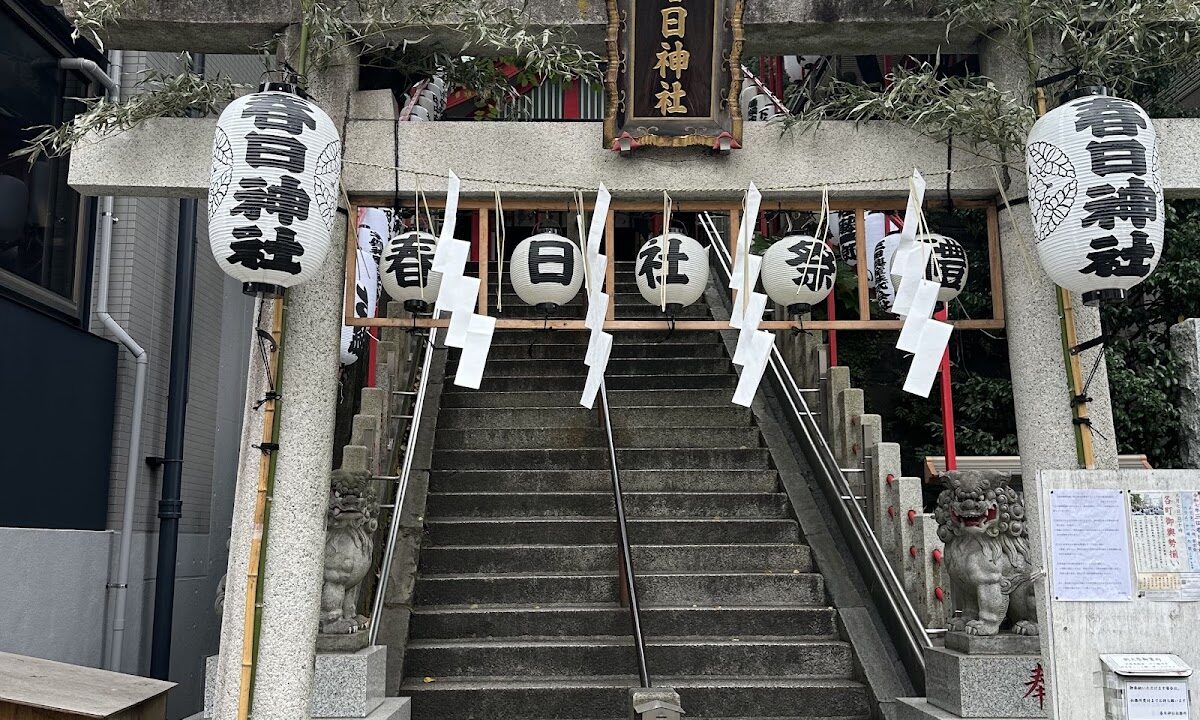
Mita Kasuga Shrine, Minato Ward – The Only Kasuga Shrine in Edo
Location: 2-13-9 Mita, Minato-ku, Tokyo 108-0073
The Kasuga Shrine located in Mita, Minato Ward, is the oldest and most prestigious Kasuga Shrine in Tokyo. In 958 AD, during the reign of Fujiwara no Masafusa, the governor of Musashi Province, invited the spirit of Amenokoyane-no-Mikoto, enshrined in the third hall of the Kasuga Shrine in Yamato Province (the tutelary deity of the Fujiwara clan and the imperial family’s maternal relatives), and enshrined it here.
During the Edo period, it was revered as “the only Kasuga Shrine within Edo,” and was deeply worshipped by the Tokugawa shoguns and various daimyo who visited Edo Castle. It is depicted as “Mita Kasuga Myojin Shrine” in the Edo Meisho Zue (Illustrated Guide to Famous Places of Edo). Originally located in Ebara Mita Village (near present-day Mita, Meguro Ward) during its founding in the Heian period, it was later moved to its current location.
Deity Enshrined: Amenokoyane-no-Mikoto
Nearest Station:
- 7-minute walk from Mita Station (Toei Mita Line/Asakusa Line)
- 10-minute walk from Tamachi Station (JR Yamanote Line/Keihin-Tohoku Line)
As the guardian shrine of Mita, it continues to attract the faith of local residents, and is bustling with many worshippers during New Year’s visits and annual festivals.
Kasuga Shrine, Chuo, Ota Ward – A shrine with approximately 700 years of history for praying for success in exams
Location: 1-14-1 Chuo, Ota-ku, Tokyo 143-0024
Kasuga Shrine in Chuo, Ota Ward, is a historic shrine that has been enshrined in this location for approximately 700 years. Affectionately known as “Kasuga-sama” by the local community, it attracts many worshippers praying for success in exams, protection from evil, and safe childbirth.
Because it enshrines Amenokoyane-no-Mikoto, the god of learning, it is especially bustling with visitors praying for success during exam season. The shrine grounds have a quiet and peaceful atmosphere, providing a space for peaceful worship away from the hustle and bustle of the city.
Deity Enshrined: Amenokoyane-no-Mikoto
Visiting Hours: 9:00 AM – 4:30 PM
Nearest Station: 15-minute walk from Omori Station on the JR Keihin-Tohoku Line
The official website allows you to make reservations for prayers and check detailed information.
Kasuga Shrine (Kasuga-sama) – A Shrine of Lion Dance and Cultural Heritage
Address: 1-38 Nogami-cho, Ome City, Tokyo 198-0032
Kasuga Shrine in Nogami-cho, Ome City, is a shrine affectionately known as “Kasuga-sama” by the local community. Its most distinctive feature is the traditional lion dance performed on the annual festival day, which is preserved as an important intangible cultural heritage of the region. The main shrine building is a historical structure built in 1648 (Keian 1) and was designated a Tokyo Metropolitan Tangible Cultural Property in 1987 (Showa 62). It is preserved as a valuable shrine treasure, retaining the characteristics of early Edo period shrine architecture.
Deity Enshrined: Amenokoyane-no-Mikoto
Cultural Properties: Main Shrine (Tokyo Metropolitan Designated Tangible Cultural Property), Lion Dance at the Annual Festival
Nearest Station: Take a bus from JR Ome Line “Ome Station”
Registered with the Tokyo Metropolitan Shrine Association as an important shrine that conveys the history and culture of Ome City.
Kasuga Shrine, Hinode-machi, Nishitama-gun [Kasuga-sama] – A shrine where the Phoenix Dance is performed
Location: 3690 Hirai, Hinode-machi, Nishitama-gun, Tokyo 190-0182
Kasuga Shrine in Hinode-machi is a shrine with a history dating back to the Sengoku period, founded on December 1st, 1546 (Tenbun 15). The most distinctive feature of this shrine is the “Phoenix Dance” performed on the day of the annual festival.
The Phoenix Dance is designated as an Intangible Cultural Property by the Tokyo Metropolitan Board of Education and is carefully preserved as a traditional performing art of the region. This elegant and dignified dance is the highlight of the Kasuga Shrine’s annual festival.
Deity Enshrined: Amenokoyane-no-Mikoto
Cultural Property: Phoenix Dance (Tokyo Metropolitan Government Designated Intangible Cultural Property)
Founded: Tenbun 15 (1546)
As a shrine possessing important cultural properties in the Nishitama region, it supports the local identity.
Kasuga Shrine, Hinohara Village, Nishitama District – The tutelary deity of Hinohara
Location: 3417 Hinohara Village, Nishitama District, Tokyo 190-0203
The Kasuga Shrine in Hinohara Village, while its founding date is unknown, has been deeply revered by local residents as the tutelary deity of the land since ancient times. Until the Kyoho era (1716-1736), it was called “Kasuga-gu,” then “Kasuga Daimyojin,” and finally renamed “Kasuga Shrine” during the Meiji Restoration.
Deities Enshrined:
- Amenokoyane-no-mikoto
- Futsunushi-no-kami
- Takemikazuchi-no-kami
This shrine enshrines three of the four deities of Kasuga Taisha, making it a highly prestigious shrine and a central shrine of Hinohara Village.
Kasuga Shrine, Kasuga-cho, Nerima Ward – The Shrine that Originates the Place Name
Location: 3-2 Kasuga-cho, Nerima-ku, Tokyo
Kasuga Shrine in Nerima Ward is the shrine that gave its name to the town where it is located, “Kasuga-cho.” While the exact date of its founding is unknown, oral tradition states that it was a shrine built on top of a circular burial mound. Its former shrine rank was a village shrine, and it has been revered as the local guardian deity.
The fact that a shrine was built on top of a burial mound suggests the possibility that an ancient sacred site was inherited as a shrine, making it an archaeologically interesting shrine.
Deity Enshrined: Amenokoyane-no-Mikoto
Former Shrine Rank: Village Shrine
As a shrine deeply connected to the history of the region, it continues to attract the faith of local residents.
Kasuga Shrine, Okura-cho, Machida City – The Central Shrine of the Former Tsurukawa Village
Location: Okura-cho, Machida City, Tokyo
Kasuga Shrine in Okura-cho, Machida City, is located almost in the center of the former Tsurukawa Village. The shrine building was constructed in September of the 4th year of the Hoei era (1707), and it enshrines a divided spirit from Kasuga Taisha Shrine in Nara.
Deities Enshrined:
- Amenokoyane-no-Mikoto
- Himegami
Founded: 4th year of the Hoei era (1707)
Founded in the mid-Edo period, it is an important example demonstrating the spread of Kasuga faith in the Tama region.
About the Deities Enshrined at Kasuga Shrines
Amenokoyane-no-Mikoto is a deity commonly enshrined at Kasuga Shrines throughout Tokyo. Amenokoyane-no-Mikoto is a god who played an important role in Japanese mythology and is believed to possess the following divine virtues:
Divine Virtues of Amenokoyane-no-Mikoto
- God of Learning and Wisdom: As the god of wisdom who recited Shinto prayers, he is worshipped for academic success and passing exams.
- God of Politics and Governance: As the ancestral deity of the Fujiwara clan, he is worshipped for career advancement and improved work luck.
- God of Kotodama (Power of Words): As the god who governs the power of words, he is worshipped for improved communication skills.
- Family Safety: As the god who protects the prosperity of the family, he is worshipped for the safety and prosperity of the family.
Other Deities Enshrined
Some shrines, such as the Kasuga Shrine in Hinohara Village, enshrine the following deities in addition to Amenokoyane-no-Mikoto.
- Futsunushi-no-kami: God of war, god of victory
- Takemikazuchi-no-kami: God of war, god of pacifying the land
- Himegami: Goddess of Kasuga Taisha Shrine
These are the four deities of Kasuga Taisha Shrine, forming a more comprehensive divine group.
Etiquette for Visiting Kasuga Shrine
Here are the basic etiquette rules for visiting Kasuga Shrine. It is important to visit shrines with sincerity.
Basic Worship Etiquette
- Bow before passing through the torii gate: As a sign of respect before entering the sacred area.
- Purify yourself at the water basin: Left hand → Right hand → Mouth → Handle of left hand in that order.
- Avoid walking in the center of the path: The center is the path of the gods.
- Bow twice, clap twice, and bow once in front of the main hall: Basic worship etiquette.
- Bow again at the torii gate when leaving: With gratitude.
Worship for Passing Exams
Kasuga Shrine, which enshrines Amenokoyane-no-Mikoto, the god of learning, is especially popular for praying for success in exams. Many students and their parents visit during exam season.
- Timing: From several months before the exam until the day of the exam
- Amulets: Amulets for academic success, amulets for passing exams
- Ema (votive tablets): Write your desired school and name and dedicate them
- Prayer: It is also possible to receive a formal prayer ceremony
Kasuga Shrines in Ota Ward and Minato Ward accept prayers for passing exams.
Cultural Assets and Highlights of Kasuga Shrines
Kasuga Shrines in Tokyo preserve important cultural assets and traditional performing arts.
Tangible Cultural Property
Main Hall of Kasuga Shrine, Ome City
- Built in 1648 (Keian 1)
- Designated Tangible Cultural Property of Tokyo Metropolitan Government (Designated in 1987)
- Early Edo Period Shrine Architectural Style
- Notable Value in Sculptures and Decorations
Intangible Cultural Property
Phoenix Dance of Kasuga Shrine, Hinode Town
- Designated Intangible Cultural Property of the Tokyo Metropolitan Board of Education
- Traditional Performing Art Dedicated on the Annual Festival
- Elegant and Dignified Dance
- Symbol of Regional Cultural Inheritance
Lion Dance of Kasuga Shrine, Ome City
- Traditional Performing Art Dedicated on the Annual Festival
- Folk Performing Art Passed Down in the Region for Many Years
- Prayers for Abundant Harvests and Protection from Plagues
Access Information to Kasuga Shrines
We have compiled access information for each Kasuga Shrine. Please use this as a reference when visiting.
Kasuga Shrines in the City Center
Kasuga Shrine, Mita, Minato Ward
- 7-minute walk from Mita Station (Toei Mita Line/Asakusa Line)
- 10-minute walk from Tamachi Station (JR Line)
- 3-minute walk from Fudanotsuji bus stop (Toei Bus)
Kasuga Shrine, Chuo, Ota Ward
- 15-minute walk from Omori Station (JR Keihin-Tohoku Line)
- Reception Hours: 9:00 AM – 4:30 PM
Kasuga Shrine, Kasugacho, Nerima Ward
- Within walking distance of Nerima-Kasugacho Station (Toei Oedo Line)
Kasuga Shrines in the Tama Area
Kasuga Shrine, Nogamicho, Ome City
- Bus from Ome Station (JR Ome Line)
- Use Nishi-Tokyo Bus
Kasuga Shrine, Hinode-machi, Nishitama District
- Bus from Musashi-Itsukaichi Station (JR Itsukaichi Line)
- Get off at “Hirai” bus stop (Nishi-Tokyo Bus)
Kasuga Shrine, Hinohara Village, Nishitama District
- Take a bus from JR Itsukaichi Line “Musashi-Itsukaichi Station”
- Take a Nishi-Tokyo Bus bound for Hinohara
- Access by private car is convenient
Kasuga Shrine, Okura-cho, Machida City
- Take a bus from Odakyu Line “Tsurukawa Station”
- Use Kanagawa Chuo Kotsu bus
Annual Festivals and Events of Kasuga Shrine
Kasuga Shrine holds various festivals throughout the year. On the day of the annual festival, special Shinto rituals and traditional performing arts are offered, attracting many worshippers.
Main Annual Events
January
- New Year’s Day Festival/First Shrine Visit of the Year
- Coming-of-Age Day
February
- Setsubun Festival/Bean Scattering
- Prayer Festival
Spring
- Spring Grand Festival (Dates vary by shrine)
- Lion Dance/Phoenix Dance Dedication (at applicable shrines)
Autumn
- Autumn Grand Festival
- Mikoshi Procession
- Dedicatory Performances
November
- Shichi-Go-San Festival
December
- Great Purification Ceremony
- New Year’s Eve Festival
The dates of annual festivals vary by shrine, so it is recommended to check the Tokyo Metropolitan Shrine Association website or the official information of each shrine.
Prayers Available at Kasuga Shrine
At Kasuga Shrine, you can receive prayers for various life milestones and wishes.
Main Types of Prayers
Prayers for Academic Success/Passing Exams
- Prayer for Passing Exams
- Academic Achievement
- Success in Employment
Life Cycle Rituals
- First Shrine Visit for a Newborn
- Shichi-Go-San Ceremony
- Coming-of-Age Ceremony
- Prayer for Protection from Evil
Family/Life
- Family Safety
- Prayer for Safe Childbirth
- Traffic Safety
- Business Prosperity
Other
- Recovery from Illness
- Fulfillment of Wishes
- Prayer for a Good Relationship
Since prayers are often by reservation only, it is recommended to contact the shrine in advance to confirm the date and time. The offering fee (prayer fee) also varies depending on the shrine.
Information on Goshuin (Shrine Seals) at Kasuga Shrine
In recent years, collecting Goshuin has become popular, and you can also obtain them at Kasuga Shrine.
Basic Information on Goshuin (Shrine Seals)
- Offering Fee: Usually 300-500 yen
- Reception Hours: Approximately 9:00 AM to 4:00 PM (Varies by shrine)
- Pre-printed Goshuin: May be pre-printed when the priest is absent
- Special Goshuin: Limited edition Goshuin may be available on festival days, etc.
Goshuin are proof of your visit to the shrine, not a stamp rally. Please complete your prayers first, and then receive the Goshuin with gratitude.
Tokyo Metropolitan Shrine Association and Kasuga Shrines
Many Kasuga shrines in Tokyo belong to the Tokyo Metropolitan Shrine Association. The Tokyo Metropolitan Shrine Association is a religious organization that encompasses shrines in Tokyo, providing support for shrine management, training of Shinto priests, and preserving shrine culture.
The Tokyo Metropolitan Shrine Association website allows you to search for information on shrines in each region, and you can check detailed information such as location, enshrined deities, history, and festival dates. You can search for shrine information throughout Tokyo, from the 23 wards (Chiyoda, Chuo, Bunkyo, Taito, Minato, Shibuya, Nakano, Suginami, etc.) to the Nishitama region, using keyword and map searches.
When visiting Kasuga Shrines, checking the information on the Tokyo Metropolitan Shrine Association website beforehand will make your visit more fulfilling.
Summary – Visiting Kasuga Shrines in Tokyo
Kasuga Shrines in Tokyo, while each possessing its own unique history and culture, are united by the common deity of worshipping Amenokoyane-no-Mikoto, the god of learning.
The Kasuga Shrine in Mita, Minato Ward, is the only Kasuga Shrine in Edo (present-day Tokyo) dating back to the Heian period; the Kasuga Shrine in Ota Ward is a shrine for praying for success in exams; the Kasuga Shrine in Ome City is known for its lion dance and cultural assets; and the Kasuga Shrine in Hinode-cho is known for its phoenix dance. Each shrine is revered as a local guardian deity.
Kasuga Shrines in Tokyo are an integral part of our lives in various ways: for students praying for success in exams, for prayers at important life events, for opportunities to experience traditional culture, and for quiet, peaceful worship.
From the heart of Tokyo to the Tama region, there are many Kasuga Shrines, ranging from easily accessible locations to those nestled in lush natural surroundings. Why not visit a Kasuga Shrine that resonates with you and experience Japanese traditional culture and history?
When visiting, please check the latest information on the Tokyo Metropolitan Shrine Association website and remember to observe proper shrine etiquette and offer heartfelt prayers.