Complete Guide to Sumiyoshi Shrine & Kotohira Shrine (Miyao Shrine) | A Historic Shrine in Hachioji City, Tokyo, and the Sacred Site of “Yuyake Koyake”
The Sumiyoshi Shrine & Kotohira Shrine (Miyao Shrine), located in Kami-Ongata-cho, Hachioji City, Tokyo, is affectionately known as “Miyao Shrine” by the local people. It is a historic shrine said to have been founded during the Genryaku era (1184-1185), and is also known as a place associated with Nakamura Uko, the lyricist of the children’s song “Yuyake Koyake.” This article provides a detailed introduction to the shrine’s history, enshrined deities, highlights, and access methods.
About Sumiyoshi Shrine & Kotohira Shrine (Miyao Shrine)
Shrine Overview and Official Name
The Sumiyoshi Shrine & Kotohira Shrine (Miyao Shrine) is located at 2089 Kami-Ongata-cho, Hachioji City, Tokyo. Its official name is “Sumiyoshi Shrine & Kotohira Shrine (Miyao Shrine),” but it is affectionately known locally as “Miyao Shrine.” Affiliated with the Tokyo Metropolitan Shrine Association, this shrine is a vital tutelary deity of the Minami-Tama region and is revered by local residents.
Location and Area Characteristics
The shrine is located in Kami-Ongata-cho, a naturally rich area in the western part of Hachioji City. Nearby are tourist facilities such as “Yuyake Koyake Fureai no Sato,” making it a valuable place for worship in a quiet environment away from the city center.
History and Origins
From Founding to the Present
According to shrine tradition, the Sumiyoshi Shrine and Kotohira Shrine Joint Shrine was founded during the Genryaku era (1184-1185). This period coincided with the end of the Genpei War and the turbulent times immediately preceding the establishment of the Kamakura Shogunate.
The shrine buildings were rebuilt during the Meireki era (1655-1658), and further repairs were carried out during the Koka era (1844-1848). In the early Meiji period, Kotohira Shrine was merged with the Sumiyoshi Shrine, resulting in the current “Sumiyoshi Shrine and Kotohira Shrine Joint Shrine.” ### History of the Merger
Due to the Meiji-era policy of shrine consolidation, Kotohira Shrine, which enshrined Kotohira-no-Okami, was merged with Sumiyoshi Shrine. As a result, the Sumiyoshi Three Gods, deities of the sea, and Kotohira-no-Okami, deities of maritime safety and abundant harvests, are enshrined in the same grounds, creating a shrine where a wider range of divine blessings can be bestowed.
Deities and Divine Blessings
Sumiyoshi Three Gods
The principal deities enshrined at the merged Sumiyoshi Shrine and Kotohira Shrine are the following gods:
- Sokotsutsu-no-Mikoto
- Nakatsutsu-no-Mikoto
- Uwatsutsu-no-Mikoto
These three deities are known as the “Sumiyoshi Three Gods” and have been worshipped since ancient times as gods of maritime safety and protection of navigation.
Other Deities Enshrined
- Empress Jingu: Also known as Okinagatarashihime-no-Mikoto, she is a deity often enshrined alongside the three Sumiyoshi deities.
- Omononushi-no-Mikoto: The principal deity of Kotohira Shrine, the god of business prosperity and abundant harvests.
- Emperor Sutoku: A deity enshrined at Kotohira Shrine.
Divine Virtues
The Sumiyoshi Shrine and Kotohira Shrine combined shrine is believed to offer the following divine virtues:
- Maritime safety and traffic safety
- Abundant harvests and business prosperity
- Good fortune and prosperity
- Family safety
- Protection from evil
Monument to the song “Yuyake Koyake” by Nakamura Uko
About Nakamura Uko (Takai Miyakichi)
One of the most distinctive features of the Sumiyoshi Shrine and Kotohira Shrine Joint Shrine is its deep connection to Nakamura Uko (real name: Takai Miyakichi), the lyricist of the children’s song “Yuyake Koyake” (Sunset Glow). Nakamura Uko was born in 1897 (Meiji 30), the third son of the shrine’s chief priest.
Uko spent his childhood in this area, and the beautiful nature and sunset scenery of Kami-Ongata became the original landscape that inspired his later masterpiece, “Yuyake Koyake.”
Song Monument and Birthplace Site
Within the shrine grounds is the site of Nakamura Uko’s birthplace, where a monument inscribed with the lyrics of “Yuyake Koyake” in Uko’s own handwriting stands. This monument is an important point of interest for visitors, and many people visit while reflecting on the world of the children’s song.
The following lyrics are inscribed on the monument:
“` The sun sets with a beautiful sunset / The temple bell rings in the mountains / Let’s all go home holding hands / Let’s go home with the crows
“`
Connection to “Yuyake Koyake Fureai no Sato”
Near the shrine is a facility called “Yuyake Koyake Fureai no Sato,” which commemorates the achievements of Nakamura Uko and is a tourist spot where visitors can experience the nature of Kami-Ongata. Visiting it in conjunction with a visit to the shrine will allow you to feel the world of “Yuyake Koyake” more deeply.
Highlights of the Shrine Grounds
Shrine Building
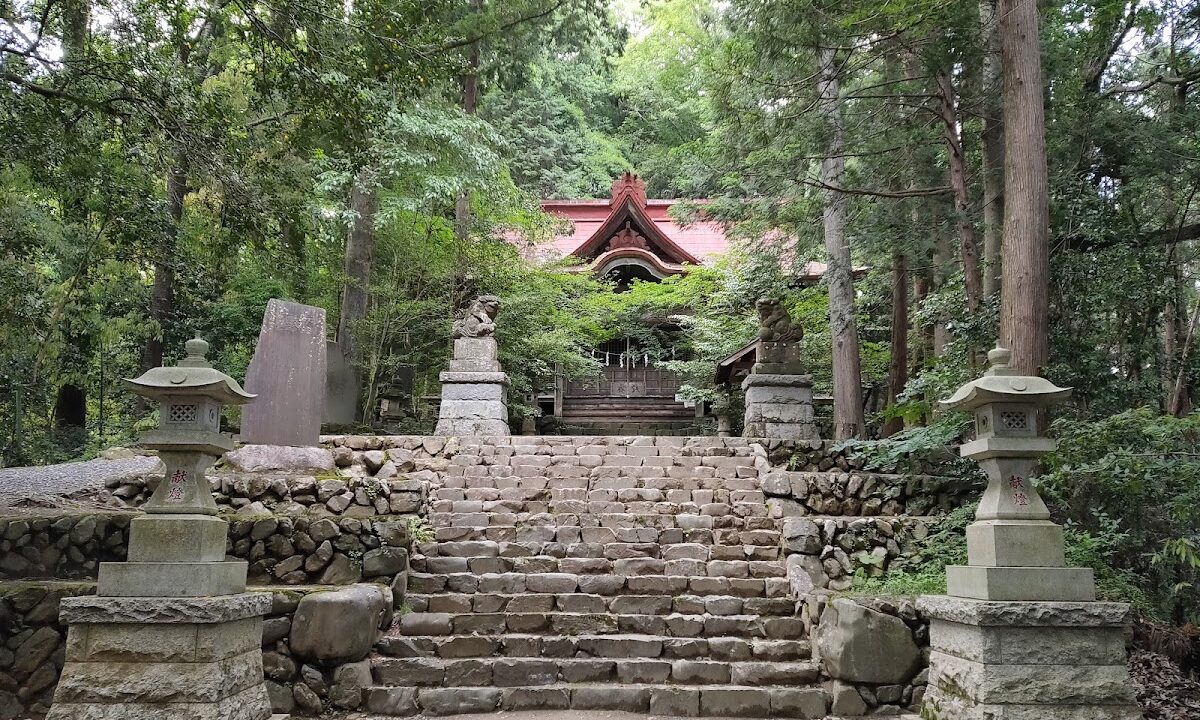
The shrine building, rebuilt during the Meireki era and restored during the Koka era, has an appearance that conveys the weight of history. The wooden main hall maintains the style of traditional shrine architecture and harmonizes with the quiet mountain environment.
Approach to the Shrine and Torii Gate
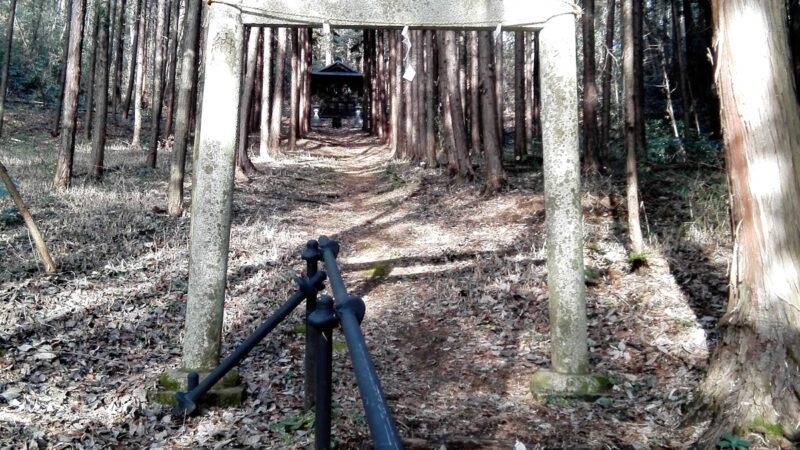
The approach to the shrine exudes a tranquil atmosphere surrounded by nature. Passing through the torii gate and climbing the stone steps, visitors are greeted by a refreshing air that makes them forget the hustle and bustle of the city.
Natural Environment of the Shrine Grounds
The shrine grounds, surrounded by the rich nature of Kami-Ongata, offer beautiful scenery throughout the seasons. Especially at dusk, there are days when you can witness a stunning sunset, just like the lyrics of the song “Yuyake Koyake” (Sunset Glow), allowing you to relive the scenery seen by Nakamura Uko.
Annual Festival and Events
Annual Festival Date
The annual festival of the Sumiyoshi Shrine and Kotohira Shrine (joint shrine) is held every year on the second Sunday of September. On this day, people from the local community gather to pray for the prosperity of the shrine and the peace and security of the region.
Annual Events
- New Year’s Day Festival: January 1st
- Setsubun Festival: Around February 3rd
- Summer Purification Ceremony: June 30th
- Annual Grand Festival: Second Sunday of September
- Year-End Purification Ceremony: December 31st
These festivals involve local residents and traditional Shinto rituals are solemnly performed.
Access Information
Access by Public Transportation
Using the Bus from the Nearest Station
- From the North Exit of JR Chuo Line “Takao Station,” take the Nishi-Tokyo Bus bound for “Jinba Kogen-shita” or “Wada.”
- Get off at the “Yuyake Koyake” bus stop and walk for approximately 5 minutes.
Since bus services are limited, it is recommended to check the timetable in advance. It can be particularly crowded with tourists on holidays.
Access by Car
- Approximately 30 minutes from the Hachioji IC on the Chuo Expressway
- Approximately 25 minutes from the Hachioji-Nishi IC on the Ken-O Expressway
There is parking space around the shrine, but the number of spaces is limited, so we recommend using public transportation during long holidays and festival days.
Location Information
Address: 2089 Kami-Ongata-cho, Hachioji City, Tokyo 192-0156
Manners and Points for Visiting the Shrine
Proper Way to Visit the Shrine
- Bow before passing through the torii gate
- Avoid walking in the center of the approach to the shrine
- Purify your body and mind at the water basin
- Perform “two bows, two claps, one bow” in front of the main hall
Points to Note When Visiting the Shrine
- The shrine grounds are a sacred place. Let’s pray quietly.
- Photography is permitted, but please be considerate of other worshippers.
- Please take all your trash with you.
- Please cherish nature and avoid harming plants and animals.
Nearby Tourist Attractions
Yuuyake Koyake Fureai no Sato
This is an experiential tourist facility within walking distance of the shrine. It features a memorial hall for Nakamura Uko, an animal petting area, and accommodation, making it popular with families.
Jinba-yama
Located in the western part of Hachioji City, this mountain with an elevation of 855m is a popular hiking destination. From the summit, you can see Mt. Fuji and the Tanzawa Mountains.
Takao-san
A world-famous tourist destination, it has received three stars in the Michelin Green Guide. It’s close to Takao Station and can be visited in conjunction with Sumiyoshi Shrine and Kotohira Shrine.
Goshuin (Shrine Seal) Information
Regarding the Issuance of Goshuin
Sumiyoshi Shrine and Kotohira Shrine (joint shrine) issue goshuin, but since there may not always be a permanent shrine office, it is recommended to check with the Tokyo Metropolitan Shrine Association or a shrine official in Hachioji City beforehand.
Goshuincho (Shrine Seal Book)
While it is necessary to confirm whether they have an original goshuincho, they will inscribe your own goshuincho.
Connection with the Community
Role as a Guardian Deity
Sumiyoshi Shrine and Kotohira Shrine (joint shrine) has long been revered by local residents as the guardian deity of the parish area centered around Kami-Ongata-cho. It continues to play an important role as a central presence for praying for the safety and prosperity of the community.
Participation in Local Events
Many residents of the parish area participate in annual events, including the annual festival, continuing to preserve tradition. Furthermore, as a sacred site for “Yuyake Koyake” (Sunset Glow), it is a core element of the community’s cultural identity.
About the Name of Miyao Shrine
Origin of the Common Name
The official name is “Sumiyoshi Shrine Kotohira Shrine Combined Shrine,” but it is often referred to locally as “Miyao Shrine.” This is thought to originate from the place name and topography of the area where the shrine is located.
Use of Both Names
Official documents and records of the Association of Shinto Shrines use the official name, but local residents and tourist information often use the more familiar name “Miyao Shrine.” Both names refer to the same shrine.
Seasonal Scenery
Springtime Shrine Grounds
In spring, the fresh greenery is beautiful, and during the cherry blossom season, the shrine grounds are enveloped in a vibrant atmosphere. The trees along the approach to the shrine bud, making it a season full of life.
Arrival of Summer
In summer, the lush green shrine grounds offer pleasant shade, providing a healing space for visitors seeking coolness. The sound of cicadas fills the air, creating a quintessential Japanese summer atmosphere.
Autumn Foliage
In autumn, the surrounding mountains turn vibrant colors, and the temple grounds also become colorful. The period from September, when the annual festival is held, through October and November, when the autumn leaves are at their most beautiful, is especially recommended for visiting.
Winter Silence
In winter, the temple grounds are enveloped in silence, allowing for a peaceful and serene visit. If it snows, the entire area becomes a silver wonderland, creating a fantastical landscape.
Clothing and Items to Bring When Visiting
Clothing
- Please wear clean clothing appropriate for visiting a shrine.
- Comfortable walking shoes are recommended due to the mountainous location.
- Take appropriate precautions against cold or heat depending on the season.
Items to Bring
- Goshuincho (stamp book) (if you wish to receive a stamp)
- Camera (for commemorative photos)
- Drinks (especially in summer)
- Rain gear (during periods of unpredictable weather)
Frequently Asked Questions
Visiting Hours
Q: Are there specific visiting hours?
A: While entry to the shrine grounds is generally free, the office hours may be limited. If you wish to receive a Goshuin (shrine stamp) or prayer, we recommend checking in advance.
Parking
Q: Is there parking available?
A: There is parking space around the shrine, but the number of spaces is limited. It may be crowded on festival days and holidays, so please consider using public transportation.
Goshuin
Q: Can I get a Goshuin anytime?
A: Since the chief priest is not always present, if you want to be sure to receive a Goshuin, we recommend contacting the shrine in advance to confirm.
Group Visits
Q: Is group visit possible?
A: Yes, but if you wish to visit or receive prayers in a large group, we recommend contacting the shrine in advance to make arrangements.
“Yuyake Koyake” Song Monument
Q: Can I visit the song monument anytime?
A: The monument inscribed with the song on the shrine grounds can be viewed anytime during visiting hours. Please be sure to see this precious monument inscribed with the song’s lyrics by Nakamura Uko himself.
Summary
Sumiyoshi Shrine and Kotohira Shrine (Miyao Shrine) has a long history, dating back to its founding during the Genryaku era, and holds special significance as a place associated with Nakamura Uko, the lyricist of the children’s song “Yuyake Koyake” (Sunset Glow). Located in the nature-rich Kami-Ongata-cho, Hachioji City, Tokyo, it enshrines many deities, including the Sumiyoshi Three Gods and Kotohira Okami.
Within the shrine grounds are the site of Nakamura Uko’s birthplace and the song monument, making it a valuable place that preserves the culture of Japanese children’s songs. It is accessible by bus from JR Takao Station, and there are also tourist facilities nearby, such as “Yuyake Koyake Fureai no Sato” (Sunset Glow Friendship Village).
Sumiyoshi Shrine and Kotohira Shrine, surrounded by the beautiful nature of the four seasons, offers a peaceful environment for worship. Please visit this shrine, which is full of history, culture, and the charm of nature.