Complete Guide to Shimoajino Shrine (Tottori Prefecture): The Charm of the Kirin Lion Dance and a Historic Local Shrine
Shimoajino Shrine, located in Shimoajino, Tottori City, Tottori Prefecture, is a historic shrine known for its Kirin Lion Dance, which is designated as a National Important Intangible Folk Cultural Property. Formerly known as Sho-ichii Gozu Tenno, it has been the principal shrine of the Ajino district, attracting the faith of the local community. This article comprehensively introduces information you should know before visiting Shimoajino Shrine, including its history, cultural assets, annual festival, and access methods.
History and Origins of Shimoajino Shrine
Founding Date and Former Name
The founding date of Shimoajino Shrine is unknown, but it has long been a center of local faith. Formerly known as “Sho-ichii Gozu Tenno,” it was revered as a god of protection against disease and misfortune. Gozu Tenno is a deity syncretized with Susanoo-no-Mikoto, and the shrine shared the same lineage of worship as Yasaka Shrine in Kyoto.
Renaming in the Early Meiji Era
Due to the Meiji-era policy of separating Shinto and Buddhism, the shrine was renamed “Shimo-Ajino Shrine” in the early Meiji period. This renaming was part of a nationwide shrine reform, eliminating Buddhist elements and marking a fresh start as a Shinto shrine.
Role as the Main Shrine of Ajino Village
Shimo-Ajino Shrine held an important position as the main shrine (chief guardian shrine) of Ajino village, protecting the entire region. It is said that since ancient times, when special prayers for a bountiful harvest or other blessings were offered annually throughout the county, this shrine, along with Karo Shrine and Matsugami Shrine, performed the ceremonies. This system of rituals involving these three shrines is a valuable historical fact that illustrates the characteristics of the religious practices in the Inaba region.
Deities and Divine Virtues
The deities enshrined at Shimo-Ajino Shrine are Susanoo-no-Mikoto and other gods. Susanoo-no-Mikoto is known as a god with a wide range of divine virtues, including protection against misfortune, eradication of disease, matchmaking, and protection of agriculture.
The Legend of Akaike Saemon
Notably, Akaike Saemon, a powerful general from the Sengoku period, is also enshrined here. Legend says that in 1581, when Toyotomi Hideyoshi attacked Tottori Castle, Akaike Saemon, acting on the orders of the castle lord Kikkawa Tsuneie, floated down the Chiyo River wearing an empty rice bale on his head, achieving success. In recognition of this brave act, Akaike Saemon was later enshrined as a god.
Cultural Properties of Shimo-Ajino Shrine
National Important Intangible Folk Cultural Property: Kirin Lion Dance
The greatest cultural property of Shimo-Ajino Shrine is the “Kirin Lion Dance,” which was designated a National Important Intangible Folk Cultural Property in 2020.
History of the Kirin Lion Dance
The Kirin Lion Dance of Shimo-Ajino is said to have originated in the early Edo period. The lion’s head currently in use was made in 1843 (Tenpo 14), making it a valuable cultural property with a history of nearly 180 years. It was first designated as an Intangible Folk Cultural Property of Tottori Prefecture in 1998, and then upgraded to a National Important Intangible Folk Cultural Property in 2020.
Characteristics of the Kirin Lion Dance
The Kirin Lion Dance, a tradition passed down in the eastern Tottori region, differs from typical lion dances in its unique form, based on the mythical Chinese creature, the “Kirin.” It features two lions, a male and a female, with a clown-like character called a Shōjō adding to the performance. This elegant and dignified dance is highly regarded as a traditional performing art of the Inaba region.
The Hackberry Tree of Shimo-Ajino Shrine (Sacred Tree)
Within the shrine grounds stands a giant hackberry tree known as the “Hackberry Tree of Shimo-Ajino Shrine.” This magnificent tree has been cherished as a sacred tree for a long history, from the shrine’s founding to the present day. It can be considered a living witness, having watched over the region for over 400 years, from the time of the siege of Tottori Castle in 1581 (Tenshō 9). Estimated to be several hundred years old, its majestic presence deeply impresses visitors.
Ridgepole Inscription from the 5th Year of the Jōkyō Era
The shrine possesses a ridgepole inscription dating back to the 5th year of the Jōkyō era (1688), when the main shrine building was constructed. This inscription is a valuable historical document that conveys the state of shrine architecture in the mid-Edo period, demonstrating the deep faith and strong community ties of the time. In July 2001, the main shrine building underwent renovation work, preserving the traditional architectural style and ensuring its continuation for future generations.
Annual Festivals and Events of Shimo-Ajino Shrine
Spring Festival
Date: Last Sunday of March
Time of Dance Performance at the Shrine: Around 8:00 AM
The Spring Festival is an important festival praying for a bountiful harvest and peace in the community in the new year. The Kirin Lion Dance is performed, and many parishioners and local residents attend. As a vibrant festival announcing the arrival of spring, it has become a local tradition.
Summer Festival (Eve and Main Festival)
Dates: Last Saturday and Sunday of July
Time of Dance Performances at the Shrine:
- Eve: Around 9 PM
- Main Festival: Around 8 AM
The Summer Festival is a grand celebration held over two days. On Saturday’s Eve, the Kirin Lion Dance is performed at night, allowing visitors to enjoy traditional performing arts in a fantastical atmosphere. On Sunday’s Main Festival, Shinto rituals are performed from the morning, and the entire community is enveloped in the festive spirit.
Points to Note When Watching the Kirin Lion Dance
When watching the Kirin Lion Dance, please pay attention to the following points:
- Lion Head Design: The lion head, created in 1843, features intricate carving and coloring.
- Dance of Two Lions: Pay attention to the synchronized movements of the male and female lions.
- Shōjō Performance: The Shōjō, playing the role of a clown, entertains the audience with its unique movements.
- Sound of Flute and Drum: Enjoy the atmosphere created by the traditional music.
Basic Information and Access
Location and Contact Information
Location: 161-2 Shimo-Ajino, Tottori City, Tottori Prefecture 680-0934
Jurisdiction: Tottori Prefectural Shrine Association
Access Method
Access by Car
- Approximately 15 minutes from Tottori IC on the Tottori Expressway
- Approximately 20 minutes by car from JR Tottori Station
- Parking: There is parking space for visitors on the shrine grounds (spaces are limited, so using public transportation is recommended during festivals).
Access by Public Transportation
- Approximately 25 minutes by local bus from JR Tottori Station, get off at “Shimo-Ajino” bus stop, then approximately 5 minutes on foot.
- Approximately 20 minutes by taxi from JR Tottori Station.
Visiting Hours and Admission Fee
Visiting Hours: Grounds are freely accessible (please check the shrine office hours).
Admission Fee: Free
Goshuin (Shrine Seal): It is recommended to check in advance regarding the issuance of Goshuin.
Nearby Tourist Attractions
Ube Shrine (Ichinomiya of Inaba Province)
Ube Shrine, located about 15 minutes by car from Shimo-Ajino Shrine, is a prestigious shrine as the Ichinomiya of Inaba Province. It enshrines Takenouchi no Sukune and is known for its blessings of longevity and financial fortune. It is a historical shrine featured on the 5-yen banknote, and a visit to both is recommended.
Karo Shrine
Like Shimo-Ajino Shrine, Karo Shrine, which once served as the center of religious ceremonies for Ajino-go, is located nearby. It is revered as the guardian deity of the fishing port facing the Sea of Japan, and fresh seafood can be enjoyed around Karo Port, which is blessed with abundant marine resources.
Tottori Sand Dunes
Tottori Sand Dunes, a representative tourist destination of Tottori, is about a 30-minute drive from Shimo-Ajino Shrine. This is one of the largest sand dunes in Japan and a popular spot for tourists visiting in conjunction with a shrine visit.
Tottori Castle Ruins (Hisamatsu-yama)
Tottori Castle Ruins, associated with the legend of Akaike Saemon, are about a 15-minute drive from Shimo-Ajino Shrine. This historical site was the stage for the siege of Tottori Castle in 1581, and offers a panoramic view of Tottori city from the castle ruins.
Highlights and Points to Note When Visiting Shimo-Ajino Shrine
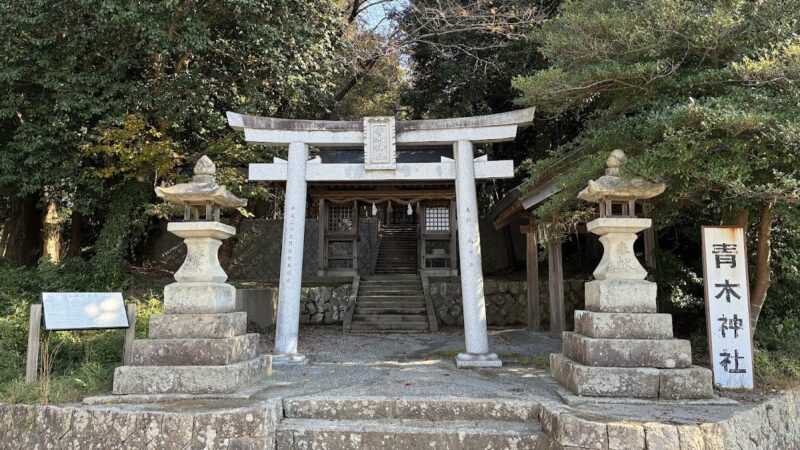
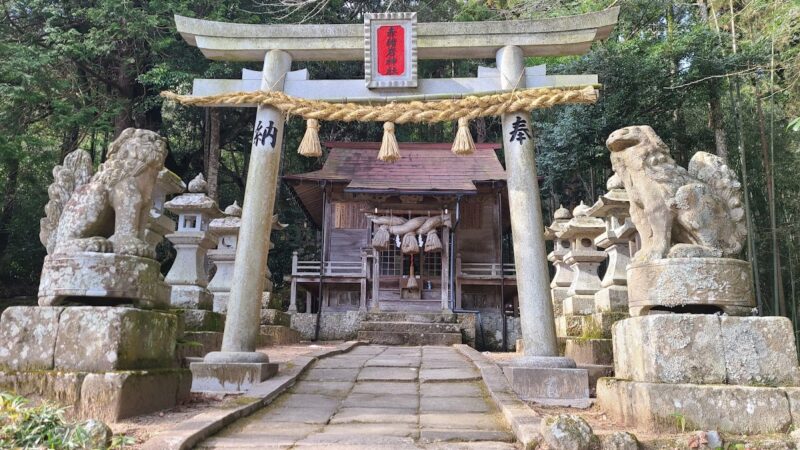
Atmosphere of the Shrine Grounds
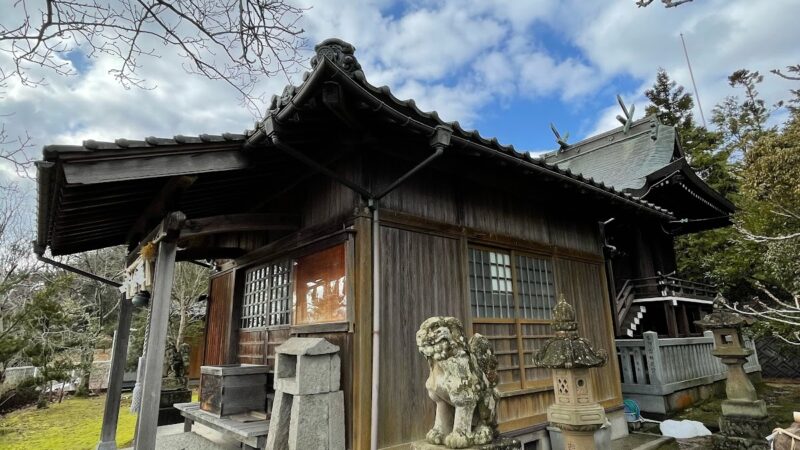
Despite being located in a residential area, Shimo-Ajino Shrine maintains a tranquil atmosphere. The sacred zelkova tree adds a solemn atmosphere to the shrine grounds, providing tranquility to visitors. The main hall preserves traditional shrine architecture, and its beautiful form has been maintained through renovations during the Heisei era.
Recommended Photo Spots
- The Sacred Hackberry Tree: This giant tree, hundreds of years old, has an awe-inspiring presence.
- Main Shrine: Beautiful traditional architecture.
- Kirin Lion Dance during the Annual Festival: Photograph this dynamic traditional performance (please observe proper photography etiquette).
Manners for Visiting the Shrine
Please observe basic manners when visiting a shrine:
- Bow before passing through the torii gate.
- Avoid walking in the center of the path.
- Purify your body and mind at the water basin.
- Pray with two bows, two claps, and one bow.
- Remain quiet and respectful within the shrine grounds.
Connection with the Community
Parishioner Organization and the Inheritance of Festivals
The festivals and Kirin Lion Dance of Shimo-Ajino Shrine have been carefully preserved by the local parishioner organization. In particular, instruction to younger generations is essential for the transmission of the Kirin Lion Dance techniques. Local elementary and junior high school students also participate in practice, continuing efforts to pass on traditional performing arts to the next generation.
Center of the Local Community
Shrines are not merely places of worship, but also play a central role in the local community. Through annual festivals and cleaning activities, they serve as places to deepen the bonds between residents, and remain an indispensable presence in the community even today.
Points to Note When Visiting Shimo-Ajino Shrine
Crowds During Annual Festivals
During the spring and summer annual festivals, many worshippers and spectators visit, causing congestion on the shrine grounds and surrounding roads. Especially during the summer eve festival, which takes place at night, please arrive early and ensure a safe return route.
Parking
Parking space on the shrine grounds is limited, and may be full during annual festivals. We recommend using public transportation or nearby paid parking lots whenever possible.
Photography
Photography of the shrine grounds and festivals is generally permitted, but consideration must be given to avoiding disrupting the religious ceremonies. When photographing the Kirin Lion Dance in particular, be sure to position yourself so as not to obstruct the performers’ movements. It is considered good manners to refrain from using flash photography.
Future Prospects for Shimo-Ajino Shrine
Shimo-Ajino Shrine, home to the Kirin Lion Dance designated as a National Important Intangible Folk Cultural Property, is expected to attract increasing attention as a cultural heritage site of Tottori Prefecture. Local residents and the government are working together to preserve and pass on the tradition, and its value as a tourist resource is also increasing.
On the other hand, the shortage of performers due to the declining birthrate and aging population is a challenge, making efforts to pass on skills to younger generations and foster a sense of attachment to the region crucial. Shimo-Ajino Shrine continues to challenge itself to adapt to the new era while preserving its traditions.
Summary: The Charms of Shimo-Ajino Shrine
Shimo-Ajino Shrine in Tottori City, Tottori Prefecture, is a shrine with many attractions, including the Kirin Lion Dance, a National Important Intangible Folk Cultural Property, a sacred tree hundreds of years old, and a history and legends dating back to the Sengoku period. As a venerable shrine whose name was changed in the early Meiji era from Shoichii Gozu Tenno, it continues to be a center of local faith and culture.
During the spring and summer festivals, you can enjoy the Kirin Shishimai (Lion Dance), which has been passed down since the early Edo period. The summer eve festival, in particular, offers a precious opportunity to enjoy traditional performing arts in a fantastical atmosphere. When visiting Tottori, be sure to visit Shimo-Ajino Shrine and experience the history and culture of the Inaba region.
The brave legend of Akaike Saemon, its role as the main shrine of Ajino village, and its deeply rooted form of faith—Shimo-Ajino Shrine offers a model of community bonds and tradition preservation that we, living in the modern age, can learn from. The time spent praying in the quiet grounds and reflecting on centuries of history will bring deep peace to your heart.