Complete Guide to Mouke Shrine (Tottori Prefecture) | The History and Blessings of the “Mouke Shrine” with its 264 Stone Steps
What is Mouke Shrine?
Mouke Shrine is a shrine located in Kawachi, Shikano-cho, Tottori City, Tottori Prefecture. While it has long been revered as the local guardian deity of Kawachi, in recent years, its name, “Mouke,” has become associated with “profit,” making it a popular power spot attracting worshippers from all over Japan seeking good fortune and business prosperity.
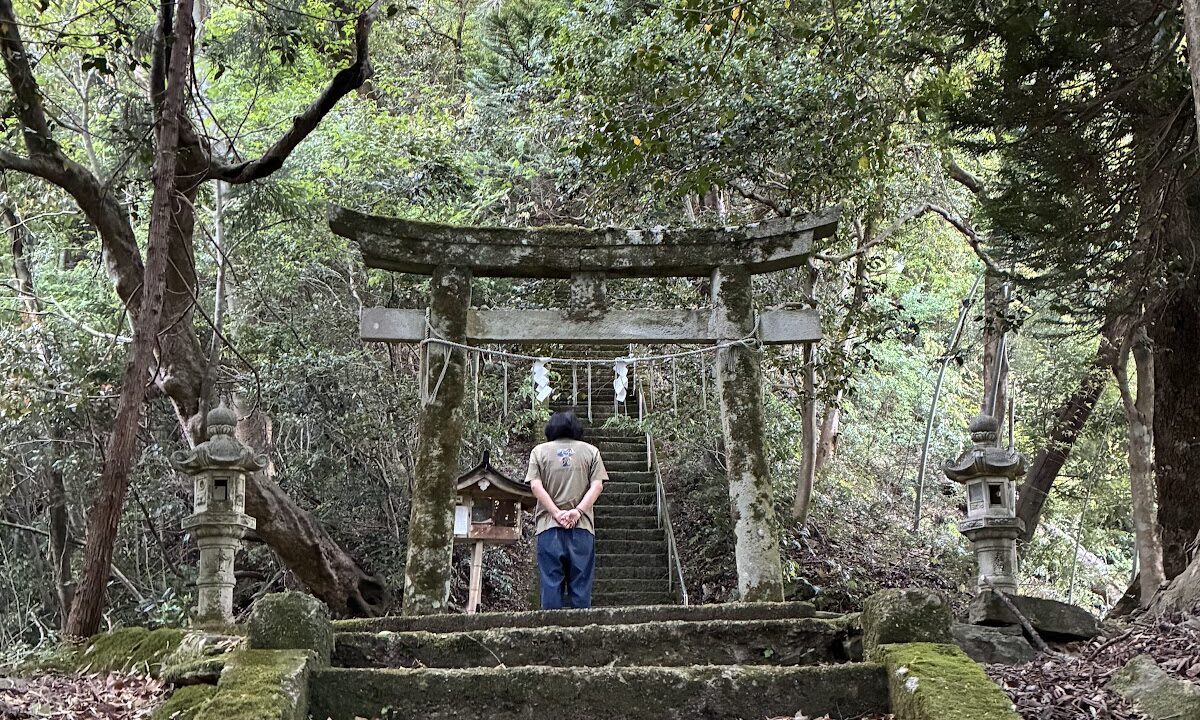
The 264 steep stone steps leading to the shrine are a challenge for worshippers, but the tranquil atmosphere of the grounds at the top has deeply moved many. Formerly a village shrine, it enshrines Amaterasu Omikami, Oyamatsumi no Mikoto, and Ukanomitama no Mikoto as its deities.
History and Origins of Mōke Shrine
The Origin of the Ancient Clan Deity
The origins of Mōke Shrine are ancient. While the exact founding date is unknown, existing ridgepole inscriptions confirm its existence at least during the Meiō era (around 1495). Furthermore, a ridgepole inscription from Keian 3 (1650) also exists, confirming its status as the local tutelary deity of Kawachi even before that time.
Initially, it was called “Myōken Daigongen,” and it is believed to have been influenced by Myōken worship, which deified the North Star and the Big Dipper. Myōken worship was a widespread astronomical worship practice from the medieval to early modern periods, believed to offer protection from misfortune and safe voyages.
Development and Renaming in the Edo Period
In Kanbun 7 (1667), the shrine’s status was elevated when the Ikeda family, the feudal lords of Inaba Province, donated 6 koku (a unit of land area) to the shrine. During this period, under the patronage of the Ikeda family, the shrine developed from a mere village tutelary shrine into an important regional shrine.
In 1692 (Genroku 5), Amaterasu Omikami was enshrined and the shrine was renamed “Myoken Mouke-gu.” While there are various theories regarding the origin of the name “Mouke,” it is believed to have been chosen as a word signifying abundant harvest and prosperity. Records of another name change in 1703 (Genroku 15) suggest that the shrine was undergoing improvements during this time.
Meiji Restoration and Shrine Reform
In 1868 (Meiji 1), with the separation of Shinto and Buddhism, the shrine was renamed “Mouke Shrine.” During this period, there was a movement throughout the country to eliminate remnants of Shinto-Buddhist syncretism, and our shrine also removed the strongly Buddhist name “Myoken,” resulting in its current name.
Furthermore, in the early Meiji period, the mountain god (Oyamatsumi-no-Mikoto), Inari god (Ukanomitama-no-Mikoto), and Inari Daimyojin (Ukanomitama-no-Mikoto), which were enshrined within the village, were merged, establishing the current composition of enshrined deities. As a result, while Amaterasu Omikami is the principal deity, it became a comprehensive shrine also enshrining the mountain god and the god of agriculture.
Nationally Famous as the “Profit Shrine”
Popular as a God of Financial Fortune and Business Prosperity
It is relatively recently that Mōke Shrine has become nationally known as the “Profit Shrine.” Attention was drawn to the fact that the shrine’s name, “Mōke,” is homophonous with “profit” in business, and it gained a reputation for bringing good fortune and business prosperity.
In recent years, after being featured prominently in the media and on television programs as “the shrine with the most auspicious name in Japan,” the number of visitors from the Sanyo region and Kansai area has surged. It is particularly revered by business owners and corporate executives, and a constant stream of visitors come to pray for business success.
Visitors from All Over Japan
Despite its location in the mountainous area of Shikano-cho, far from the center of Tottori City, which is not easily accessible, visitors come from all over Japan. The challenge of climbing the 264 steep stone steps is actually seen as a “training to receive blessings,” and the sense of accomplishment after visiting is one of the reasons for its popularity.
The shrine is especially crowded during the New Year’s visit period and the annual festival in October, bringing a lively atmosphere to the usually quiet mountain village. It has received high praise on social media and through word of mouth as a power spot worth traveling from afar for.
The 264 Stone Steps and Highlights of the Shrine Grounds
The Approach Starting from the First Torii Gate
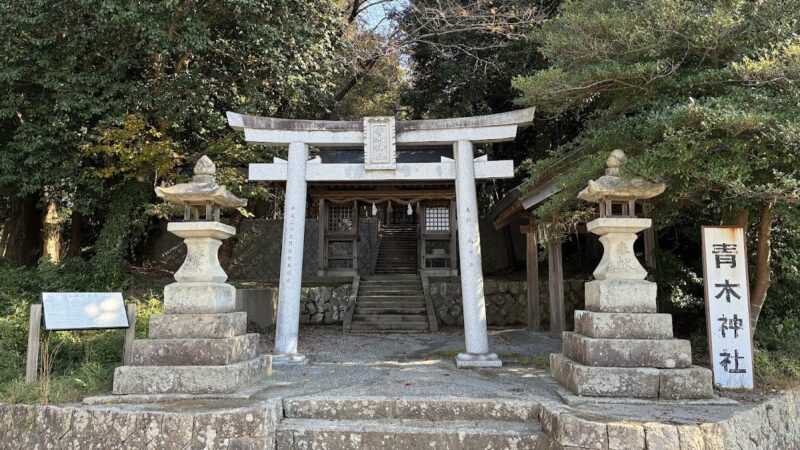
Visiting Mōke Shrine begins at the first torii gate, located on the outskirts of the village. After passing through the torii gate, you’ll first walk along a gentle mountain path. This section is a quiet path surrounded by trees, a time to prepare yourself for the transition from everyday life to the sacred realm.
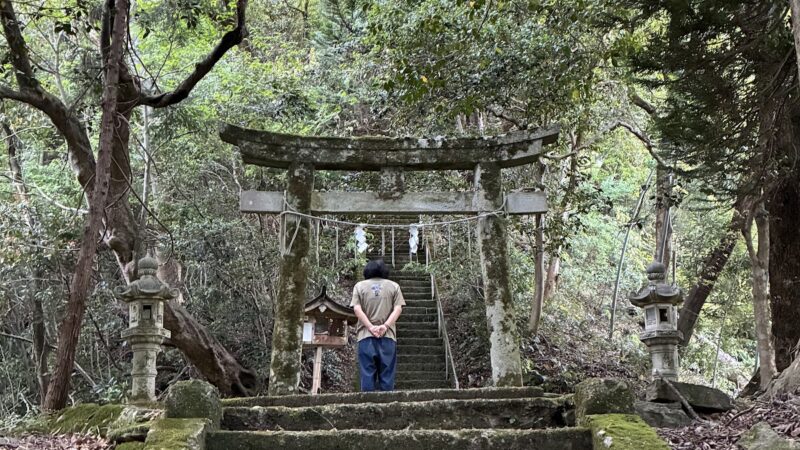
Further along the mountain path, you’ll finally come across the 264 stone steps. These steps were constructed around 1868 (Meiji 1), making this a pilgrimage route with over 150 years of history. Each step is relatively high and the incline is steep, so those who are not confident in their physical strength are advised to climb slowly, taking breaks as needed.
Points of Interest Along the Way
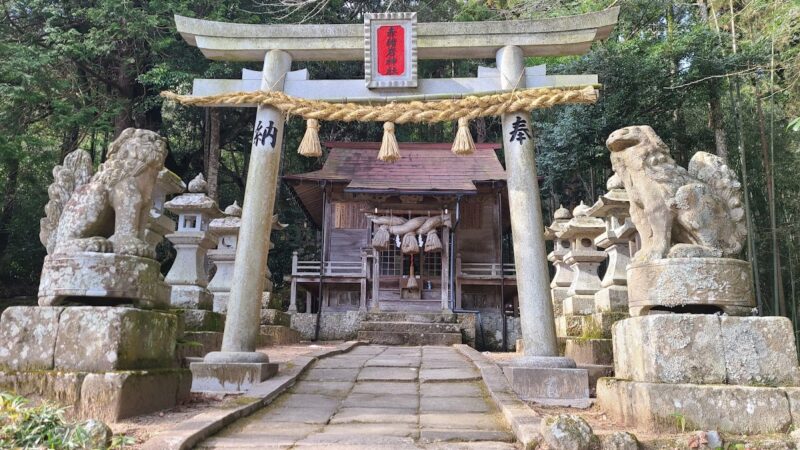
There are several points of interest along the way up the stone steps. First, there is the second torii gate; passing through this gate gives you a sense of approaching the heart of the sacred area.
Further up, you’ll find a guestbook inscribed with “How to Achieve Happiness,” where visitors can write down their wishes and resolutions. Taking a break at this guestbook before tackling the remaining steps is a popular route.
A purification fountain is located halfway up the stone steps; visitors purify themselves here before climbing the final set of steps. While it’s only a short distance from the fountain to the shrine, the final steps are the steepest, requiring careful ascent.
Atmosphere of the Shrine and Grounds
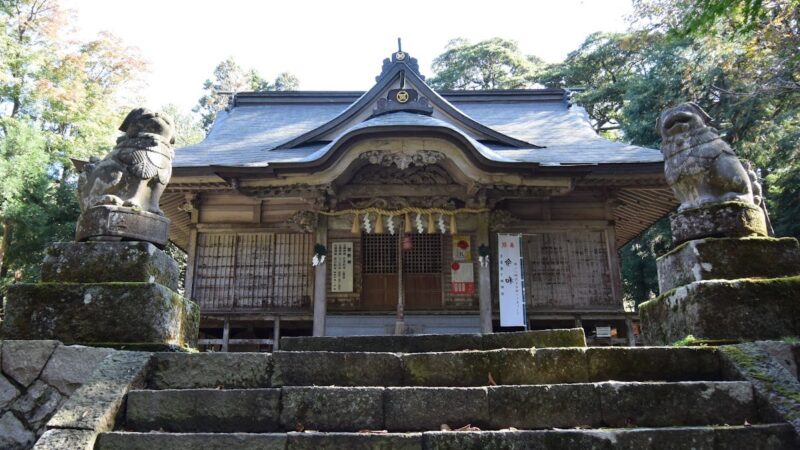
After climbing the 264 stone steps, a serene atmosphere permeates the worship hall. Combined with the sense of accomplishment after the steep climb, the tranquil atmosphere of the grounds is exceptional. Surrounded by trees, the shrine is situated on the mountainside, offering views overlooking the town of Kano.
The worship hall, though simple, is meticulously maintained, reflecting the deep faith of the local people. The main sanctuary is located behind the worship hall, enshrining Amaterasu Omikami and other deities.
The grounds are not particularly large, but this creates an intimate space where one feels closer to the gods. After praying, it’s a good idea to take a break and enjoy the view from the grounds.
Deities and Blessings of Mōuke Shrine
Main Deity: Amaterasu Ōmikami
Amaterasu Ōmikami is the supreme deity in Japanese mythology, a goddess who personifies the sun. She is considered the ancestral deity of the Imperial family and is known for being enshrined at Ise Grand Shrine. She was invited and enshrined at Mōuke Shrine in 1692 (Genroku 5).
Amaterasu Ōmikami’s blessings are wide-ranging, but she is particularly known for national peace and security, good fortune, and protection from evil. Due to her nature as a sun goddess, she is believed to have the power to illuminate and brighten everything, and is also believed to bring blessings for business prosperity and development.
Ōyamatsumi-no-Mikoto
Ōyamatsumi-no-Mikoto is known as the god of mountains and, in Japanese mythology, is considered the child of Izanagi-no-Mikoto and Izanami-no-Mikoto. As the god who rules the mountains, he has been worshipped as the guardian deity of industries such as mining, forestry, and agriculture.
Because Mōuke Shrine is located on the mountainside, it is believed that the local mountain god was enshrined there. The blessings of Ōyamatsumi-no-Mikoto include abundant harvests, industrial development, and family safety.
Ukanomitama-no-Mikoto
Ukanomitama-no-Mikoto is a deity personifying the spirit of rice, and is commonly known as “O-Inari-san.” As the god who presides over food and grains, he is widely worshipped as the god of agriculture and the god of business prosperity.
At Mōuke Shrine, the village’s Inari god and the Inari Daimyōjin of the subsidiary shrine within the grounds are enshrined together, and he plays an important role in the blessings of business prosperity and increased wealth.
General Benefits
The general benefits of Mōuke Shrine include the following:
- Increased Financial Fortune and Business Prosperity: The most famous benefit, associated with the shrine’s name, “Mōke” (profit/profit).
- Business Development and Company Prosperity: Business success through the power of Amaterasu Ōmikami and Inari-no-Mikoto.
- Good Fortune and Prosperity: Increased luck through the power of the sun of Amaterasu Ōmikami.
- Abundant Harvest: Prosperity in agriculture and industry through Ōyamatsumi-no-Mikoto and Inari-no-Mikoto.
- Family Safety: A traditional benefit as a local guardian deity.
Annual Festival and Events
October Festival
The annual festival of Mōuke Shrine is held every October. In addition to traditional Shinto rituals, the festival includes events for local people to enjoy, attracting many worshippers and local residents.
During the annual festival, events such as the procession of the portable shrine and the dedication of sacred dances may take place, making this usually quiet shrine the most vibrant place of the year. Visitors from afar can experience the shrine’s history and local culture more deeply by visiting during this time.
Other Events
Besides the annual festival, various events are held throughout the year, including the New Year’s visit, the Setsubun festival, and the autumn harvest festival. The shrine grounds are particularly lively during the New Year’s visit period, with worshippers praying for business prosperity and increased wealth in the new year.
About Goshuin (Shrine Seals)
Goshuin (shrine seals) are available at Mōke Shrine. While they can be obtained at the shrine office, staff may not always be present, so it is recommended to call ahead to confirm availability.
The goshuin features the calligraphy of “Mōke Shrine” and the shrine’s seal, and is a popular memento of the visit. The Goshuin (seal) of the “Mouke Shrine” holds special significance for those praying for financial luck and business prosperity.
Access and Basic Information
Location
Address: Kawachi, Shikano-cho, Tottori City, Tottori Prefecture 689-0405
Phone: 0857-84-2759 (Mouke Shrine Office)
Access by Car
- Approximately 10 minutes from the Shikano IC on the Tottori Expressway
- Approximately 30 minutes from JR Tottori Station
- Approximately 40 minutes from the Tottori Sand Dunes
There is a free parking lot at the foot of the shrine. It’s a short walk from the parking lot to the first torii gate, but you will need to climb 264 stone steps from there.
Access by Public Transportation
Access by public transportation is somewhat inconvenient. From JR Tottori Station, take a bus towards Shikano and walk from the nearest bus stop. However, since the number of buses is limited, it is recommended to check the timetable before visiting. For tourists, renting a car or taking a taxi is convenient.
Visiting Hours and Admission Fee
Visiting Hours: Grounds are freely accessible (24-hour worship available)
Admission Fee: Free
Closed Days: Open every day
However, the shrine office may be unattended, so it is recommended to contact them in advance if you wish to receive a Goshuin (shrine stamp) or amulet.
Estimated Time Required for Visiting
Including the round trip up the stone steps and worship, it is generally advisable to allow 30 minutes to 1 hour. The stone steps are long, with 264 steps, and the slope is steep, so those who are not confident in their physical strength or elderly people are advised to visit with plenty of time to spare.
Nearby Tourist Attractions
Kano Castle Ruins Park
Located about 5 minutes by car from Mōke Shrine, Kano Castle Ruins Park is the site of Kano Castle, which functioned as a strategic point in Inaba Province from the Sengoku period to the Edo period. It is now a park and is also known as a famous cherry blossom viewing spot. In spring, approximately 500 cherry trees bloom, attracting many visitors for cherry blossom viewing.
Shikano Onsen
Shikano Town is home to Shikano Onsen, a hot spring resort perfect for a stop after visiting Mouke Shrine. You can soothe your tired body in the hot springs after climbing the 264 stone steps. Day-use bathing facilities are also available, making it easily accessible for tourists.
Tottori Sand Dunes
Tottori Sand Dunes, a representative tourist destination of Tottori Prefecture, is about a 40-minute drive from Mouke Shrine. As one of Japan’s largest sand dunes, you can enjoy magnificent scenery. Visiting both Mouke Shrine and Tottori Sand Dunes will enhance your Tottori sightseeing experience.
Tottori City Center
Tottori City center is about a 30-minute drive away. Tourist facilities such as Tottori Castle Ruins, Jinpukaku, and Warabe-kan offer opportunities to experience Tottori’s history and culture. You can also enjoy seafood and other Tottori specialties.
Points to Note and Etiquette When Visiting the Shrine
About the Stone Steps
The 264 stone steps are not easy. Please pay attention to the following points when visiting:
- Comfortable Shoes: Wear comfortable walking shoes such as sneakers. Avoid heels and sandals.
- Hydration: Especially in summer, bring water and drink frequently.
- Breaks: Don’t push yourself too hard; take breaks along the way.
- Weather: The stone steps become slippery in rainy weather, so extra caution is needed.
Shrine Visiting Etiquette
Please observe basic shrine visiting etiquette:
- Bow before passing through the torii gate.
- Avoid walking in the center of the path (the center is the path of the gods).
- Cleanse your hands and mouth at the purification fountain.
- Perform “two bows, two claps, one bow” in front of the main hall.
- After praying, turn around and bow as you leave the torii gate.
Photography
Photography is generally permitted on the shrine grounds, but there are places and times when photography is prohibited, such as inside the main hall or during Shinto rituals. If you are unsure, please check with the shrine office. Also, please be considerate of other visitors.
Summary: The Charm of Mōke Shrine
Mōke Shrine is a shrine famous nationwide for its auspicious name, “Mōke” (meaning “profit” or “profit”), and is known for bringing good fortune and business prosperity. However, its charm extends far beyond that.
The long history of reverence as the local guardian deity, the tranquil atmosphere that unfolds after climbing 264 stone steps, the views from the mountainside, and above all, the warm welcome to visitors—all of these elements combine to offer visitors a special experience at Mouke Shrine.
It’s a shrine that can be enjoyed for a variety of purposes, whether you’re praying for business prosperity or increased wealth, want to visit a historical shrine, enjoy a power spot tour, or are visiting as part of your Tottori sightseeing.
We encourage you to visit and experience for yourself the blessings and divine virtues that await you after overcoming the challenge of climbing 264 stone steps. You’re sure to feel a sense of accomplishment upon reaching the top, and it will be a memorable pilgrimage experience.
When visiting Tottori Prefecture, why not add a visit to Mouke Shrine to your itinerary? You’re sure to gain wonderful memories along with the blessings of “profit.”