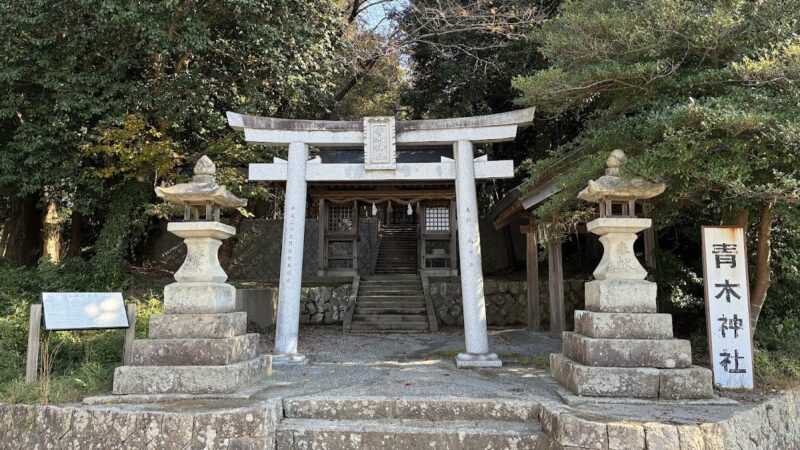
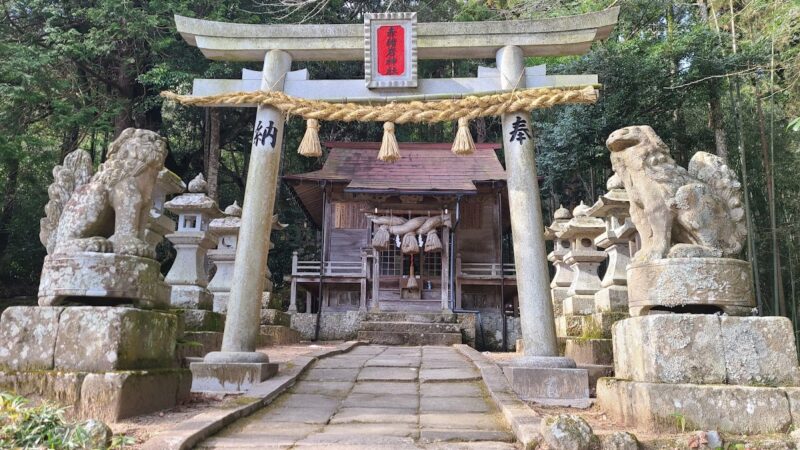
Awashima Shrine (Yonago City, Tottori Prefecture) Complete Guide | The Legend of the 187 Stone Steps and the God Who Crossed to the Land of Eternity
Awashima Shrine, located in Hikona-cho, Yonago City, Tottori Prefecture, is an ancient shrine built on a sacred mountain approximately 38 meters high, which was once a small island floating in Lake Nakaumi. From the summit, reached by climbing 187 long stone steps, you can enjoy a panoramic view of Lake Nakaumi and the city of Yonago. The history of faith and mystical legends that have continued since the age of the gods still breathe life into this shrine.
This article will introduce all the charms of Awashima Shrine, from its history and enshrined deities to access methods, highlights, and nearby tourist spots.
Basic Information about Awashima Shrine
Location: 1404 Hikona-cho, Yonago City, Tottori Prefecture 683-0854
Deity Enshrined: Sukunahikona-no-Mikoto
Founding: Unknown (An object of worship since ancient times)
Shrine Rank: Former Village Shrine
Cultural Properties: City-designated scenic spot (Awashima Island), Prefectural-designated natural monument (Awashima Shrine forest)
Parking: Available (Free)
Visiting Hours: Open for worship at any time
Awashima Shrine is counted as one of the Awashima Shrines and has been revered since ancient times as a god of medicine, magic, and longevity.
The History and Origins of Awashima Shrine
A Place of Worship Since Ancient Times
The history of Awashima Shrine is ancient, with a description found in the lost fragments of the “Hoki no Kuni Fudoki” (713 AD) – cited in Volume 7 of the Shaku Nihongi. It states, “In the northwest of the houses of Aimi County, there is a village called Awashima. Sukunahikona no Mikoto sowed millet, and the grains separated. He then carried the millet across to the land of Tokoyo, hence the name Awashima.” This legend tells of Sukunahikona no Mikoto sowing millet, which then separated from the mainland. He then carried the millet across to the land of Tokoyo, hence the name “Awashima” (millet island).
Formerly a Small Island in Lake Nakaumi
Although Awashima is now connected to the mainland of Yonago city, until the Edo period it was an independent small island in Lake Nakaumi. Land reclamation for the development of new rice fields in the surrounding area led to its connection to the mainland. The entire island is revered as Kannabi-yama, a sacred mountain where gods reside, and it is believed that in ancient times, the shrine was located at the foot of the mountain.
Repeated Fires and Loss of Records
Awashima Shrine has suffered from repeated fires, resulting in the loss of many records, so the exact founding date is unknown. However, based on the legend of Empress Jingu and traces of ancient beliefs, it is certain that rituals were performed there from a considerably early period. The current shrine is built on the mountaintop, welcoming worshippers with its imposing copper-plated roof.
The Deity Enshrined: Sukunahikona-no-Mikoto and His Divine Virtues
God of Nation Building
Sukunahikona-no-Mikoto is a god who appears in the Kojiki and Nihon Shoki, and it is said that he was so small that he could fit in the palm of your hand. In ancient times, together with Onamuchi-no-Mikoto (Okuninushi-no-Mikoto), he pioneered this country and dedicated himself to nation-building. ### God of Medicine and Magic
Sukunahikona-no-Mikoto is known as a god who taught people medical methods, bestowed upon them the art of magic, and saved them from all kinds of illnesses. Therefore, he is believed to have divine virtues for healing illnesses, praying for good health, and granting longevity, and has attracted deep devotion since ancient times.
The Last Place of His Journey to Tokoyo-no-Kuni
After completing the creation of the nation, Sukunahikona-no-Mikoto departed for Tokoyo-no-Kuni (the Land of Eternity). It is said that Awashima Island was his final destination, and Awashima Shrine is considered a place of special spiritual significance as the starting point of Sukunahikona-no-Mikoto’s journey to Tokoyo-no-Kuni.
Highlights of Awashima Shrine
187 Stone Steps
The first thing you’ll see when visiting Awashima Shrine is the long 187 stone steps leading to the mountaintop. These stone steps are incredibly steep, seemingly leading to the heavens, and require considerable stamina to climb. However, with each step you ascend, you feel refreshed and experience a sense of purification of mind and body.
From the middle of the steps, views of Lake Nakaumi and Yonago city unfold, reminding you that this was once an island. In autumn, the autumn foliage is beautiful, and it’s known as a scenic spot for autumn moon viewing.
Shrine at the Summit
At the summit, approximately 38 meters above sea level, reached by climbing 187 stone steps, stands a magnificent shrine with a copper-plated roof. Surrounded by a lush forest, it’s a tranquil space imbued with a sacred atmosphere. The view from the shrine is also superb, offering panoramic views of Lake Nakaumi, Mount Daisen, and Yonago city.
Awashima Shrine Forest (Prefectural Designated Natural Monument)
The forest covering the grounds of Awashima Shrine is designated as a natural monument of Tottori Prefecture, known as the “Awashima Shrine Forest.” It is a lush evergreen forest, including Japanese cinnamon (Lauraceae), creating a mystical atmosphere as if Totoro might live there. Locally, it is also known as “Totoro’s Forest” and is popular with children.
Awashima Island (City Designated Scenic Spot)
Awashima Island itself is a designated scenic spot of Yonago City, and the entire small hill, approximately 36 meters high, is protected as a cultural property. Its geographical features as a small island that once floated in Lake Nakaumi, and its history of ancient religious beliefs, are highly valued.
Legends of Awashima Shrine
The Legend of Yaobikuni (Shizuka’s Cave)
The legend of Yaobikuni is passed down at Awashima Shrine. The legend of Yaobikuni refers to a nun who is said to have lived to be 800 years old after eating the flesh of a mermaid. Awashima Island has a place called “Shizuka no Iwaya” (Quiet Cave), and there is a legend that Yaobikuni practiced asceticism in this cave.
This legend is linked to the belief in longevity and is one of the reasons why Awashima Shrine is revered as a sacred site for praying for long life.
The Legend of Sukunahikona-no-Mikoto and Millet
According to the legend recorded in the aforementioned “Hoki no Kuni Fudoki” (Gazetteer of Hoki Province), Sukunahikona-no-Mikoto sowed millet and carried the grain to the land of Tokoyo (the eternal world). Because of this legend, millet is treated as a sacred plant at Awashima Shrine, and it is also the origin of the island’s name.
The Legend of Empress Jingu
Awashima Shrine also has a legend related to Empress Jingu. Legend says that Empress Jingū prayed here during her conquest of the Three Kingdoms of Korea, indicating that this area has been an important site of religious ceremonies since ancient times.
The Benefits and Proper Way to Visit Awashima Shrine
Main Benefits
- Healing from Illness: Divine virtue as the god of medicine
- Prayer for Health: Protection of physical and mental health
- Longevity: Benefits of longevity linked to the legend of Yaobikuni
- Protection from Evil: Power as a god who bestowed magical powers
- Prayer for Safe Childbirth: Faith associated with the Awashima Shrine lineage
Proper Way to Visit
- Bow before passing through the torii gate
- Slowly climb the 187 stone steps (take breaks as needed)
- Bow twice, clap twice, and bow once in front of the shrine at the summit
- State your wish specifically in your heart
- After visiting, enjoy the nature and views of the shrine grounds
Access to Awashima Shrine
Access by Car
- From Yonago IC on the San’in Expressway: Approximately 15 minutes
- From Yonago city center: Approximately 10 minutes on Prefectural Road 47 (Uchihama Industrial Road) towards Sakaiminato
- Parking: Free parking available near the shrine entrance (several spaces)
Access by public transport
- From JR Yonago Station: Take the Hinomaru Bus bound for Sakaiminato and get off at the “Hikona” bus stop, then walk for approximately 10 minutes.
- From Yonago Airport: Approximately 10 minutes by taxi
Points to note
- There are 187 stone steps, so we recommend wearing comfortable shoes for your visit.
- Insect repellent spray is useful in the summer.
- The stone steps can become slippery in rainy weather, so please be careful.
Tourist attractions around Awashima Shrine
Yonago Waterfowl Park
Yonago Waterfowl Park, located about 5 minutes by car from Awashima Shrine, is a popular spot for bird watching over Lake Nakaumi. In winter, thousands of Bewick’s swans and Greater White-fronted Geese migrate to the area, making it a great spot for birdwatching. From Awashima Shrine, you can also enjoy views of the waterfowl park across Lake Nakaumi.
Munakata Shrine
An ancient shrine located in Yonago City, dedicated to the Munakata Three Goddesses, the gods of the sea. Many people visit this shrine along with Awashima Shrine, making it a place where you can feel the history of Yonago.
Wada Misaki Shrine
Located in Wada-cho, Yonago City, this shrine is worshipped as a guardian deity of maritime safety and fishing. It’s a recommended stop on a tour of shrines along Lake Nakaumi.
Kamo Shrine Tenmangu
Located in Kamo-cho, Yonago City, this shrine enshrines Sugawara no Michizane, the god of learning. Many visitors come to pray for success in exams and academic achievement.
Yonago City Museum of Art & Sculpture Road
Around the Yonago City Cultural Hall, there’s a “Sculpture Road” dotted with sculptures, allowing you to enjoy art while strolling. Recommended for sightseeing in the city after visiting Awashima Shrine.
Annual Events at Awashima Shrine
Awashima Shrine holds various festivals throughout the year, supported by the local community.
Annual Grand Festival
The annual grand festival, held every autumn, is the most important event at Awashima Shrine. Local parishioners and devotees gather for a portable shrine procession and Kagura (sacred dance) performances.
New Year’s Visit
From New Year’s Day to the third day, many worshippers visit to pray for longevity and good health. Some even climb the 187 stone steps to see the first sunrise of the year.
Best Season to Visit Awashima Shrine
Spring (March-May)
The forest is brimming with life during this season of fresh greenery. The trees around the stone steps are budding, making for a refreshing visit.
Autumn (September-November)
Awashima Shrine, known as a scenic spot for the autumn moon, is at its most beautiful in autumn. The stone steps adorned with autumn leaves and the moon reflected in Lake Nakaumi are exceptional.
Winter (December-February)
The air is clear, offering excellent views, and on clear days, you can see the snow-covered landscape of Mt. Daisen. However, caution is advised as the stone steps may freeze.
Tips for Maximizing Your Enjoyment of Awashima Shrine
Early Morning Visit Recommended
Visiting during the quiet early morning hours allows you to feel the sacred atmosphere more deeply. The view of Lake Nakaumi illuminated by the morning sun is also beautiful, refreshing both mind and body.
Slowly Climbing the Stone Steps
The 187 stone steps are steep, but by climbing slowly and without rushing, you can feel the history of faith embedded in each step. It’s also recommended to look back and enjoy the scenery along the way.
Observing the Nature of the Shrine Grounds
The shrine’s forest, a prefecturally designated natural monument, is home to a diverse range of plants, including Japanese cinnamon. Listen to the chirping of wild birds and the rustling of the trees, and experience a sense of oneness with nature.
Reflecting on History and Legends
Reflecting on the various histories and legends—such as the fact that this was once a small island floating in Lake Nakaumi, that it was the place where Sukunahikona-no-Mikoto crossed to the land of Tokoyo, and that there is a cave where Yaobikuni practiced asceticism—will make your visit a deeper experience.
The Historical Connection Between Awashima Shrine and Yonago
Awashima Shrine is deeply connected to the history of Yonago City. This region, formerly part of the ancient Aimi District, was a crucial point for maritime traffic across Lake Nakaumi, and Awashima Island played an important role as a navigational landmark.
During the Edo period, it became part of the Yonago Domain, and while the surrounding area was reclaimed for land development, Awashima Island itself continued to be protected as a sacred site. The faith of the local people and their reverence for the mountain as a dwelling place of the gods have preserved and passed down this shrine to this day.
Summary: Awashima Shrine is a sacred and ancient shrine that Yonago is proud of.
Awashima Shrine, located in Hikona-cho, Yonago City, Tottori Prefecture, is a sacred and ancient shrine with many attractions, including its 187 stone steps, the legend of Sukunahikona-no-Mikoto crossing to the land of Tokoyo, the cave of Yaobikuni, and the shrine’s forest, a prefecturally designated natural monument.
This sacred mountain, standing 38 meters high, was once a small island in Lake Nakaumi. It continues to uphold ancient beliefs, bestowing blessings upon worshippers for longevity, healing from illness, and good health.
When visiting Yonago City, be sure to visit Awashima Shrine, climb the 187 stone steps to the summit, admire the magnificent view of Lake Nakaumi, and experience the divine blessings of Sukunahikona-no-Mikoto. In this tranquil space surrounded by a mystical forest, you will feel refreshed both physically and mentally.
Awashima Shrine is a precious cultural heritage that Yonago is proud of, where history and legend, nature and faith harmonize. We hope this article will be helpful to those planning a visit to Awashima Shrine.