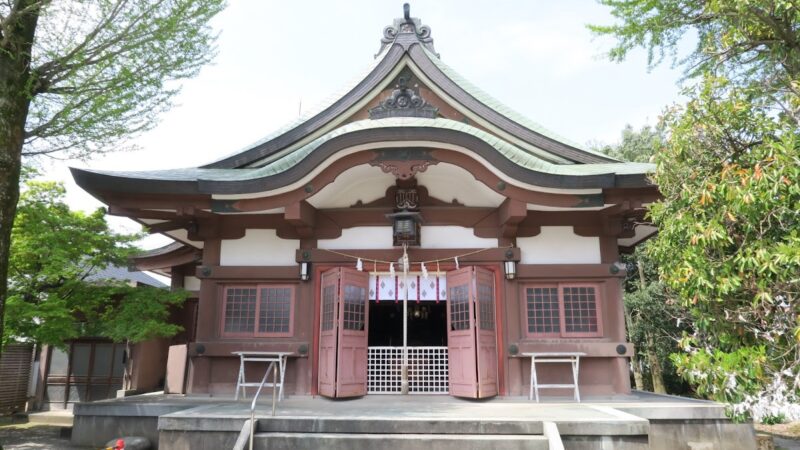
Matsuo Shrine (Fusemachi Minami, Toyama City, Toyama Prefecture) Complete Guide | History, Deities, Access, and Highlights Explained in Detail
Matsuo Shrine, located in Fusemachi Minami, Toyama City, is a shrine beloved by local residents, yet its details are not widely known. This article provides a detailed explanation of Matsuo Shrine’s history, enshrined deities, highlights within the grounds, access methods, and its relationship to the nationwide network of Matsuo Shrines.
Basic Information on Matsuo Shrine (Fusemachi Minami, Toyama City)
Location and Access
Matsuo Shrine is located at 1-13-15 Fusemachi Minami, Toyama City, Toyama Prefecture. It is situated near the Matsukawa River and close to the “Matsukawa Water Purification Facility,” which introduces purified water from the Tsuchikawa River, making it easily accessible from central Toyama City.
Address: 1-13-15 Fusemachi Minami, Toyama City, Toyama Prefecture 939-8208
Access
- Public Transportation: Take a local bus from Toyama Station towards Fusemachi, then a 5-minute walk from the nearest bus stop.
- Car: Approximately 15 minutes by car from central Toyama City; parking available.
- Bicycle: Rental bicycles from Toyama City’s “Avire” service are available; the area around the shrine is flat and easy to cycle around.
History and Origins of Matsuo Shrine
Relationship between Matsuo Shrines Nationwide and the Head Shrine, Matsuo Taisha
The head shrine of the Matsuo Shrines scattered throughout Japan is Matsuo Taisha, located in Arashiyama, Nishikyo-ku, Kyoto City. Matsuo Taisha is an ancient shrine said to have been founded in 701 AD (Taiho 1), and is a highly prestigious shrine listed in the Engishiki (ancient Japanese legal code) as a Myojin Taisha (a major shrine listed in the Engishiki) in Kadono District, Yamashiro Province.
Matsuo Taisha Shrine has been worshipped since ancient times by the Hata clan, a clan of immigrant origin. The Hata clan excelled in sericulture, weaving, and especially sake brewing techniques, spreading these skills throughout Japan. For this reason, Matsuo Taisha Shrine is widely revered as the “god of sake brewing” and is worshipped by sake brewers nationwide.
Matsuo Shrine in Minami-Fuse-machi, Toyama City, is also thought to be one of the shrines that enshrined the deity of Matsuo Taisha Shrine. The reason why Matsuo Shrines were branched off throughout Japan is related to the development of the sake brewing industry and the expansion of the Hata clan’s activities.
Establishment of Matsuo Shrines in Toyama
Several Matsuo Shrines exist within Toyama Prefecture. While detailed records of the founding date of Matsuo Shrine in Minami-Fuse-machi, Toyama City, are limited, it is presumed to be deeply connected to the development of the region and its industrial growth.
The Fuse area developed along the Matsukawa River, and water transport and agriculture flourished there. The deity enshrined at Matsuo Shrine, Ōyamakui-no-kami, possesses characteristics of both a mountain god and a water god, and has been worshipped as a god who presides over the blessings of water related to agriculture and brewing.
Enshrined Deity and Divine Virtues
Main Deity: Ōyamakui-no-kami
The main deity enshrined at Matsuo Shrine is Ōyamakui-no-kami. This god is an ancient deity that appears in the Kojiki (Records of Ancient Matters) and is also known as the mountain god of Mount Hiei (Hieyama). The character “kui” means “stake,” signifying a ruler of the mountains who resides there as if a stake had been driven into the mountain.
Oyamakui-no-kami is believed to possess the following divine virtues:
- Protection of Brewing: Guardian deity of brewing industries such as sake, miso, and soy sauce.
- Protection of Agriculture: Prayers for abundant harvests and bountiful harvests.
- Water Management and Water Resources: Protection of water sources and safe irrigation.
- Good Fortune and Prosperity: Business prosperity and family safety.
- Protection from Misfortune: Protection from disasters and healing from illness.
Enshrined Deity: Nakatsushima-hime-no-mikoto
At Matsuo Taisha Shrine, Nakatsushima-hime-no-mikoto (Ichikishima-hime-no-mikoto) is enshrined alongside Oyamakui-no-kami. This goddess is one of the three Munakata goddesses and is worshipped as a goddess of water and navigation. She also possesses characteristics as a goddess of beauty and performing arts, and is sometimes identified with Benzaiten.
Highlights of the Shrine Grounds
Spring Weeping Cherry Blossoms
The greatest highlight of Matsuo Shrine is the beautiful weeping cherry blossoms that bloom in spring. The weeping cherry trees on the grounds are magnificent, mature trees, and when in full bloom, the drooping cherry blossoms create a fantastical scene, like a waterfall.
Best Viewing Time: Typically early to mid-April
It is known as a popular cherry blossom viewing spot, attracting many visitors from both the local area and surrounding regions. During cherry blossom season, you can enjoy a deeply evocative landscape where the tranquil atmosphere of the shrine harmonizes with the splendor of the cherry blossoms.
Atmosphere of the Shrine and Grounds
Despite being located in an urban area, the grounds of Matsuo Shrine offer a quiet and peaceful space. The shrine buildings maintain traditional shrine architectural styles and are carefully maintained by local residents.
The grounds are neither too large nor too small, allowing visitors to worship comfortably. The purification fountain, worship hall, and main shrine are arranged, and the environment is kept clean and well-maintained. ### Location of the Matsukawa Water Purification Facility
The Matsukawa Water Purification Facility is located very close to the shrine. This facility introduces purified water from the Tsuchikawa River into the Matsukawa River and plays an important role in water environment conservation in Toyama City.
It is symbolic that Matsuo Shrine, which enshrines Oyamakui-no-kami, a deity associated with water, is situated so close to the water purification facility. This creates an interesting landscape where modern environmental conservation technology and ancient water deity worship coexist.
Annual Events and Festivals
Grand Festival
Matsuo Shrine holds various festivals throughout the year. As the local guardian shrine, it holds annual events such as the spring Kinensai (harvest festival) and the autumn Niinamesai (harvest festival), attracting the faith of local residents.
New Year’s Visits and Worship
At the start of the new year, visitors come for their first shrine visit of the year. While not as crowded as large shrines, the atmosphere is quiet yet warm as local people pray for peace and prosperity in the new year.
Other Matsuo Shrines in Toyama Prefecture
There are several Matsuo Shrines in Toyama Prefecture. Each is intertwined with local history and industry, making them interesting subjects for comparative research.
Matsuo Shrine in Oyabe City
There is also a Matsuo Shrine in Matsuo, Oyabe City. It is located approximately 4 km southwest of Isurugi Station on the Hokuriku Main Line and is accessible from National Routes 42 and 274. The shrine grounds face east, and the main hall is located at the top of a flight of stairs.
This Matsuo Shrine is also worshipped locally as the god of brewing and has its own unique history and traditions.
Other Matsuo Shrines in Toyama Prefecture
According to records from the Toyama Prefectural Shrine Association, there are as many as 610 shrines in Toyama City alone. Among them, there are several shrines with the name Matsuo Shrine, each serving as a spiritual pillar for its local community.
Major Matsuo Shrines Nationwide
Matsuo Taisha (Nishikyo-ku, Kyoto City, Kyoto Prefecture)
Matsuo Taisha, the head shrine, is a Shikinaisha (a shrine listed in the Engishiki, an ancient Japanese legal code) located in Arashiyama Miyacho, Nishikyo-ku, Kyoto City. It is said to have been founded in 701 AD (Taiho 1), and is an ancient shrine that has been located in this area since before the relocation of the capital to Heian-kyo.
Within the shrine grounds is a sacred spring called “Kame no I” (Turtle Well). It is believed that using this water in sake brewing produces high-quality sake, and sake brewers from all over Japan visit to pray. Every April, the “Matsuo Festival” is held with great fanfare, including a procession of portable shrines.
Matsuo Shrines in the Kanto Region
Matsuo Shrine in Fuchu City, Tokyo, was established in 1800 (Kansei 12) at the request of a brewer from Musashi Province, having been invited from Matsuo Taisha in Kyoto. The torii gate, erected in 1807 (Bunka 4), bears the names of the brewers who donated it, demonstrating its deep connection to the sake brewing industry.
Other Matsuo Shrines
- Matsuo Shrine in Higashitani, Nagaoka City, Niigata Prefecture
- Matsuo Shrine in Machii, Shiga-machi, Hakui-gun, Ishikawa Prefecture
- Matsuo Shrine in Uguisu-cho, Kanazawa City, Ishikawa Prefecture
- Matsuo Shrine in Tateno-cho, Matsusaka City, Mie Prefecture
- Matsuo Shrine in Hiramatsu, Konan City, Shiga Prefecture
These shrines, each with its own unique history in its respective region, enshrine the deities of Matsuo Taisha and are revered as guardian deities of the brewing and agriculture industries.
Matsuo Shrine and Japanese Sake Brewing Culture
The Hata Clan and the Transmission of Brewing Technology
The existence of the Hata clan is indispensable when discussing the history of Matsuo Shrine. The Hata clan is believed to have migrated from the Korean Peninsula around the 5th century and possessed advanced civil engineering, sericulture, and brewing techniques.
The Hata clan established their base in the Sagano-Uzumasa area of Kyoto and founded Matsuo Taisha Shrine at the foot of Mount Matsuo. The brewing techniques they brought with them formed the foundation of Japan’s sake brewing culture, and Matsuo Taisha Shrine became known nationwide as the “god of sake brewing.”
Modern Sake Brewing and Matsuo Faith
Even today, sake breweries and brewers throughout Japan visit Matsuo Taisha Shrine and various Matsuo shrines to pray for the success and safety of their brewing process. Before brewing new sake and during the sake brewing season, master brewers and brewery workers visit the shrines to perform Shinto rituals.
Toyama Prefecture is also known as a sake-producing region, producing nationally acclaimed brands such as “Tateyama,” “Masuizumi,” and “Katsukoma.” Matsuo Shrine in Minami-Fusemachi, Toyama City, is also connected to the local brewing culture, and it is believed that the worship of the god of water and brewing has been passed down through generations.
The Position of Matsuo Shrine in Toyama City’s Shrine Culture
Major Shrines in Toyama City
Toyama City has many shrines, each deeply connected to the local history and culture.
Hie Shrine (Sanno-san): Located in Sanno-machi, Toyama City, this shrine is affectionately known as “Sanno-san.” It was deeply revered by the Maeda family, successive lords of Toyama Castle, and the Sanno Festival is held annually from May 31st to June 2nd. It is one of Toyama City’s representative shrines.
Toyama Prefectural Gokoku Shrine: Located in Isobe-machi, Toyama City, this shrine enshrines the spirits of those who sacrificed their lives for the country. It boasts vast grounds and is also known as a famous cherry blossom viewing spot.
Oyama Shrine: A central shrine of Tateyama worship, it consists of three shrines: the main shrine at the summit of Mt. Tateyama, the Ashikura Middle Shrine, and the Iwakura Front Shrine. It is a representative center of sacred mountain worship in Toyama Prefecture.
Matsuo Shrine as a Local Guardian Deity
Compared to these large-scale shrines, Matsuo Shrine is a smaller shrine with a strong character as a local guardian deity. However, precisely because of this, it is close to the local residents and is cherished as an object of daily worship.
For the residents of the Fuse district, Matsuo Shrine is an integral part of their lives, a familiar sacred place they visit at seasonal and life-changing occasions. Even without large-scale festivals, it plays an important role as a quiet watchful presence over the community.
Etiquette and Manners for Worship
Basic Worship Etiquette
When visiting Matsuo Shrine, please observe the following basic etiquette.
- Bow at the Torii Gate: Bow before entering the shrine grounds at the torii gate.
- Walking the Path: Walk along the sides of the path, as the center is considered the path of the gods.
- Watering Procedure: Cleanse your hands at the water basin in the order of left hand, right hand, and mouth.
- Worship at the Main Hall: The basic procedure is two bows, two claps, and one bow (two bows, two claps, one bow).
- Bow Upon Exit: When leaving the shrine grounds, turn back at the torii gate and bow.
Photography Etiquette
Photography is generally permitted on the shrine grounds, but please note the following:
- Do not take photos in areas where photography is prohibited, such as inside the main hall.
- Be considerate of other worshippers.
- Refrain from taking photos when Shinto rituals are being performed.
- Check in advance before using a tripod.
Enjoying Shrine Visits by Season
Spring (March-May): April, when the weeping cherry blossoms are in full bloom, is the most recommended time to visit. Visiting the shrine under the cherry blossoms offers a particularly special experience.
Summer (June-August): The fresh greenery is beautiful, and the shrine grounds are enveloped in a cool, refreshing atmosphere. Even on hot days, you can find shade to cool off.
Autumn (September-November): During the autumn foliage season, the trees on the shrine grounds change color, allowing you to enjoy a tranquil autumnal atmosphere.
Winter (December-February): The shrine grounds, covered in snow, are enveloped in silence, creating a solemn atmosphere. During the New Year’s visit season, you can feel the refreshing air of the new year.
Nearby Attractions and Recommended Spots
Stroll along the Matsukawa River
The Matsukawa River, close to Matsuo Shrine, is a representative scenic spot in Toyama City. In spring, approximately 500 Somei Yoshino cherry trees bloom, and it has been selected as one of “Japan’s Top 100 Cherry Blossom Viewing Spots.” Sightseeing boats also operate, allowing you to enjoy the cherry blossoms from the water.
A cherry blossom viewing course that combines the weeping cherry trees at Matsuo Shrine and the Somei Yoshino cherry trees along the Matsukawa River is a recommended route to fully enjoy spring in Toyama.
Toyama Glass Museum
In the heart of Toyama City is the Toyama Glass Museum, designed by Kengo Kuma. This cultural facility symbolizes “Toyama, the City of Glass,” and allows visitors to admire masterpieces of contemporary glass art. Visiting it in conjunction with a visit to Matsuo Shrine is highly recommended.
Toyama Castle Park
This park, developed on the site of Toyama Castle, features a castle tower (local history museum) and a Japanese garden. It’s a popular tourist spot where you can learn about the history of Toyama City.
Toyama Shrine Pilgrimage and Matsuo Shrine
Toyama Prefectural Shrine Association and Shrine Network
The Toyama Prefectural Shrine Association is the organization that oversees shrines in the prefecture, supporting the training of Shinto priests and the maintenance of shrines. There are numerous shrines in Toyama Prefecture, each playing an important role in conveying the history and culture of the region.
Matsuo Shrine is also affiliated with the Toyama Prefectural Shrine Association and, as part of the prefecture’s shrine network, contributes to the preservation of traditional Shinto culture.
Recommended Shrine Pilgrimage Course
When visiting shrines in Toyama City, the following course is recommended:
- Hie Shrine (Sanno-san) – A representative shrine of Toyama City
- Toyama Prefectural Gokoku Shrine – A vast precinct also famous for its cherry blossoms
- Matsuo Shrine – A tranquil local shrine
- Hachiman Shrine – A historically significant local shrine
Each shrine has a different character and history, allowing you to experience the diverse religious culture of Toyama.
The Future of Matsuo Shrine and its Connection to the Community
As a Center of the Local Community
In modern society, shrines play a role beyond that of mere religious institutions. They fulfill multifaceted functions as gathering places for local communities, places for cultural transmission, and spiritual havens.
Matsuo Shrine is maintained through the cooperation of local residents, and through activities such as cleaning and preparations for festivals, it serves as a place to deepen community bonds.
Passing on to the Next Generation
In today’s society, where the birthrate is declining and the population is aging, how to pass on shrine culture to the next generation is a crucial issue. Small local shrines like Matsuo Shrine face this challenge even more acutely than large shrines.
However, the deeply rooted faith and the beautiful seasonal scenery (especially the weeping cherry blossoms) are attractive to younger generations. New forms of faith transmission are being explored through information dissemination on social media and collaboration with local events.
Environmental Conservation and Shrines
Located near the Matsukawa Water Purification Facility, Matsuo Shrine is also connected to the modern issue of water environment conservation. Historically, shrines have played a role in preserving the natural environment as “guardian forests.”
Even today, shrine grounds are valuable green spaces in urban areas, contributing to the conservation of biodiversity and the mitigation of the urban heat island effect. The grounds of Matsuo Shrine are also being re-recognized for their value as a vital part of local environmental conservation.
Summary: The Charm and Value of Visiting Matsuo Shrine
Located in Minami, Fuse-machi, Toyama City, Matsuo Shrine is a historic shrine that enshrines the deity of Matsuo Taisha Shrine in Kyoto, and is part of a nationwide network of Matsuo Shrines.
While not a large-scale tourist shrine, it is deeply rooted in the community as a local guardian shrine, closely intertwined with the lives of the residents. The weeping cherry blossoms in spring are particularly beautiful, allowing visitors to experience the changing seasons and the beauty of Japan.
Dedicated to Oyamakui-no-kami, the god of brewing, water, and mountains, Matsuo Shrine symbolizes Toyama’s abundant water and nature, as well as its brewing culture. Its location near the clear waters of the Matsukawa River and a water purification facility creates a symbolic landscape where ancient water deity worship and modern environmental conservation coexist.
When you visit Toyama, be sure to visit not only the famous tourist spots, but also these small, locally rooted shrines. The time spent praying in the quiet grounds will surely add depth to your travel memories.
Matsuo Shrine is a precious cultural heritage site that conveys the history, culture, and faith of the local people of Toyama. The essence of Japanese shrine culture breathes within its tranquil atmosphere.