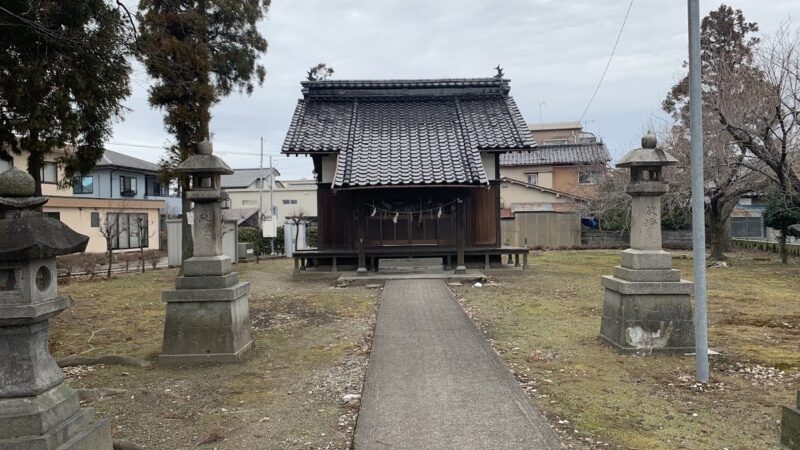
Suwa Shrine (Ishigane, Toyama City, Toyama Prefecture) Complete Guide | History, Deities, and Access Information
The Suwa Shrine, located in Ishigane, Toyama City, Toyama Prefecture, is a small, locally rooted shrine that has preserved a long history and faith. This article delves deeply into the local faith and history, from detailed information about the Suwa Shrine to the surrounding shrine environment and the shrine culture of Toyama City.
Basic Information about Suwa Shrine
Location and Access
Location: 94 Ishigane, Toyama City, Toyama Prefecture
Postal Code: 930-0966
The Suwa Shrine is located in the Ishigane district of Toyama City, situated in a residential area slightly southeast of the city center. The Ishigane district is close to the city center of Toyama City, maintaining a quiet environment despite being within a residential area.
Transportation Access:
- Access by Car: Approximately 15 minutes from the city center of Toyama City. The shrine is accessible via National Route 41 and prefectural roads. Parking is limited in the surrounding area, so please be considerate of local residents when visiting.
- Public Transportation: Within walking distance of the nearest Toyama Chihō Railway bus stop. Please check the Toyama Chihō Railway official website for detailed bus routes.
Deities and Beliefs
Based on the name of the Suwa Shrine, the principal deity is presumed to be Takeminakata-no-kami. Takeminakata-no-kami is a deity of the Suwa faith, with the Suwa Grand Shrine in Shinano Province (present-day Nagano Prefecture) as its head shrine, and numerous Suwa shrines and Suwa-sha exist throughout Japan.
Divine Characteristics of Takeminakata-no-Kami:
- Character as a God of War and Martial Arts
- Worship as a God of Agriculture and Water
- Guardian Deity of Hunting
- Divine Virtue for Abundant Harvests and Business Prosperity
Suwa faith has been revered by the samurai class since ancient times, and has also been widely practiced by commoners engaged in agriculture and fishing. Several Suwa shrines exist within Toyama Prefecture, and they are cherished as guardian deities of the region.
Historical Connections between Suwa Faith and Toyama Prefecture
Nationwide Spread of Suwa Faith
From the medieval period onward, Suwa faith spread throughout Japan, gaining the faith of samurai groups, including the Takeda clan. Especially during the Sengoku period, warlords invited Suwa deities to pray for victory in battle, and Suwa shrines were built in various locations.
Toyama Prefecture had many areas under the control of the Kaga Domain and also formed its own unique cultural sphere as Etchu Province. The following factors are thought to explain how the Suwa faith spread to Toyama:
- Invitation by the Samurai Class: From the medieval to the early modern period, local samurai and feudal lords invited a divided spirit from Suwa Grand Shrine.
- Acceptance as an Agricultural Faith: The characteristics of the deity as a water god and agricultural god were accepted by farmers in the Toyama Plain, where rice cultivation was central.
- Influence of Highway Culture: The faith spread through transportation routes such as the Hokuriku Road and the Hida Road.
Historical Background of the Ishigane District
The Ishigane district is located in the southeastern part of Toyama City and has long been a settlement centered on agriculture. It is fertile land blessed by the Jinzu River system, and rice cultivation has flourished there.
In such an agricultural region, it is natural that the faith in Suwa, who presides over abundant harvests and the blessings of water, took root. As a local tutelary deity or guardian deity of the settlement, the Suwa Shrine is believed to have attracted the faith of local residents for many years.
The Shrine Culture of Toyama City and the Position of the Suwa Shrine
Total Number of Shrines in Toyama City
Toyama City, Toyama Prefecture, has 610 shrines. This is partly due to Toyama City’s large-scale municipal mergers during the Heisei era, which incorporated surrounding towns and villages, resulting in a vast city area.
Shrines in Toyama City have the following characteristics:
- Diverse Forms of Worship: A mix of diverse beliefs, including Hachiman worship, Hakusan worship, Suwa worship, and Inari worship.
- Community-Oriented: Numerous small shrines function as tutelary deities for each settlement.
- Presence of Historical Shrines: Historically significant shrines such as Imizu Shrine, Hie Shrine, and Toyosaka Inari Shrine are scattered throughout the area.
The Suwa Shrine (Ishigane) is one of these numerous shrines in Toyama City, playing a central role in the faith of the Ishigane district.
Distribution of Shrines in Toyama Prefecture
Totaling 2,266 shrines exist in Toyama Prefecture, distributed as follows by municipality:
- Toyama City: 610 shrines (the most in the prefecture)
- Takaoka City: Over 300 shrines
- Nanto City: Over 200 shrines
- Imizu City: Over 150 shrines
- Numerous shrines are scattered throughout other municipalities.
These figures demonstrate that Toyama Prefecture is a region where shrine worship is prevalent. Diverse forms of worship, deeply intertwined with Toyama’s natural environment, including mountain worship, agricultural worship, and sea worship, have been passed down to the present day.
Shrine Environment Around Suwa Shrine
Major Shrines in Toyama City
Besides Suwa Shrine (Ishikane), Toyama City has many other historically significant shrines:
Imizu Shrine
One of Toyama City’s representative shrines, it has been revered since ancient times as the Ichinomiya (first-ranked shrine) of Etchu Province. It was relocated from the foot of Mt. Futagami to its current location within Toyama Castle Park, and serves as a spiritual center for the citizens of Toyama.
Hie Shrine
Located in Sanno-cho, Toyama City, it is known as the center of Sanno worship. It was also deeply revered by the Maeda family, the lords of the Toyama domain, and is deeply intertwined with Toyama’s history.
Toyosaka Inari Shrine
Located near the commercial center of Toyama City, it attracts many worshippers as a god of business prosperity.
Iwase Suwa Shrine
Located in the Iwase district of Toyama City, this Suwa Shrine is affectionately known as “Ura no Miya.” As the guardian deity of Iwase, a port town at the mouth of the Jinzu River, it attracts worshippers praying for safety at sea and abundant catches.
Takuhireshi Shrine
This shrine has a long history dating back to ancient times and is an important part of Toyama City’s history.
Small Shrines Around the Ishigane District
Small shrines are scattered throughout the Ishigane district, in each settlement. These shrines:
- Serve as local tutelary deities, with rituals performed throughout the year.
- Annual events such as spring and autumn festivals are observed by local residents.
- Shrine maintenance is handled by local parishioner organizations.
- They play a role in strengthening community bonds.
The existence of these small shrines is one of the reasons why there are 610 shrines in Toyama City.
Shrine Culture and Annual Events in Toyama Prefecture
Role of the Toyama Prefectural Shrine Association
The Toyama Prefectural Shrine Association, as an organization encompassing shrines within Toyama Prefecture, carries out the following activities:
- Liaison and coordination with the Association of Shinto Shrines
- Promotion of shrines within the prefecture and training of Shinto priests
- Provision of information and public relations activities related to shrines
- Preservation and transmission of traditional culture
- Disaster relief activities
The official website of the Toyama Prefectural Shrine Association provides information on shrines within the prefecture, annual events, and various other information related to shrines.
Major Annual Events
Toyama Sagicho Festival
In 2026, the “Toyama Sagicho Festival” is scheduled to be held at various shrines in Toyama City. Sagicho is a fire festival held during the Little New Year, a traditional event where New Year’s decorations and calligraphy are burned to pray for good health and protection from illness.
Nagoshi no Oharai (Summer Purification Ceremony)
This Shinto ritual, held on June 30th, purifies the sins and impurities accumulated over the past six months and prays for good health and protection from illness for the remaining half of the year. Many shrines hold a ritual involving passing through a ring of reeds.
Reitaisai (Autumn Festival)
This is the most important festival held in autumn at each shrine. It expresses gratitude for a bountiful harvest and prays for the prosperity of the region.
Hatsumode (First Shrine Visit of the New Year)
Many citizens visit their local shrines as a New Year’s pilgrimage.
The Spread of Goshuin Culture
In recent years, “Goshuin pilgrimages,” where people visit shrines to collect Goshuin (stamps), have become popular. The Toyama Prefectural Shrine Association also encourages visits to local shrines through initiatives such as the “Toyama Prefecture Goshuin MAP – Let’s Visit Local Shrines.”
While smaller shrines like Suwa Shrine (Ishikane) may not always offer Goshuin (shrine stamps), the Goshuin culture is meaningful as a way to learn about and visit local shrines.
Etiquette and Manners for Visiting Suwa Shrine
Basic Etiquette for Visiting Shrines
There are basic etiquette rules for visiting shrines:
- Bow Before Passing Through the Torii Gate
As a sign of respect before entering the sacred area, bow before the torii gate.
- Walking Along the Approach
The center of the approach is considered the path of the gods, so it is preferable to walk along the sides.
- Purification at the Water Basin
If there is a water basin, purify your hands and mouth before praying.
- Praying at the Main Hall
Two bows, two claps, and one bow is the basic procedure.
- Bow deeply twice
- Clap your hands twice
- Bow deeply once
- Bow upon Exit
Bow as you leave the torii gate, turning back and bowing.
Points to Note When Visiting Small Shrines
When visiting small, community-oriented shrines like Suwa Shrine (Ishigane), please keep the following points in mind:
- Worship in silence: Many shrines are located in residential areas, so please be considerate of noise.
- Parking considerations: If there is no dedicated parking lot, please be considerate of the neighbors.
- Maintain cleanliness: Always take your trash with you.
- Photography etiquette: Check if photography is permitted and remember to be considerate of other worshippers.
- No trespassing on private property: Do not trespass on private property around the shrine without permission.
Regional Information of Toyama City and the Ishigane Area
Overview of Toyama City
Toyama City is the capital of Toyama Prefecture and a core city in the Hokuriku region with a population of approximately 410,000 (as of 2024). Following the Heisei-era mergers in 2005, seven municipalities were incorporated into the former Toyama City, resulting in its current vast area.
Characteristics of Toyama City:
- Beautiful scenery overlooking the Tateyama mountain range
- Abundant water resources and clean water
- Rich seafood from Toyama Bay
- History and tradition as a pharmaceutical city
- A leading example of compact city policy
Characteristics of Ishigane District
The Ishigane district is located in the southeastern part of Toyama City and has the following characteristics:
Geographical Characteristics:
- Approximately 15 minutes by car from the center of Toyama City
- A mixed area of residential and agricultural land
- Relatively quiet living environment
Living Environment:
- Postal code: 〒930-0966
- Good access to educational and commercial facilities
- Active local community
Surrounding Facilities:
- Medical facilities such as Toyama Ishigane Dental Clinic
- Various commercial facilities necessary for daily life
- Access to public transportation
Comparison with Shrine Culture in the Hokuriku Region
Shrines in Ishikawa Prefecture
Numerous shrines also exist in Ishikawa Prefecture, which is adjacent to Toyama Prefecture. In particular, the region boasts many historically significant shrines, such as the Hakusan Hime Shrine (the Ichinomiya of Kaga Province) and the Keta Taisha Shrine (the Ichinomiya of Noto Province).
Ishikawa and Toyama prefectures historically had many areas under the influence of the Kaga Domain, and similarities can be seen in their shrine cultures.
Relationship with Niigata and Nagano Prefectures
Niigata Prefecture, formerly Echigo Province, and Nagano Prefecture, formerly Shinano Province, each developed their own unique shrine cultures. In particular, the Suwa Grand Shrine in Nagano Prefecture is the head shrine of the Suwa faith, and the Suwa Shrine in Ishigane, Toyama City, is thought to be connected to that faith’s sphere of influence.
Looking at the entire Hokuriku and Koshinetsu region, it is clear that mountain worship, agricultural worship, and war god worship have been intricately intertwined, forming distinctive shrine cultures in each region.
The Role of Local Shrines in Modern Times
As a Center of the Community
In modern society, small local shrines like Suwa Shrine (Ishikane) play a role that goes beyond mere religious institutions:
A Place to Forge Community Bonds
Through festivals and cleaning activities, they provide opportunities for local residents to meet and interact. Especially in today’s increasingly urbanized society, this role as a nexus for local communities is crucial.
Preservation of Traditional Culture
Through festivals and religious ceremonies, they play a role in passing on local history and traditions to future generations.
A Place of Spiritual Refuge
They function as a place to seek peace of mind during life’s milestones and in daily life.
Disaster Prevention and Mitigation Perspective
Shrines can also function as evacuation sites and local disaster prevention bases during disasters. The Toyama Prefectural Shrine Association has also engaged in social contribution activities, such as collecting earthquake relief donations in the past.
Knowing your local shrine and its location is also significant from a disaster prevention perspective.
Other Suwa Shrines in Toyama Prefecture
Besides the Suwa Shrine in Ishigane, there are several other shrines in Toyama Prefecture based on the Suwa faith:
Iwase Suwa Shrine (Iwase, Toyama City)
As mentioned above, this Suwa Shrine is located in Iwase, a port town at the mouth of the Jinzu River, and is affectionately known as “Ura no Miya” (Shrine of the Sea). It is characterized by its faith in praying for safety at sea and abundant catches.
Other Suwa Shrines
The Suwa Shrines scattered throughout Toyama Prefecture have developed unique forms of faith in each region. In agricultural areas, prayers are for abundant harvests; in mountainous areas, for safety in the mountains; and in coastal areas, for safety at sea, reflecting the characteristics of each region.
Shrine Information in the Digital Age
Online Information Gathering
In modern times, gathering information about shrines via the internet has become easy:
- Toyama Prefectural Shrine Association Official Website: Basic information and event information for shrines within the prefecture
- Shrine Database Site: Searchable information on shrines nationwide
- Map Apps: Check shrine locations and access methods
- SNS: Refer to visitor reviews and photos
Utilization of QR Codes
Some shrines are installing QR codes to allow visitors to access detailed information via smartphones. Providing information such as the shrine’s history, deities, and annual events digitally promotes a deeper understanding.
Summary: Suwa Shrine (Ishigane) and Toyama’s Shrine Culture
The Suwa Shrine, located at 94 Ishigane, Toyama City, Toyama Prefecture, is one of the many shrines (610 in Toyama City and 2,266 in Toyama Prefecture) that continues to preserve local faith and history to this day.
While playing a part in the nationwide Suwa faith system, the Ishigane Shrine has also been a unique entity rooted in the local community, serving as a spiritual anchor for the residents.
Toyama Prefecture’s shrine culture has been shaped by a complex interplay of mountain worship in the Tateyama mountain range, water worship in the Jinzu River and Toyama Bay, and agricultural worship in the fertile plains. The Suwa Shrine (Ishigane) is an integral part of this, embodying the region’s history and culture.
In modern society, small local shrines transcend their role as religious institutions, possessing multifaceted value as community centers, places for the transmission of traditional culture, and places of peace.
When visiting Toyama City, or if you live in Toyama City, please do visit a local shrine. Even small shrines like the Suwa Shrine (Ishigane) hold a long history and the heartfelt sentiments of the local people. Visiting such shrines will allow you to gain a deeper understanding of Toyama’s history, culture, and the lives of its people.
Visiting a shrine is more than just sightseeing or visiting a power spot; it’s a valuable opportunity to connect with the history and culture of the region and reflect on the faith and practices of our ancestors. We encourage you to experience the rich shrine culture of Toyama Prefecture.