Complete Guide to Wakayama Prefecture Gokoku Shrine | History, Deities, Access, and Highlights Explained in Detail
Wakayama Prefecture Gokoku Shrine is located within the grounds of Wakayama Castle and enshrines the spirits of those from Wakayama Prefecture who sacrificed their lives for the nation in battles since the Meiji Restoration. Its convenient location allows visitors to combine a visit with a tour of Wakayama Castle, offering a tranquil atmosphere for remembrance and prayers for peace.
This article comprehensively explains everything you need to know before visiting Wakayama Prefecture Gokoku Shrine, including its detailed history, enshrined deities, highlights within the grounds, how to worship, and access information.
What is Wakayama Prefecture Gokoku Shrine?
Wakayama Prefecture Gokoku Shrine is a shrine that enshrines the spirits of approximately 30,000 people from Wakayama Prefecture who sacrificed their precious lives for the nation from the Boshin War to the Pacific War. It is located on the south side of Wakayama Castle, in its current location, a sacred area dating back to the Tokugawa period.
Gokoku Shrines are a general term for shrines that enshrine the spirits of those who died for their country, and they are established in every prefecture throughout Japan. Wakayama Prefecture Gokoku Shrine, designated by the Minister of Home Affairs, has played a central role in the region’s memorial services and prayers for peace.
About the Enshrined Deities
The deities enshrined at Wakayama Prefectural Gokoku Shrine are the spirits of those from Wakayama Prefecture who died in the following battles:
- Boshin War (1868-1869)
- Satsuma Rebellion (1877)
- First Sino-Japanese War (1894-1895)
- Russo-Japanese War (1904-1905)
- World War I (1914-1918)
- Manchurian Incident/China Incident (1931-)
- Greater East Asia War (Pacific War) (1941-1945)
- Others who perished in national crises
In total, approximately 30,000 spirits are enshrined, each of whom sacrificed their precious lives for their hometown of Wakayama and for their nation.
History of Wakayama Prefecture Gokoku Shrine
The Beginning of the Memorial Service (Meiji Era)
The origins of Wakayama Prefecture Gokoku Shrine date back to 1880 (Meiji 13). A memorial service was established once a year to commemorate those from Wakayama Prefecture who died in the Boshin War.
1880-1895 (Meiji 13-Meiji 28)
The memorial service was held at Tenpiyama in Oka Park, Wakayama City.
1896-1936 (Meiji 29-Showa 11)
The location was moved to Sunanomaru within Wakayama Castle, and the memorial service was held annually on May 5th with the Governor of Wakayama Prefecture as the chief officiant. During this period, momentum grew for the construction of a permanent memorial shrine.
Founding of Wakayama Prefecture Shokonsha Shrine (Early Showa Period)
1928 (Showa 3)
The Wakayama Prefecture Shokonsha Shrine Construction Promotion Association was officially established. With the donation of timber used in Emperor Showa’s enthronement ceremony (Showa Grand Ceremony), preparations for the construction of the shrine building began in earnest.
1937 (Showa 12)
The current shrine grounds, a sacred area dating back to the Tokugawa period, were transferred from Wakayama City, and the shrine building and office were constructed within the same year. Wakayama Prefecture Shokonsha Shrine was officially founded at this time.
Renaming to Gokoku Shrine (Showa 14)
March 1939 (Showa 14)
By Ministry of Home Affairs Ordinance No. 12, “Shokonsha Shrines shall be renamed Gokoku Shrines,” Wakayama Prefecture Shokonsha Shrine was renamed Wakayama Prefecture Gokoku Shrine. At the same time, it was designated a Gokoku Shrine by the Minister of Home Affairs, clearly establishing its position as a national memorial facility.
Post-War Developments
Even after the war, Wakayama Prefecture Gokoku Shrine continued its activities rooted in the local community as a center for commemorating war dead.
1987 (Showa 62)
Unfortunately, the main shrine building was completely destroyed by fire.
Heisei Era
Thanks to the enthusiasm of the parishioners and worshippers, the shrine building was rebuilt. The current shrine building is a solemn structure incorporating traditional styles, with reinforced concrete construction, copper roofing, and cypress wood used for the interior, and a cypress bark roof for the inner roof.
In March 1992 (Heisei 4), the Gokoku Shrine Reconstruction Support Association donated a third torii gate made of alloy.
Highlights of the Shrine Grounds
Features of the Shrine Architecture
The current shrine buildings were rebuilt after a fire and have the following features:
Main Hall: 13.42 m²
Offering Hall/Worship Hall: 27.05 m²
Assembly Hall: 97.20 m²
Gift Shop: 11.67 m²
Garage/Warehouse: 11.67 m²
Boasting a total area of 161.01 m² (48.8 tsubo), the building combines a modern structure of reinforced concrete with a copper-plated roof in the nagare-zukuri style with traditional design elements such as cypress wood interiors and a cypress bark roof on the central roof.
Three Torii Gates
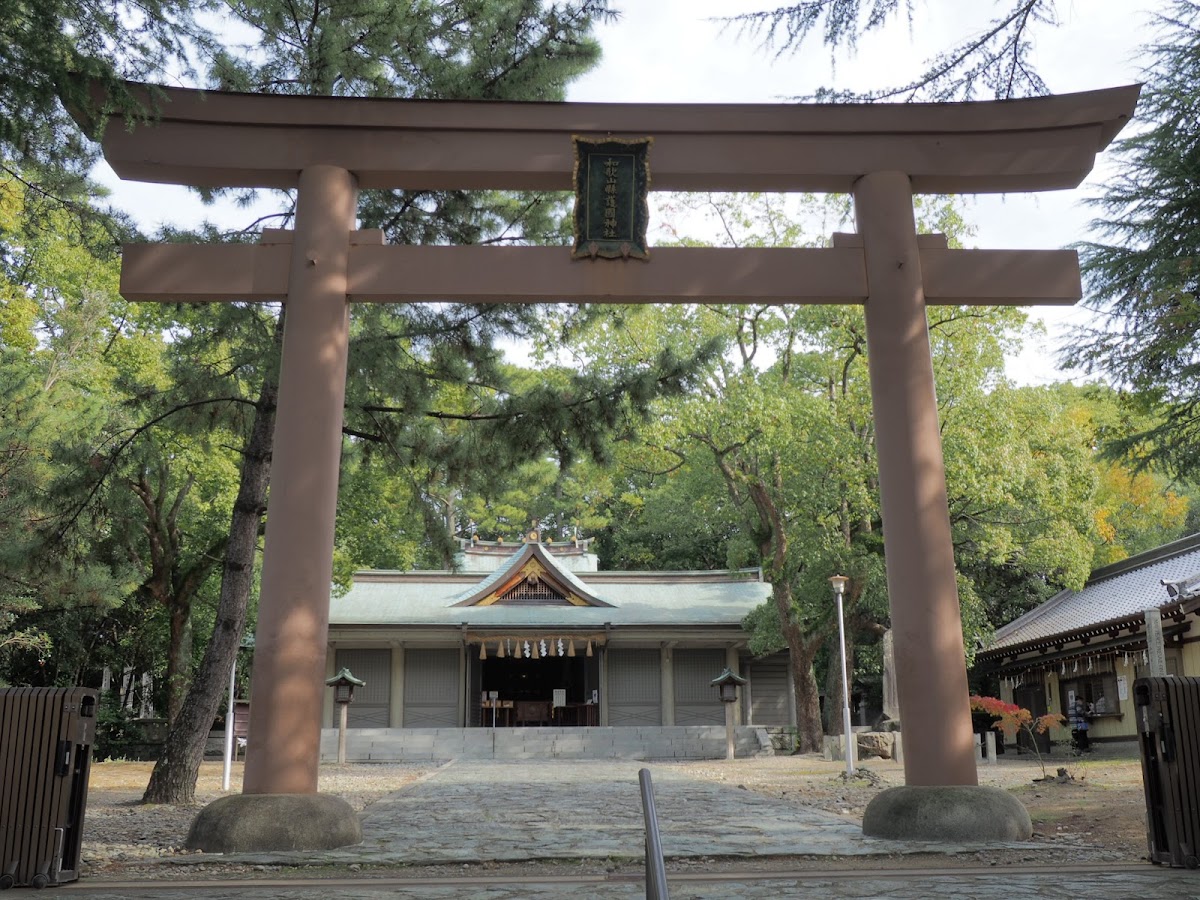
Wakayama Prefecture Gokoku Shrine has three torii gates along its approach. Each was donated in a different era, telling the story of the shrine’s history.
First Torii Gate: Stone, donated by Mr. Bunzo Nakao in March 1935
Second Torii Gate: Stone, donated by Mr. Kaichiro Nezu in September 1938
Third Torii Gate: Alloy, donated by the Gokoku Shrine Reconstruction Support Association in March 1992
In particular, Mr. Kaichiro Nezu, who donated the second torii gate, was a businessman known for managing Tobu Railway, and his deep affection for people from Wakayama Prefecture is evident.
Memorial Monuments and Memorial Stones
Numerous memorial monuments and memorial stones have been erected within the shrine grounds, strongly reflecting its character as a Gokoku Shrine. These monuments each hold deep meaning, commemorating various battles and units, and being erected by bereaved families’ associations.
When visiting the shrine, paying attention to these monuments and reflecting on the names and inscriptions will allow you to feel a deeper sense of remembrance. ### An Integrated Landscape with Wakayama Castle
Wakayama Prefectural Gokoku Shrine is located within the grounds of Wakayama Castle, creating a unique landscape where the castle and shrine are seamlessly integrated. Within the historical atmosphere of Wakayama Castle, the former residence of the Kishu Tokugawa family (one of the three main branches of the Tokugawa clan), this quiet space for commemorating fallen heroes leaves a profound impression on visitors.
Visiting the shrine in conjunction with sightseeing around Wakayama Castle, including its keep, stone walls, and moats, allows for a multifaceted understanding of Wakayama’s history.
How to Worship and Manners
Basic Worship Etiquette
Worship at Gokoku Shrines follows the same etiquette as general shrine visits:
- Bow before passing through the torii gate: This is a sign of respect before entering the sacred area.
- Avoid walking in the center of the path: The center is considered the path of the gods.
- Purify yourself at the water basin: Purify your left hand, then your right hand, then your mouth.
- Worship in front of the main hall: Two bows, two claps, and one bow is the basic form.
- Bow again at the torii gate when leaving: This expresses gratitude when leaving the sacred area.
Mindset Unique to Gokoku Shrines
Gokoku Shrines are special places that enshrine the spirits of those who died in war. Please keep the following points in mind when visiting the shrine:
- Visit quietly and with a solemn heart.
- Offer gratitude to those who died in war and prayers for peace.
- Show particular respect in front of the memorial monument.
- Take photographs with moderation.
About Goshuin (Shrine Seals)
You can also receive a Goshuin at Wakayama Prefectural Gokoku Shrine. Please inquire at the shrine office after your visit. Bringing your own Goshuincho (seal book) is common, but pre-printed seals are also available.
Annual Events and Festivals
Wakayama Prefectural Gokoku Shrine holds various festivals throughout the year.
Main Festivals
Spring Grand Festival (Early May)
This is one of the most important festivals, a grand festival commemorating the spirits of the war dead who are enshrined here. Many bereaved families and general worshippers attend.
Autumn Grand Festival (around October)
A significant festival, comparable in importance to the Spring Grand Festival, where a memorial service is held in a solemn atmosphere.
Memorial Service on the Anniversary of the End of the War (August 15th)
A special memorial service is held on the anniversary of the end of the war, offering prayers for peace.
New Year’s Day Festival (January 1st)
A festival to welcome the new year and pray for the security and peace of the nation.
By attending these festivals, one can gain a deeper understanding of the significance of the Gokoku Shrine.
Access Information
Basic Information
Location: 3 Ichibancho, Wakayama City, Wakayama Prefecture 640-8146
Phone Number: 073-425-2911
Opening Hours: Open for worship during the day (Please check the office hours)
Admission Fee: Free
Access by Train
From JR Wakayama Station
- Get off at “Koen-mae” bus stop (Wakayama Bus), approximately 5 minutes on foot
- Approximately 10 minutes by taxi
From Nankai Wakayamashi Station
- Approximately 15 minutes on foot
- Get off at “Koen-mae” bus stop (Wakayama Bus), approximately 5 minutes on foot
It’s relatively close to Nankai Wakayamashi Station and accessible on foot. If you walk towards Wakayama Castle, you’ll naturally arrive.
Access by Car
Hanwa Expressway
- Approximately 15 minutes from Wakayama IC
Parking
You can use the parking lot at Wakayama Castle Park. There are several parking lots around Wakayama Castle, which are convenient to use in conjunction with sightseeing.
- Wakayama Castle Park Parking Lot (Paid)
- Nearby Coin Parking
It can get crowded on weekends and during tourist seasons, so consider using public transportation.
Nearby Tourist Attractions
Wakayama Castle
Wakayama Castle, where the Wakayama Prefectural Gokoku Shrine is located, is a famous castle that flourished as the residence of the Kishu Tokugawa family, one of the three main branches of the Tokugawa family. From the castle tower, you can enjoy a panoramic view of Wakayama city, and it is also known as a famous cherry blossom viewing spot in spring.
You can enjoy a leisurely visit to the castle tower, explore the stone walls, and stroll along the bridge corridor in conjunction with a visit to the Gokoku Shrine.
Wakayama Castle Park Zoo
A free zoo located within Wakayama Castle Park. Although small in scale, it houses a variety of animals and is a popular spot for families. It’s a good place to stop by after visiting Gokoku Shrine, especially if you’re with children.
Momijidani Garden
This is a Japanese garden built in the early Edo period within Wakayama Castle. It was developed as a garden for the Kishu Tokugawa family, and the scenery is particularly beautiful during the autumn foliage season.
Wakayama City Museum
Located near Wakayama Castle, it offers a chance to learn about Wakayama’s history and culture. The museum has extensive exhibits on Wakayama Castle and the Kishu Tokugawa family, and visiting before or after visiting Gokoku Shrine will allow you to gain a deeper understanding of the region’s history.
Points to Note and Manners When Visiting
Regarding Attire
While there are no strict dress code regulations, it is desirable to dress appropriately, as it is a sacred place. Especially when attending festivals such as the annual grand festival, semi-formal or subdued attire is appropriate.
Regarding Photography
Photography is generally permitted on the shrine grounds, but please observe the following points:
- Please refrain from taking photographs during religious ceremonies.
- Please be especially considerate in front of the memorial monument.
- Please do not disturb other worshippers.
- Permission may be required to photograph inside the shrine buildings.
Maintaining a Solemn Atmosphere
While Gokoku Shrine is a place of remembrance and also has aspects of a tourist attraction, it is first and foremost a sacred place to comfort the souls of those who died in war. Please refrain from loud conversations and noisy behavior, and worship quietly.
Significance and Modern Value of Wakayama Prefecture Gokoku Shrine
A Place of Remembrance and Prayer for Peace
Wakayama Prefecture Gokoku Shrine plays a role in conveying the tragedy of war to future generations and reaffirming the preciousness of peace. The fact that approximately 30,000 souls are enshrined here speaks volumes about the immense sacrifices brought about by war.
A Place to Learn Local History
The modern history of Japan, from the Meiji Restoration to the Showa War, is also the history of people from Wakayama Prefecture. Visiting the Gokoku Shrine allows you to trace the footsteps of local people that you won’t learn from textbooks.
Passing on Memories Across Generations
In today’s world, where war survivors are dwindling, the Gokoku Shrine plays a crucial role in passing on the memories of war to future generations. Young people visiting and offering prayers before the memorial monuments provides a practical opportunity for peace education.
Summary
The Wakayama Prefectural Gokoku Shrine, situated on the sacred grounds of Wakayama Castle, is an important memorial facility enshrining the spirits of approximately 30,000 people from Wakayama Prefecture who perished in national crises during the wars following the Meiji Restoration.
Beginning with the Shokonsai (memorial service) in 1880, followed by the establishment of the Shokonsha (shrine for the war dead) in 1937, its renaming to Gokoku Shrine in 1939, and its subsequent fire and reconstruction in 1987, it continues to function as a center of community remembrance and prayers for peace.
The Wakayama Prefectural Gokoku Shrine boasts an excellent location, easily accessible from Wakayama Castle. Its three historic torii gates, the reconstructed, magnificent shrine buildings, and the numerous memorial monuments within its grounds leave a profound impression on visitors.
When visiting Wakayama, we highly recommend visiting the Wakayama Prefectural Gokoku Shrine, quietly offering a prayer for peace. The spirit of the many who sacrificed their precious lives for their homeland and nation still resonates there.
Through this visit, we can reaffirm the tragedy of war and the preciousness of peace, and it is our responsibility, as those living in the present, to pass on this message to future generations.