Ooyatsuhime Shrine (Wakayama Prefecture) | Complete Guide to the History, Deities, and Access of this Myojin Taisha Shrine
Overview of Ooyatsuhime Shrine
Ooyatsuhime Shrine is a Shikinaisha (shrine listed in the Engishiki) located at 59 Udamori, Wakayama City, Wakayama Prefecture. Listed as “Ooyatsuhime Shrine” in the Engishiki Jinmyocho (a list of shrines compiled in the Heian period), it is a Myojin Taisha (a high-ranking shrine) and has been considered important since ancient times as a prestigious shrine receiving offerings during the monthly and annual harvest festivals.
A Myojin Taisha is a shrine listed in the Engishiki Jinmyocho that was particularly revered by the imperial court for its miraculous powers. Only a limited number of shrines nationwide held this status. In Nagusa District, Kii Province, Ooyatsuhime Shrine was positioned as one of the most prestigious shrines.
Under the modern shrine ranking system, it was ranked as a prefectural shrine and continues to be revered by the local people as a center of faith in northern Wakayama City.
Basic Information
- Location: 59 Udamori, Wakayama City, Wakayama Prefecture
- Former Shrine Rank: Prefectural Shrine
- Shikinaisha: Ooyatsuhime Shrine, Nagusa District, Kii Province (Myojin-taisha, Monthly and Annual Festivals)
- Deities Enshrined: Ooyatsuhime-no-Mikoto (Main Deity), Isotakeru-no-Mikoto (Left Side Shrine), Tsumatsuhime-no-Mikoto (Right Side Shrine)
- Annual Festival Day: Second Sunday of October
About the Enshrined Deities
Ooyatsuhime-no-Mikoto
Ooyatsuhime-no-Mikoto, the main deity of our shrine, is a goddess who appears in the eighth section of the Age of the Gods in the *Nihon Shoki* (Chronicles of Japan), in one of the alternative versions (fourth and fifth). Ooyatsuhime-no-Mikoto is considered a child of Susanoo-no-Mikoto and, along with her brother Itakeru-no-Mikoto and sister Tsumatsuhime-no-Mikoto, is known as a tree god who sowed tree seeds throughout Japan, creating a lush and green land.
According to the section on the Age of the Gods in the *Nihon Shoki* (Chronicles of Japan), when Susanoo-no-Mikoto descended from heaven, he plucked all the hair from his body to form trees, and these three gods cooperated to plant trees throughout the country. From this myth, Ooyatsuhime-no-Mikoto has been worshipped as the guardian deity of forestry, building materials, and housing.
The name “Ooya” is thought to mean “large roof” or “large house,” particularly representing her role as a deity presiding over building materials and housing. In ancient times, wood was the most important building material, and Ooyatsuhime-no-Mikoto was deeply revered by the imperial court as the god who presided over its supply.
Enshrined Deities
Left Side Shrine: Isotakeru-no-Mikoto
Isotakeru-no-Mikoto, considered the elder brother of Ooyatsuhime-no-Mikoto, is known as the principal deity of Itakiso Shrine. In the *Nihon Shoki*, he is described as the son of Susanoo-no-Mikoto, and according to one theory, he is a god who, along with Okuninushi-no-Mikoto, contributed greatly to the development of the land. He is widely worshipped as the god of trees and the god of navigation.
Right Side Shrine: Tsumatsuhime-no-Mikoto
Tsumatsuhime-no-Mikoto, the younger sister of Ooyatsuhime-no-Mikoto, is the principal deity of Tsumatsuhime Shrine. Also a goddess who presides over trees, she is said to have contributed to the greening of the land together with her sister. These three deities are worshipped as the “Three Gods of Kii Province,” and while each is enshrined in an independent shrine, they maintain a deep relationship.
History of Ooyatsuhime Shrine and its Relocation
Founding and Initial Location
The founding date of Ooyatsuhime Shrine is unknown, but it is certain that it was a shrine worshipped in ancient Kii Province from a very early period. According to shrine tradition, its initial location was the site of the present-day Hinokuma Shrine and Kunikake Shrine (Akizuki, Wakayama City).
This area was one of the most sacred places in Kii Province, and the tradition that Ooyatsuhime Shrine was located here speaks to the shrine’s antiquity and high status.
First Relocation: To Inomori
In the 16th year of Emperor Suinin’s reign (14 BC), Hinokuma Shrine and Kunikake Shrine were relocated to their current locations. Ooyatsuhime Shrine ceded its land to the two shrines and relocated to “Inomori” in Santo (present-day Itakiso, Wakayama City).
This Inomori forest is believed to be the site of the present-day Itakiso Shrine. During this period, it is thought that the three shrines—Ooyatsuhime Shrine, Itakiso Shrine (dedicated to Isotakeru-no-Mikoto), and Tsumatsuhime Shrine (dedicated to Tsumatsuhime-no-Mikoto)—were enshrined within the same grounds. Given that the three deities are related as siblings, it was natural that they would be enshrined in a single sacred area.
Second Relocation: Move to the Old Shrine
In 702 AD (Taiho 2), the three shrines of Itakiso, Ooyatsuhime, and Tsumatsuhime were separated and relocated. This period coincides with the establishment of the Ritsuryo system and the Shinto system, a time when the independence of each shrine became increasingly important.
Ooyatsuhime Shrine was relocated from Inomori to a place north of it called “Old Shrine.” While there are various theories regarding the exact location of this Old Shrine, it is believed to have been located north of the current shrine site, within the Udamori district.
Relocation to the Current Location
While there are no clear records of the relocation from the old shrine to its current location, it is estimated to have occurred sometime after the Middle Ages. The current location is on the north bank of the Kinokawa River, east of its tributary, the Kamoi River. As the place name Udamori suggests, it has long been a sacred place surrounded by forest.
The Udamori archaeological site has yielded the remains of dwellings from the middle of the Yayoi period, along with pottery and bronze bells, archaeologically confirming that this area was both a place of residence and a center of worship since ancient times.
Engishiki and the Status of a Myojin Taisha Shrine
Listing in the Engishiki Jinmyocho (List of Shrines in the Engi Era)
In the section on the Nankaido Shrines of Kii Province, Nagusa District, in Volume 9 and 10 of the Engishiki Jinmyocho, it is listed as “Ooyatsuhime Shrine, Myojin Taisha, Monthly and Niiname Festivals.” This listing indicates that Ooyatsuhime Shrine received the following special treatment in the early Heian period.
Myojin Taisha: Shrines with particularly remarkable spiritual power, designated as the subject of the Myojin Festival, a special festival. Of the approximately 3,000 Shikinaisha shrines nationwide, only 224 (285 shrines) were Myojin Taisha, making them a rare existence.
Tsukimi Niiname: Shrines that receive offerings (heihaku) from the Imperial Court during the monthly festivals in June and December, and the Niiname Festival in November. This indicates the shrine’s important role in national religious ceremonies.
Records in the Shoku Nihongi
The Shoku Nihongi contains several articles concerning Ooyatsuhime Shrine. In particular, records of its promotion in divine rank are preserved; in Tenpyo Hoji 2 (758), it was promoted from Junior Fifth Rank, Lower Grade to Junior Fifth Rank, Upper Grade, and in Hoki 9 (778), it was promoted to Senior Fifth Rank, Lower Grade.
These records are valuable historical materials demonstrating that the Ooyatsuhime Shrine was continuously valued by the imperial court during the Nara period and held an important position within the system of national rituals.
Shrine Grounds and Highlights
Approach and Torii Gate
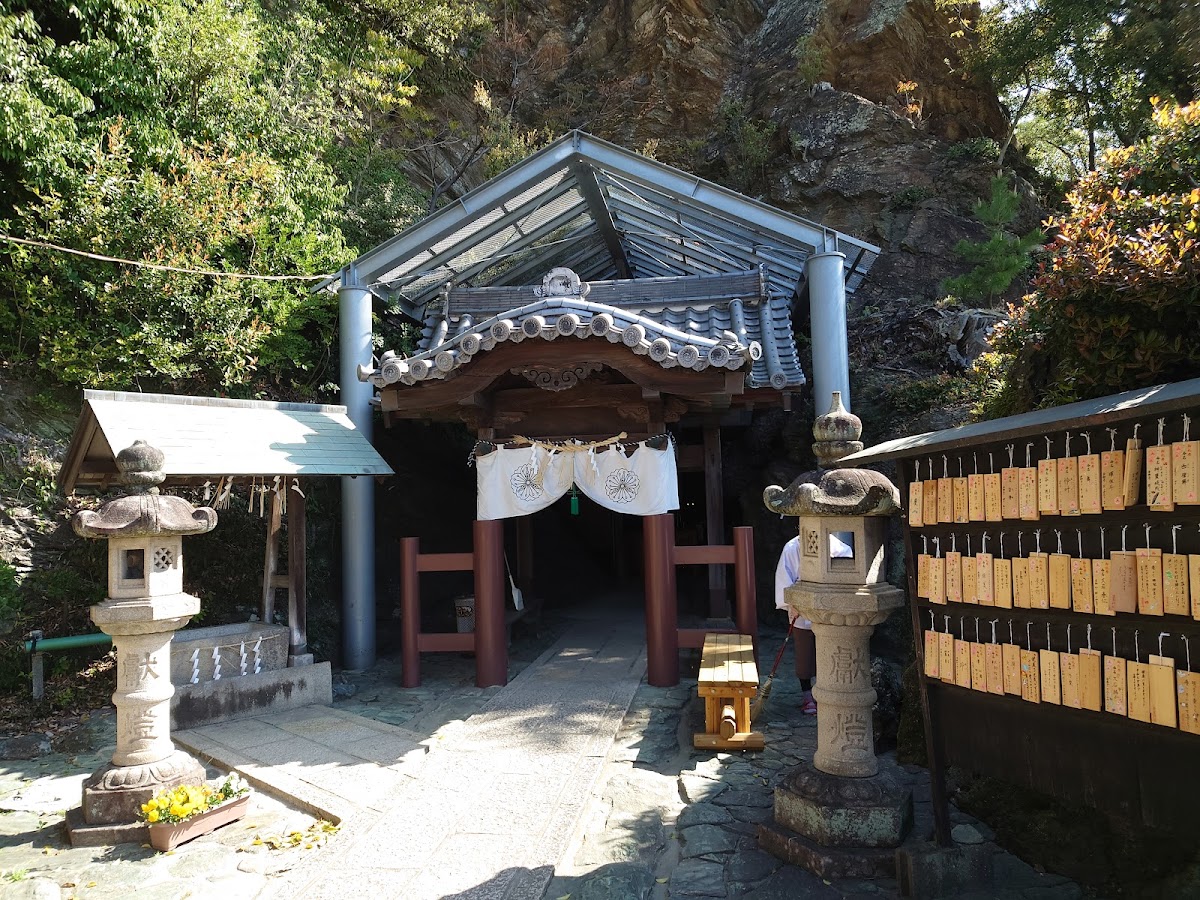
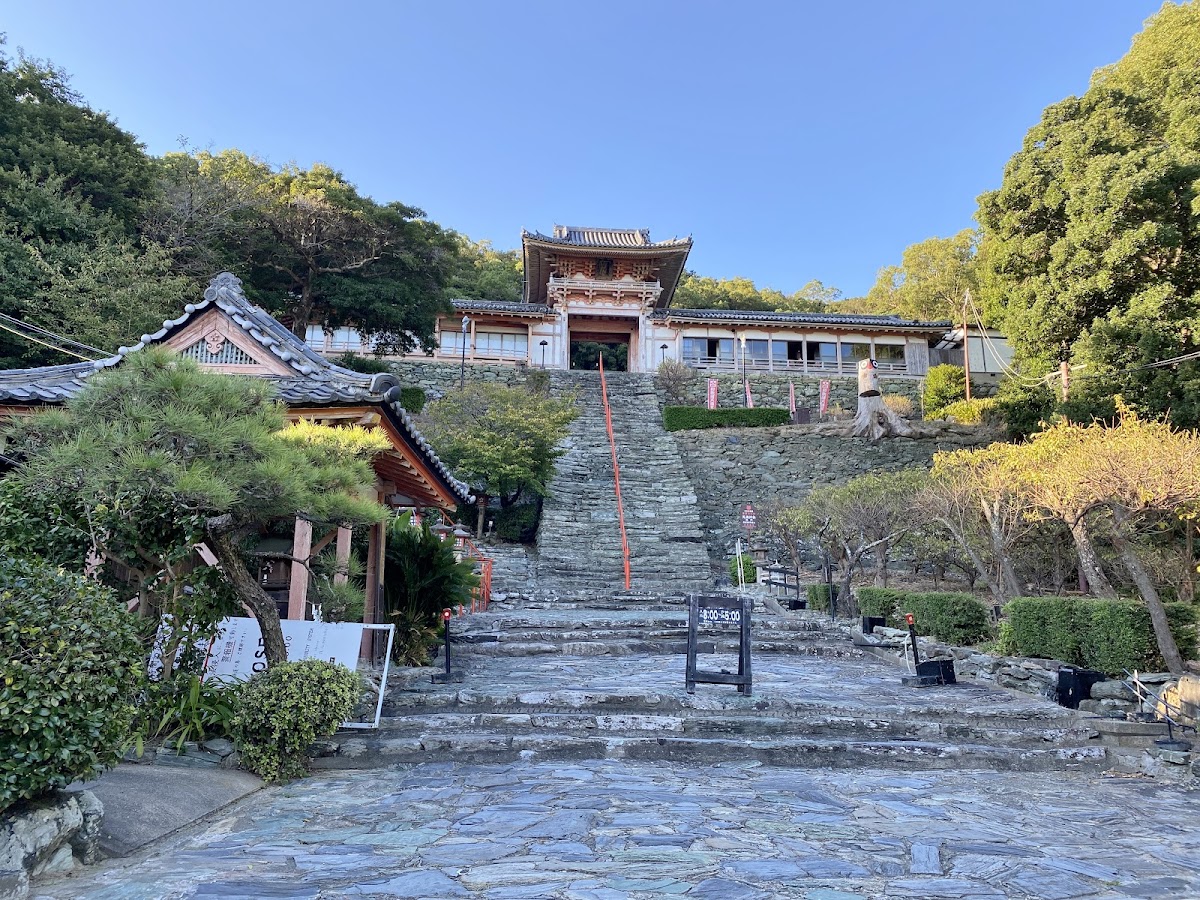
The grounds of the Ooyatsuhime Shrine exist as a sacred grove in a rural area. A stone torii gate stands at the entrance to the approach, and the path leading from there to the shrine building is a tranquil space surrounded by ancient trees.
Passing through the torii gate, one is immediately greeted by a lush, green shrine grounds befitting a shrine dedicated to the god of trees. Large trees such as cedars and camphor trees line both sides of the approach, giving a sense of the shrine’s ancient character.
Worship Hall and Main Sanctuary
The worship hall is a magnificent building with a hipped roof, while the main sanctuary is said to be in the Kasuga style. The main sanctuary is protected by a protective structure and cannot be seen directly, but its scale and the meticulousness of its construction convey the deep faith of the local people.
The main shrine is flanked by subsidiary shrines on either side. The left subsidiary shrine enshrines Isotakeru-no-Mikoto, and the right subsidiary shrine enshrines Tsumatsuhime-no-Mikoto. This arrangement reflects the relationship between the three deities and conveys the history of the three gods of Kii Province being worshipped as a single entity.
Subsidiary Shrines and Stone Structures
The shrine grounds contain several subsidiary shrines, demonstrating the diversity of local beliefs. Old stone lanterns and guardian lion-dogs remain, offering insights into the worship practices from the Edo period onward.
A purification fountain is also provided, allowing worshippers to cleanse themselves with pure water before praying. The entire shrine grounds are well-maintained, indicating that the daily faith of the local people continues to this day.
Shrine Grove and Natural Environment
As a shrine dedicated to the god of trees, the shrine grove of Ooyatsuhime Shrine holds particular significance. The shrine grounds are home to a variety of tree species, primarily evergreens such as camphor trees, cedars, and chinquapins, forming a small but rich forest ecosystem.
In particular, the large camphor tree, considered a sacred tree, is estimated to be several hundred years old and is revered as a symbol of the divine power of Ooyatsuhime-no-Mikoto. This shrine forest also functions as a valuable green space in the increasingly urbanized city of Wakayama.
Relationship with the Kii Province Grand Shrine
A banner bearing the inscription “Kii Province Grand Shrine” is erected within the grounds of Ooyatsuhime Shrine, suggesting the possibility that this shrine was the Kii Province Grand Shrine. A Grand Shrine (Soja) was a shrine established near the provincial capital under the Ritsuryo system, enshrining the deities of the major shrines in that province.
By visiting the Grand Shrine, the provincial governor was considered to have the same effect as visiting all the shrines in the province, thus serving both administrative convenience and religious importance.
There are various theories regarding the Kii Province’s main shrine, and it is also presumed that Fumori Shrine (Fuchu, Wakayama City) was the Kii Province’s main shrine. Considering that Ooyatsuhime Shrine was a Myojin Taisha (a high-ranking shrine) and that the Udamori area was an important region since ancient times, it is quite possible that this shrine functioned as the main shrine at one point.
Related Shrines
Itakiso Shrine
Itakiso Shrine, located in Itakiso, Wakayama City, is a Shikinaisha (Myojin Taisha) enshrining Isotakeru-no-Mikoto as its principal deity. As a shrine dedicated to the elder brother of Ooyatsuhime-no-Mikoto, it has a deep connection with Ooyatsuhime Shrine.
As mentioned above, Ooyatsuhime Shrine was also formerly located in Inomori (Itakiso), and there was a period when all three shrines shared the same grounds. Even today, both shrines maintain a close relationship as centers of tree deity worship in Kii Province.
Tsumatsuhime Shrine
Located in Hirao, Wakayama City, Tsumatsuhime Shrine is a Shikinaisha (a shrine listed in the Engishiki, an ancient Japanese legal text) that enshrines Tsumatsuhime-no-Mikoto as its principal deity. As a shrine dedicated to the younger sister of Ooyatsuhime-no-Mikoto, it has a close relationship with Ooyatsuhime Shrine.
These three shrines, known as the “Three Gods of Kii Province,” form the core of tree worship, maintaining a deep connection while remaining independent from ancient times to the present day.
Hinokuma Shrine and Kunikake Shrine
Located in Akizuki, Wakayama City, Hinokuma Shrine and Kunikake Shrine are ancient shrines known as the Ichinomiya (first-ranked shrine) of Kii Province. These two shrines currently stand on the site where Ooyatsuhime Shrine is believed to have originally been located.
The tradition that Ooyatsuhime Shrine ceded its land during the reign of Emperor Suinin is an important tradition that demonstrates the historical relationship between these two shrines and Ooyatsuhime Shrine.
Hinokuma Shrine and Kunikake Shrine, located in Akizuki, Wakayama City, are ancient shrines known as the Ichinomiya of Kii Province. These two shrines currently stand on the site where Ooyatsuhime Shrine is believed to have originally been located.
The tradition that Ooyatsuhime Shrine ceded its land during the reign of Emperor Suinin is passed down as an important tradition demonstrating the historical relationship between these two shrines and Ooyatsuhime Shrine.
Takazumi Shrine
Takazumi Shrine, located in Takazumi, Wakayama City, is also a Shikinaisha (a shrine listed in the Engishiki, an ancient Japanese legal code) of the same Nagusa District as Ooyatsuhime Shrine. Their geographical proximity suggests they were interconnected within the ancient Nagusa District’s shrine network.
Access and Visiting Information
Access by Public Transportation
By Train and Bus
- Take the Wakayama Bus “Sando Line” from JR Wakayama Station or Nankai Wakayamashi Station.
- Get off at the “Udamori” bus stop and walk for approximately 5 minutes.
By Train and on Foot
- Approximately 20 minutes on foot from JR Wakayama Line “Tainose Station”.
- Approximately 25 minutes on foot from Wakayama Electric Railway Kishigawa Line “Itakiso Station”.
Access by Car
- Approximately 15 minutes from Hanwa Expressway “Wakayama IC”.
- Approximately 10 minutes from Keina-Wa Expressway “Wakayama Kita IC”.
- Parking space for visitors is available on the temple grounds (several spaces).
Visiting Hours
The temple grounds are generally open for free visits. It is recommended to check in advance regarding the issuance of Goshuin (temple/shrine stamps) at the temple office.
Nearby Attractions
- Itakiso Shrine: Located within walking distance (approx. 2km), and many visitors combine their visit with a visit to the shrine.
- Udamori Ruins: Known as a Yayoi period archaeological site.
- Kinokawa Riverbed: A nature-rich walking trail.
About Goshuin (Shrine Seals)
Ooyatsuhime Shrine offers Goshuin. Since the shrine office may be unattended, it is recommended to contact the shrine in advance to confirm availability if you wish to receive a Goshuin.
The Goshuin bears the name of the shrine, “Ooyatsuhime Shrine,” and the words “Shikinai Myojin Taisha” (a high-ranking shrine listed in the Engishiki), indicating the shrine’s high status. Many visitors receive a Goshuin as a memento of their visit or as part of a shrine pilgrimage.
Festivals and Annual Events
Annual Festival
The annual festival is held on the second Sunday of October each year. On this day, parishioners and devotees gather for the most important festival of the year, offering gratitude and prayers to Ooyatsuhime-no-Mikoto. ### Other Festivals
- New Year’s Day Festival: January 1st
- Spring Festival: Spring Festival
- Summer Purification Ceremony: Around June 30th
- Autumn Festival: Annual Festival
- Niiname-sai Festival: Around November 23rd
These festivals carry on the ancient tradition of monthly Niiname-sai ceremonies and have become established annual events for the local people.
Faith and Divine Virtues of Ooyatsuhime Shrine
Guardian Deity of Trees and Forestry
Ooyatsuhime-no-Mikoto is revered as the goddess who planted trees throughout Japan, and is deeply worshipped by those in the forestry industry, landscape gardeners, and timber businesses. Kii Province has been known as a source of high-quality timber since ancient times, and Ooyatsuhime-no-Mikoto has held a special position as its guardian deity.
Guardian Deity of Architecture and Housing
The name “Ōya” in the deity’s name means “large roof” or “house,” so construction workers and those undertaking new construction or renovations visit the shrine to pray for safety during construction and the sturdiness of the building. As the guardian deity of housing, she is also deeply revered for the safety of the home.
Nature Conservation and Environmental Protection
In modern times, due to the myth of planting trees to green the land, she is also attracting attention as a symbol of nature conservation and environmental protection. In today’s society, which aims for a sustainable society, the myth of Ōyatsuhime-no-Mikoto is beginning to take on new significance.
Summary
Ōyatsuhime Shrine is a prestigious ancient shrine listed as a Myōjin Taisha (a major shrine) in the Engishiki Jinmyōchō (a list of shrines compiled in the Heian period), and is a rare shrine in Japan that enshrines Ōyatsuhime-no-Mikoto, the goddess of trees. Located in Udamori, Wakayama City, Wakayama Prefecture, a place where people have lived since ancient times, its faith has been passed down uninterrupted to the present day, despite several relocations.
The history of the shrine’s relocation—from the sites of Hinokuma Shrine and Kunikake Shrine to Inomori, then through the old shrine, and finally to its current location—is a valuable example illustrating the evolution of Shinto worship in Kii Province. The fact that it has been worshipped together with Itakiso Shrine, dedicated to the elder brother Isotakeru-no-Mikoto, and Tsumatsuhime Shrine, dedicated to the younger sister Tsumatsuhime-no-Mikoto, as the three deities of Kii Province, also reflects the unique characteristics of the faith in this region.
The shrine grounds are surrounded by a lush forest, retaining a strong atmosphere befitting a shrine dedicated to the god of trees. In the increasingly urbanized city of Wakayama, Ooyatsuhime Shrine, which continues to protect its ancient faith and natural environment, remains an irreplaceable presence for the local people.
When you visit Wakayama, be sure to pay your respects at this historic and prestigious shrine and experience the divine virtues of Ooyatsuhime-no-Mikoto, who enriched the land of Japan with greenery.