Asakura Shrine (Wakayama Prefecture) Complete Guide: History, Goshuin (Shrine Seal), and Access Information
Asakura Shrine, located in Saginomori Myojincho, in the heart of Wakayama City, Wakayama Prefecture, is a historically significant shrine listed in the Engishiki Jinmyocho (a list of shrines compiled during the Heian period). Formerly known as Saginomori Shrine or Kuzuryu Daimyojin, it has been cherished by the local community. This article comprehensively covers all the information you need for a visit to Asakura Shrine, including its detailed history, highlights within the grounds, goshuin information, and access methods.
Overview of Asakura Shrine
Asakura Shrine is located in the central area of the Jōhoku district of Wakayama City. Its former shrine rank was Village Shrine. Its current address is Saginomori Myojincho, Wakayama City, Wakayama Prefecture, and it is situated in a residential area close to Wakayama Castle.
Basic Information
- Official Name: Asakura Shrine
- Former Name: Saginomori Shrine, Kuzuryu Daimyojin, Kenkoku Shrine
- Location: Saginomori Myojincho, Wakayama City, Wakayama Prefecture
- Former Province/District: Saginomori, Nagusa District, Kii Province
- Deity Enshrined: Okuninushi-no-Mikoto
- Shrine Rank: Shikinaisha (Shrine listed in the Engishiki), Former Village Shrine
- Annual Festival Date: October 15th
- Shrine Grounds Area: 828.12 square meters
Asakura Shrine is a Shikinaisha (Shrine listed in the Engishiki Jinmyocho) listed in Nagusa District, Kii Province, and is known as a shrine with a history dating back to ancient times.
History and Origins of Asakura Shrine
The founding date of Asakura Shrine is unknown, but its history dates back to ancient times. The name “Asakura Shrine” is already listed in the Engishiki Jinmyocho (927 AD), compiled in the mid-Heian period, confirming that it has a history of at least 1000 years.
Ancient Records and Legends
The Kii Zoku Fudoki (Continued Topographical Record of Kii Province) contains the following description of Asakura Shrine:
“The above shrine is located in Wakayama Saginomori. It is the Asakura Shrine of Nagusa District in the Engishiki Jinmyocho, and the Asakura Shrine of the Fourth Rank, Upper Grade, in Nagusa District in the local Jinmyocho. There is an old camphor tree in this place, and egrets always gathered on it, so the locals called it Saginomori Shrine, and it is also called Kuzu Daimyojin.”
From this description, it can be seen that there was an old camphor tree in the area of the shrine, and egrets always gathered on it in flocks. Therefore, locals called it “Saginomori Shrine” and also referred to it as “Kuzu Daimyojin.”
The “Kishu Meisho-shi Asamura Shrine Den” (Record of Famous Places in Kishu) also records a legend that “in ancient times, the Chinzei Shogun built it as a reward for his distinguished service during a conquest.”
Identification as a Shikinaisha Shrine during the Enpo Era
A significant turning point occurred during the Enpo era (1673-1681). The shrine, then called “Kenkoku-sha,” was identified by the Confucian scholar Li Meikei as the Shikinaisha “Asamura Shrine” listed in the Engishiki Jinmyocho (a list of shrines compiled in the Heian period), and its name was changed. This identification led to the establishment of the current name, “Asamura Shrine.”
However, there are multiple candidates for the Shikinaisha “Asamura Shrine,” and there are other shrines in Wakayama Prefecture that bear the name or are identified as Asamura Shrine.
Records from the Medieval and Early Modern Periods
According to Meiji-era documents, records show that Asakuma Shrine was constructed in 1382 (Eitoku 2) and 1411 (Oei 18). These records indicate that the shrine attracted and maintained local faith throughout the medieval period.
Motoori Norinaga’s Visit
In 1794 (Kansei 6), the scholar of Japanese classics, Motoori Norinaga, visited the shrine and composed and dedicated a poem to a large tree in the grounds known as the “Shrine Spirit Pine”: “Before the wide expanse, its branches drooping deeply, a truly magnificent sacred pine.” While this pine is believed to no longer exist, it is a valuable record that evokes the appearance of the shrine grounds at that time.
Modern Era
Under the Meiji-era shrine ranking system, Asakuma Shrine was ranked as a village shrine. Since then, it has continued to attract faith as the local tutelary deity and remains a beloved spiritual center for the citizens of Wakayama City to this day.
During the Heisei period, the shrine grounds were renovated, and today, despite being located in an urban area, it maintains a tranquil atmosphere and welcomes many worshippers.
About the Enshrined Deity
The enshrined deity of Asakuma Shrine is Ōkuninushi-no-Mikoto. Ōkuninushi-no-Mikoto is a deity also known as the principal deity of Izumo Taisha Shrine, and is widely worshipped as the god of nation-building, agriculture, commerce, and medicine.
Various Theories Regarding the Enshrined Deity
In the “Jinmei-chō Kōshō” (Commentary on the Register of Deities), there is also a theory that the enshrined deity is Ame-no-Iwahowake-no-Mikoto, similar to Asakura Shrine in Kochi City, Kochi Prefecture. Ame-no-Iwahowake-no-Mikoto is considered a god associated with stones and rocks, and a connection to ancient rock worship has been pointed out.
There are various theories regarding the enshrined deity, and it is believed that the current enshrined deity was arrived at through the changes in ancient forms of worship, the influence of later syncretism of Shinto and Buddhism, and the consolidation of shrines.
Deities Enshrined in the Subsidiary Shrines
Within the grounds of Asakuma Shrine, there are several subsidiary shrines, each enshrining a different deity.
- Shinmei Shrine: Dedicated to Amaterasu Omikami
- Komori Katte Shrine: Dedicated to the god of childcare and financial assistance
These subsidiary shrines have been established to meet the diverse religious needs of the local community.
Grounds and Highlights
Despite being located in the urban and residential area of Wakayama City, Asakuma Shrine boasts a spacious 828.12 square meters and is neatly maintained.
Torii Gate and Approach
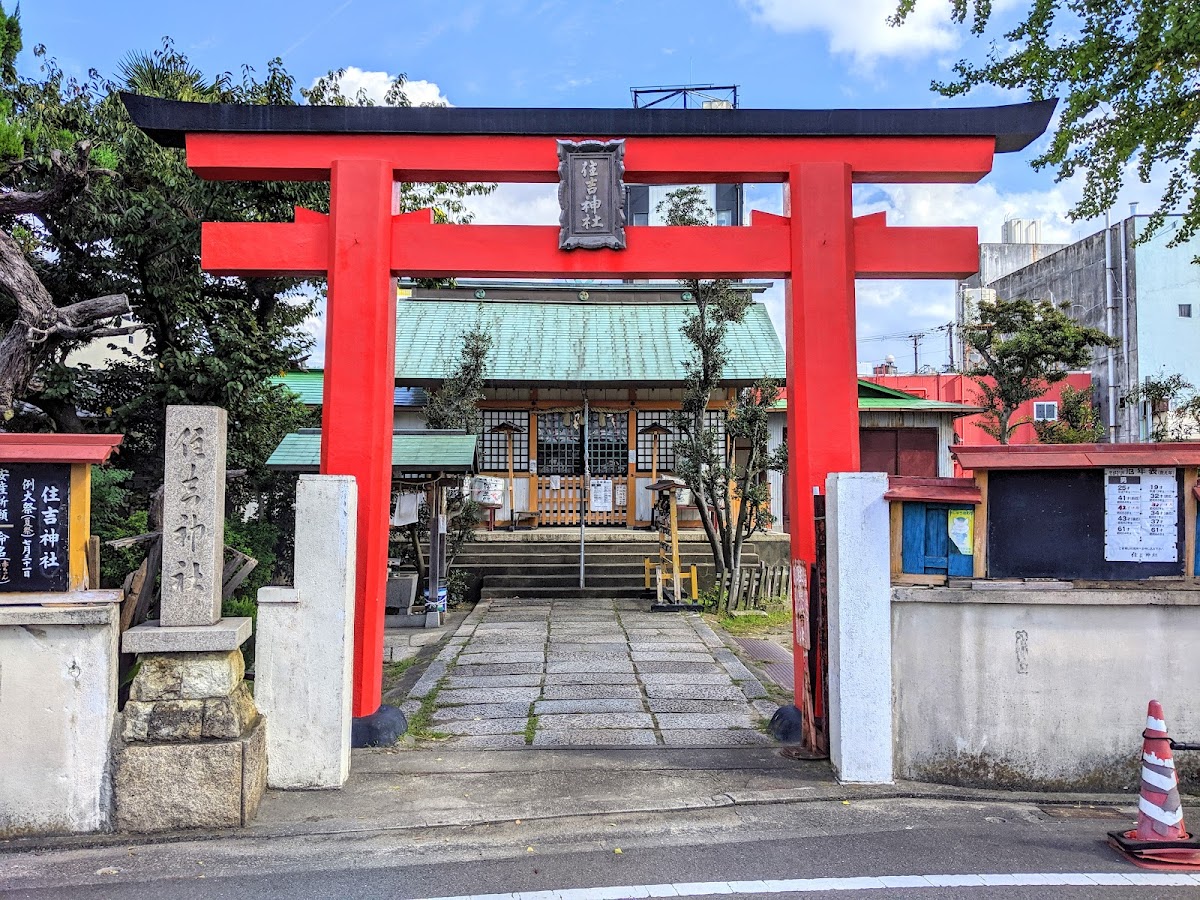
A white Myojin Torii gate stands at the entrance to the shrine. Both the first and second torii gates are stone Myojin Torii gates, inviting visitors into the sacred area as they proceed along the approach. The road in front is wide, making the shrine’s location very easy to find.
The approach to the shrine is well-maintained, creating a quiet and peaceful atmosphere despite its location in the city.
Water Basin
After passing through the torii gate, you will find a water basin for purifying yourself before worship. Cleanse your hands and mouth here before proceeding to the main shrine.
Guardian Dogs
A pair of guardian dogs (komainu) are positioned along the approach, protecting the sacred area. These stone guardian dogs possess a dignified, historical presence.
Shrine Building
The shrine building of Asakuma Shrine is built in the style of traditional Shinto shrine architecture.
- Main Shrine: Wooden structure with copper tile roof, nagare-zukuri style, area 6.96 square meters
- Offering Hall: Wooden structure with tile roof, area 3.27 square meters
- Worship Hall: Wooden structure with tile roof, irimoya-zukuri style, area 19.8 square meters
The irimoya-zukuri style of the worship hall has a dignified feel, conveying the dignity of a historical shrine. The main shrine is built in the elegant nagare-zukuri style and is roofed with copper tiles.
Other Buildings
The following buildings are also located within the shrine grounds.
- Sacred Offering Hall: Wooden, tiled roof, area 4.95 square meters
- Shrine Office: Wooden, tiled roof, area 108.9 square meters
- Sacred Item Storage: Wooden, corrugated iron roof, area 15.8 square meters
- Portable Shrine Storage: Wooden, tiled roof, area 4.6 square meters
These buildings are maintained as facilities necessary for the rituals and management of the shrine.
Subsidiary Shrines
In addition to the main shrine dedicated to the principal deity, several subsidiary shrines are enshrined within the grounds.
Shinmei Shrine
Shinmei Shrine, dedicated to Amaterasu Omikami, demonstrates faith in Amaterasu Omikami, the principal deity of Japan.
Komori Katte Shrine
Komori Katte Shrine is a shrine cherished by local people as a place to pray for the healthy growth of children and the safety of families.
These subsidiary shrines, along with the main deity, have supported the diverse beliefs of the region.
The Former Shrine Spirit Pine
As mentioned above, when Motoori Norinaga visited the shrine in 1794 (Kansei 6), there was a large tree on the grounds known as the “Shrine Spirit Pine.” While this pine is believed to no longer exist, it remains an important historical record that evokes the landscape of the shrine grounds at that time.
The Origin of Saginomori
The name of the shrine’s location, “Saginomori,” originates from the large camphor tree that once stood on the grounds, which was frequented by flocks of white egrets. Although the large camphor tree is now gone, the name remains as a reminder of it.
Its Status as a Shikinaisha (Shrine Listed in the Engishiki)
Asakura Shrine is a Shikinaisha (Shrine listed in the Engishiki Jinmyocho, a list of shrines compiled in the Heian period). The Engishiki Jinmyocho is a section of the Engishiki, compiled in 927 during the mid-Heian period, listing important shrines throughout Japan recognized by the imperial court.
Shrines in Nagusa District, Kii Province
Several shrines are listed in the Engishiki Jinmyocho in Nagusa District, Kii Province, and Asakuma Shrine is one of them. Other shrines in Nagusa District include:
- Sasutahiko Shrine
- Naru Shrine
- Katsuchi Shrine
Along with these other shrines, it is clear that Asakuma Shrine was an important site of worship in ancient Kii Province.
Regarding Candidate Shrines
There are several candidate shrines for the Engishiki shrine “Asakuma Shrine.” A “candidate shrine” refers to a shrine that is a candidate for a specific location when there are multiple possible locations for a shrine listed in the Engishiki Jinmyocho.
Within Wakayama Prefecture, there are other shrines that bear the name Asakuma Shrine, or are identified as the Shikinaisha Asakuma Shrine, and there are various theories as to which one was the original Shikinaisha. However, historically, since its identification by Ribaikei during the Enpo era, our shrine has been widely recognized as the Shikinaisha Asakuma Shrine.
About Goshuin (Shrine Seals)
Asakuma Shrine offers Goshuin. Goshuin are popular among many visitors as proof of worship and as a way to forge a connection with the shrine.
Where to Obtain Goshuin
Goshuin are available at the shrine office. However, priests may not always be present, so if you wish to be sure to receive a Goshuin, it is recommended to contact the shrine in advance.
Features of the Goshuin
The Asakuma Shrine Goshuin features the shrine name “Asakuma Shrine” written in ink and stamped with the shrine’s seal. It is a simple yet powerful Goshuin that conveys the prestige of a Shikinaisha. ### Etiquette for Visiting the Shrine
Goshuin (shrine stamps) are proof of your visit, so be sure to receive them only after you have completed your prayers. It is important to bring your goshuincho (stamp book) and request them respectfully.
Festivals and Annual Events
Asakura Shrine holds various festivals and religious ceremonies throughout the year.
Annual Festival (October 15th)
The most important festival at Asakura Shrine is the annual festival held on October 15th each year. During the festival, traditional religious ceremonies such as the procession of the portable shrine and the dedication of kagura (sacred dance) are performed, and local people gather to offer their gratitude to the gods.
Other Annual Events
In addition to the annual festival, the shrine holds the following annual events:
- New Year’s Visit: Praying for happiness in the new year
- Setsubun Festival: Praying for protection from evil and good fortune
- Summer Purification Ceremony: Purifying oneself of sins and impurities accumulated over the past six months
- Year-End Purification Ceremony: Purifying oneself of sins and impurities accumulated over the past year
These events are attended by local residents, deepening the bond between the shrine and the community.
Main Prayers and Supplications
Asakura Shrine accepts prayers and supplications for various life milestones and wishes.
Groundbreaking Ceremony
Groundbreaking ceremonies, where prayers are offered to the land gods for the safety of construction and the prosperity of the building, are frequently held at Asakura Shrine. When building in Wakayama City, groundbreaking ceremonies at our shrine, the local guardian shrine, are often chosen.
Shrine Visit for Newborns
Shrine visits for newborns, where parents report the birth of their baby to the gods and pray for their healthy growth, are a beloved event in the community.
Exorcism of Misfortune
Prayers for warding off misfortune and misfortune are also performed for those entering their unlucky years. This is an important ceremony to pray for divine protection at a turning point in life.
Prayer for Traffic Safety
Prayers for traffic safety, including for cars and motorcycles, are also accepted. Many people visit for this prayer when purchasing a new car.
Prayer for Safe Childbirth
Prayers for safe childbirth, performed on the Day of the Dog in the fifth month of pregnancy, are also conducted at our shrine. Prayers are offered for the health of mother and child and for a safe delivery.
Other Prayers
- Shichi-Go-San (7-5-3 Festival)
- Prayer for Success in Exams
- Prayers for Business Prosperity
- Family Safety
- Recovery from Illness
We offer a variety of prayers, including these. Please contact the shrine directly for details.
Access Information
Asakura Shrine is located in the heart of Wakayama City and is easily accessible by both public transport and private car.
Access by Train
Approximately 10 minutes on foot from JR Wakayama City Station
The nearest station is Wakayama City Station on the JR Kisei Main Line and Wakayama Line. It’s about a 10-minute walk northeast from the station, following an easy-to-follow route through the city center.
Approximately 10 minutes on foot from Nankai Wakayama City Station
It’s also about a 10-minute walk from Nankai Electric Railway’s Wakayama City Station.
Access by Bus
If using Wakayama Bus, it’s a few minutes’ walk from the nearest bus stop. Please check the Wakayama Bus official website for bus routes.
Access by Car
Approximately 15 minutes from Hanwa Expressway Wakayama IC
It’s about a 15-minute drive from the Hanwa Expressway Wakayama Interchange via National Route 24, etc. ### Parking
While the shrine has parking spaces for visitors, the number of spaces is limited. During busy periods such as New Year’s Day or annual festivals, we recommend using nearby paid parking lots.
Nearby Tourist Attractions
The following tourist attractions are located near Asakuma Shrine:
- Wakayama Castle: A symbol of Wakayama City, within walking distance
- Kishu Toshogu Shrine: A prestigious shrine dedicated to Tokugawa Ieyasu
- Wakayama City Museum: A facility where you can learn about the history of Wakayama
You can experience the history and culture of Wakayama in conjunction with your shrine visit.
The Charm of Asakuma Shrine and Points to Note When Visiting
A Tranquil Space in the City
One of the greatest charms of Asakuma Shrine is that, despite being located in the city center and residential area of Wakayama City, it maintains a quiet and peaceful atmosphere. It is a precious space where you can escape the hustle and bustle of the city and pray in peace.
Over 1000 Years of History
Asakuma Shrine, listed in the Engishiki Jinmyocho (a list of shrines compiled in the Heian period), boasts a history of over 1000 years. One can feel the weight of its long history, having continuously attracted the faith of the local people.
A Shrine Rooted in the Community
Asakuma Shrine is not a tourist attraction, but rather a local guardian shrine visited daily by local residents. It remains a familiar presence in the community, visited for important life events such as New Year’s visits, baby blessings, Shichi-Go-San (a traditional rite of passage for children), and exorcisms.
Well-Maintained Grounds
The shrine grounds are spacious, and the approach is neatly maintained. The shrine buildings are also carefully maintained, allowing for a pleasant visit.
Proximity to Wakayama Castle
Its proximity to Wakayama Castle makes it easily accessible for tourists. Visiting before or after a visit to Wakayama Castle allows for a deeper appreciation of Wakayama’s history.
Summary
Asakura Shrine, located in Saginomori Myojincho, Wakayama City, Wakayama Prefecture, is a historically significant shrine listed in the Engishiki Jinmyocho (a list of shrines compiled in the Heian period). Formerly known as Saginomori Shrine, Kuzuryu Daimyojin, and Kenkoku Shrine, it was identified as the Shikinaisha Asakura Shrine during the Enpo era (1673-1682) and subsequently adopted its current name.
The enshrined deity is Okuninushi-no-Mikoto, and the grounds also house several subsidiary shrines, including Shinmei Shrine and Komori Katte Shrine. The main hall is a traditional wooden structure with a copper-tiled roof in the nagare-zukuri style, while the worship hall is a wooden structure with a tiled hip-and-gable roof in the irimoya-zukuri style, maintaining a tranquil atmosphere despite its location in the city.
The exact founding date is unknown, but its history of over 1000 years is confirmed, as it is listed in the Engishiki Jinmyocho from the Heian period and records of its construction from the medieval period also exist. During the Edo period, Motoori Norinaga also visited the shrine and dedicated a waka poem.
Located in a prime location about a 10-minute walk from JR Wakayama City Station, this shrine accepts various prayers and rituals, including ground-breaking ceremonies, baby blessings, exorcisms, traffic safety prayers, and prayers for safe childbirth. Goshuin (shrine stamps) are also available, making it a convenient place to visit in conjunction with nearby tourist attractions such as Wakayama Castle.
As a local guardian shrine and a Shikinaisha (shrine listed in the Engishiki) that preserves the history of Wakayama, Asakuma Shrine continues to be cherished by many people. When you visit Wakayama, be sure to pay a visit and experience its history and atmosphere.