Complete Guide to Hinokuma Shrine & Kunikakasu Shrine | The Charm and Visiting Information of the 2600-Year-Old Ichinomiya of Kii Province
Located in Wakayama City, Wakayama Prefecture, Hinokuma Shrine & Kunikakasu Shrine are known as one of Japan’s oldest shrines. They possess a unique form, with two shrines standing side-by-side within a single precinct, collectively known as “Nichizen-gu” or “Nagusa-gu,” and affectionately called “Hinokuma-san” by locals.
This article provides a detailed explanation of these historic shrines, boasting a history of over 2600 years, covering everything from their origins and enshrined deities to the secrets of their sacred objects, highlights within the grounds, major festivals, and helpful local information for visitors.
Table of Contents
- Overview of Hinokuma Shrine and Kunikake Shrine
- The Mystery of the Deities and Sacred Objects
- A History of Over 2600 Years Since Founding
- Layout and Highlights of the Shrine Grounds
- Introduction to Subsidiary Shrines
- Major Festivals and Annual Events
- Benefits and Faith
- Access and Visiting Information
- How to Refer to Hinokuma Shrine
Overview of Hinokuma Shrine and Kunikake Shrine
Hinokuma Shrine and Kunikake Shrine are shrines located in Akizuki, Wakayama City, Wakayama Prefecture. Both shrines have long been revered as Shikinaisha (Myojin Taisha) and Ichinomiya (first-ranked shrine) of Kii Province. They formerly held the highest rank of Kanpei Taisha (Grand Imperial Shrine), and currently maintain their own unique traditions as independent shrines not belonging to the Association of Shinto Shrines.
Unique Form of Two Shrines as One
The most distinctive feature is that two shrines, Hinokuma Shrine and Kunikake Shrine, are located side-by-side within the same grounds. To the left of the entrance is the Nichizen Shrine, and to the right is the Kunikake Shrine. While each has its own independent main hall, they are operated as a single entity.
This form of two shrines operating as one is rare nationwide, and the fact that the two shrines stand side-by-side in an equal relationship represents a unique form of worship not seen in other shrines.
The Collective Name “Nichizen-gu”
The official name is “Nichizen Shrine and Kunikake Shrine,” but it is generally referred to collectively as “Nichizen-gu,” and locals affectionately call it “Nichizen-san.” In the past, it was also called “Nagusa-no-miya,” after the name of its location.
The Mystery of the Deities and Sacred Objects
The deities and sacred objects of Nichizen Shrine and Kunikake Shrine have deep connections to Japanese mythology.
Deities enshrined at Hinokuma Shrine
Hinokuma Shrine enshrines Hinokuma no Okami. Hinokuma no Okami is said to be another name for Amaterasu Omikami and is a deity with characteristics of a sun goddess.
The sacred object is a divine mirror called Higata no Kagami, which is believed to be one of the mirrors cast by Ishikoridome no Mikoto when Amaterasu Omikami hid in the Amano-Iwato cave.
Deities enshrined at Kunikakasu Shrine
Kunikakasu Shrine enshrines Kunikakasu no Okami. Kunikakasu no Okami is also considered a deity with a deep connection to Amaterasu Omikami.
The sacred object is a divine mirror called Hiboko no Kagami. Like the Higata no Kagami, it is believed to be a mirror cast by Ishikoridome no Mikoto.
Relationship with the Three Sacred Treasures
According to the *Nihon Shoki* (Chronicles of Japan), when Ishikoridome-no-Mikoto cast mirrors for Amaterasu-Omikami, the first two were unsatisfactory. It was only on the third attempt that she finally created a mirror she was happy with (the Yata-no-Kagami). These first two mirrors were the Nichizo-no-Kagami and the Hihoko-no-Kagami. It is said that the Yata-no-Kagami became the sacred object of Ise Grand Shrine, while the Nichizo-no-Kagami and Hihoko-no-Kagami became the sacred objects of Hinokuma-Jingu and Kunikake-Jingu.
In other words, the sacred objects of Hinokuma-Jingu and Kunikake-Jingu hold extremely important significance, being equivalent to, or even preceding, the Yata-no-Kagami of Ise Grand Shrine. Because of this tradition, Hinokuma-Jingu and Kunikake-Jingu have been called “Ise of Kii Province” and have been considered to possess a status comparable to Ise Grand Shrine.
History of Over 2600 Years
The history of Hinokuma-Jingu and Kunikake-Jingu dates back to the age of Japanese mythology. ### Founding History
According to the *Nihon Shoki* (Chronicles of Japan), the founding of Hinokuma Shrine and Kunikake Shrine dates back to the 2nd year of Emperor Jimmu’s reign (approximately 660 BC). This is over 2600 years ago, making them among the oldest shrines in Japan.
During Emperor Jimmu’s eastern expedition, while carrying the divine spirit of Amaterasu Omikami towards Yamato, he stopped in Kii Province and enshrined the Nichizo-kagami and Nichihoko-kagami mirrors in this location, marking the beginning of the shrine’s founding. It is said that at that time, the shrine was located in Hamanomiya, Kemi-go, Nagusa-gun (present-day Kemi, Wakayama City).
Relocation in the 16th Year of Emperor Suinin’s Reign
In the 16th year of Emperor Suinin’s reign, the shrine was relocated to its current location in Akizuki, Nagusa-gun (present-day Akizuki, Wakayama City). Since then, rituals have continued in this location for over 2000 years.
Rituals by the Ki Clan
The rituals at Hinokuma Shrine and Kunikake Shrine have been performed for generations by a powerful clan known as the Ki Clan since ancient times. The Ki Clan was a powerful clan based in Kii Province, tracing their ancestry back to Amenomichine-no-Mikoto.
The Ki Clan had strong ties to the imperial court from ancient times and played a central religious and political role in Kii Province through the rituals at Hinokuma Shrine and Kunikake Shrine. It is an extremely rare example of a family line continuing the rituals to this day.
Status as the Ichinomiya (First Shrine) of Kii Province
Since the Heian period, Hinokuma Shrine and Kunikake Shrine have been considered the Ichinomiya (First Shrine) of Kii Province, the most prestigious shrines in Kii Province (present-day Wakayama Prefecture and southern Mie Prefecture). They received deep reverence from the imperial court, and envoys offering prayers were frequently dispatched.
During the Middle Ages, the shrines received protection from the governors of Kii Province and from feudal lords of the Sengoku period. In the Edo period, they were revered by the Kishu Tokugawa family. The lords of the Kishu domain consistently held the Hinokuma Shrine and Kunikake Shrine in special esteem, undertaking repairs to the shrine buildings and donating sacred lands.
After the Meiji Era
Under the modern shrine ranking system of the Meiji era, both shrines were designated as Kanpei Taisha (Grand Imperial Shrines), receiving the highest rank from the state. After World War II, when the Association of Shinto Shrines (Jinja Honcho) was established, many shrines joined it. However, Hinokuma Shrine and Kunikake Shrine, valuing their own traditions, chose to remain independent shrines.
Even today, alongside Ise Grand Shrine and Izumo Taisha, they continue to be influential shrines independent of the Association of Shinto Shrines, preserving their unique rituals and traditions.
Layout and Highlights of the Shrine Grounds
The grounds of Hinokuma Shrine and Kunikake Shrine are a tranquil space surrounded by deep groves of trees.
Omotesando and Torii Gate
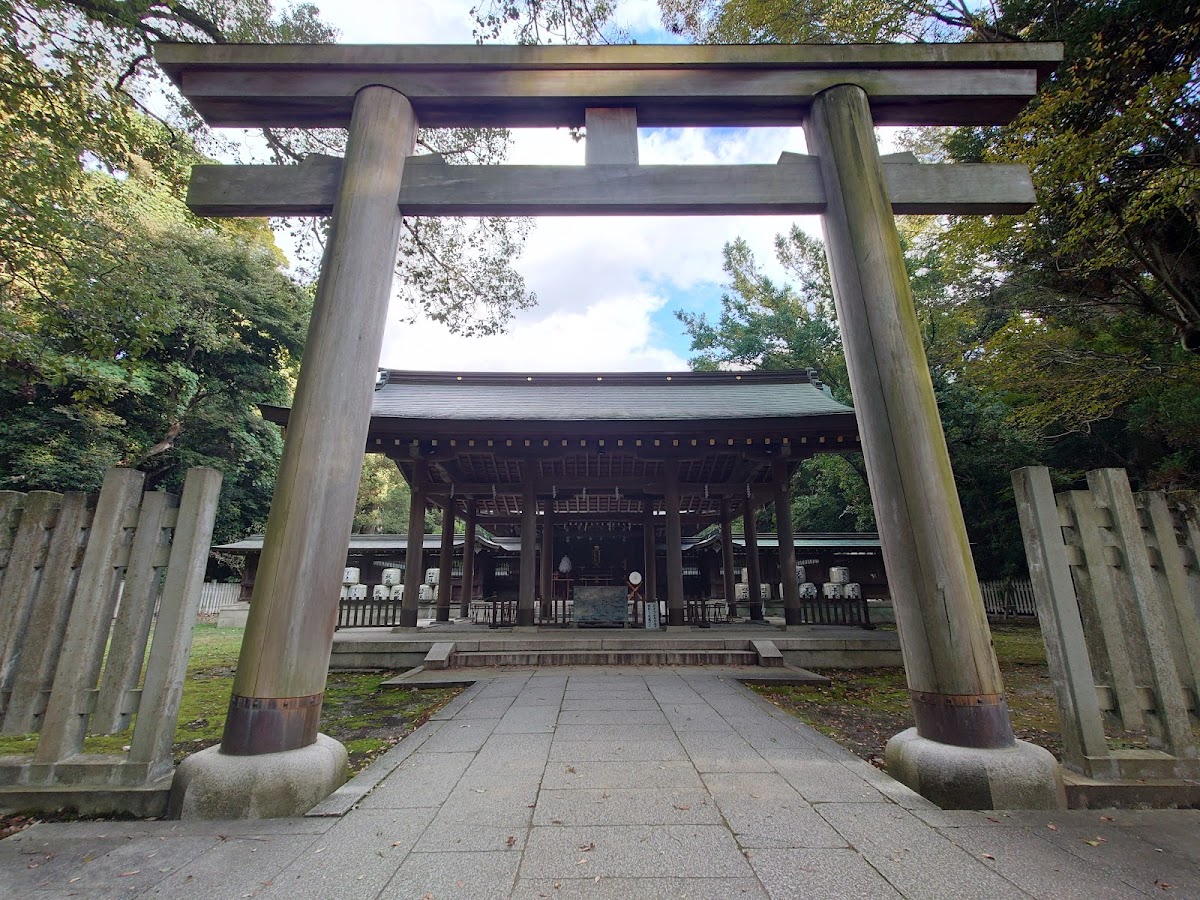
A large torii gate stands at the Omotesando, the entrance to the shrine grounds. Passing through the torii, you’ll find yourself adorned with centuries-old giant trees lining both sides of the path, creating a solemn atmosphere befitting a sacred area.
Haiden and Honden
As you proceed along the path, the shrine buildings of Hinokuma Shrine and Kunikake Shrine appear, splitting to the left and right.
Hinokuma Shrine is located on the left, with the Haiden (worship hall) and Honden (main hall) side by side. The Honden is built in the Shinmei-zukuri style, the same style as Ise Grand Shrine, and enshrines the sacred object, the Nichizo-kyo mirror.
Kunikake Shrine is located on the right, similarly with the Haiden and Honden arranged. The Nichihoko-kyo mirror is also enshrined in this Honden.
The shrine buildings of both shrines are symmetrically positioned, creating a harmonious landscape while remaining independent. It is considered proper etiquette to pay respects at both shrines separately.
Shrine Gate and Office
Within the shrine grounds is a shrine gate, and nearby is the office (shrine office). Here you can receive amulets and Goshuin (shrine stamps). At both Hinokuma Shrine and Kunikake Shrine, you can receive Goshuin from both shrines, and many visitors collect both as a memento of their visit.
Nature within the Shrine Grounds
The shrine grounds cover approximately 10,000 tsubo (about 33,000 square meters) and maintain a rich natural environment as a sacred forest. In particular, there are many large trees such as ancient camphor trees, cedars, and cypresses, creating a sacred atmosphere befitting a divine site.
Cherry blossoms bloom in spring, and the autumn leaves are beautiful, allowing visitors to enjoy nature throughout the seasons. Despite being in an urban area, it is a quiet and peaceful space that soothes the hearts of visitors.
Introduction to Subsidiary Shrines
Several subsidiary shrines are located within the grounds of Hinokuma Shrine and Kunikake Shrine.
Tendōne-no-Mikoto Shrine
This shrine is dedicated to Tendōne-no-Mikoto, the ancestral deity of the Ki clan. It is an important shrine for the Ki clan, serving as their tutelary deity, and is situated in a corner of the shrine grounds.
Ichiebisu Shrine
This shrine is dedicated to Ebisu, the god of business prosperity. It enjoys strong devotion from local merchants and business owners, and is particularly crowded with worshippers during the Hatsuebisu festival.
Other Subsidiary Shrines
Several other subsidiary shrines are scattered throughout the grounds, each enshrining a different deity. Visiting these subsidiary shrines as well will make your pilgrimage more fulfilling.
Main Festivals and Annual Events
Various festivals are held throughout the year at Hinokuma Shrine and Kunikake Shrine.
Annual Grand Festival (September 26th)
The most important festival is the Annual Grand Festival, held annually on September 26th. A solemn Shinto ritual is performed according to ancient customs, attracting many worshippers. A portable shrine procession and dedication ceremonies also take place, enveloping the shrine grounds in a festive atmosphere.
Hinokuma-gu Noh Performance
Held annually in autumn, the “Hinokuma-gu Noh Performance” is a traditional event where Noh theater is performed on a specially constructed stage within the shrine grounds. Many Noh fans and culture enthusiasts visit to experience the ethereal world of Noh illuminated by bonfires within the sacred precincts.
New Year’s Visit
During the first three days of the New Year, many visitors come to the shrine as the Ichinomiya (first-ranked shrine) of Kii Province. The grounds are bustling with people praying for family safety, business prosperity, and successful relationships.
Monthly Festival
Monthly festivals are held on the 1st and 15th of each month, praying for daily peace and national security.
Other Annual Events
- New Year’s Day Festival (January 1st): A festival celebrating the New Year
- National Foundation Day Festival (February 11th): A festival celebrating the founding of the nation
- Prayer for a Bountiful Harvest Festival (February 17th): A festival praying for a bountiful harvest
- Summer Purification Ceremony (June 30th): A Shinto ritual to purify oneself of sins and impurities accumulated over the past six months
- Niiname-sai Festival (November 23rd): A festival offering the new harvest to the gods
- Great Purification Ceremony (December 31st): A Shinto ritual to purify oneself of sins and impurities accumulated over the past year
These festivals preserve traditional forms of worship that have continued since ancient times, and offer valuable opportunities to understand Japanese Shinto culture.
Benefits and Faith
Hinokuma Shrine and Kunikake Shrine are believed to offer various benefits and attract the faith of many people.
Main Benefits
- Good Matchmaking/Marriage: Believed to bring good fortune in relationships between men and women, attracting many visitors praying for romantic success and marriage.
- Family Safety: Benefits of protecting the peace and happiness of the family.
- Business Prosperity: A belief in praying for business development and prosperity.
- Protection from Misfortune/Good Fortune: Benefits of warding off misfortune and opening up good fortune.
- Safe Childbirth/Childbearing: A belief in praying for safe childbirth and the blessing of children.
As a Place for Life Celebrations
Hinoki Shrine and Kunikake Shrine play an important role as places for local people to celebrate milestones in their lives.
- First Shrine Visit: Praying for the healthy growth of the baby
- Shichi-Go-San Ceremony: Celebrating the growth of children and praying for their health
- Exorcism Ceremony: Warding off misfortune during the unlucky year
- Wedding Ceremony: A Shinto wedding ceremony can be held.
These ceremonies, held in the sacred atmosphere of the shrine grounds, will become cherished memories in your life.
Access and Visiting Information
Location
365 Akizuki, Wakayama City, Wakayama Prefecture 640-8322
Telephone/Fax
- TEL: 073-471-3730
- FAX: 073-474-3869
Reception Hours
- Visiting Hours: 9:00 AM – 4:40 PM (Gates close)
- Prayer Reception: 9:00 AM – 4:00 PM
Access by Train
Using Nankai Electric Railway:
- Take the Nankai Wakayama Bus bound for “Hinokimiya” from Nankai Main Line “Wakayama-shi Station,” and get off at the “Hinokimiya” bus stop.
- Approximately 10 minutes by taxi from Nankai Main Line “Wakayama-shi Station”
- Approximately 1 minute walk from Nankai Kishigawa Line “Hinokimiya Station” (nearest station)
Using JR:
- From JR Kisei Main Line/Wakayama Line “Wakayama Station,” take the Wakayama Bus bound for “Hinokimiya” and get off at the “Hinokimiya” bus stop.
- Approximately 15 minutes by taxi from JR “Wakayama Station”
Access by Car
- Approximately 15 minutes from Hanwa Expressway “Wakayama IC”
- Approximately 20 minutes from Hanwa Expressway “Wakayama Kita IC”
Parking
There is a free parking lot for visitors on the temple grounds. However, due to limited spaces, we recommend using public transportation during busy periods such as festivals and New Year’s visits.
Etiquette for Visiting Shrines
- Bow when passing through the torii gate.
- Walk along the sides of the path, as the center is considered the path of the gods.
- Cleanse your hands and mouth at the water basin.
- Pray using the two bows, two claps, and one bow ritual.
- Visit both Hinokuma Shrine and Kunikake Shrine.
- Photography is permitted within the shrine grounds, but be aware that some areas, such as inside the main hall, are off-limits to photography.
About Goshuin (Shrine Seals)
You can obtain goshuin (shrine seals) from both Hinokuma Shrine and Kunikake Shrine. They are available at the shrine office (reception area), and the offering fee is approximately 300 yen per shrine. In addition to having the goshuin stamped in your goshuin book, pre-printed goshuin are also available.
Nearby Tourist Attractions
Near Hinokuma Shrine and Kunikake Shrine are some of Wakayama’s most famous tourist spots, including Wakayama Castle, Kimii-dera Temple, and Wakayama Marina City. You can enjoy sightseeing in Wakayama in conjunction with your visit to the shrine.
About the pronunciation of Hinokuma Shrine
There are several variations in how to pronounce Hinokuma Shrine and Kunikakasu Shrine, which can be confusing for first-time visitors.
Official Name
The official name is “Hinokuma Shrine and Kunikakasu Shrine“, pronounced “Hinokuma Jingu” and “Kunikakasu Jingu”.
General Pronunciation
Generally, it is often referred to collectively as “Hinokuma Shrine“, pronounced “Nichizengu“. Locally, it is affectionately called “Nichizen-san” or “Hinokuma-san”.
The pronunciation “Hinokuma” is officially used to refer to Hinokuma Shrine alone, but it is also sometimes used as a general term. On the other hand, the general term “Nichizengu” has spread naturally among people and is currently the most commonly used pronunciation.
Alternative Names
In the past, it was also called “Nagusa-no-miya” after the name of its location. The notation “Hinokuma-Kunikake-Jingu” is also sometimes used.
Summary
Hinokuma-Jingu and Kunikake-Jingu are extremely prestigious shrines with a history of over 2600 years, making them among the oldest in Japan. They enshrine the Nichizo-kagami and Nichihoko-kagami mirrors, considered equivalent to the Yata-no-kagami mirror of Ise Grand Shrine, as their sacred objects. They possess many unique features not found in other shrines, such as the distinctive layout of two shrines standing side-by-side within a single precinct, the long-standing rituals of the Ki clan, and their status as the Ichinomiya (first-ranked shrine) of Kii Province.
The tranquil grounds, surrounded by deep groves of trees, maintain a solemn atmosphere befitting a sacred place despite being in an urban area, providing solace to visitors. It is believed to offer various blessings, including good fortune in relationships, family safety, and business prosperity, attracting many worshippers not only from the local area but also from all over Japan.
When you visit Wakayama, be sure to stop by Hinokuma Shrine and Kunikake Shrine and offer a peaceful visit to these sacred sites steeped in over 2,600 years of history. By visiting both shrines and experiencing the ancient traditions of religious rites, you will gain a deep appreciation for the richness of Japanese history and culture.