Enmei-ji Temple (Sakata City, Yamagata Prefecture) | A Complete Guide to the History and Highlights of the 18th Temple of the Shonai Thirty-Three Kannon Pilgrimage
Enmei-ji Temple, located in the Oishi district of Sakata City, Yamagata Prefecture, is a historic temple belonging to the Chizan branch of the Shingon sect. Known as the 18th temple of the Shonai Thirty-Three Kannon Pilgrimage, it has been a place of worship for the local people since the Heian period. This article comprehensively introduces information you should know before visiting Enmei-ji Temple, including its history, cultural assets, visiting information, goshuin (temple stamps), and access methods.
Basic Information about Enmei-ji Temple
Enmei-ji Temple is a Shingon Chizan sect temple located on Omoriyama in the Oishi district of Sakata City, Yamagata Prefecture. Its official mountain name is “Oishi-san,” and it enshrines Fudo Myoo as its principal deity. It also houses Sho Kannon Bodhisattva as the pilgrimage principal deity, and as the 18th temple of the Shonai Thirty-Three Kannon Pilgrimage, it attracts many pilgrims.
Location
164 Omoriyama, Oishi, Sakata City, Yamagata Prefecture 998-0802
Sect
Shingon-shu Chizan-ha
Principal Deity
Fudo Myoo
Pilgrimage Principal Deity
Sho Kannon Bodhisattva
Telephone Number
0234-94-2361
Visiting Hours
8:00 AM – 5:00 PM (Group visits require advance reservation)
Parking
Approximately 20 spaces available
History and Origins of Enmei-ji Temple
Detailed records regarding the founding date of Enmei-ji Temple are unavailable, and the exact founding date is unknown. However, based on the style of cultural artifacts and Buddhist statues preserved at the temple, it is believed to have existed as a place of worship since the Heian period.
As its mountain name, Oishi-yama, suggests, this temple is located in the mountains of the Oishi area and has developed as a sacred site linked to mountain worship since ancient times. It also functioned as a training ground based on the esoteric Buddhist thought of the Shingon sect, and the fact that Fudo Myoo (Acala) is the principal deity suggests that it was a temple that emphasized the path to enlightenment through rigorous training.
During the Edo period, it was established as one of the 33 Kannon pilgrimage sites in Shonai, and it became a place of worship for the people of the Shonai region. Kannon worship was widely accepted by ordinary people, and many pilgrims visited Enmei-ji Temple.
Despite being affected by the anti-Buddhist movement of the Meiji era, the temple was protected by the deep faith of the local people, and the Buddhist teachings have continued uninterrupted to this day.
Cultural Assets and Highlights of Enmei-ji Temple
Heian Period Statue of Sho Kannon Bodhisattva
Enmei-ji Temple’s greatest treasure is a statue of Sho Kannon Bodhisattva, believed to have been created during the Heian period. This statue is enshrined as the principal image of worship at the 18th temple of the Shonai 33 Kannon pilgrimage, and is a valuable cultural asset that conveys the characteristics of elegant Heian period sculpture.
The Holy Kannon Bodhisattva is the basic form of Kannon Bodhisattva and is worshipped as a compassionate Buddha who perceives the suffering of all sentient beings and offers salvation. The Kannon statue at Enmei-ji Temple is characterized by its serene expression and flowing drapery, demonstrating the high level of Buddhist art during the Heian period.
Pagoda from the Kamakura to Nanboku-cho Periods
Within the temple grounds remains a pagoda believed to have been constructed between the Kamakura and Nanboku-cho periods. A pagoda is a tower for housing Buddha relics (the remains of Shakyamuni Buddha), and this stone pagoda is a representative cultural asset of medieval stone art.
This pagoda has withstood centuries of weathering, retaining its original form, and is an important relic that tells the story of the flourishing Buddhist culture in the Shonai region during the medieval period. From the style and inscriptions of the pagoda, we can learn about the nature of faith and its relationship with the local community at that time.
Atmosphere of the Main Hall and Temple Grounds
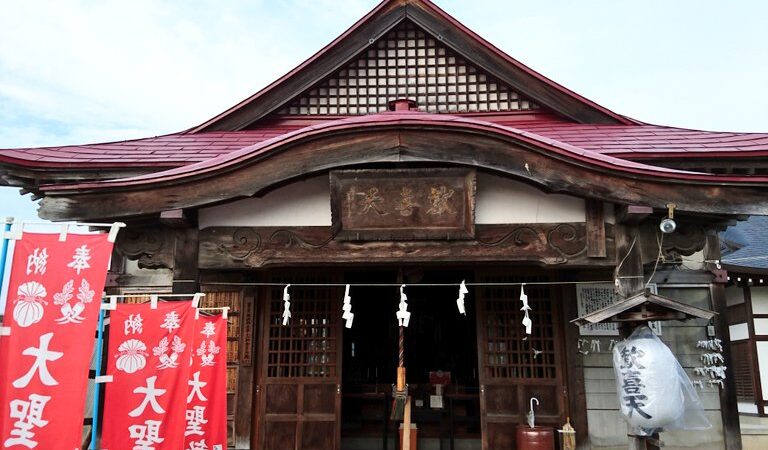
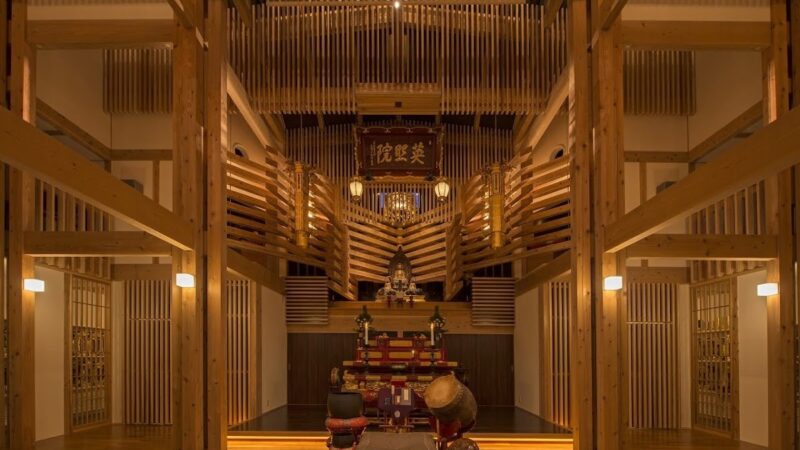
The main hall of Enmei-ji Temple has a solemn atmosphere typical of a Shingon Buddhist temple. The main hall houses the principal image of Fudo Myoo (Acala), and Goma rituals are regularly performed at the Goma altar. Fudo Myoo is a benevolent deity who guides sentient beings with a stern expression, bearing flames that burn away worldly desires.
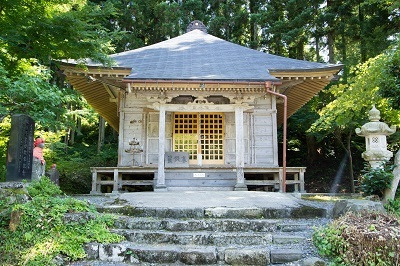
The temple grounds are located in a quiet mountain area, surrounded by nature that changes with the seasons. Spring brings fresh greenery, summer brings deep green, autumn brings vibrant foliage, and winter brings snowscapes, offering different scenery depending on the time of year.
About the Shonai Thirty-Three Kannon Pilgrimage
Enmei-ji Temple holds an important position as the 18th temple of the Shonai Thirty-Three Kannon Pilgrimage. The Shonai Thirty-Three Kannon Pilgrimage is a pilgrimage route visiting 33 Kannon temples scattered throughout the Shonai region of Yamagata Prefecture (Sakata City, Tsuruoka City, Shonai Town, Yuza Town, etc.).
Kannon pilgrimage originated from the Saigoku Thirty-Three Kannon Pilgrimage and spread throughout Japan. The number 33 originates from the teachings of the Lotus Sutra, which states that Kannon Bodhisattva transforms into 33 different forms to save all sentient beings.
It is believed that by visiting the 33 Kannon pilgrimage sites in Shonai, one can experience Kannon’s compassion and attain inner peace. Each pilgrimage site, including Enmei-ji Temple, offers Goshuin (temple stamps), which are collected by many as proof of their pilgrimage.
Goshuin and Pilgrimage Information
Enmei-ji Temple offers Goshuin to visitors. Goshuin are popular as proof of worship and as a memento of the pilgrimage.
Goshuin Reception Hours
8:00 AM – 5:00 PM (during visiting hours)
Types of Goshuin
- Standard Goshuin
- Goshuin for the 18th temple of the Shonai 33 Kannon Pilgrimage
It is recommended to bring your Goshuincho (stamp book) when receiving a Goshuin. A Goshuin (temple stamp) is not merely a stamp or signature, but a symbol of a connection with Buddha or the gods. Please receive it carefully and keep it safe.
Those undertaking the Shonai Thirty-Three Kannon Pilgrimage can obtain special Goshuin notebooks and pilgrimage supplies at each temple. Enmei-ji Temple also provides information regarding the pilgrimage, so please feel free to inquire.
Annual Events and Memorial Services
Enmei-ji Temple, as a Shingon Buddhist temple, holds various annual events and memorial services.
Main Annual Events
New Year’s Visit and Shushō-e (New Year’s Ceremony)
In January, as we welcome the New Year, visitors come for their first shrine visit of the year. A Shushō-e ceremony is also held to pray for safety and happiness throughout the year.
Spring Equinox Ceremony
During the Higan period, centered around the spring equinox, memorial services are held to honor ancestors.
Obon Memorial Service
During Obon in August, memorial services are held to welcome and honor the spirits of ancestors. Autumn Equinox Service During the autumn equinox period, similar to the spring equinox, memorial services for ancestors are held.
Goma Ritual The Goma ritual, a characteristic practice of the Shingon sect, is performed regularly. This prayer involves burning away worldly desires with the flames of the Goma fire and fulfilling wishes.
For detailed dates and participation information regarding these events, we recommend contacting the temple in advance.
Access and Transportation Information
Enmei-ji Temple is located in the Oishi district of Sakata City and is accessible by both public transport and private car.
Access by Train and Bus
Nearest Station
JR Uetsu Main Line, Sakata Station
Access from Sakata Station
- By Taxi: Approximately 15 minutes
- By Local Bus: Approximately 50 minutes by bus bound for Oishi from Sakata Station (advance confirmation is necessary as there are days when buses do not operate)
The nearest bus stop is around Sunagoshi Station, but it is a considerable distance to walk from there, so if using the bus, you may want to consider using a taxi in conjunction with the bus.
Access by Private Car
From Yamagata Area
Head north on National Route 7, then take the prefectural road from Sakata city to the Oishi area. Approximately 15 minutes from Sakata Station.
From Akita Area
Head south on National Route 7, passing through Sakata city to the Oishi area.
Parking
There is a free parking lot with space for approximately 20 cars on the temple grounds. Groups wishing to visit by large bus must contact us in advance.
Navigation Settings
Address: 164 Omoriyama, Ikeishi, Sakata City, Yamagata Prefecture
Phone Number: 0234-94-2361
Entering the above information into your car navigation system will allow you to arrive smoothly. Because it is located in a mountainous area, caution is needed regarding icy roads and snow during winter.
Nearby Tourist Attractions
When visiting Enmei-ji Temple, visiting nearby tourist attractions will make your trip even more fulfilling.
Tourist Attractions in Sakata City
Sankyo Warehouses
A rice storage warehouse built during the Meiji era, a symbol of Sakata. The zelkova tree-lined avenue is beautiful, and it is a popular tourist destination as a historical building.
Honma Museum of Art & Former Honma Residence
A museum exhibiting the art collection of the Honma family, one of Japan’s leading landowners, and the former residence that conveys the lifestyle of a wealthy merchant during the Edo period.
Hiyoriyama Park
A park offering a panoramic view of Sakata Port, featuring a model of a large cargo ship and a lighthouse. It is also known as a cherry blossom viewing spot. ### Other Temples of the Shonai Thirty-Three Kannon Pilgrimage
Those undertaking the Shonai Thirty-Three Kannon Pilgrimage, including Enmei-ji Temple, may also consider visiting nearby temples. Each temple has its own history and unique characteristics, enriching your pilgrimage.
Manners and Precautions When Visiting
When visiting Enmei-ji Temple, please observe the following manners and precautions.
Basic Manners for Visiting
- Dress Code: Avoid revealing clothing and opt for clean, understated attire.
- Behavior on Temple Grounds: Visit quietly and refrain from loud conversations or making noise.
- Photography: Photography of the temple grounds and building exteriors is permitted, but permission is required before photographing the interior of the main hall or Buddha statues.
- Smoking and Eating: Smoking is prohibited on the temple grounds. Eating and drinking are also prohibited outside of designated areas.
- Offerings: Please offer your donation respectfully. Instead of the traditional two bows, two claps, and one bow ritual, please join your hands in prayer and pray quietly.
Group Visits
If you wish to visit as a group, please contact us by phone in advance to inform us of the date, time, and number of people. Advance reservations are also required if you wish to receive an explanation from the head priest or a special viewing.
Seasonal Precautions
Winter (December-March)
Yamagata Prefecture experiences heavy snowfall in winter, especially around Enmei-ji Temple, which is located in a mountainous area. When visiting in winter, snow tires or chains are essential. Please also take sufficient precautions against the cold.
Summer (July-August)
Summers are hot, but the mountainous area makes the climate relatively comfortable. However, don’t forget insect repellent and hydration.
The Charm and Significance of Visiting Enmei-ji Temple
The greatest charm of Enmei-ji Temple lies in its long history, dating back to the Heian period, and the precious cultural assets that tell that story. The statue of the Holy Kannon Bodhisattva and the pagoda are not merely ancient objects, but the culmination of the faith and skill of our ancestors.
Furthermore, as a Shingon Buddhist temple, it serves as a place of practice and faith based on the teachings of Esoteric Buddhism. The stern yet compassionate figure of Fudo Myoo (Acala) gives us the courage to sever our worldly desires and walk the right path.
As the 18th temple of the Shonai Thirty-Three Kannon Pilgrimage, Enmei-ji Temple is an important sacred site for pilgrims. Many people visit to experience the compassion of Kannon and find peace of mind.
Nestled in the quiet mountains, Enmei-ji Temple offers a time to escape the hustle and bustle of everyday life and confront oneself. Through a visit, you will find an opportunity to calm your mind and reflect on life.
Summary
Enmei-ji Temple in Sakata City, Yamagata Prefecture, is an ancient temple of the Shingon Chizan sect, possessing valuable cultural assets such as a statue of the Holy Kannon Bodhisattva from the Heian period and a pagoda from the Kamakura period. As the 18th temple on the Shonai Thirty-Three Kannon Pilgrimage, it is beloved by many pilgrims and visitors.
Enmei-ji Temple, nestled in the tranquil environment of Mt. Oishi, offers a chance to experience history and faith. When visiting Sakata City, be sure to stop by. Visiting hours are 8:00 AM to 5:00 PM, and parking is available, making it relatively easy to access.
You can also receive a Goshuin (temple stamp), making it a great choice for those considering a pilgrimage to the Shonai Thirty-Three Kannon Pilgrimage. If you wish to visit as a group, please remember to contact the temple in advance.
May your visit to Enmei-ji Temple be a time of peace and tranquility.