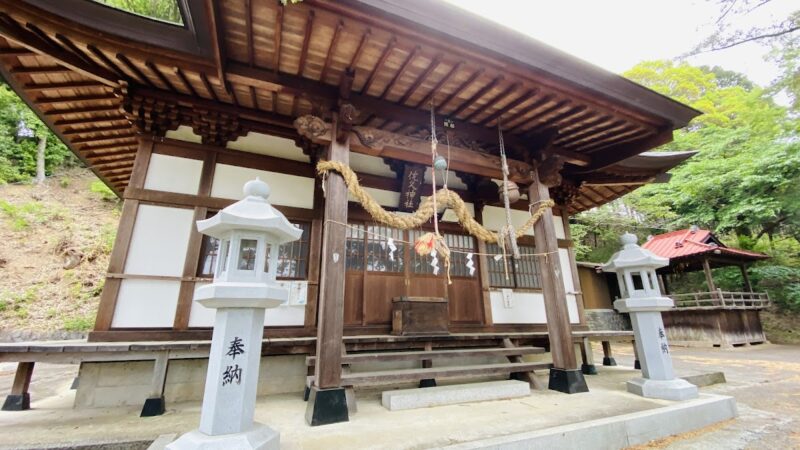
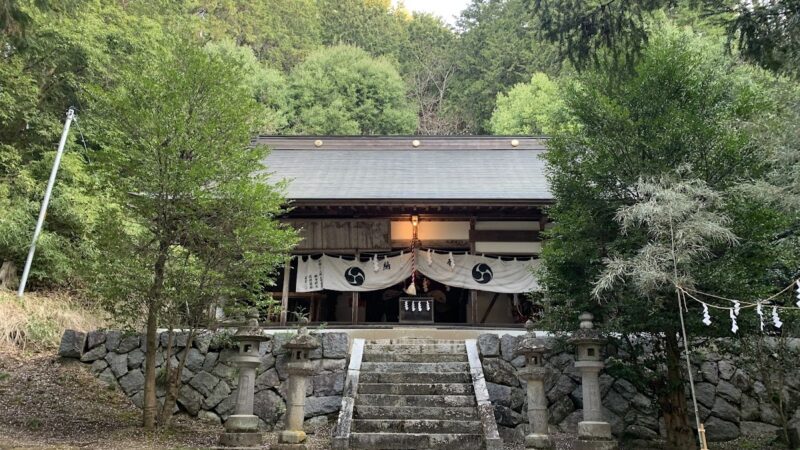
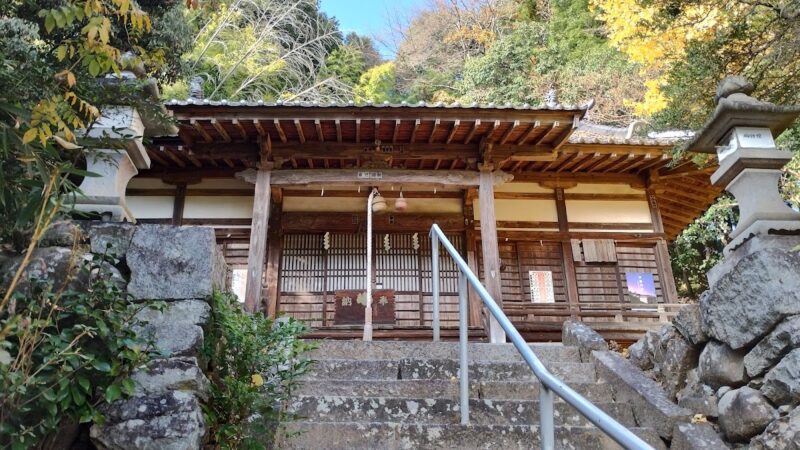
Hiyoshi Sanno Shrine (Yamanashi City, Yamanashi Prefecture) Complete Guide | History, Deities, Access, and Festival Information
Hiyoshi Sanno Shrine, located in Murofushi, Makioka-cho, Yamanashi City, Yamanashi Prefecture, is a venerable shrine that has attracted the faith of the local community since ancient times. It boasts the tradition of the Higashi-Goko (Eastern Imperial Pilgrimage), once counted as one of the “Three Imperial Pilgrimages of Koshu,” and is still carefully preserved by the local people. This article provides detailed information useful for visitors, including the history of Hiyoshi Sanno Shrine, its enshrined deities, festivals, and access methods.
Basic Information on Hiyoshi Sanno Shrine
Location: 2990 Murofushi, Makioka-cho, Yamanashi City, Yamanashi Prefecture
Religious Corporation: Under the Association of Shinto Shrines
Jurisdiction: Yamanashi Prefectural Shrine Association
Hiyoshi Sanno Shrine is located in the Murofushi district of Makioka-cho, in the northern part of Yamanashi City. The surrounding area is a mountainous region rich in nature, and it has long been worshipped as a spiritual pillar of the local community, which has been centered on agriculture.
History and Origins of Hiyoshi Sanno Shrine
Status as an Ancient Grand Shrine
Hiyoshi Sanno Shrine is a historical shrine with records preserved in the “Kai no Kuni Shi” (History of Kai Province). According to the book, “The shrine records state, ‘This shrine is an ancient grand shrine,'” indicating that it was a large shrine occupying an important position in the region from ancient times.
Sanno worship originated from Hiyoshi Taisha (Otsu City, Shiga Prefecture), the guardian deity of Enryaku-ji Temple on Mount Hiei, and spread throughout Japan. While several Sanno shrines exist in Yamanashi Prefecture, Hiyoshi Sanno Shrine is considered one of the oldest.
The Tradition of the Three Imperial Processions of Koshu and the Eastern Imperial Procession
An essential aspect of discussing Hiyoshi Sanno Shrine is the tradition of the “Eastern Imperial Procession,” one of the “Three Imperial Processions of Koshu.”
According to the *Kai no Kuni Shi* (History of Kai Province), the following Shinto ritual was once performed:
- Time: The second Monkey Day of April every year
- Participating Shrines:
- Karato Myojin Shrine of Narusawa
- Sanno Gongen Shrine of Shimo-Ogihara (Hiyoshi Sanno Shrine)
- Sanno Gongen Shrine of Kami-Kaminokawa Village, Kurihara-suji (Place of the procession)
- Content: The portable shrines of the three shrines proceed to Sanno Gongen Shrine in Kami-Kaminokawa Village and are enshrined there.
- Return: The procession returns to our shrine (Hiyoshi Sanno Shrine) on the second Monkey Day of November.
This ritual was called “Higashi Miyuki” (Eastern Procession) and was counted as one of the three important processions (processions of the gods) in Koshu (Kai Province). It was a very distinctive form of festival, in which the gods moved to another shrine, stayed there for more than six months, and then returned.
Changes in the Festival
Unfortunately, this magnificent Higashi Miyuki ritual ceased at some point. The *Kai no Kuni Shi* (History of Kai Province) states that the ritual was “discontinued at some point.”
However, the tradition of the Shinto ritual was passed down in a modified form. Even after the Higashi-Goko (Eastern Procession) ceased, records indicate that the festival continued, with three portable shrines being carried to the Fuefuki Riverbed on the day of the Monkey in April.
Current Festivals and Annual Events
Grand Festival (Spring Grand Festival)
At the current Hiyoshi Sanno Shrine, the Grand Festival is held annually on April 11th.
While the festival has changed from its former tradition of being held on the day of the Monkey to a fixed date of April 11th, it remains an important festival celebrating the arrival of spring and praying for a bountiful harvest and peace in the community, and is still cherished by the local people.
During the annual grand festival, a solemn ceremony is conducted by Shinto priests, and parishioners and local residents attend to offer gratitude and prayers to the gods.
Other Annual Events
In addition to the annual grand festival, Hiyoshi Sanno Shrine is believed to hold the following annual events (similar to those of typical shrines):
- New Year’s Day Festival: January 1st, a festival celebrating the new year
- Setsubun Festival: February, a festival to ward off evil and invite good fortune
- Summer Purification Ceremony: End of June, a Shinto ritual to purify oneself of sins and impurities accumulated over the past six months
- Autumn Annual Festival: Autumn, a festival to express gratitude for the harvest
- Year-End Purification Ceremony: End of December, a Shinto ritual to purify oneself of sins and impurities accumulated over the year
For detailed festival schedules, please contact the Yamanashi Prefectural Shrine Association or your local parishioner’s representative.
About the Deity
The main deity enshrined at Hiyoshi Sanno Shrine is believed to be Ōyamakui-no-kami, the central deity of Sanno worship.
About Ōyamakui-no-kami
Ōyamakui-no-kami is a deity appearing in the Kojiki (Records of Ancient Matters), worshipped as the god of mountains and water.
- Divine Aspects: Guardian deity of mountains, god of agriculture, god of brewing
- Divine Virtues: Abundant harvests, business prosperity, family safety, protection from evil and good fortune
- Main Shrine: Hiyoshi Taisha (Ōtsu City, Shiga Prefecture)
Known as the guardian deity of Mount Hiei, Ōyamakui-no-kami is a central deity of Sanno worship, which spread throughout Japan with the development of Enryaku-ji Temple.
Characteristics of Sanno Worship
Sanno worship is a form of faith strongly influenced by the syncretism of Shinto and Buddhism. The name “Sanno Gongen” indicates that the Shinto deity Oyamakui-no-kami is worshipped as a Gongen (a Buddhist manifestation of a deity).
Due to the separation of Shinto and Buddhism during the Meiji era, many Sanno Gongen shrines were renamed “Hiyoshi Shrine” or “Sanno Shrine,” but Hiyoshi Sanno Shrine is unique in that it retains both names.
Access to Hiyoshi Sanno Shrine
Location
2990 Murofushi, Makioka-cho, Yamanashi City, Yamanashi Prefecture 404-0013
Access by Car
From the Chuo Expressway:
- Approximately 30 minutes from Katsunuma IC
- Approximately 35 minutes from Ichinomiya Misaka IC
Take National Route 140 (Karisaka-michi) towards Makioka. Once you enter the Murofushi area, we recommend checking the signs or asking locals for directions.
Parking: Details unknown (there may be a small parking space for visitors)
Access by Public Transportation
Nearest Station: JR Chuo Main Line “Yamanashi-shi Station”
From Yamanashi-shi Station, you will need to use a city bus or taxi. Because the Murofushi area of Makioka-cho is located in a mountainous area, public transportation access is limited.
Taxi: Approximately 20-25 minutes from Yamanashi-shi Station (estimated fare: around 3,000-4,000 yen)
Notes on Access
- Due to its mountainous location, there is a possibility of snow and icy roads in winter.
- When searching with a car navigation system, please enter the address (2990 Murofushi, Makioka-cho, Yamanashi City).
- There may be narrow roads and steep slopes, so please drive carefully.
- It is recommended to check the route on a map in advance.
Nearby Tourist Attractions
The area around Makioka-cho, Yamanashi City, where Hiyoshi Sanno Shrine is located, has many spots where you can enjoy nature and history.
Nishizawa Valley
A valley famous for the “Nanatsugama Godan Falls,” selected as one of Japan’s Top 100 Waterfalls. Known for its beautiful fresh greenery and autumn foliage, it features a well-maintained walking trail that takes approximately 3.5 hours.
Estimated Time: Approximately 20 minutes by car from Hiyoshi Sanno Shrine
Fuefukigawa Fruit Park
A park themed around fruits, a specialty product of Yamanashi Prefecture. It boasts an observation deck offering panoramic views of the Kofu Basin and is a popular spot for night views.
Estimated Time: Approximately 25 minutes by car from Hiyoshi Sanno Shrine
Kentoku Mountain
One of Yamanashi’s 100 Famous Mountains, with an elevation of 2,031m. A popular mountain among hiking enthusiasts, it offers spectacular views from the summit.
Estimated Time: Approximately 15 minutes by car from Hiyoshi Sanno Shrine to the trailhead
Kubohira Onsen
A hot spring facility located in Makioka Town. Perfect for relaxing after hiking or sightseeing.
Estimated Time Required: Approximately 10 minutes by car from Hiyoshi Sanno Shrine
Manners and Precautions When Visiting
Basic Worship Etiquette
- Bow before passing through the torii gate
- Purify yourself at the water basin (if available)
- Purify your left hand, then your right hand
- Rinse your mouth
- Purify the handle of the ladle
- Bow twice, clap twice, and bow once in front of the main hall
- Bow deeply twice
- Clap twice
- Bow deeply once
Points to Note When Visiting
- This is a quiet mountain shrine, so please worship quietly and respectfully.
- The shrine grounds are a sacred place. Please take your trash with you.
- Photography is permitted, but please be discreet in sacred areas such as the main shrine.
- This is a place of worship for local people, so please treat it with respect.
- It may be unattended at times, so please check in advance regarding Goshuin (shrine stamps), etc.
The Charm of Hiyoshi Sanno Shrine
An Ancient Shrine Evokes Historical Romance
The greatest charm of Hiyoshi Sanno Shrine lies in its deep history. As a shrine with the tradition of the Higashi-Goko (Eastern Imperial Procession), one of the “Three Imperial Processions of Koshu” recorded in the “Kai no Kuni Shi” (History of Kai Province), it occupies an important position in the history of shrines in Yamanashi Prefecture.
Visiting while imagining the magnificent tradition of the procession, which has now ceased, will surely evoke a deeper sense of awe.
A Quiet Sacred Place in the Mountains
Nestled in the quiet mountains of Murofushi, Makioka-cho, Hiyoshi Sanno Shrine is attractive for its tranquil atmosphere, far removed from the hustle and bustle of the city. It is a place where you can pray in peace surrounded by nature.
The Parishioners Who Continue to Preserve Local Faith
The faith of the local people who continue to preserve ancient traditions is a major attraction of this shrine. Every year on April 11th, at the annual festival, parishioners and local residents gather to offer their gratitude to the gods.
Other Sanno and Hiyoshi Shrines in Yamanashi Prefecture
Besides Hiyoshi Sanno Shrine, there are several other shrines in Yamanashi Prefecture based on the Sanno faith.
Major Sanno and Hiyoshi Shrines
- Hiyoshi Shrine (Kofu City)
- Sanno Shrine (Fuefuki City)
- Hie Shrine (Fujiyoshida City)
These shrines are also deeply connected to the history of their respective regions, demonstrating the widespread roots of the Sanno faith in Yamanashi Prefecture.
Summary: Points to Note When Visiting Hiyoshi Sanno Shrine
Hiyoshi Sanno Shrine is a historical shrine located in Murofushi, Makioka-cho, Yamanashi City, Yamanashi Prefecture.
Points to Note When Visiting:
- History: An ancient grand shrine recorded in the “Kai no Kuni Shi” (History of Kai Province), and a tradition of the “Higashi Goko” (Eastern Imperial Pilgrimage), one of the three imperial pilgrimages of Kai Province.
- Annual Grand Festival: Held annually on April 11th.
- Deity Enshrined: Oyamakui-no-kami (the central deity of Sanno worship)
- Access: Convenient access by car (approximately 30 minutes from Katsunuma IC on the Chuo Expressway).
- Nearby Attractions: Numerous natural tourist spots such as Nishizawa Gorge and Fuefukigawa Fruit Park are located nearby.
This shrine is highly recommended for those interested in visiting shrines in Yamanashi Prefecture, Sanno worship, or historical shrines. Why not quietly visit this sacred place nestled in the mountains, reflecting on ancient rituals and offering a peaceful prayer?
Contact Information
For detailed information regarding Hiyoshi Sanno Shrine, please contact the following:
Yamanashi Prefectural Shrine Association
Address: 10-14 Okajima-cho, Kofu City, Yamanashi Prefecture
Phone: 055-226-5744
Website: https://www.yamanashi-jinjacho.or.jp/
Yamanashi City Hall, Makioka Branch
Address: 316 Kubohira, Makioka-cho, Yamanashi City, Yamanashi Prefecture
Phone: 0553-35-3111
We recommend checking the festival schedule and the shrine’s status before visiting. Prior confirmation is especially important during winter and in bad weather.