Ainai Shrine Complete Guide | A Thorough Explanation of History, Goshuin (Seal Stamps), Festivals, and Access Information
Ainai Shrine, located in Ainai-cho, Kitami City, Hokkaido, is a shrine deeply intertwined with the history of the region. This guide comprehensively introduces everything visitors want to know about Ainai Shrine, from its history and enshrined deities to its annual festivals, goshuin information, and access methods, as it has developed alongside the settlement of the Ainai district by Tondenhei (frontier soldiers).
Overview of Ainai Shrine
Ainai Shrine is a shrine under the jurisdiction of the Association of Shinto Shrines, located at 51 Ainai-cho, Kitami City, Hokkaido. It belongs to the Abashiri Branch of the Hokkaido Association of Shinto Shrines, and although its former shrine rank was unranked, it is cherished as the guardian shrine of the region, encompassing most of the former Ainai Village.
Basic Information
- Address: 51 Ainai-cho, Kitami City, Hokkaido 099-0871, Japan
- Phone Number: 0157-37-2916
- FAX: 0157-57-4040
- Office Hours: 9:00 AM – 12:00 PM, 1:00 PM – 5:00 PM
- Former Shrine Rank: Unranked Shrine
- Affiliation: Under the jurisdiction of the Association of Shinto Shrines (Abashiri Branch, Hokkaido Shrine Association)
Features of the Shrine Building
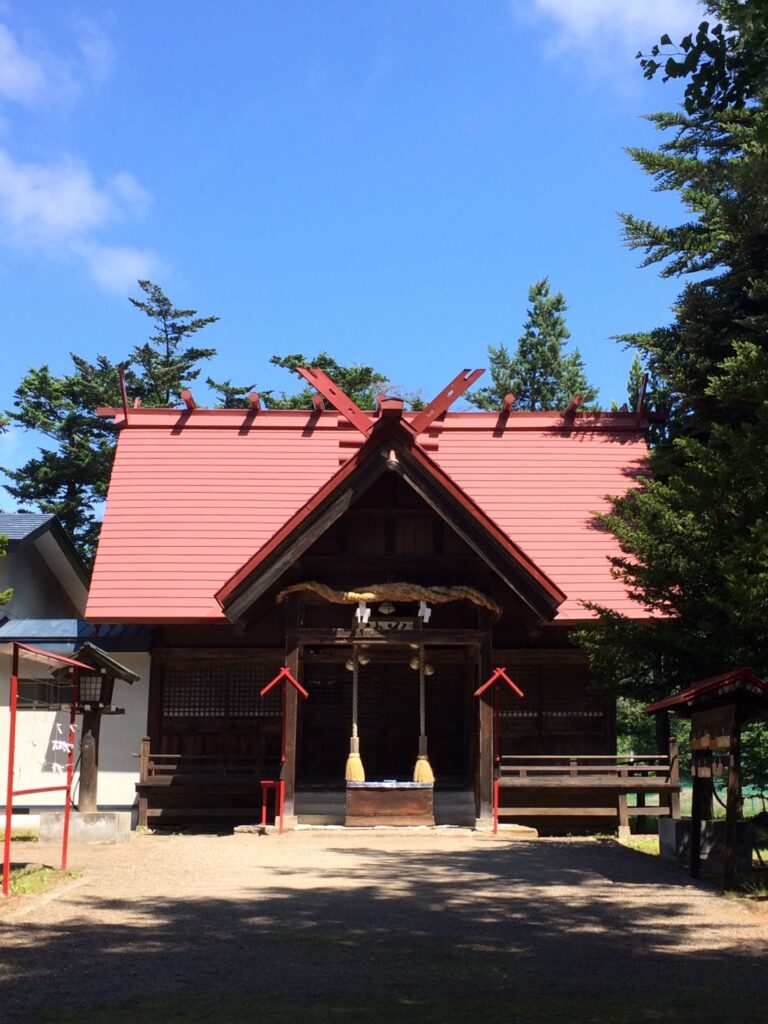
The shrine building of Ainai Shrine is constructed in the Shinmei-zukuri architectural style. Shinmei-zukuri is an ancient Japanese architectural style, exemplified by Ise Grand Shrine, characterized by its simple yet dignified appearance. The chigi (ornamental roof finials) are inwardly tapered, and there are eight katsuogi (decorative roof beams), demonstrating a faithful adherence to the Shinmei-zukuri style.
The History and Origins of Ainai Shrine
The history of Ainai Shrine is deeply intertwined with the development of Hokkaido and the settlement of Tondenhei (frontier soldiers).
The Settlement of Tondenhei and the Beginning of the Shrine
During the Meiji era, the Tondenhei system was introduced for the development of Hokkaido. Tondenhei settled in the Ainai area, undertaking the tasks of land reclamation and defense in a harsh natural environment. The settlers needed a shrine as a spiritual anchor, and this is the origin of Ainai Shrine.
The Establishment of Ainai Village and the Development of the Shrine
In 1922 (Taisho 11), Ainai Village was officially established. Although the Tondenhei system had already served its purpose by this time, many former Tondenhei and their descendants continued to dedicate themselves to the development of Ainai. As the center of the local community, the importance of the shrine grew ever greater.
Changes in the Shrine Building
In 1932 (Showa 7), the original Hōanden (treasure hall) was repurposed as the shrine building and enshrined in the northern center of the then-town. The Hōanden is a building that housed portraits of the Emperor and Empress and the Imperial Rescript on Education before the war. Its use as a shrine reflects the historical context of the time.
Later, in 1952 (Showa 27), the shrine was relocated to its current location. During this relocation, the shrine grounds were renovated to be befitting a village guardian deity, leading to its present form.
Deities Enshrined
Ainai Shrine enshrines two of the most important deities in Japanese mythology.
Amaterasu Ōmikami
Amaterasu Ōmikami is the supreme deity in Japanese mythology, a goddess who personifies the sun. She is considered the ancestral deity of the Imperial family and is enshrined in the Inner Shrine of Ise Grand Shrine. She is widely worshipped at shrines throughout Japan as a goddess who protects agriculture and all aspects of life.
Toyouke Ōkami
Toyouke Ōkami is the goddess who presides over food and grains. Enshrined at the Outer Shrine of Ise Grand Shrine, this deity holds a significant position as the god who presides over the meals of Amaterasu Omikami. It is revered as the guardian deity of abundant harvests and industrial development.
These two deities are the same as those enshrined at the Inner and Outer Shrines of Ise Grand Shrine, and together with the fact that Ainai Shrine has a Shinto-style building, this indicates that it is a shrine connected to the Ise faith lineage.
Annual Festival Calendar
Ainai Shrine holds various festivals throughout the year.
New Year’s Day Festival (Saitansai)
This is the first festival of the new year, held on January 1st. It celebrates the new year and prays for the prosperity of the Imperial Family, the peace and security of the nation, and the happiness of parishioners and worshippers. Many worshippers visit for their first shrine visit of the year, praying for a safe year.
Burning of Old Amulets and Talismans Festival (Koshinsatsu Shonosai)
This is a festival in which old amulets and talismans are burned. We express our gratitude for the amulets that have protected us throughout the year and return them to the gods through a burning ceremony. This is a winter tradition in Hokkaido, and many local residents participate.
Spring Festival
This festival, held in spring, is a time to pray for a bountiful harvest and the development of the region. The shrine grounds are filled with an atmosphere announcing the arrival of spring, and it is bustling with worshippers.
Autumn Festival
This is one of the most important festivals, held in autumn. We give thanks for the year’s harvest and report it to the gods. It also has the characteristics of a local festival, and sometimes includes a portable shrine procession and offering ceremonies.
Doll Appreciation Festival
This festival is a time to express gratitude for and respectfully mourn cherished dolls and stuffed animals. By carefully mourning dolls filled with memories, it provides an opportunity for owners to find closure. In recent years, with the rise of environmental awareness, it has also gained attention as an event that fosters a sense of cherishing possessions.
Other Festivals
In addition to the above, various Shinto rituals are held throughout the year, including monthly festivals and various prayer ceremonies. For detailed schedules, please inquire at the shrine’s official website or the shrine office.
Shrines and Facilities within the Precincts
Miyoshi Shrine
Within the grounds of Ainai Shrine, Miyoshi Shrine is enshrined as a subsidiary shrine. Miyoshi Shrine is a shrine worshipped mainly in Akita Prefecture, and enshrines Ōnamuchi-no-kami, Sukunahikona-no-kami, and Miyoshi-no-Reishin, known as gods of strength and victory.
Many settlers in Hokkaido were from the Tohoku region, and there are many examples of them bringing their homeland’s faith to the northern land. Miyoshi Shrine at Ainai Shrine is a valuable presence that conveys this history of pioneering.
Ainai Park
Ainai Park is located adjacent to the grounds of Ainai Shrine. The approach to the shrine is lined with lush trees, allowing visitors to experience the beauty of nature throughout the seasons. It is especially lively with visitors strolling through the grounds during the spring when the new leaves appear and in the autumn when the leaves change color.
The integrated park and shrine environment is a beloved place of relaxation for local residents and a playground for children.
Atmosphere of the Approach and Shrine Grounds
The approach to Ainai Shrine is surrounded by abundant nature. Walking along the tree-lined path allows you to forget the hustle and bustle of the city and offer a peaceful visit. The shrine grounds are well-maintained, and a refreshing atmosphere permeates the air.
About Goshuin (Shrine Seals)
Ainai Shrine offers Goshuin as proof of your visit.
Issuance of Goshuin
Goshuin are issued during shrine office hours (9:00 AM – 12:00 PM, 1:00 PM – 5:00 PM). After your visit, please present your Goshuin book at the shrine office to receive your Goshuin. ### Monthly Goshuin (Shrine Seal)
Ainai Shrine offers monthly goshuin (shrine seals). The designs often reflect the seasons and festivals, making them popular among goshuin collectors. We recommend checking the shrine’s official website or social media for information on this month’s goshuin.
Rescue Cat/Dog Goshuin
As a unique initiative, the shrine also offers goshuin featuring rescue cats and dogs. This is part of a social contribution activity aimed at raising awareness of animal welfare, and an attempt to increase interest in rescued animals through goshuin.
Goshuin Notebook
Ainai Shrine also offers original goshuin notebooks. We recommend checking the design and availability in advance.
Mail Order Service
For those who live far away or find it difficult to visit in person, mail order service for goshuin may be available. Please contact the shrine directly for detailed procedures and fees.
Access Information
We will guide you on how to access Ainai Shrine.
Access by Train
From JR Sekihoku Main Line, Ainai Station
- Get off at Ainai Station, approximately 10 minutes on foot
- Exit the station and head north to reach the shrine.
Ainai Station is a small station where only local trains stop, but it is conveniently located as the closest station to the shrine.
Access by Bus
Hokkaido Kitami Bus
- Get off at the “Ainai Shrine” bus stop, approximately 3 minutes on foot
The bus stop is very close, making it easily accessible. Bus timetables can be checked on the Hokkaido Kitami Bus official website.
Access by Car
Approximately 15 minutes from Kitami city center via National Route 39. There is parking space for visitors on the shrine grounds, but it may get crowded during festivals, so it is recommended to visit with plenty of time to spare.
Surrounding Environment
Ainai Shrine is located in the suburbs of Kitami City, in an area with a peaceful rural landscape. Ainai Park is nearby, allowing visitors to enjoy a stroll in addition to their visit to the shrine. ## Manners and Precautions for Visiting a Shrine
Etiquette for Visiting a Shrine
Here are the basic etiquette rules for visiting a shrine.
- Bow before passing through the torii gate: This is a courtesy before entering the sacred area.
- Purify yourself at the water basin: Purify your left hand, right hand, and mouth in that order.
- Walk along the edge of the path: The center is considered the path of the gods.
- Etiquette at the main hall: Two bows, two claps, and one bow are the basic rituals.
Clothing
There are no specific dress code requirements, but please wear clean clothing that is respectful to the gods. If attending a festival or ceremony, slightly more formal attire is desirable.
Photography
Photography is generally permitted within the shrine grounds, but it may be restricted during festivals or inside the shrine buildings. Please check with the shrine office if you have any questions.
Seasonal Precautions
Winter (November – March)
- Hokkaido winters are harsh; be careful of snow and ice.
- Take thorough precautions against the cold when visiting the shrine.
- Wear non-slip shoes as the ground can be slippery.
Summer (June – August)
- Insect repellent is recommended.
- On sunny days, bring a hat and sunscreen.
Treasures and Cultural Assets of Ainai Shrine
Ainai Shrine houses valuable historical documents and offerings that tell the history from the pioneering era. These are usually not open to the public, but may be displayed on special occasions.
Historical Documents
The shrine preserves valuable documents for understanding the history of the region, such as documents related to the settlement of Tondenhei (frontier soldiers) and the establishment of Ainai Village, as well as old amulets and records of festivals.
Offerings
The shrine houses votive tablets and other offerings donated by local people, allowing us to understand the wishes and beliefs of people throughout different eras.
Connection with the Community
Ainai Shrine is not merely a religious facility; it plays a vital role as the center of the local community.
Hub for Local Events
Festivals, including the Autumn Festival, are important opportunities for local residents to gather. They serve as a place for intergenerational exchange, strengthening community bonds.
Preservation of Traditional Culture
Through festivals and events at the shrine, traditional Japanese culture and customs are passed down to the next generation. Children participating in shrine festivals naturally provide opportunities to experience traditional culture.
Educational Role
In collaboration with local elementary and junior high schools, it is also used as a place for local history learning. Learning about the history of Ainai Shrine leads to understanding the pioneering history of the region.
History and Culture of the Ainai District
To understand Ainai Shrine, it is important to know the history of the Ainai district.
Origin of the Place Name
The place name “Ainai” is believed to originate from the Ainu word “Ainonai.” “Ai” means thorn, and “nai” means river, so it is believed that the name originally meant a river where thorny plants grew.
History of Development
From the late Meiji era to the Taisho era, full-scale development progressed. Under harsh natural conditions, settlers cleared the primeval forest and created farmland.
Present-day Ainai District
The present-day Ainai district continues to develop as a region centered on agriculture. As part of Kitami City, it plays an important role in supporting agricultural production in the Okhotsk region.
Nearby Tourist Attractions
Here are some nearby spots you might want to visit when you come to Ainai Shrine.
Tourist Attractions in Kitami City
- Kitami Peppermint Museum: Learn about the history of peppermint, a representative specialty product of Kitami City.
- Northern Fox Farm: Observe Hokkaido’s unique northern foxes up close.
- Pearson Memorial Hall: A historical building that tells the story of Kitami City’s pioneering history.
The Charms of the Okhotsk Region
Kitami City, where Ainai Shrine is located, is the central city of the Okhotsk region. It also offers good access to tourist destinations along the Okhotsk Sea coast, such as Abashiri City and Monbetsu City.
Inquiries about Ainai Shrine
For inquiries regarding worship, prayers, and Goshuin (shrine stamps), please contact the following:
- Telephone: 0157-37-2916
- FAX: 0157-57-4040
- Reception Hours: 9:00 AM – 12:00 PM, 1:00 PM – 5:00 PM
For the latest information, please check the shrine’s official website and social media (Instagram: @aynonay_jinjya) before visiting.
Summary
Ainai Shrine is a historic shrine located in Ainai-cho, Kitami City, Hokkaido. It has walked hand in hand with the history of the region, which began with the settlement of Tondenhei (frontier soldiers), and remains a beloved guardian shrine of the area.
There are many highlights, including the Shinto shrine building dedicated to Amaterasu Omikami and Toyouke Omikami, the festivals held throughout the year, and the distinctive goshuin (shrine stamp). The shrine grounds, adjacent to Ainai Park and rich in nature, show different expressions throughout the seasons.
Located just a 10-minute walk from JR Ainai Station and a 3-minute walk from the bus stop, Ainai Shrine boasts excellent accessibility. When visiting Kitami City or the surrounding area, we highly recommend paying your respects at Ainai Shrine. You’ll be able to spend a peaceful time while feeling the history of the area’s pioneering spirit.
As a shrine deeply rooted in the community, Ainai Shrine will undoubtedly continue to be a spiritual haven for many people.