Complete Guide to Ancho-ji Temple (Chiba Prefecture) | History, Access, and Highlights Explained in Detail
Chiba Prefecture boasts numerous historical temples, but Ancho-ji Temple is one that attracts deeply rooted local faith. This article comprehensively provides all the information you need to know before visiting Ancho-ji Temple, including detailed information, historical background, points to consider when visiting, and surrounding tourist information.
What is Ancho-ji Temple? | Its Position and Characteristics in Chiba Prefecture
Ancho-ji Temple is a Buddhist temple located in Chiba Prefecture. Chiba Prefecture is known for having a particularly large number of temples within the Kanto region, with historically valuable temples scattered throughout the prefecture. Ancho-ji Temple has also welcomed many worshippers for many years as a center of local faith.
Temples in Chiba Prefecture belong to various sects, such as Nichiren Buddhism, Shingon Buddhism, and Jodo Buddhism, each possessing its own unique history and culture. Ancho-ji Temple plays an important role in the local community as part of Chiba Prefecture’s rich Buddhist culture.
Characteristics of Ancho-ji Temple in Chiba Prefecture’s Temple Culture
Chiba Prefecture is home to many nationally renowned temples, such as Hokkeji Temple in Ichikawa City, Hondoji Temple in Matsudo City, and Naritasan Shinshoji Temple in Narita City. Compared to these large-scale temples, Ancho-ji Temple has a history of being deeply rooted in the community, cherishing its close ties with its parishioners and local residents.
Local temples are not merely religious institutions; they are treasure troves of cultural assets that tell the history of the region and also function as spiritual pillars for the community. Ancho-ji Temple also plays these multifaceted roles.
History of Ancho-ji Temple | From Founding to the Present
Unraveling the history of Ancho-ji Temple is also connected to understanding the history of a certain region in Chiba Prefecture. Like many temples, Ancho-ji Temple has experienced various changes along with the passage of time.
Background and History of Founding
Many temples in Chiba Prefecture were founded during the medieval and early modern periods, and developed under the patronage of influential local figures and feudal lords. The founding of Ancho-ji Temple is also thought to be closely related to the history of the region.
The founding of a temple involves various factors, including the social conditions of the time, religious demands, and the state of regional development. Chiba Prefecture has long been a region where agriculture thrives, and temples that attracted the faith of farmers were built throughout the area.
Transition from the Edo Period to the Meiji Period
During the Edo period, temples established a stable foundation under the danka system (parishioner system). Many temples in Chiba Prefecture were developed during this period, forming the foundation of the temple complexes we see today. It is presumed that Ancho-ji Temple also established a firm position in the local community during this time.
With the arrival of the Meiji era, many temples faced difficulties due to the anti-Buddhist movement, but temples supported by local faith survived and adapted to the new era. In Chiba Prefecture, temples that overcame this period continue to preserve their religious traditions to this day.
Development in the Modern and Contemporary Era
As the era shifted from Showa to Heisei and then to Reiwa, the role of temples also changed. In modern times, in addition to traditional religious activities, the function of temples as centers for local cultural activities is also becoming increasingly important.
It is believed that Ancho-ji Temple is also responding to the demands of the times, preserving tradition while undertaking new initiatives.
Ancho-ji Temple’s Sect and Doctrine
Understanding a temple is crucial to understanding its sect. Chiba Prefecture has a particularly large number of Nichiren Buddhist temples, with many scattered throughout the prefecture, including Hokke-ji Temple in Ichikawa City.
Distribution of Buddhist Sects in Chiba Prefecture
Temples in Chiba Prefecture are divided into the following sects:
- Nichiren Sect: Numerous temples throughout the prefecture, including Ichikawa, Matsudo, Kashiwa, Abiko, Sakura, Narita, Yachimata, Inzai, Shiroi, Katori, Choshi, and Asahi cities.
- Shingon Sect: Powerful temples including Naritasan Shinshoji Temple.
- Jodo Sect/Jodo Shinshu Sect: Distributed throughout the region.
- Soto Sect/Rinzai Sect: Zen temples are also scattered throughout the prefecture.
- Tendai Sect: Historic ancient temples exist.
Each sect has its own unique doctrines and practices, and the atmosphere and events of the temples also differ.
Differences in Characteristics by Sect
In Nichiren Sect temples, chanting the title “Namu Myoho Renge Kyo” is the central practice. Chiba Prefecture boasts numerous renowned Nichiren Buddhist temples, including Hondoji (Matsudo City), Myokakuji, Honshoji, Hosenji, Kofukuji, Jomyo-ji, Nihonji, Myofukuji, and Toeiji.
Shingon Buddhism is characterized by its esoteric rituals, such as the Goma fire ceremony. Jodo Buddhism and Jodo Shinshu Buddhism emphasize the Nembutsu (chanting of Amida Buddha), with faith in Amida Buddha at its center.
Anchoji Temple Grounds and Buildings
One of the greatest pleasures of visiting a temple is strolling through the grounds and appreciating the buildings. Chiba Prefecture has many temple buildings designated as prefectural cultural properties or nationally designated important cultural properties.
Main Hall and Main Temple Complex
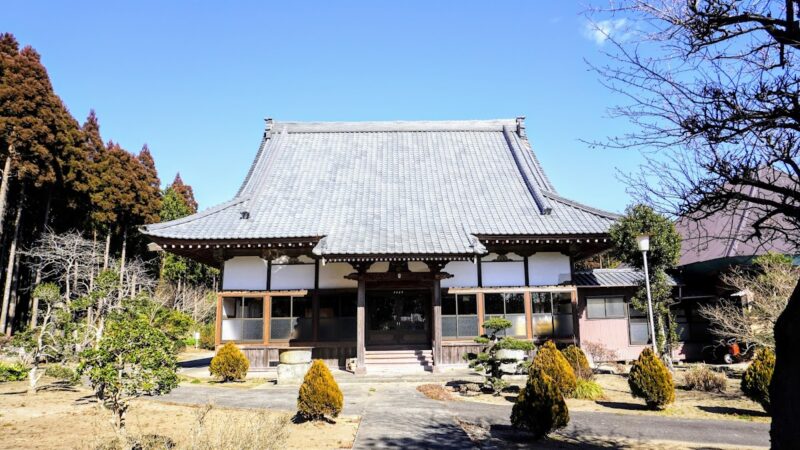
The main hall is the heart of the temple. The principal image is enshrined there, and it serves as the central place for religious services and worship. Many temple main halls in Chiba Prefecture were built between the Edo and Meiji periods, preserving the beauty of traditional wooden architecture.
There are buildings in the prefecture that have been designated as cultural properties, such as the main hall of Senjoji Temple in Kisarazu City. These historical buildings are valuable resources that convey the architectural techniques and aesthetic sensibilities of the time to the present day.
Highlights of the Temple Grounds
Besides the main hall, the temple grounds also contain the following buildings and facilities:
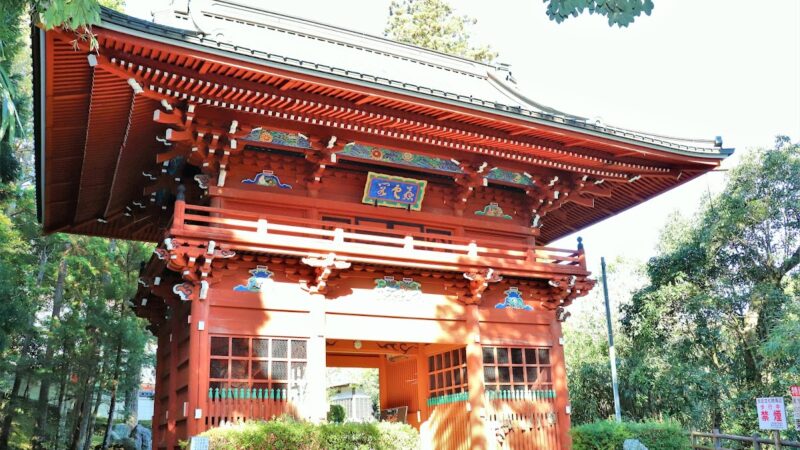
- Sanmon (Niomon): A gate adorning the entrance to the temple, sometimes housing Nio statues.
- Shoro (Bell Tower): A building where the temple bell is hung, used for New Year’s Eve bell ringing, etc.
- Kuri (Priest’s Quarters): The living space of the head priest and temple office.
- Kyakuden (Guest Hall): A space used for Buddhist services and gatherings.
- Cemetery: The burial grounds for parishioners.
- Gardens: Many temples, especially Zen temples, have beautiful gardens.
The trees on the temple grounds are also a highlight, offering particularly beautiful scenery during cherry blossom and autumn foliage seasons.
Cultural Properties and Treasures of Ancho-ji Temple
Many temples in Chiba Prefecture possess numerous valuable cultural properties, including Buddhist statues, paintings, scriptures, and crafts. These are not merely works of art, but objects of faith and witnesses to history.
Buddhist Statues and Paintings
Buddhist statues enshrined in temples encompass a wide range of forms, including principal images, attendant deities, and guardian deities. Chiba Prefecture also retains ancient Buddhist statues dating from the Heian to Kamakura periods, some of which are of high artistic historical value.
Buddhist paintings are also important cultural properties, encompassing various types such as mandalas, Raigo paintings (paintings depicting the Buddha’s descent to welcome the deceased), and portraits of high-ranking monks. These are sometimes used as hanging scrolls during Buddhist ceremonies.
Ancient Documents and Scriptures
Many temples house ancient documents and scriptures, which are valuable resources for local history research. A diverse range of historical materials are preserved, including temple histories, records of relationships with parishioners, and documents related to the land.
The temple houses important calligraphic texts, including handwritten copies of the Lotus Sutra and the Heart Sutra, making them significant from a calligraphic history perspective.
How to Access Ancho-ji Temple
When visiting a temple, it’s important to check access methods in advance. Temples in Chiba Prefecture vary widely in location, from urban areas to quiet mountain environments.
Access by Public Transportation
Major temples in Chiba Prefecture can be accessed by public transportation such as JR lines, private railways, and buses.
Major Lines:
- JR Sobu Line: Towards Ichikawa City, Funabashi City, Chiba City
- JR Joban Line: Towards Matsudo City, Kashiwa City, Abiko City
- Keisei Line: Towards Ichikawa City, Funabashi City, Sakura City, Narita City
- Toyo Rapid Railway Line: Towards Yachiyo City, Funabashi City
- Hokuso Line: Towards Inzai City, Shiroi City
From the nearest station, you will need to walk, or take a bus or taxi. It’s helpful to check the bus schedule in advance.
Access by Car
If you are visiting by private car, you can use the following expressways:
- Higashi-Kanto Expressway
- Keiyo Expressway
- Tateyama Expressway
- Tokyo Bay Aqua-Line
- Ken-O Expressway
It is necessary to check in advance whether the temple has parking. Especially during memorial services and events, it can get crowded, so consider using public transportation.
Access from Surrounding Areas
Chiba Prefecture borders Tokyo, Saitama, and Ibaraki Prefectures, making it easily accessible from these areas. Many temples can be reached in about an hour from central Tokyo, making them suitable for day trips.
Annual Events and Memorial Services at Ancho-ji Temple
The temple holds various events and memorial services throughout the year. Participating in these allows you to experience Buddhist culture more deeply.
Major Annual Events
The following are some of the typical annual events at temples:
Spring Events:
- Spring Equinox Ceremony (March)
- Flower Festival (Buddha’s Birthday, April 8th): Celebrating the birth of Buddha
- Segaki Ceremony (April-May)
Summer Events:
- Obon (July or August): An important time for ancestor worship
- Urabon-e: Obon memorial service
- Segaki Ceremony: Offering prayers for beings in the realm of hungry ghosts
Autumn Events:
- Autumn Equinox Ceremony (September)
- Thirteenth Night (13th day of the 9th month in the lunar calendar)
Winter Events:
- New Year’s Eve Bell Ringing (December 31st)
- Shusho-e (January): New Year’s memorial service
- Setsubun Ceremony (February 3rd): Bean-throwing ceremony, etc.
Sect-Specific Events
In Nichiren Buddhist temples, an important memorial service called “Oeshiki” is held around October 13th, the anniversary of the death of the sect’s founder, Nichiren Shonin. Nichiren Buddhist temples in Chiba Prefecture also hold grand events such as the Mantō Nerikuyō (lantern procession) around this time.
Shingon Buddhism holds Goma-taki (fire ritual), and Jodo Buddhism holds Nembutsu-e (chanting of Amida Buddha’s name), demonstrating that each sect has its own unique events.
Etiquette and Manners for Visiting Temples
Knowing basic etiquette for visiting temples will allow for a more heartfelt and respectful visit.
Basic Procedure for Visiting a Temple
- Bow at the Temple Gate: Bow before entering the temple grounds.
- Purify at the Water Basin: Cleanse your hands and mouth.
- Worship at the Main Hall:
- Quietly place your offering in the offering box.
- Join your hands and bow.
- Offer your prayers silently.
- Bow again.
- Stroll around the Temple Grounds: Quietly walk around the temple grounds.
- Bow upon Exit: Turn around and bow when leaving the temple gate.
Points to Note When Visiting a Temple
- Attire: Clean, understated clothing is preferable.
- Photography: Take photos only in permitted areas. Photography is often prohibited inside the main hall.
- Quiet: Please refrain from loud conversations.
- Smoking and Eating: Please refrain from smoking and eating outside of designated areas.
- Pets: As a general rule, please refrain from bringing pets onto the temple grounds.
Differences between Temples and Shrines
Temples and shrines are different religious facilities:
- Temple: Buddhist facility. The principal image is a Buddha statue. Sutras are chanted. Managed by monks.
- Shrine: Shinto facility. A sacred object is enshrined. Prayers are recited. Managed by Shinto priests.
The etiquette for worship also differs. At shrines, the basic ritual is “two bows, two claps, one bow,” but at temples, clapping is not done; instead, one quietly puts their hands together in prayer.
Other Notable Temples in Chiba Prefecture
When visiting Ancho-ji Temple, visiting other temples in Chiba Prefecture as well will make for a more fulfilling temple tour.
Ichikawa City/Funabashi City Area
Hokkeji Temple (Ichikawa City)
A major temple of the Nichiren sect and one of Chiba Prefecture’s leading temples. It possesses numerous cultural assets, including a five-story pagoda designated as a National Important Cultural Property.
Temples in Funabashi City
Funabashi City also has many historical temples scattered throughout, attracting local faith.
Matsudo City/Kashiwa City/Abiko City Area
Hondoji Temple (Matsudo City)
Known as the “Hydrangea Temple,” it’s a popular spot recommended in spring. Approximately 10,000 hydrangea plants are planted on the temple grounds. The autumn foliage is also magnificent, making it a recommended temple for autumn visits.
Temples in Kashiwa City/Abiko City
Both cities also have numerous temples, preserving the history of the region.
Narita City, Sakura City, and Yachimata City Area
Naritasan Shinshoji Temple (Narita City)
The head temple of the Shingon Chizan sect, it boasts one of the highest numbers of New Year’s visitors in Japan. It is also a representative tourist spot in Narita City.
Sakura City and Yachimata City Temples
Many historical temples, including Myokakuji Temple, are located throughout the area.
Inzai City and Shiroi City Area
Inzai City and Shiroi City also have temples of various sects, including Nichiren Buddhist temples.
Choshi City, Asahi City, and Katori City Area
Choshi City Temples
Historical temples such as Nihonji Temple and Myofukuji Temple are located here.
Asahi City Temples
Local temples such as Toeiji Temple attract many worshippers.
Katori City Temples
Many temples, such as Kofukuji Temple and Jomyoji Temple, also exist in Katori City.
Ichihara City/Yachiyo City Area
Ichihara City and Yachiyo City also have many temples, each playing an important role in their respective regions.
Tourist Attractions Around Ancho-ji Temple
Visiting nearby tourist attractions before or after visiting the temple will make for a more fulfilling day. Chiba Prefecture offers a variety of attractions, including nature, history, and gourmet food.
Historical and Cultural Facilities
Chiba Prefecture has numerous facilities where you can experience history and culture, such as museums, archives, and historical buildings. Combining these with temple visits will allow you to gain a deeper understanding of the region’s history.
Natural Spots
Recommended for Spring
- Cherry Blossom Spots: There are many cherry blossom spots throughout the prefecture, with the best time to see them being from late March to early April.
- Rapeseed Flower Fields: A yellow carpet that colors Chiba in spring.
Recommended for Summer
- Beaches: The coastlines of Kujukuri Beach, Uchibo, and Minamiboso.
- Mountain Streams and Waterfalls: Spots to visit to cool off.
Recommended for Autumn
- Autumn Foliage Spots: You can enjoy autumn leaves in various locations throughout the prefecture, including Hondoji Temple.
- Cosmos Fields: Flowers that color the autumn.
Gourmet & Shopping
Chiba Prefecture is blessed with both seafood and mountain produce. After visiting a temple, it is recommended to enjoy dishes made with local ingredients.
Memorial Services and Buddhist Rites at Anchoji Temple
Temples are used not only for worship but also as venues for various memorial services and Buddhist ceremonies.
Funeral and Memorial Services
At your family temple, religious ceremonies are performed at important life events, from funerals to annual memorial services.
Main Memorial Services:
- First seven days, forty-ninth day: Memorial services for the deceased
- First anniversary, third anniversary, seventh anniversary, thirteenth anniversary, seventeenth anniversary, twenty-third anniversary, twenty-seventh anniversary, thirty-third anniversary: Annual memorial services
- Spring and autumn equinox, Obon: Ancestor worship
Prayers and Memorial Services
Temples also accept various prayers and memorial services:
- Prayer for traffic safety
- Prayer for family safety
- Prayer for business prosperity
- Prayer for academic success
- Prayer for protection from evil
- Memorial service for stillborn babies
- Memorial service for pets
Please contact each temple directly for details.
Information Sources Regarding Temples in Chiba Prefecture
For more detailed information about temples in Chiba Prefecture, please refer to the following resources.
Information from Public Institutions
Chiba Prefectural Government
The Chiba Prefectural Board of Education’s Cultural Properties Division provides information on designated cultural properties within the prefecture. A list of temples and cultural property information can be viewed on the prefectural website.
Cultural Property Information from Municipalities
Each municipal board of education also provides information on local temples and cultural properties.
Information from Sect Headquarters
Nichiren Sect Portal Site
The official Nichiren Sect website publishes a map of Nichiren Sect temples nationwide, allowing you to search for Nichiren Sect temples in Chiba Prefecture. Basic information, access, and event information for each temple are listed.
Information from Other Sects
Each sect’s head temple and administrative office also provides information on affiliated temples.
Tourism Information
Tourism associations and tourism information websites provide information combining temple visits and sightseeing. Information on nearby tourist spots, recommended hotels, and tours can also be obtained.
How to Enjoy Temple Visits
Visiting temples in Chiba Prefecture offers diverse ways to enjoy yourself, including historical exploration, cultural experiences, and spiritual healing. ### Themed Temple Pilgrimages
Sectarian Pilgrimages
By visiting temples of a specific sect, such as a Nichiren sect or a Shingon sect, you can gain a deeper understanding of that sect’s characteristics.
Cultural Property Pilgrimages
Visit temples with prefecturally designated cultural properties or nationally designated important cultural properties to appreciate historical buildings and works of art.
Seasonal Temple Pilgrimages
Visit temples that showcase the beauty of each season, such as cherry blossoms in spring, hydrangeas in early summer, and autumn leaves in fall.
Collecting Goshuin (Temple Stamps)
Collecting Goshuin, which has become popular in recent years, is another enjoyable aspect of temple pilgrimages. Goshuin are given as proof of worship, and each temple offers a different design and calligraphy style.
Manners for Receiving a Goshuin (Temple Stamp):
- Always pray before receiving a Goshuin.
- Prepare a Goshuincho (stamp book) (notebooks and memo pads are not acceptable).
- Prepare the Goshuin fee (generally 300-500 yen).
- Wait during busy times.
- Don’t forget to express gratitude.
Sutra Copying/Buddhist Image Copying Experience
Some temples offer experiences in sutra copying and Buddhist image copying. It’s a precious time to calm your mind by taking up a brush in a quiet space.
Temple Visits and Mental Health
In modern society, where stress and anxiety are increasing, temple visits are considered beneficial for maintaining mental health.
Temple Visits as Mindfulness
Spending time in the tranquil atmosphere of a temple is said to have similar effects to mindfulness meditation. By getting away from the hustle and bustle of everyday life and having time to reflect on yourself, you can regain peace of mind.
Connecting with Nature
Many temples are surrounded by abundant nature. Interacting with nature—the trees, flowers, and birdsong within the temple grounds—is effective for refreshing both mind and body.
Connections with the Community
Temples are also centers of local communities. Participating in events and memorial services allows you to feel connected to local people and helps prevent social isolation.
Summary | Ancho-ji Temple and the Temple Culture of Chiba Prefecture
Ancho-ji Temple, as one of the temples that constitute Chiba Prefecture’s rich temple culture, conveys the region’s faith and history to the present day. Within Chiba Prefecture, there are numerous temples with unique characteristics scattered throughout various regions, including Ichikawa City, Funabashi City, Matsudo City, Kashiwa City, Abiko City, Sakura City, Narita City, Yachimata City, Inzai City, Shiroi City, Katori City, Choshi City, Asahi City, Ichihara City, and Yachiyo City, each possessing its own distinct history and culture.
From renowned temples such as Hokkeji, Hondoji, and Naritasan Shinshoji to small, locally rooted temples, Chiba Prefecture boasts a rich diversity of temples. Visiting these temples will allow you to experience the depth of Chiba Prefecture’s history, culture, and faith.
When planning a visit to Anchoji Temple, please check the opening hours, event schedule, and access methods in advance, and be sure to observe proper etiquette during your visit. Visiting nearby tourist spots and other temples in conjunction will further enrich your exploration of Chiba Prefecture.
We recommend visiting the temple in quiet contemplation, enjoying the beauty of each season—cherry blossoms in spring, lush greenery in summer, and vibrant autumn foliage. Experiencing Chiba Prefecture’s temple culture will deepen your understanding of traditional Japanese culture and enrich your spirit.