Aoyama Shrine (Shirosato-machi, Higashiibaraki-gun, Ibaraki Prefecture) Complete Guide | The History of an Engishiki-Listed Shrine and its Mysterious 320-meter Approach
Aoyama Shrine, located in Shirosato-machi, Higashiibaraki-gun, Ibaraki Prefecture, is a prestigious ancient shrine known as an Engishiki-listed shrine. Its approximately 320-meter approach, enveloped in a lush forest, the cluster of giant cedar trees said to be hundreds of years old, and the grounds that still convey the atmosphere of the pre-Heian period invite visitors into an ancient world.
This article will introduce the charm of this mystical shrine in its entirety, from its history, enshrined deities, highlights, access methods, and goshuin (shrine stamp) information.
Basic Information about Aoyama Shrine
Location: 229 Kami-Aoyama, Shirosato-machi, Higashiibaraki-gun, Ibaraki Prefecture 311-4344
Main Deity: Isotakeru-no-mikoto
Shrine Rank: Engishiki-listed shrine (Naga-gun, Hitachi Province)
Founded: 772 (Hoki 3)
Annual Festival: Second Sunday of October
Parking: Available (Free)
Shrine Office: Currently managed by Mito Hachimangu Shrine
Inquiries: Mito Hachimangu Shrine 029-226-8854
History and Origins of Aoyama Shrine
Origin of Founding and Divine Oracle
Aoyama Shrine was founded in 772 (Hoki 3), dating back to the late Nara period. According to shrine tradition, the shrine was founded by inviting the deity Isotakeru-no-kami from Itakiso Shrine, a Shikinaisha (a major shrine listed in the Engishiki) in Kii Province (present-day Wakayama Prefecture), following a divine oracle.
Isotakeru-no-kami is a son of Susanoo-no-Mikoto and is considered the guardian deity of forestry and the timber industry, said to have sown tree seeds throughout Japan. The worship of this deity suggests the importance of forestry in this region at the time.
Status as an Engishiki Shrine
Aoyama Shrine is a Shikinaisha listed in the Engishiki Jinmyocho (a list of shrines compiled in the mid-Heian period) as “Aoyama Shrine, Naka District, Hitachi Province.” There are only 2,861 Engishiki shrines nationwide (though there are differing accounts), indicating its historical significance and recognition by the imperial court since ancient times.
There are 28 Shikinaisha shrines in Ibaraki Prefecture, and in Shirosato Town, in addition to Aoyama Shrine, there are three more: Awayama Shrine, Awayama Shrine, and Ishifune Shrine. These indicate that the area was a center of ancient religious belief in Hitachi Province.
Changes Since the Modern Era
Despite being affected by the Meiji-era shrine consolidation policy, Aoyama Shrine has continued to exist as a center of local faith. Currently, Mito Hachimangu Shrine in Mito City handles the shrine’s affairs, including the issuance of Goshuin (shrine seals) and the performance of rituals.
Deity Enshrined: Isotakeru-no-Mikoto
About Isotakeru-no-Mikoto
Isotakeru-no-Mikoto is a god of trees appearing in Japanese mythology. According to the Nihon Shoki (Chronicles of Japan), he descended from Takamagahara (the High Plain of Heaven) with his father, Susanoo-no-Mikoto, and sowed tree seeds throughout Japan, making the land lush and green.
Because of these achievements, he has been worshipped as the guardian deity of forestry, timber, construction, and shipbuilding. Furthermore, because trees protect people from disasters, the deity is also revered as a god of protection against misfortune and disaster.
Faith at Aoyama Shrine
The area around Shirosato Town has long been a thriving forestry region, and the worship of Isotakeru-no-Mikoto was deeply intertwined with the local industry. The grove of giant cedar trees covering the shrine grounds welcomes visitors as if embodying the divine virtues of Isotakeru-no-Mikoto.
Highlights of Aoyama Shrine
A Mysterious Approach of Approximately 320 Meters
The greatest attraction of Aoyama Shrine is undoubtedly its long approach, stretching approximately 320 meters. From the intersection of National Route 123 and Ibaraki Prefectural Road 61 (Hitachi-Kasama Line) at “Ishizuka Nihonmatsu,” proceed west along the prefectural road for about 2.6 kilometers, and you will see a white torii gate by the roadside.
Passing through this torii gate, a different world unfolds. The unpaved path creates an atmosphere as if you have traveled back in time to the Heian period. The approach to the shrine extends northward through the forest, lined on both sides by towering cedar and cypress trees.
Even during the day, the trees block the sunlight, creating a dimly lit and mystical atmosphere. Walking along this path is a form of purification, an experience that cleanses both mind and body.
Giant Cedar Trees and Sacred Trees
The cedar trees lining both sides of the approach are ancient trees estimated to be several hundred years old. The giant trees around the main hall are particularly impressive, their majestic presence overwhelming visitors.
These giant trees symbolize the divine virtues of Isotakeru-no-Mikoto and are living witnesses that have protected Aoyama Shrine throughout its long history. It has been selected as one of Ibaraki Prefecture’s “100 Best Forests,” and is valued as a precious space where nature and faith are intertwined.
The Charm of the “Hydrangea Grove”
Aoyama Shrine is also known as the “Hydrangea Grove.” Hydrangeas are planted along a section of the approach to the shrine, and during their blooming season from June to July, visitors can enjoy the beautiful scenery created by the interplay of the lush green of the giant cedar trees and the vibrant colors of the hydrangeas.
The way the scenery changes from the dimly lit approach lined with cedar trees to the open area where the hydrangeas bloom gives a true sense of stepping into the depths of a sacred place.
Worship Hall and Main Shrine
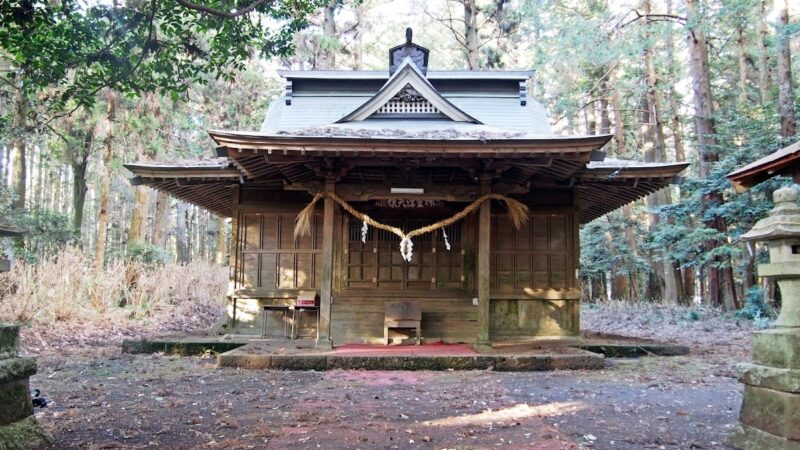
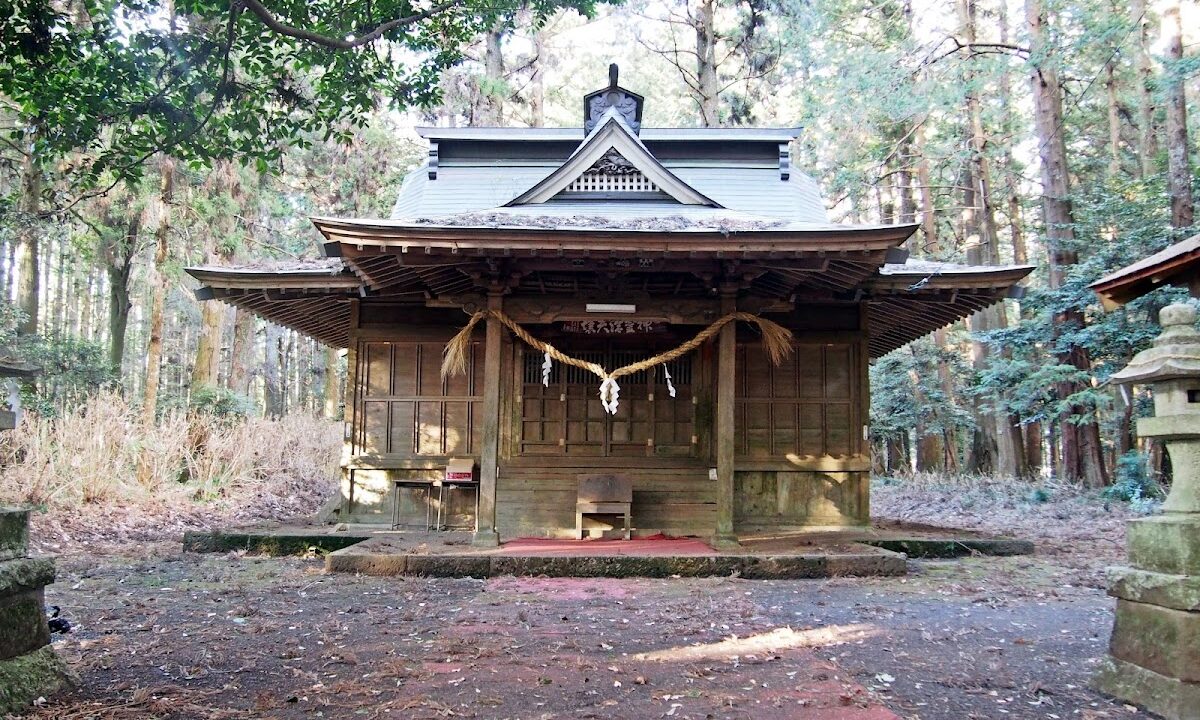
After passing through the long approach, the worship hall appears amidst a dense forest. The simple yet solemn presence of the worship hall evokes the dignity of an ancient shrine.
Behind the worship hall sits the main shrine, where Isotakeru-no-Mikoto is enshrined. The entire shrine grounds are enveloped in silence, providing a space for peaceful worship away from the hustle and bustle of the city.
Relationship with the Former Aoyama Elementary School
Aoyama Shrine is located right next to the former Aoyama Elementary School, which has now been merged into Johoku Elementary School. It was once a playground for local children and a central hub of the community.
Access and Parking Information
Access by Car
Nearest Interchange: Joban Expressway, Mito IC or Naka IC
From Mito IC: Approximately 30 minutes
From Naka IC: Approximately 25 minutes
Directions:
- Head towards the intersection of National Route 123 and Ibaraki Prefectural Road 61 (Hitachi-Kasama Line), “Ishizuka Nihonmatsu”
- From the intersection, head west on Prefectural Road 61 for approximately 2.6 kilometers
- Parking space is available where you can see a white torii gate by the side of the road.
Parking: Free parking space available near the torii gate (a few cars)
Access by Public Transportation
Nearest Bus Stop: Approximately 7 minutes on foot from the Ibaraki Kotsu “Johoku High School Entrance” bus stop
However, since the number of buses is limited, access by car is recommended. It is recommended to check the Ibaraki Kotsu bus timetable in advance.
Access Information
- When searching with a car navigation system, please set the address to “229 Kami-Aoyama, Shirosato-machi, Higashiibaraki-gun, Ibaraki Prefecture”.
- The approach to the shrine is unpaved, so we recommend wearing comfortable shoes.
- The approach may become muddy during rainy weather, so please be careful.
- As the environment is like being in a mountain, we recommend taking precautions against insects during the summer.
Goshuin (Shrine Seal) Information
Regarding the Issuance of Goshuin
Goshuin are not issued at Aoyama Shrine. Those wishing to receive a goshuin can obtain one at Mito Hachimangu Shrine in Mito City, which also handles shrine affairs.
Mito Hachimangu Shrine
Location: 8-54 Hachiman-cho, Mito City, Ibaraki Prefecture
Phone: 029-226-8854
Reception Hours: 9:00 AM – 5:00 PM (approx.)
How to Receive a Goshuin (Shrine Seal)
- After visiting Aoyama Shrine, visit Mito Hachimangu Shrine.
- At the shrine office, request a Goshuin from Aoyama Shrine.
- Either leave your Goshuin book or receive a pre-printed Goshuin.
- Pay the offering fee (usually around 300-500 yen).
It is recommended to call Mito Hachimangu Shrine in advance to confirm.
Etiquette and Manners for Visiting a Shrine
Basic Etiquette for Visiting a Shrine
- Bow before passing through the torii gate: This is a sign of respect when entering the sacred area.
- Walk along the edge of the path: The center is considered the path of the gods.
- Purify yourself at the water basin: If Aoyama Shrine does not have a water basin, purify your heart before proceeding along the path.
- Etiquette in front of the main hall: Two bows, two claps, and one bow is the basic procedure.
- Bow upon leaving: Turn around and bow when leaving the torii gate.
Photography Manners
Aoyama Shrine’s beautiful nature and approach are popular photography spots, but please observe the following manners:
- Refrain from taking photos inside the main hall or worship hall.
- Be considerate of other visitors.
- Check your surroundings before using a tripod.
- Be mindful of identifying the location when posting on social media.
Attractions around Aoyama Shrine
Other Shirosato Town Shrines Listed in the Engishiki
Awayamagami Shrine
Location: 664 Awayama, Shirosato-machi, Higashiibaraki-gun, Ibaraki Prefecture
Also an Engishiki shrine, many people visit it along with Aoyama Shrine. It has a 320-meter-long approach lined with magnificent giant cedar trees.
Ishifune Shrine
Another Engishiki shrine located in Shirosato Town. A valuable shrine that preserves the ancient belief in sacred rocks.
Tourist Spots in Shirosato Town
- Hororu no Yu: A natural hot spring facility where you can relax after visiting the shrine.
- Fujiigawa Dam: A scenic spot where you can enjoy nature in all four seasons.
- Michi-no-Eki Katsura: You can purchase fresh local vegetables and specialty products.
Recommended Time to Visit Aoyama Shrine
Spring (March-May)
The season of fresh greenery. The giant cedar trees sprout new leaves, and the approach to the shrine is enveloped in vibrant green. The weather is mild, making it an ideal time for a visit.
Early Summer (June-July)
The true essence of “Hydrangea Forest.” Hydrangeas bloom in abundance, creating a beautiful contrast with the cedar trees. Be prepared with rain gear due to the rainy season.
Autumn (September-November)
Autumn, including October when the annual festival is held, is a suitable season for a visit. While the autumn foliage is less vibrant, the deep green of the cedars and the crisp autumn air create a pleasant atmosphere.
Winter (December-February)
A season characterized by a mystical atmosphere enveloped in silence. The snow-covered path is enchanting, but caution is needed when stepping.
Summary of Aoyama Shrine’s Charms
Aoyama Shrine is located in a place that is not easily accessible, but this is precisely why its natural environment and history have been preserved.
- A prestigious shrine listed in the Engishiki (ancient Japanese legal code) with a history of over 1200 years
- A mystical space created by a 320-meter-long approach and a cluster of giant cedar trees
- A historical site dedicated to the tree god, Isotakeru-no-Mikoto
- The seasonal beauty of the hydrangea grove
- A precious environment that conveys the ancient atmosphere of the pre-Heian period
Even for those who find mountains a little scary or tiring, Aoyama Shrine, located on flat land, offers a mountain shrine-like atmosphere and is a special place within Ibaraki Prefecture.
Checklist of Items to Bring When Visiting the Shrine
- Comfortable walking shoes (as the path is unpaved)
- Drinks (especially in summer)
- Insect repellent (in summer)
- Rain gear (during the rainy season or when the weather is unpredictable)
- Camera (to record the beautiful nature)
- Goshuincho (stamp book) (if you wish to receive one at Mito Hachimangu Shrine)
- Small change (for offerings)
Guidelines for Visiting Aoyama Shrine
When visiting Aoyama Shrine, consider the long walk along the path itself as a form of spiritual practice and an act of purifying your mind and body. Away from the hustle and bustle of the city, you can have time to reflect on yourself in the silence surrounded by giant cedar trees.
Proceed slowly along the path, feeling the divine virtues of Isotakeru-no-Mikoto: “vitality,” “growth,” and “protection.” The true essence of visiting Aoyama Shrine lies in not rushing and fully experiencing the breath of nature.
Summary
Located in Shirosato-machi, Higashiibaraki-gun, Ibaraki Prefecture, Aoyama Shrine is a prestigious ancient shrine with a history of over 1200 years, listed in the Engishiki (an ancient Japanese legal code). The approximately 320-meter-long cedar-lined approach, the cluster of centuries-old trees, and the venerable shrine dedicated to Isotakeru-no-Mikoto convey to visitors the essence of ancient Japanese faith.
Also known as the “Hydrangea Grove,” Aoyama Shrine, where you can enjoy the beauty of nature throughout the seasons, is especially recommended for those who wish to pray in peace, feel the power of nature, or visit a historical shrine.
Despite being relatively easily accessible from Mito City, Aoyama Shrine offers a mystical atmosphere reminiscent of a deep mountain valley. Please visit this special place at least once. You are sure to have a unique experience unlike anything you’ll find in everyday life.