Asahikawa Shrine (Asahikawa City, Hokkaido) Complete Guide | History Related to Tondenhei, Shrine Grounds, Goshuin (Shrine Seals), and Prayer Information
Asahikawa Shrine, located at 8-14, Higashi Asahikawa Minami 1-jo 6-chome, Asahikawa City, Hokkaido, is a historic shrine founded in 1893 (Meiji 26) with strong ties to the Tondenhei (frontier soldiers). Known as the birthplace of Asahikawa, it is a valuable cultural heritage site that conveys the history of its development, and is also attracting attention as a power spot beloved by the local people.
This article provides detailed information useful for visitors, including the history of Asahikawa Shrine, its enshrined deities and blessings, highlights of the grounds, information on goshuin and prayers, access methods, and annual events.
History of Asahikawa Shrine | 130 Years Walking Together with the Tondenhei
Founding in the Meiji Era and the Settlement of Tondenhei
The history of Asahikawa Shrine dates back to 1892 (Meiji 25). In this year, 400 households settled in Asahikawa, and as part of the development project, the construction of a village shrine was resolved. Tondenhei were soldiers who served both as pioneers and guards in Hokkaido, clearing the land while engaging in agriculture in a harsh natural environment.
The following year, in 1893 (Meiji 26), Amaterasu Omikami and Konohanasakuya-hime no Mikoto were enshrined as the deities, and the shrine grounds were designated as a windbreak forest, with the main hall constructed. The shrine was named “Asahikawa Shrine,” derived from the village name at the time, “Asahikawa Heisō” (Asahikawa Soldiers’ Village).
Significance as the Birthplace of Asahikawa
The Higashi-Asahikawa district, where Asahikawa Shrine is located, is truly the birthplace of Asahikawa City. It is the place where the pioneering by Tondenhei began, and a historically important area that laid the foundation for present-day Asahikawa City. Within the shrine grounds is the Asahikawa Military Settlement Memorial Museum, which displays materials related to the Tondenhei (frontier soldiers), allowing visitors to learn about life and pioneering during that time.
A Faith Passed Down from the Meiji to the Reiwa Era
More than 130 years after its founding, Asahikawa Shrine continues to welcome many worshippers as a guardian deity of the region and a place that conveys the history of pioneering. It continues to receive prayers from people visiting at important milestones in their lives, such as New Year’s visits, Shichi-Go-San (a traditional rite of passage for children), and Shinto wedding ceremonies.
Deities and Blessings
Amaterasu Omikami
The supreme deity in Japanese mythology, the goddess who presides over the sun. Enshrined at Ise Grand Shrine as the ancestral deity of the Imperial family, she is believed to bring blessings of national peace and security, good fortune, and protection from evil. As the guardian deity of the Kamikawa region’s pioneering, she is enshrined as one of the main deities of Asahikawa Shrine.
Konohanasakuya-hime no Mikoto
Known as a goddess as beautiful as a cherry blossom, she is also identified with Asama-no-Okami, the deity of Mount Fuji. She is revered as the “Goddess of Beauty,” offering blessings for safe childbirth, child-rearing, matchmaking, and beauty. Asahikawa Shrine is renowned for its refreshing atmosphere, said to be imbued with the goddess’s mystical power.
Benefits of Asahikawa Shrine
- Good Fortune and Prosperity: Increased luck through the divine virtues of Amaterasu Omikami
- Business Prosperity and Financial Luck: Development of business and improvement of wealth
- Safe Childbirth and Child-rearing: Protection of Konohanasakuya-hime
- Matchmaking: Successful relationships
- Exorcism: Protection from misfortune and protection of peaceful days
- Beauty and Health: Power of the goddess of beauty
Shrine Grounds Guide | Highlights and Facilities
Main Hall and Worship Hall
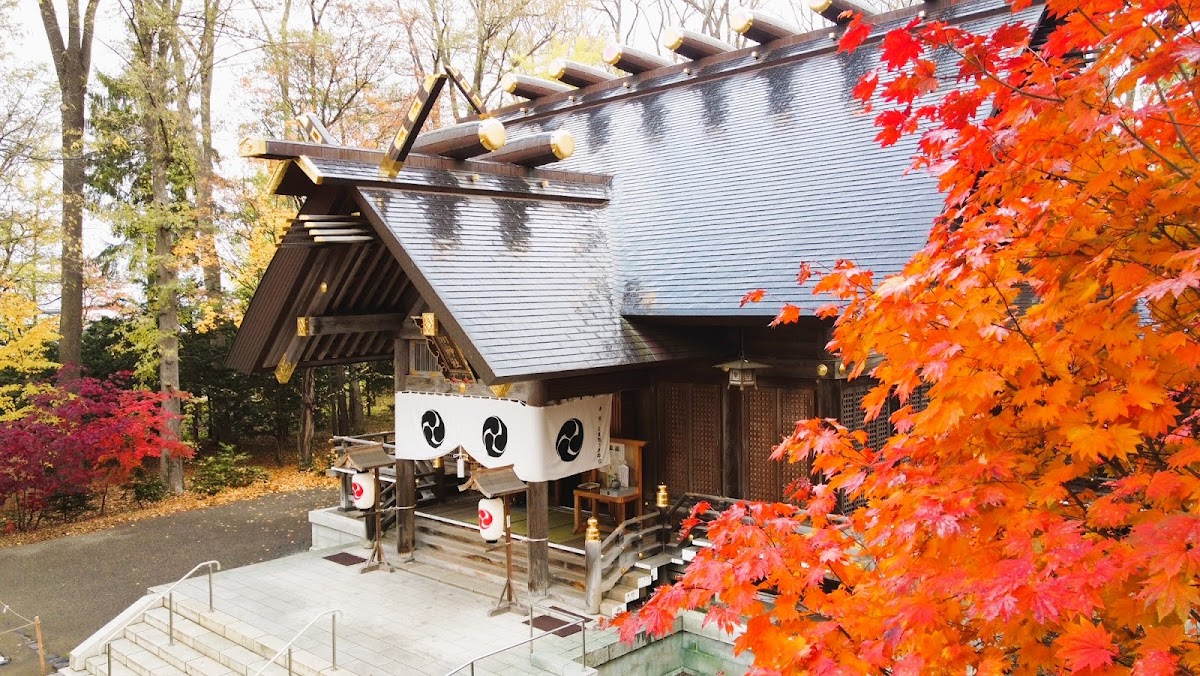
The main hall of Asahikawa Shrine has been the center of local faith since its founding in 1893 (Meiji 26). The shrine, standing in a tranquil space surrounded by a windbreak forest, has endured Hokkaido’s harsh climate while watching over the history of pioneering. In the worship hall, worshippers can offer prayers to the enshrined deities.
Asahikawa Military Settlement Memorial Museum
Within the shrine grounds is the Asahikawa Military Settlement Memorial Museum, which tells the history of the Tondenhei (frontier soldiers). The museum displays farming tools, daily necessities, and photographic materials used at the time, providing a concrete understanding of the development of the area during the Meiji period. It’s a must-see for anyone interested in the history of Asahikawa.
Natural Environment of the Shrine Grounds
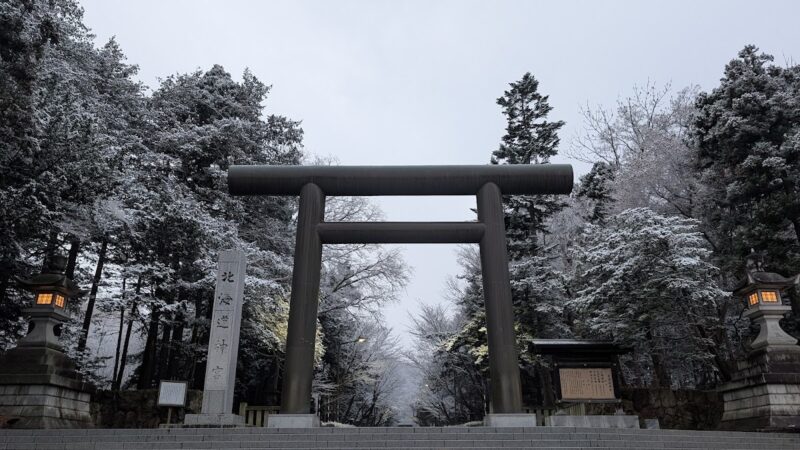
The shrine grounds are surrounded by trees maintained as windbreaks, allowing visitors to experience the changing seasons. Cherry blossoms bloom in spring, the greenery deepens in summer, the autumn leaves are beautiful, and a snowy landscape unfolds in winter. Experiencing the unique seasonal changes of Hokkaido within the shrine grounds is one of the charms of Asahikawa Shrine.
Shrine Office
The shrine office is open from 8:30 AM to 5:00 PM, offering services such as the issuance of Goshuin (shrine stamps), the distribution of amulets, and the acceptance of prayer requests. The priests and shrine maidens provide courteous service, making it a comfortable experience even for first-time visitors.
Goshuin and Amulets
About Goshuin
Asahikawa Shrine offers Goshuin as proof of worship. The goshuin (temple/shrine stamp) is available at the shrine office, where a Shinto priest will carefully write it in ink. You can bring your own goshuincho (stamp book) or purchase one on the spot.
The goshuin will include the shrine’s name and the date of your visit, and will bear the shrine’s seal. The unique design of Asahikawa Shrine’s goshuin is popular among goshuin collectors.
Amulets and Souvenirs
Asahikawa Shrine offers a variety of amulets and souvenirs.
- Good Fortune Amulet: A general amulet for wishing for good fortune.
- Safe Childbirth Amulet: An amulet for safe childbirth, receiving the protection of Konohanasakuya-hime no Mikoto.
- Matchmaking Amulet: An amulet for finding a good partner.
- Traffic Safety Amulet: A prayer for safety when traveling by car or bicycle.
- Academic Success Amulet: A prayer for academic success and passing exams.
- Exorcism Amulet: For those in their unlucky year or those wishing to ward off misfortune.
Each amulet is imbued with the divine virtues of the enshrined deity and protects your daily life.
Information on Prayer Services in the Shrine
Individual Prayer Services
Asahikawa Shrine accepts individual and family prayer services in the shrine. You can enter the main hall and receive a Shinto priest’s recitation of prayers and purification.
Main Prayer Services
- First Shrine Visit (Omiyamairi)
- Shichi-Go-San (7-5-3) Ceremony
- Protection from Evil
- Safe Childbirth
- Success in Exams
- Business Prosperity
- Family Safety
- Traffic Safety
- Recovery from Illness
Those wishing to request a prayer are advised to make a reservation in advance by phone (0166-36-1818) to the shrine office.
Shinto Wedding Ceremony
Asahikawa Shrine offers traditional Shinto wedding ceremonies. Exchanging vows in the solemn atmosphere before the enshrined deities will be an unforgettable memory marking a significant milestone in your life.
Those wishing to have a Shinto wedding ceremony will need to make preparations several months in advance, so we recommend consulting with the shrine office as soon as possible.
Shichi-Go-San Ceremony
Every year, mainly in November, many families visit the shrine for the Shichi-Go-San ceremony. They express gratitude to the enshrined deities for their children’s healthy growth and pray for their future safety. A photo spot is also provided on the shrine grounds, allowing families to create precious memories.
Annual Events and Festivals
Main Annual Events
Asahikawa Shrine holds various festivals and ceremonies throughout the year.
January
- New Year’s Day Festival/First Shrine Visit of the Year: Bustling with worshippers praying for happiness in the new year.
- New Year’s Day Festival: A New Year’s festival held on New Year’s Day.
February
- Setsubun Festival: Bean-throwing to ward off evil spirits and invite good fortune.
Spring
- Spring Grand Festival: A festival celebrating the arrival of spring.
Summer
- Summer Visit: A time to give thanks for the safety of the past six months and pray for peace in the remaining half of the year.
Autumn
- Autumn Grand Festival: A festival to give thanks for the bountiful autumn harvest.
November
- Shichi-Go-San Festival: A time when many people visit to celebrate the growth of their children.
December
- Great Purification Ceremony: A Shinto ritual to purify and cleanse away the impurities of the past year.
Asahikawa Shrine Yell (Events)
In recent years, Asahikawa Shrine has been holding various events in collaboration with the local community under the name “Asahikawa Shrine Yell.” The shrine offers various activities to make the shrine feel more accessible, such as markets and workshops on the grounds, and seasonal special events.
Event information is announced on the official website and bulletin boards, so it is recommended to check before visiting.
Access and Parking Information
Basic Information
Address
8-14, Higashi Asahikawa Minami 1-jo 6-chome, Asahikawa City, Hokkaido 078-8261
Phone Number
0166-36-1818
Shrine Office Hours
8:30 AM – 5:00 PM
Access by Car
It is approximately a 20-minute drive from the center of Asahikawa City (around Asahikawa Station). Take National Route 39 towards Higashi Asahikawa. There is a free parking lot for visitors on the shrine grounds.
If using a car navigation system, search for “Asahikawa Shrine” or the address above.
Access by Public Transportation
You can take a bus from JR Asahikawa Station. Take an Asahikawa Electric Railway bus bound for Higashi-Asahikawa, get off at the nearest bus stop, and it’s a few minutes’ walk from there. It’s recommended to check the bus timetable and routes in advance.
If using a taxi, it takes about 20 minutes from Asahikawa Station.
Parking
There is free parking available on the shrine grounds. During busy periods such as New Year’s Day and the annual festival, the parking lot may be full, so it’s recommended to visit with plenty of time to spare.
Relationship with other shrines in Asahikawa
Kenkun Shrine
Besides Asahikawa Shrine, there are several other historical shrines in Asahikawa. Kenkun Shrine is located near the city center and is revered as a guardian deity of the region.
Hachiman Atago Shrine
Hachiman Atago Shrine is also one of the representative shrines in Asahikawa. Each shrine has its own unique history and enshrined deities, offering different blessings.
Nagayama Shrine
Nagayama Shrine is located in the Nagayama district and was founded in 1891 by the Nagayama Tondenhei (frontier soldiers) settlers. It began with soldiers from Okayama Prefecture enshrining the guardian deity of their hometown.
When enjoying a tour of shrines in Asahikawa City, visiting these shrines together is highly recommended.
Asahikawa Shrine as a Power Spot
Refreshing Air and Mystical Power
Asahikawa Shrine is known as a place overflowing with mystical power, as it enshrines Konohanasakuya-hime, the goddess of beauty. Stepping onto the shrine grounds, you are enveloped in refreshing air and a tranquil atmosphere, allowing you to forget the hustle and bustle of everyday life.
The Energy of a History of Settlement
The history of the Tondenhei, who pioneered the area in a harsh natural environment, conveys the energy of courage and hope in the face of adversity. By visiting Asahikawa Shrine, you may feel that energy and gain the strength to overcome difficulties in your own life.
Harmony with the Changing Seasons
Experiencing the four seasons of Hokkaido within the shrine grounds is one of its attractions as a power spot. The grounds, displaying different expressions with each season—the fresh green of spring, the deep green of summer, the autumn foliage, and the snowy landscape of winter—offer a fresh and moving experience with every visit.
Manners and Etiquette for Worship
How to Pass Through the Torii Gate
The torii gate of a shrine is the boundary separating the sacred realm from the secular world. Bow before passing through the torii gate to show respect for entering the sacred realm. Since the center of the path is considered the path of the gods, it is customary for worshippers to walk to either the left or right side.
How to Wash Your Hands
Purify your body and mind at the water basin.
- Hold the ladle in your right hand and purify your left hand.
- Switch the ladle to your left hand and purify your right hand.
- Hold the ladle in your right hand again, receive water in your left hand, and rinse your mouth.
- Purify your left hand once more.
- Hold the ladle upright, pour water over the handle, and return it to its original position.
Etiquette for Worship
The basic etiquette for worshipping in front of the main hall is “two bows, two claps, one bow.”
- Place your offering in the offering box.
- Ring the bell if there is one.
- Bow deeply twice.
- Clap your hands twice at chest height.
- Pray with your hands clasped together.
- Finally, bow deeply once.
Asahikawa Shrine and the Hokkaido Association of Shrines
Asahikawa Shrine is one of the shrines belonging to the Hokkaido Association of Shrines. The Hokkaido Association of Shrines is an organization that oversees shrines in Hokkaido and supports the spread of Shinto and the maintenance and management of shrines.
The Hokkaido Shrine Association website also features information about Asahikawa Shrine, where you can find basic information such as its history, enshrined deities, and location.
Nearby Tourist Attractions
Asahiyama Zoo, Asahikawa City
Asahiyama Zoo, located about 15 minutes by car from Asahikawa Shrine, is famous as Japan’s northernmost zoo. Its unique “behavioral exhibit” method allows visitors to observe animals in their natural state.
Asahikawa Ramen Village
Asahikawa ramen is famous nationwide, and there are many ramen shops in the city. Asahikawa Ramen Village brings together several famous shops, allowing you to enjoy comparing different ramen dishes.
Ueno Farm
Ueno Farm, part of the Hokkaido Garden Road, is a beautiful garden where you can enjoy flowers throughout the seasons. Especially in summer, a riot of colorful flowers blooms.
Points to Note When Visiting Asahikawa Shrine
Regarding Attire
While there are no strict dress code regulations for visiting the shrine, clean and presentable clothing that reflects the sacred nature of the place is desirable. For those attending a Shinto prayer ceremony or wedding ceremony, formal attire or equivalent is required.
Photography
Photography is generally permitted within the shrine grounds, but restrictions may apply inside the main hall or during religious ceremonies. Please check with the shrine office or review posted notices before taking photographs.
Visiting in Winter
Due to snow and ice in Hokkaido winters, please wear non-slip shoes and take adequate precautions against the cold when visiting during winter. While snow removal is carried out within the shrine grounds, caution is still necessary.
Summary
Asahikawa Shrine is a historic shrine that has walked hand in hand with the history of Asahikawa for over 130 years since its founding in 1893 (Meiji 26). It boasts many attractions, including its history related to the Tondenhei (frontier soldiers), its enshrined deities Amaterasu Omikami and Konohanasakuya-hime, the Asahikawa Military Settlement Memorial Museum on the grounds, the changing seasons, and its locally rooted festivals and events.
This shrine offers various blessings, including good fortune, business prosperity, safe childbirth, matchmaking, and protection from evil. It also offers Goshuin (shrine stamps) and amulets. It’s an ideal place to visit for important life events such as New Year’s visits, Shichi-Go-San (a traditional rite of passage for children), and Shinto wedding ceremonies.
Located at 8-14, Higashi Asahikawa Minami 1-jo 6-chome, Asahikawa City, it’s easily accessible, about a 20-minute drive from Asahikawa Station, and has ample parking. The shrine office is open from 8:30 AM to 5:00 PM, and inquiries can also be made by phone (0166-36-1818).
When visiting Asahikawa, be sure to pay your respects at Asahikawa Shrine, experience its history of pioneering, and receive the blessings of its enshrined deities. The time spent quietly praying in the refreshing atmosphere of the shrine grounds will surely be a memorable and precious experience.