Complete Guide to Chofuku-ji Temple (Nishikan-ku, Niigata City, Niigata Prefecture) | History, Access, and Temple Information
Located in Fukui, Nishikan-ku, Niigata City, Chofuku-ji Temple is a historic temple belonging to the Shinshu Otani sect. As a temple deeply rooted in the region, it is beloved by locals and known for its unique architectural style and connection to Teishin-ni. This article comprehensively introduces useful information for visitors, including the history of Chofuku-ji Temple, its architectural features, access methods, and nearby attractions.
Basic Information on Chofuku-ji Temple
Location and Access
Chofuku-ji Temple is located at 2013 Fukui, Nishikan-ku, Niigata City, Niigata Prefecture. Nishikan-ku, located in the southwestern part of Niigata City, is a naturally rich area embraced by the sea, mountains, and plains, and is blessed with tourist resources such as the Echigo Nanoura Coast, Mount Kakuda, and Mount Taho.
Address: 2013 Fukui, Nishikan-ku, Niigata City, Niigata Prefecture
Nearest Stations:
- Approximately 0.8km (about 10 minutes on foot) from JR Echigo Line “Maki Station”
- JR Echigo Line “Iwamuro Station”
- JR Yahiko Line “Yahiko Station”
Maki Station is the closest station and is accessible on foot. If coming by car, National Route 116 or the prefectural road is convenient. Nishikan-ku is a new town formed by the integration of the Maki, Nishikawa, Katagashi, Iwamuro, and Nakanokuchi districts, each with its own unique history and culture.
Overview of the Sect and Temple
Chofuku-ji Temple is a Jodo Shinshu temple belonging to the Shinshu Otani-ha (Higashi Honganji-ha). The Shinshu Otani-ha is a sect founded by Shinran Shonin, and its doctrine centers on believing in the original vow of Amida Buddha and chanting the Nembutsu. Many Shinshu Otani-ha temples exist in Niigata Prefecture, and Chofuku-ji Temple is one of them, serving as a center of local faith.
Belonging to the Niigata Diocese of the Shinshu Otani-ha, Chofuku-ji Temple serves as a spiritual anchor for the local people through Buddhist services such as funerals, memorial services, and monthly visits (tsukiki).
Architectural Features of Chofuku-ji Temple
Unusual Square-Shaped Main Hall
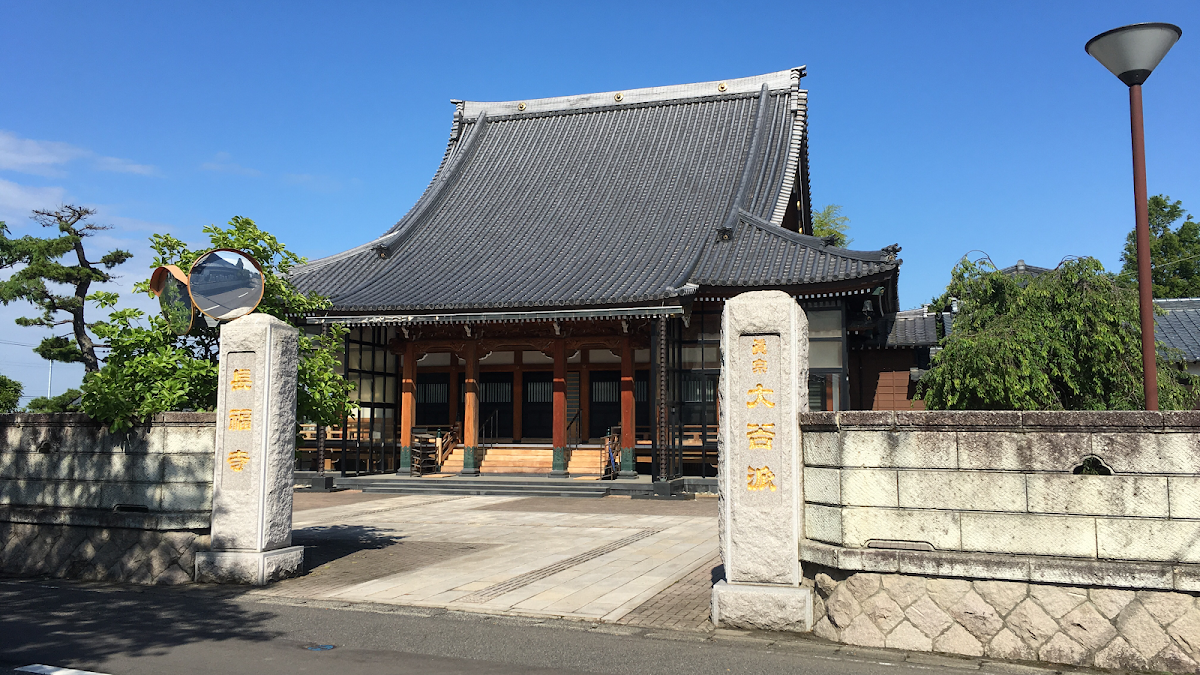
The most distinctive feature of Chofuku-ji Temple is the unusual square-shaped roof of its main hall. A square-shaped roof (hogyo-zukuri) is a unique architectural style where the roof slopes in all four directions, resulting in a pyramidal top.
While hip-and-gable roofs (irimoya-zukuri) and hip-and-gable roofs (yosemune-zukuri) are more common in typical temple architecture, the square-shaped roof is relatively rare, giving the temple a unique style and presence. While square-shaped roofs can be seen in the abbot’s quarters of Zen temples, its adoption in a Shinshu temple is particularly noteworthy.
This architectural style, with its roof sloping evenly from all four sides, creates a beautiful silhouette that is both stable and harmonious. When you visit Chofuku-ji Temple, be sure to pay attention to this distinctive roof shape.
Historical Value of Temple Architecture
Temple architecture in Niigata Prefecture has developed uniquely due to its climatic conditions as a heavy snowfall region and its historical background. The architecture of Chofuku-ji Temple also tells a story of its history, adapting to the climate and environment of the region while fulfilling its function as a place of worship.
The square-shaped roof also has the effect of distributing the weight of snow, and can be said to be a rational design adapted to the harsh winter climate of Niigata. Through this architectural style, you can feel the wisdom and ingenuity of our ancestors.
Connection to Teishin-ni
Teishin-ni Hermitage (Enma-do Hall)
Within the town where Chofuku-ji Temple is located, there is Teishin-ni Hermitage (Enma-do Hall). Teishin-ni (1798-1872) was a renowned female poet from Echigo Province and is famous for her friendship with Ryokan.
Teishin-ni was born the daughter of a village headman in Izumozaki Town, Niigata Prefecture (present-day Izumozaki Town, Mishima District, Niigata Prefecture). After losing her husband at a young age, she entered the Buddhist priesthood. Her deep connection with Ryokan is preserved through numerous waka poems. Even after Ryokan’s death, Teishin-ni traveled throughout Echigo Province and is believed to have spent her later years in this area.
Teishin-ni’s hermitage, known as Enma-do, is a historically significant site in literary history as the place where she spent her final years. When visiting Chofuku-ji Temple, we highly recommend visiting this place associated with Teishin-ni.
The Poetic Exchange Between Ryokan and Teishin-ni
The friendship between Ryokan (1758-1831) and Teishin-ni is a beautiful and noteworthy episode in the history of Japanese literature. Ryōkan met Teishin-ni when he was over 70 years old; she was 29 at the time. The two shared a deep spiritual connection through waka poetry, exchanging many poems.
Poems such as Ryōkan’s “Even if you forget the path, you will forget the way” and Teishin-ni’s “This is the path of Buddhism; let us cherish it, and regret the scattering of the flowers” continue to move many people today.
Visiting this region will allow you to feel the profound spirituality nurtured by the nature and culture of Echigo.
Services offered at Chōfuku-ji Temple
Funeral and Memorial Services
Chōfuku-ji Temple conducts funerals and memorial services according to the customs of the Jōdo Shinshū Ōtani sect. A Jōdo Shinshū funeral is a ceremony to send the deceased to the Pure Land of Amida Buddha, and at the same time, it is considered an important opportunity for those left behind to encounter Buddhist teachings.
The temple provides careful assistance with consultations and preparations regarding funerals. A system is in place to ensure that even first-time visitors can consult with confidence.
Cemetery and Burial Ground
Chofuku-ji Temple has a cemetery where parishioners maintain their ancestral graves. Those seeking a cemetery in the Nishikan-ku area of Niigata City can inquire directly with the temple regarding availability and conditions.
The advantage of a temple cemetery is that the head priest provides daily maintenance and memorial services. During periods such as Obon and Higan, joint memorial services are held, providing opportunities to remember the deceased.
Monthly Visits (Monthly Memorial Visits)
Monthly visits (monthly memorial visits) are a custom of visiting the temple each month on the anniversary of a person’s death. Chofuku-ji Temple conducts monthly visits, visiting parishioners’ homes to chant sutras. This is a cherished custom in many families, providing an opportunity to connect with Buddhist teachings once a month.
Through monthly visits, dialogue with the head priest and exposure to Buddhist teachings provides a valuable time to find peace of mind in daily life.
Consultation and Inquiries
Chofuku-ji Temple accepts various consultations regarding Buddhist rituals, including funerals, cemeteries, and monthly visits. We strive to provide courteous service so that even first-time visitors can feel at ease.
We operate as a temple that stands by the community, with the attitude of “Please feel free to contact us if you have any problems.”
History and Culture of Nishikan-ku
Origins of Nishikan-ku
Nishikan-ku in Niigata City was created in 2007 following the merger of municipalities in 2005, when Maki Town, Nishikawa Town, Katagashi Village, Iwamuro Village, and Nakanokuchi Village were incorporated into Niigata City, and then in 2007 when Niigata became a designated city.
It is a new town created by uniting five areas: Maki, Nishikawa, Katagashi, Iwamuro, and Nakanokuchi, inheriting the history and culture cultivated by each area.
Regional Characteristics
Nishikan Ward is located southwest of Niigata City and boasts a diverse topography, including the beautiful scenery of the Echigo Nanoura Coast facing the Sea of Japan, mountains such as Mt. Kakuda and Mt. Taho, and fertile plains.
Natural Resources:
- Echigo Nanoura Coast: A rugged coastline and beautiful sunsets
- Mt. Kakuda: A magnificent peak at 481.7m, popular for mountain climbing and hiking
- Mt. Taho: Offers stunning views from its summit
- Kamiseki Lagoon Park: Known as a famous cherry blossom viewing spot
Agriculture:
Nishikan Ward is one of Niigata Prefecture’s leading agricultural areas, particularly known for rice cultivation. Rice farming, utilizing the fertile soil and abundant water resources of the Echigo Plain, is a core industry in this region.
Hot Springs: Iwamuro Onsen is known as the “inner sanctuary of Echigo” and has been cherished by many people since ancient times.
Historical Background
Nishikan Ward has a long history, with Jomon period ruins having been discovered. In the Middle Ages, manors were formed, and during the Sengoku period, it was under the control of the Uesugi clan. During the Edo period, along with the development of Niigata town, this area also flourished as a center of agriculture, fishing, and a port of call for Kitamae ships.
After the Meiji Restoration, modernization progressed, and the opening of railways and industrial development significantly changed the landscape of the area. This town, nurtured by the wisdom and efforts of many predecessors, continues to develop while preserving its traditions.
Attractions around Chofuku-ji Temple
Tourist Spots in the Maki Area
Mount Kakuda:
Mount Kakuda, with an elevation of 481.7m, is a mountain beloved by Niigata citizens. In spring, it is known as the “Mountain of Flowers,” with a variety of flowers such as hepatica and dogtooth violets blooming. There are multiple hiking trails, enjoyable for beginners to advanced hikers. From the summit, you can enjoy panoramic views of the Sea of Japan, Sado Island, and the Echigo Plain.
Kamiseki Lagoon Park:
This park boasts approximately 1,200 cherry trees, offering a magnificent cherry blossom avenue in spring. The view of the lagoon, cherry blossoms, and Mount Kakuda in the background is breathtaking.
Echigo Nanoura Seaside Line:
This scenic road runs along the Sea of Japan, perfect for driving and cycling. The sunsets are exceptionally beautiful and it has been selected as one of “Japan’s Top 100 Sunsets.”
Iwamuro Onsen
Located about 15 minutes by car from Chofuku-ji Temple, Iwamuro Onsen is a historic hot spring resort dating back to the Edo period. Legend says it was discovered by Kobo Daishi, and it has been cherished as the “inner sanctuary of Echigo.”
The spring water is sulfurous and is said to be effective for neuralgia, rheumatism, and skin diseases. There are several inns in the hot spring town, and day trips for bathing are also available.
Historical Sites Associated with Teishin-ni
Historical sites associated with Teishin-ni are scattered around Chofuku-ji Temple. Besides Teishin-ni’s hermitage (Enma-do), there are other places associated with Ryokan nearby, making it a great place to enjoy a literary stroll.
The Kimura family residence (at the foot of Mt. Kunigami), where Ryokan spent his later years, and Kunigami-ji Temple are also worth visiting. A journey to experience the spiritual world of Ryokan and Teishin-ni amidst the natural beauty of Echigo will leave a deeply moving impression.
Other Chofuku-ji Temples in Niigata Prefecture
There are several temples named “Chofuku-ji” in Niigata Prefecture. To avoid confusion, we will introduce the main Chofuku-ji temples.
Chofuku-ji Temple (Nishikasamaki, Minami-ku, Niigata City)
This is a Shinshu Otani-ha temple located at 1149 Nishikasamaki, Minami-ku, Niigata City. While it also belongs to the Shinshu Otani-ha, it is a different temple from the Chofuku-ji in Nishikan-ku.
Chofuku-ji Temple (Nagaoka City)
Tokuju-zan Chofuku-ji Temple in Nagaoka City is a Soto Zen temple. Founded in 1502 (Bunki 2), it was established during the Muromachi period. After periods as a Nichiren Buddhist and Shingon Buddhist temple, it converted to the Soto Zen sect in 1635 (Kanei 12), and remains so to this day. It is a different temple with a different sect and history.
Chofuku-ji Temple (Tokamachi City)
There is also a Soto Zen temple called Chofuku-ji in Tokamachi City. This is also a different temple from the Chofuku-ji in Nishikan-ku.
When visiting Niigata Prefecture or researching temples, it is important to check the location and sect.
About the Shinshu Otani School
Doctrine and History
The Shinshu Otani School is a branch of Jodo Shinshu Buddhism, founded by Shinran Shonin (1173-1263), and its head temple is Higashi Hongan-ji (Shinshu Honbyo) in Kyoto. Shinran Shonin preached the doctrine of “absolute reliance on the power of Amida Buddha,” teaching that all people can be equally saved by believing in Amida Buddha’s original vow and chanting the Nembutsu (invocation of Amida Buddha).
Jodo Shinshu Buddhism was established during the Kamakura period and was widely accepted, especially among common people such as farmers and merchants. Shinran’s teachings, exemplified by the “theory of salvation even for the wicked,” had a significant impact on the Buddhist world of the time.
Characteristics of the Shinshu Otani School
The following are some of the characteristics of the Shinshu Otani School:
- Centered on Nembutsu: The recitation of “Namu Amida Butsu” is central to their faith.
- Neither Monk Nor Lay: Monks are permitted to marry, and eating meat is not prohibited.
- Reliance on Other Power: Belief in salvation through the power of Amida Buddha’s vow, not through one’s own power.
- Equality Doctrine: The teaching that all people are equally saved.
Niigata Prefecture and the Shinshu Otani School
Numerous Shinshu Otani School temples exist in Niigata Prefecture, organized as the Shinshu Otani School Niigata Diocese. From the Edo period to the Meiji era, the teachings of Shinshu Buddhism spread throughout the Hokuriku and Tohoku regions, and many temples were established in Niigata Prefecture.
Chofuku-ji Temple is one such temple, supporting the faith of local people and contributing to the preservation of Buddhist culture.
Temple Visiting Etiquette
Basic Etiquette for Visiting Temples
When visiting a temple, please observe the following basic etiquette:
- Bow at the Temple Gate: Bow before passing through the temple gate (entrance).
- Be Quiet: Be quiet within the temple grounds and refrain from loud conversations.
- Photography Permitted: Take photographs only in areas where photography is permitted.
- Worship at the Main Hall: Bow with your hands clasped together in the main hall.
- Offering a Coin: Offer your coin quietly and with sincerity.
How to Worship at a Jodo Shinshu Temple
At a Jodo Shinshu temple, please note the following:
- Gassho: Bring both hands together in front of your chest (do not clap).
- Nembutsu: Chant “Namu Amida Butsu” silently in your heart.
- Incense Offering: During memorial services, do not press the incense to your forehead; place it directly into the incense burner (Jodo Shinshu Buddhist custom).
Attire and Belongings
Unless it is a special memorial service, everyday clothing is acceptable, but avoid overly flashy or revealing clothing. Even in summer, keep skin exposure to a minimum, and remove your hat before entering the temple gate.
Access Details
Access by Public Transportation
Using the JR Echigo Line:
- Approximately 30 minutes from Niigata Station to Maki Station on the JR Echigo Line
- Approximately 10 minutes on foot from Maki Station (approx. 0.8 km)
Maki Station is a major station on the Echigo Line, and most local trains stop there. The path from the station to Chofuku-ji Temple is flat, making it easily accessible on foot.
Using the Bus:
You can also use Niigata Kotsu buses from within Niigata City. It is convenient to get off at the “Fukui” bus stop on a bus bound for Maki.
Access by Car
From the Hokuriku Expressway:
- Approximately 10 minutes from Makigatahigashi IC
- Approximately 20 minutes from Niigata Nishi IC
Via National Route 116:
From central Niigata City, head south on National Route 116 towards Maki. Follow the signs in the Fukui area.
Parking:
There is parking space at the temple, but it can get crowded during events such as memorial services. It is recommended to check in advance.
Map and Landmarks
Chofuku-ji Temple is located in a residential area of the Fukui district. The surrounding area is a quiet rural landscape. From Maki Station, the easiest route is to head south along the street in front of the station towards Fukui.
Searching for “Chofuku-ji Temple, 2013 Fukui, Nishikan-ku, Niigata City” on your car navigation system or smartphone map app will show the exact location.
Annual Events and Memorial Services
Main Annual Events
In Shinshu Otani sect temples, various memorial services and events are held throughout the year. It is believed that the following events are held at Chofuku-ji Temple:
Spring Memorial Service:
- Spring Equinox Memorial Service (March)
- Birth Celebration (Gotan-e): A memorial service celebrating the birth of Shinran Shonin (around May 21st)
Summer Memorial Service:
- Obon Memorial Service (August): An important time for ancestor worship
Autumn Memorial Service:
- Autumn Equinox Memorial Service (September)
- Hoonko: The most important memorial service commemorating the anniversary of Shinran Shonin’s death (late November)
Winter Memorial Service:
- New Year’s Eve Service/New Year’s Day Service (December 31st – January 1st)
About Hoonko
Hoonko is the most important memorial service in Shinshu temples, held to express gratitude for the blessings of Shinran Shonin. Many temples hold a solemn memorial service over several days in late November, where parishioners gather to learn the teachings of the saint and chant the Nembutsu (Buddhist invocation).
It is likely that Chofuku-ji Temple also holds a memorial service, so those wishing to participate are advised to check the schedule with the temple.
The Danka System and the Relationship with Temples
What is a Danka?
A Danka (parishioner) is a family that financially supports a specific temple and holds funerals and memorial services there. Originating from the temple registration system of the Edo period, the Danka system is still maintained by many temples today.
Becoming a Danka creates the following services and relationships:
- Funeral and memorial service execution
- Use of cemetery plots
- Monthly visits (monthly memorial services)
- Participation in annual events
- Consultation on Buddhist matters
Use by Non-Danka
Recently, an increasing number of temples accept funerals and memorial services even from non-Danka members. Chofuku-ji Temple may also accept consultations from non-Danka members, so please inquire directly.
Regarding cemeteries, if there are vacancies, they may be available for use by non-parishioners as well. However, becoming a parishioner may be a requirement, so prior confirmation is necessary.
Other Temples in Nishikan-ku
Nishikan-ku has many temples besides Chofuku-ji Temple. Here are some of the main temples:
Senpuku-ji Temple
This is a Shinshu Otani-ha temple located in Nishikan-ku, Niigata City. It belongs to the same sect as Chofuku-ji Temple and supports the local faith.
Kokujo-ji Temple
This is an ancient Shingon Buddhist temple located on Mount Kokujo, next to Mount Yahiko. It is known as the temple where Ryokan trained, and many worshippers visit. The temple grounds include Ryokan-do Hall and Gogo-an Hermitage, and are maintained as a place associated with Ryokan.
Other Temples
Nishikan-ku has temples of various sects, including Jodo Shinshu, Soto Zen, and Shingon Buddhism. Each temple is a valuable resource that conveys the history and culture of the region.
Summary
Located in Fukui, Nishikan-ku, Niigata City, Chofuku-ji Temple is a historic temple belonging to the Shinshu Otani sect. With its unusual square-shaped main hall and known as a place associated with Teishin-ni, the temple plays an important role as a center of faith for the local people.
Its convenient location, approximately a 10-minute walk from JR Echigo Line Maki Station, is also a major draw. It’s an open temple where you can easily consult about Buddhist services such as funerals, cemeteries, and monthly visits. Why not visit Chofuku-ji Temple while experiencing the rich nature and history of Nishikan-ku?
The surrounding area offers many attractions, including Mt. Kakuda, Kamiseki Lagoon Park, and Iwamuro Onsen, and you can also enjoy a literary walk visiting Teishin-ni’s hermitage and historical sites associated with Ryokan. It will be a valuable opportunity to experience the spiritual culture nurtured by the climate and culture of Echigo.
Those wishing to visit or consult with Chofuku-ji Temple are advised to contact them in advance. As a temple deeply rooted in the community, we welcome everyone with courteous service.