Complete Guide to Choshoji Temple (Kamakura City, Kanagawa Prefecture) | History, Highlights, and Access Information for this Ancient Temple Associated with Nichiren Shonin
About Choshoji Temple
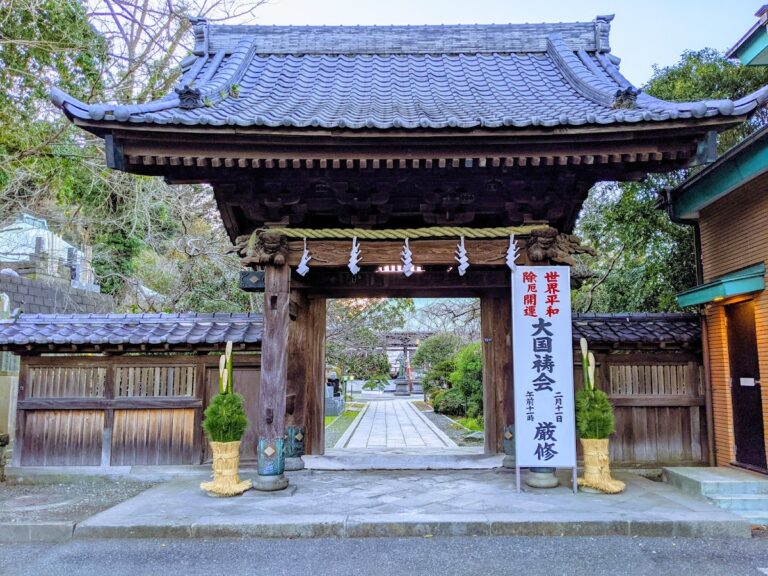
Choshoji Temple is a Nichiren Buddhist temple located in Zaimokuza, Kamakura City, Kanagawa Prefecture. Its mountain name is Sekiseizan, its principal image is the Great Mandala, and it belongs to the Konishi lineage as a former branch temple of the head temple Honkokuji (Rokujo school).
The Zaimokuza area of Kamakura is a quiet area slightly removed from the bustling tourist area around Kamakura Station, but Choshoji Temple is particularly known as a temple of high historical value. Many important cultural properties remain within its spacious grounds, making it a valuable place that conveys the origins of Nichiren Buddhism.
Founding and History of Choshoji Temple
The history of Choshoji Temple dates back to Kencho 5 (1253). In this year, Ishii Saburo Nagakatsu, a local lord who had converted to Nichiren Buddhism, built a Hokke-do (Lotus Sutra Hall) within his residence and donated it to Nichiren, marking the beginning of the temple’s history.
At the age of 32, Nichiren declared the establishment of his sect at Seichoji Temple in Awa Province (present-day Chiba Prefecture) and then entered Kamakura. At that time, he received the fervent devotion of Ishii Nagakatsu and built a hermitage in this location. This was Nichiren’s first base in Kamakura and holds immense significance in the history of the Nichiren sect.
Initially, this temple was called “Hokke-do,” and later became “Honkoku-ji.” Honkoku-ji flourished under the direct disciples of Nichiren, such as Nichiro Shonin and Nichizo Shonin, becoming a central temple of the Nichiren sect in Kamakura.
However, in 1321, Honkoku-ji relocated to Kyoto. Later, in 1345 (Jōwa 1), Nichijō Shōnin restored the former site and named it “Chōshōji” after Ishii Chōshō. This is the direct origin of the present-day Chōshōji.
Chōshōji Temple from the Edo Period Onward
During the Edo period, the temple received patronage from the Tokugawa shogunate, and its grounds were improved. The basic layout of the current temple grounds was formed during this period. Despite being affected by the anti-Buddhist movement after the Meiji Restoration, the temple has continued to preserve its teachings, supported by the faith of the local people.
During the Showa period, improvements to the temple grounds were made, and in 1977 (Shōwa 52), the Hokke-dō (Lotus Sutra Hall) was designated as an Important Cultural Property of Kanagawa Prefecture, officially recognizing its historical value.
Highlights and Cultural Properties of Chōshōji Temple
Hokke-dō (Lotus Sutra Sanmai Hall)
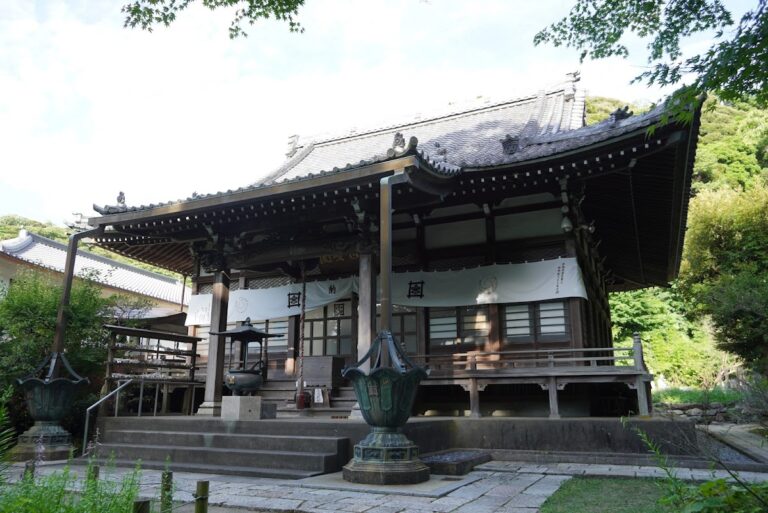
The greatest highlight of Chōshōji Temple is the Hokke-dō (Lotus Sutra Sanmai Hall), a Kanagawa Prefecture-designated Important Cultural Property. This building is a valuable structure that strongly retains the architectural style of the Muromachi period and conveys the characteristics of the unique Japanese style of architecture of the Kamakura period.
The Hokke-do Hall is a hip-and-gable roofed hall with a copper-plated roof (originally thatched), characterized by its simple yet dignified design. Inside, a statue of Nichiren Shonin is enshrined, creating a serene space. It is of high architectural historical value and is attracting attention from researchers as an example of medieval temple architecture in Kamakura.
Statue of Nichiren Preaching and Statues of the Four Heavenly Kings
An impressive statue of Nichiren Preaching stands in front of the main hall. This statue depicts Nichiren Shonin preaching the Lotus Sutra, and its powerful and dignified figure welcomes visitors.
Surrounding the statue are statues of the Four Heavenly Kings: Jikokuten, Komokuten, Zochoten, and Tamonten. These statues are considered guardians of Buddhism and the training hall, and serve as the spiritual guardians of Choshoji Temple. The arrangement of the Four Heavenly Kings statues symbolically represents the religious importance of this temple.
Taishakuten Daido Hall
Within the temple grounds stands a magnificent Taishakuten Daido Hall. Taishakuten is one of the guardian deities in Buddhism, and is particularly revered in the Nichiren sect as the guardian deity of the Lotus Sutra. Although the hall is a relatively new building, it is a dignified structure that follows traditional styles and is one of the centers of faith at Choshoji Temple.
Monument to the Song “The White Peak of Mount Fuji”
Within the temple grounds is a monument to the song “The White Peak of Mount Fuji.” This was erected in memory of the accident in 1910 (Meiji 43) in which 12 members of the Zushi Kaisei Junior High School rowing club perished. “The White Peak of Mount Fuji” is a memorial song with lyrics written by Misumi Suzuko, a teacher at Kamakura Girls’ School, and is widely known as a Japanese children’s song.
This monument, a memorial to the history of Kamakura and Zushi, and to the tragedy of the young people, deeply moves many visitors.
Grave of Keiichiro Akagi
Choshoji Temple houses the grave of Keiichiro Akagi, a popular actor of the Showa era. Akagi was a Nikkatsu star known for the “Pistol Outlaw” series, but he passed away suddenly at the young age of 21 in 1961.
Even today, many fans visit on the anniversary of his death, and flowers are constantly being offered. Choshoji Temple has become one of the sacred sites for Keiichiro Akagi fans and a place that marks a page in the history of Showa-era cinema.
Annual Events at Choshoji Temple
Water Purification Ritual (February 11th)
Every year on February 11th, Choshoji Temple holds a water purification ritual performed by its monks. The rigorous practice of the monks dousing themselves with cold water in the bitter cold leaves a deep impression on those who witness it. This water purification ritual is a traditional Buddhist ceremony to cleanse the mind and body and renew one’s resolve for spiritual practice. It is open to the public for observation.
Memorial Services Related to Nichiren Shonin
As a Nichiren Buddhist temple, the Oeshiki ceremony is held around October 13th, the anniversary of Nichiren Shonin’s death. A memorial service is also held on April 28th, commemorating the founding of the sect, attracting many followers.
Basic Information and Access to Choshoji Temple
Basic Information
- Official Name: Ishiiyama Choshoji Temple
- Sect: Nichiren Buddhism
- Principal Image: Great Mandala
- Founded: Kencho 5 (1253)
- Founder: Ishii Saburo Chosho
- Restoration: Nichijo Shonin (Jowa 1, 1345)
- Address: 2-12-17 Zaimokuza, Kamakura City, Kanagawa Prefecture 248-0013
- Visiting Hours: Grounds are freely accessible (Please check for access to the Hokke-do Hall interior)
- Admission Fee: Free
- Parking: Available (Limited number of spaces)
- Telephone: 0467-25-4300
Access Method
Access by Train and Bus
From JR Kamakura Station
- Take the Keikyu Bus bound for “Nagoe” from bus stop #3 at the east exit of Kamakura Station.
- Get off at the “Choshoji” bus stop and walk for about 1 minute.
- Bus journey time: about 6 minutes
- Fare: around 220 yen one way
Access on Foot
- Approximately 20-25 minutes on foot from the east exit of JR Kamakura Station.
- Take the route south along Wakamiya-oji Street towards Zaimokuza.
- You can also walk along the coastline.
Access by Car
- Approximately 15 minutes from the Asahina IC on the Yokohama-Yokosuka Expressway.
- Parking is limited to a few cars, so using public transportation is recommended.
- Be aware that traffic congestion is common in Kamakura city on weekends and during peak tourist seasons.
Manners and Precautions During Visits
- Please visit the temple grounds quietly.
- Photography is permitted, but please be considerate of those performing religious services or other visitors.
- If you wish to view the interior of the Hokke-do Hall, it is recommended to check in advance.
- Please be considerate of those visiting graves, as a cemetery is also located on the premises.
Recommended Tourist Spots Around Choshoji Temple
Zaimokuza Beach
Located about a 10-minute walk from Choshoji Temple, Zaimokuza Beach is one of Kamakura’s representative beaches. It has a calmer atmosphere than Yuigahama Beach and is beloved by locals. It is a popular swimming beach in the summer, and ideal for strolling and jogging during other seasons.
Komyoji Temple
Komyoji Temple, the largest temple in the Zaimokuza area, is about a 7-minute walk from Choshoji Temple. It is a major temple of the Jodo sect, and its magnificent main gate and main hall are highlights. From the temple grounds, you can enjoy a panoramic view of Zaimokuza Beach, and the scenery is particularly beautiful during the autumn foliage season.
Jissoji Temple
Jissoji Temple, an ancient temple of the Nichiren sect, is also within walking distance. Known as a temple associated with the Miura clan, important figures of the Kamakura Shogunate, visiting both Choshoji Temple and Kuhonji Temple will give you a deeper understanding of the history of Nichiren Buddhism in Kamakura.
Kuhonji Temple
Kuhonji Temple, known for its association with Nitta Yoshisada, is about a 10-minute walk from Choshoji Temple. Within the temple grounds is a place believed to be Nitta Yoshisada’s grave, allowing visitors to reflect on the history of the fall of the Kamakura Shogunate.
Zaimokuza Cemetery
Near Choshoji Temple is Zaimokuza Cemetery, where many historical gravestones can be seen. It’s a place where you can feel the history of Kamakura in a quiet environment.
Recommended Restaurants near Choshoji Temple
Zaimokuza’s Cafe Culture
The Zaimokuza area has seen a recent increase in stylish cafes. Many cafes offer a relaxing time with ocean views, making them perfect for a break after visiting Choshoji Temple.
Many restaurants offer lunches using local ingredients and dishes featuring plenty of Kamakura vegetables, allowing you to enjoy both sightseeing and dining. ### Japanese Sweets and Dessert Shops
Kamakura is known for its many excellent Japanese sweets shops. There are long-established shops around Zaimokuza where you can enjoy seasonal Japanese sweets and matcha tea. Why not enjoy a traditional Japanese flavor after visiting the temple?
Seafood Dishes
Because Zaimokuza is close to the sea, there are many restaurants serving fresh seafood. Set meals and rice bowls using seafood caught in Sagami Bay are one of the pleasures of sightseeing in Kamakura.
Visitor Trends and Reviews of Choshoji Temple
Visitor Characteristics
Compared to the famous temples around Kamakura Station, Choshoji Temple has fewer visitors and is known as a hidden gem where you can worship in peace. Therefore, it is particularly popular with the following types of people:
- Nichiren Buddhist followers: Those who visit as religious pilgrims
- History enthusiasts: Those who trace the footsteps of Nichiren Shonin and the architecture of the Kamakura period
- Keiichiro Akagi fans: Fans of Showa-era films who visit to pay their respects at the grave
- Solo travelers: Those who want to pray in a quiet environment
- Architecture and cultural property researchers: Those who study historical buildings such as the Hokke-do Hall
Visitor Reviews Trends
Actual visitors have commented as follows:
“It’s a quiet temple with hardly any tourists, so I was able to pray at my own pace.”
“The architecture of the Hokke-do Hall is wonderful, a valuable place where you can feel the atmosphere of the Kamakura period.”
“I visited to pay my respects at Keiichiro Akagi’s grave. I was moved that he still has so many fans.”
“The statue of Nichiren Shonin preaching is very impressive, and the arrangement with the Four Heavenly Kings statues is magnificent.”
“I recommend visiting in conjunction with a stroll around the Zaimokuza area.”
Tips for Enjoying the Charms of Choshoji Temple to the Fullest
Recommended Time to Visit
Spring (March-May)
The temple grounds are home to cherry trees, which bloom beautifully in spring. The fresh green season is also refreshing and an ideal time to visit.
Autumn (October-November)
During the autumn foliage season, the temple grounds are ablaze with color, allowing visitors to enjoy the beautiful scenery in a tranquil atmosphere. Around October 13th, during the Oeshiki festival, you can also experience a special Buddhist service.
Winter (February 11th)
If you wish to witness the water purification ritual, a visit on February 11th is recommended. The sight of the ascetic practice in the bitter cold is deeply moving.
Recommended Time of Visit
Early morning hours (around 8:00-10:00 AM) are particularly quiet, allowing you to feel the pure air of the temple grounds. The afternoon offers beautiful afternoon sun, making it ideal for photography.
Combination Plans with Surrounding Areas
Half-Day Course (Approx. 3-4 Hours)
- Departure from Kamakura Station
- Visit to Choshoji Temple (40 minutes)
- Visit to Komyoji Temple (40 minutes)
- Stroll along Zaimokuza Beach (30 minutes)
- Lunch at a cafe in Zaimokuza (60 minutes)
Full-Day Course (Approx. 6-7 Hours)
- Departure from Kamakura Station
- Visit to Choshoji Temple (60 minutes)
- Visit to Jissoji Temple and Kyuhonji Temple (60 minutes)
- Lunch in Zaimokuza (60 minutes)
- Visit to Komyoji Temple (60 minutes)
- Stroll along Zaimokuza Beach and Yuigahama Beach (90 minutes)
- Dinner and souvenir shopping around Kamakura Station
Frequently Asked Questions about Choshoji Temple
Q1: Is there an entrance fee to Choshoji Temple?
A: Entry to the temple grounds is free. However, if you wish to visit special areas such as the interior of the Hokke-do Hall, we recommend checking with the temple office in advance.
Q2: Can I get a Goshuin (temple stamp)?
A: Yes, you can get a Goshuin at the temple office. However, they may be absent, so if you want to be sure to get one, we recommend calling ahead. The offering fee is usually around 300 to 500 yen.
Q3: Is there parking?
A: There are a few parking spaces on the temple grounds, but the number is limited. It can get full on weekends and during events, so we recommend using public transportation.
Q4: Where is Keiichiro Akagi’s grave located?
A: It is located within the cemetery, but please ask the temple office for the specific location. When visiting the grave, please be considerate of other visitors.
Q5: Is photography allowed?
A: Photography is generally permitted on the temple grounds, but consideration is needed during religious services or when other visitors are present. Please check in advance regarding photography inside the buildings.
Q6: Is it within walking distance from Kamakura Station?
A: It takes approximately 20-25 minutes on foot. The easiest route is to head south along Wakamiya-oji Street towards Zaimokuza. You can enjoy a stroll through the streets of Kamakura along the way.
Q7: What is the relationship between Choshoji Temple and Honkokuji Temple?
A: The current location of Choshoji Temple is believed to be the site of the original Honkokuji Temple. After Honkokuji Temple moved to Kyoto, Nichijo Shonin restored the site and named it Choshoji Temple after Ishii Chosho.
Q8: Do you perform memorial services and funerals?
A: Choshoji Temple is a temple with a danka system (parishioner system) and performs memorial services and funerals. Please contact the temple office directly for details.
Summary: The Charm and Value of Visiting Choshoji Temple
Choshoji Temple is a precious temple that, despite its historical significance as the first hermitage built by Nichiren Shonin in Kamakura, maintains a tranquil atmosphere unspoiled by tourism.
It boasts diverse attractions, including the Hokke-do Hall, which preserves the architectural style of the Kamakura period, the impressive statues of Nichiren preaching and the Four Heavenly Kings, and the grave of the renowned Showa-era actor, Keiichiro Akagi. Located in the peaceful Zaimokuza area, it can be combined with a stroll along the coast or visits to other nearby temples for a more fulfilling Kamakura sightseeing experience.
For those who want to escape the hustle and bustle of Kamakura and quietly contemplate history, experience the origins of Nichiren Buddhism, and discover the hidden charms of Kamakura, Choshoji Temple is a must-see.
Next time you visit Kamakura, be sure to extend your trip to Choshoji Temple in Zaimokuza. There, a profound history and a serene space for prayer await you, distinct from the famous tourist spots.