
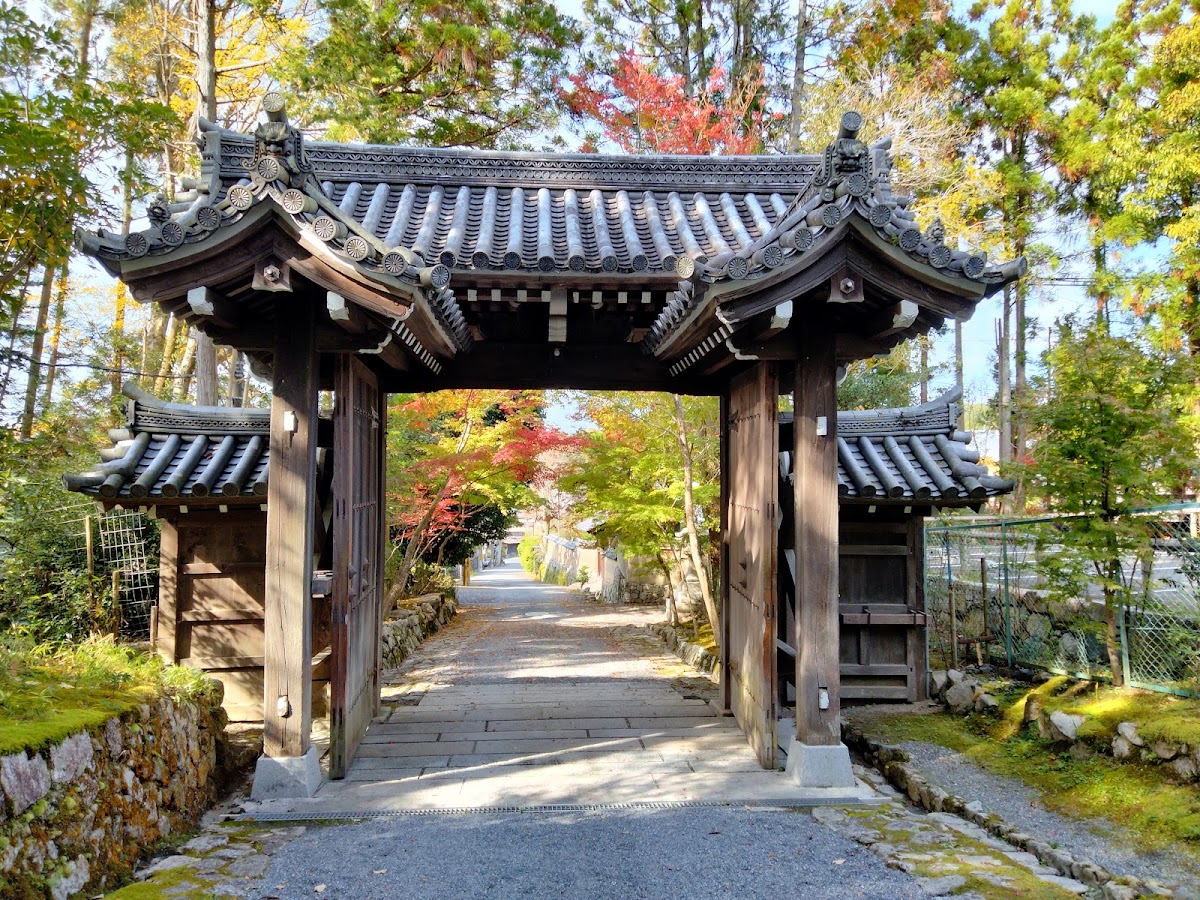
Complete Guide to Sekizan Zen-in Temple | A Famous Temple Protecting Kyoto’s Northeast Gate and the Charm of its Autumn Foliage
Sekizan Zen-in Temple, located in Shugakuin Kaikonbo-cho, Sakyo-ku, Kyoto City, is a Tendai sect temple with a history of over 1100 years as a sub-temple of Enryaku-ji Temple on Mount Hiei. It has long been revered as a temple protecting the northeast gate of the Kyoto Imperial Palace and is also known as the temple that enshrines Fukurokuju, one of the Seven Lucky Gods of Kyoto. This article comprehensively introduces information you should know before visiting Sekizan Zen-in Temple, including its history, the origin of its principal image, highlights of the temple grounds, annual events, and its charm as a famous spot for autumn foliage.
History and Origin of Sekizan Zen-in Temple
Founded According to the Last Will of Jikaku Daishi Ennin
Sekizan Zen-in Temple was founded in 888 (Ninna 4) by An’e, the 4th head of the Tendai sect. This temple was founded based on the last wishes of Jikaku Daishi Ennin, An’e’s teacher.
Jikaku Daishi Ennin was a highly respected monk known as the restorer of Mount Hiei. In his 30s, he dedicated himself to the development of Enryaku-ji Temple, but his health deteriorated due to overwork. Afterward, he studied in Tang China, and during his nine-and-a-half-year training, he stayed at Sekizan Hokke-in Temple on Mount Sekizan in the Shandong Peninsula.
At Sekizan Hokke-in Temple, Ennin encountered the worship of Taizan Fukun and became deeply devoted. Upon returning to Japan, he wished to enshrine Taizan Fukun on Mount Hiei, but he was unable to fulfill this wish during his lifetime, entrusting it to his disciple An’e as his last wish.
Position as a Sub-temple of Enryaku-ji Temple
Sekizan Zen-in is one of the sub-temples (tatchu) of Enryaku-ji Temple, the head temple of the Tendai sect. Located at the western foot of Mount Hiei, it has played an important role as the guardian deity of Enryaku-ji Temple and as the guardian deity of the entire Tendai sect.
A tatchu is a small temple built within or near the grounds of a large temple, often serving as the burial place of a high-ranking monk or a training ground for his disciples. In the case of Sekizan Zen-in, it holds special significance as a temple that carries on the will of Jikaku Daishi Ennin.
The Principal Deity: Sekizan Daimyojin and the Worship of Taizan Fukun
Taizan Fukun as the Ancestral Deity of Onmyodo (Japanese esoteric cosmology)
The principal deity of Sekizan Zen-in is Sekizan Daimyojin, also known as Taizan Fukun. Taishan Fujun is the deity of Mount Tai, the eastern peak and foremost of the Five Great Mountains of China, and in Taoism, he is considered the god who governs human lifespan.
Upon arrival in Japan, Taishan Fujun was positioned as the ancestral deity of Onmyōdō (Japanese esoteric cosmology). In Onmyōdō, various rituals are performed to determine the auspiciousness or inauspiciousness of directions and to avoid disaster, and Taishan Fujun has been revered as a central deity in these rituals.
God of Business Prosperity and Protection from Evil Directions
Akayama Daimyōjin is also widely worshipped as a god of business prosperity. This stems from the fact that Akayama Fahua Temple in China was a place to pray for the safety of maritime trade, and that Taishan Fujun, as a god who governs people’s destinies, was also thought to be involved in the success or failure of businesses.
At the same time, because it is located in the northeast (the “demon’s gate”) of the Kyoto Imperial Palace, it is also strongly revered as a god of protection from evil directions. In Onmyodo (Japanese esoteric cosmology), the “Kimon” (demon’s gate) is an inauspicious direction from which demons are believed to enter and exit. Specifically, the northeast is called the “Omote-Kimon” (front demon’s gate), and the southwest is called the “Ura-Kimon” (back demon’s gate). Akasan Zen-in Temple has been deeply revered by the Imperial family as the “guardian of the Imperial Palace,” protecting the Imperial Palace (Kyoto Imperial Palace) from the demon’s gate.
Highlights and Architecture of the Temple Grounds
The Divine Monkey (Masaru) on the Roof of the Worship Hall
When visiting Akasan Zen-in Temple, the first thing that catches the eye is the ceramic divine monkey (Masaru) placed on the roof of the worship hall. This monkey holds a gohei (ritual wand) and a bell, and faces the direction of the Kyoto Imperial Palace.
Monkeys have been considered animals that ward off evil spirits since ancient times, and have been thought to be auspicious due to the wordplay between “magasaru” (evil leaves) and “masaru” (to surpass). A monkey statue is also placed at Sarugatsuji, the northeast corner of the Kyoto Imperial Palace, and is believed to protect the palace in a corresponding manner to the divine monkey of Akasan Zen-in Temple. The deep connection with the Imperial family is evident from the fact that Emperor Go-Mizunoo bestowed the imperial plaque “Akayama Daimyojin” upon Akayama Zen-in when he constructed the Shugakuin Imperial Villa.
Main Hall and the Shonenju (Grand Prayer Beads)
The main hall enshrines the principal deity, Akayama Daimyojin. While not usually open to the public as a hidden Buddha, its miraculous powers have been widely known since ancient times.
Within the temple grounds, a large rosary called the Shonenju is enshrined. This Shonenju is used by worshippers to purify their mind and body and pray for the fulfillment of their wishes by rotating it while chanting Buddhist prayers. The act of rotating each bead with heartfelt intention provides a meditative experience.
Fukurokuju Hall and the Kyoto Seven Lucky Gods Pilgrimage
Akayama Zen-in is also known as a temple that enshrines Fukurokuju, one of the Kyoto Seven Lucky Gods. Fukurokuju is worshipped as a god who bestows the three virtues of happiness (Fuku), wealth (Roku), and longevity (Ju).
The Kyoto Seven Lucky Gods pilgrimage involves visiting seven shrines and temples within Kyoto City. Besides Akasanzan-in Temple, these include Ebisu Shrine (Ebisu), Matsugasaki Daikokuten (Daikokuten), Toji Temple (Bishamonten), Gyoganji Temple (Jurojin), Manpukuji Temple (Hotei), and Rokuharamitsu-ji Temple (Benzaiten). Many worshippers visit the Seven Lucky Gods during the New Year, and Akasanzan-in Temple also sees a large influx of visitors.
Jizo Hall and Temple Treasures
Within the temple grounds is a Jizo Hall, housing various Jizo Bodhisattva statues. The Child-Rearing Jizo and Longevity Jizo, in particular, are revered by the local people.
Akasan Zen-in Temple houses temple treasures related to Jikaku Daishi Ennin, as well as donations from successive emperors, making it a valuable cultural asset that conveys the history of the Tendai sect.
The Charm of Akasan Zen-in Temple as a Famous Autumn Foliage Spot
A Tunnel of Autumn Leaves Adorning the Temple Grounds
Akasan Zen-in Temple is a famous spot for autumn foliage, so much so that it is also known as “Momiji-dera” (Maple Temple). Located northwest of Shugakuin Imperial Villa and nestled in a rich natural environment at the foot of Mount Hiei, the entire temple grounds are enveloped in vibrant autumn colors.
The tunnel of maple leaves along the approach to the temple is particularly breathtaking, reaching its peak from mid- to late November. The gradation of various colors, including vermilion, orange, and yellow, captivates visitors.
Enjoying Autumn Leaves in Tranquility
While Kyoto has many famous autumn foliage spots, Akasan Zen-in Temple is known as a hidden gem where you can enjoy the autumn leaves in peace and quiet, with relatively few tourists. It is especially recommended for those who want to avoid crowds and slowly savor the autumn scenery.
You can enjoy the beauty of the autumn leaves from various angles, such as looking up at them while climbing the stone steps of the temple grounds, or viewing the autumn foliage in the garden from the main hall.
Annual Events and Special Blessings and Prayers
Monthly Events and the Thousand-Day Circumambulation
At Akasaka Zen-in Temple, various events are held every month. Particularly noteworthy are the blessings and prayers performed by the Great Ajari (high-ranking Buddhist priest) of Mount Hiei.
The Thousand-Day Circumambulation (Sennichi Kaihogyo) is one of the most arduous ascetic practices passed down at Enryaku-ji Temple on Mount Hiei, a seven-year pilgrimage through the mountains. Those who complete this Thousand-Day Circumambulation are called Great Ajari, and their blessings are believed to possess special spiritual power.
At Akasaka Zen-in Temple, blessings by this Great Ajari are performed regularly every month, attracting many visitors.
Loofah Blessing (Asthma Relief)
One of the distinctive events at Akasan Zen-in Temple is the “Loofah Blessing,” a secret ritual of the Tendai sect. This is a blessing and prayer for the healing of asthma, and a unique ceremony using loofah is performed.
Loofah has been believed since ancient times to have cough-suppressing and expectorant properties and has been used in folk medicine. At Akasan Zen-in Temple, this traditional wisdom is combined with the blessings of Tendai esoteric Buddhism to preserve the “asthma relief” ritual.
Prayer Bead Memorial Service
Akasan Zen-in Temple also holds a “Prayer Bead Memorial Service” for worn-out prayer beads (rosaries). Prayer beads are important religious tools for Buddhists, and prayer beads used for many years are imbued with the thoughts and feelings of their owners.
In the prayer bead memorial service, these prayer beads are respectfully consecrated, and feelings of gratitude are offered. This event is a precious ceremony that conveys the Japanese spirit and culture of cherishing possessions.
Origin of the “Fifty-Day Payment” System
Akayama Zen-in Temple, affectionately known as “Akayama-san,” is also known as the birthplace of the “Fifty-Day Payment” business custom.
The “Fifty-Day Payment” system, where goods are paid for every 50 days of the month, originated in Kyoto during the Edo period. Because Akayama Daimyojin was worshipped as a god of business prosperity, merchants began making payments on the temple’s festival days, and this is said to have become established as the “Fifty-Day Payment” system.
Access and Visiting Information
Transportation Access
The most convenient way to access Akayama Zen-in Temple is by using public transportation.
Access by Train and Bus:
- Get off at Shugakuin Station on the Eizan Electric Railway, approximately 20 minutes on foot.
- Get off at Shugakuin Rikyu-michi bus stop on the Kyoto City Bus, approximately 15 minutes on foot.
- Get off at Shugakuin-michi bus stop on the Kyoto City Bus, approximately 20 minutes on foot.
Access by Car:
- Parking available (limited spaces; public transportation is recommended during peak seasons such as autumn foliage).
Visiting Information
Location: 18 Kaikonbo-cho, Shugakuin, Sakyo-ku, Kyoto City
Visiting Hours: 9:00 AM – 4:30 PM (may vary depending on the season)
Admission Fee: Free entry to the grounds (donations welcome)
Inquiries: Please check the official website or call.
Manners and Precautions for Visiting
Sekizan Zen-in is a temple where ascetic practices are still conducted. Please observe the following points when visiting.
- Maintain silence and be considerate so as not to disturb the training.
- Take photographs only in designated areas.
- Photography is often prohibited inside the main hall; please check in advance.
- Always take your trash with you.
- Do not touch the plants or buildings on the temple grounds.
Nearby Tourist Attractions
Shugakuin Imperial Villa
Shugakuin Imperial Villa, located within walking distance of Sekizan Zen-in Temple, is an imperial villa built as a mountain retreat for Emperor Go-Mizunoo. It consists of three villas (upper, middle, and lower), and boasts a magnificent borrowed-landscape garden.
Advance reservations are required for visits, but it is well worth a visit as one of the finest Japanese gardens.
Shisendo Temple
Shisendo Temple, built by Ishikawa Jozan, is located about a 15-minute walk south of Sekizan Zen-in Temple. It is a beautiful literati’s mountain retreat featuring the “Shisen-no-ma” (Poet’s Room) displaying portraits of 36 Chinese poets, and a garden known for its “shishi-odoshi” (deer scarer).
Manshuin Monzeki
Manshuin Monzeki, one of the five main temples of the Tendai sect, is located nearby. It boasts numerous attractions, including the national treasure, the Yellow Fudo statue, and a dry landscape garden attributed to Kobori Enshu.
Kyoto Loop Trail
The area around Sekizan Zen-in Temple lies along the Kyoto Loop Trail. As a starting point for the hiking course that continues from Mount Hiei to Mount Daimonji, you can enjoy nature while exploring the mountains of Kyoto.
Reasons to Visit Sekizan Zen-in Temple
Depth of History and Faith
Sekizan Zen-in Temple has a history of over 1100 years and continues to be an important center of the Tendai sect, carrying on the legacy of Jikaku Daishi Ennin. As a temple protecting the northeast direction of the Kyoto Imperial Palace and a deity of business prosperity, it has attracted the faith of people throughout the ages.
Tranquility and Natural Beauty
Located at the foot of Mount Hiei, it offers a tranquil environment far removed from the hustle and bustle of the city. Especially during the autumn foliage season, the harmony between the natural beauty and the temple architecture creates a magnificent landscape.
Tradition in the Modern Age
A major attraction of Akasanzan Zen-in Temple is that ancient traditions, such as blessings by the Great Ajari who completed the Sennichi Kaihogyo (thousand-day mountain asceticism), loofah blessings, and rosary offerings, are still alive today. Participating in these events offers a valuable experience of touching upon Japanese spiritual culture.
As Part of the Kyoto Seven Lucky Gods Pilgrimage
Akasanzan Zen-in Temple, which enshrines Fukurokuju, is an important stop on the Kyoto Seven Lucky Gods Pilgrimage. The Seven Lucky Gods Pilgrimage is a faith that prays for various blessings in life, such as happiness, wealth, and longevity, and many worshippers visit throughout the year, especially during the New Year.
Summary
Akasanzan Zen-in Temple has attracted fervent devotion from the Heian period to the present day as a temple that protects Kyoto’s northeast direction (the “demon’s gate”). Founded according to the last wishes of Jikaku Daishi Ennin, and serving as a sub-temple of Enryaku-ji Temple, this temple, dedicated to Akasan Daimyojin, the guardian deity of the Tendai sect, is an object of multifaceted worship, encompassing Onmyodo (Japanese esoteric cosmology), business prosperity, and the worship of the Seven Lucky Gods of Kyoto.
With its rich natural environment at the foot of Mount Hiei, the beauty of its autumn foliage (known as the “Maple Temple”), traditional ceremonies such as the blessings and loofah blessings performed by the Great Ajari who completed the Sennichi Kaihogyo (a thousand-day mountain ascetic practice), and unique features including the sacred monkey on the roof of the main hall, Akasan Zen-in offers many attractions well worth a visit.
When sightseeing in Kyoto, don’t just visit famous temples like Kiyomizu-dera and Kinkaku-ji; also consider visiting historically significant and tranquil temples like Akasan Zen-in. There, you can witness Kyoto’s profound spiritual culture and the unchanging spirit of faith for over 1000 years.
By visiting Sekizan Zen-in Temple along with other nearby attractions such as Shugakuin Imperial Villa, Shisendo Temple, and Manshuin Temple, you can fully enjoy the charm of Kyoto’s Rakuhoku area. Especially during the autumn foliage season, Sekizan Zen-in Temple is an ideal hidden gem for enjoying Kyoto’s autumn while avoiding crowds.


