Complete Guide to Anyoin Temples: History and Highlights of Anyoin Temples Across Japan (Kamakura, Koyasan, etc.)
The name Anyoin is a prestigious temple name found in temples throughout Japan. This article focuses on the particularly famous Anyoin Temple in Kamakura City, but also provides detailed explanations of Anyoin Temples in other locations such as Koyasan, Shinagawa Ward, and Honjo City, covering their history, cultural assets, highlights within the temple grounds, and access methods.
Table of Contents
- What is Anyoin?
- Anyoin Temple in Kamakura City (Gionzan Chorakuji Temple)
- Anyoin Temple in Koyasan
- Anyoin Temple in Shinagawa Ward
- Anyoin Temple in Honjo City
- Anyoin Temples in Other Regions
- Access Methods to Each Anyoin Temple
What is Anyoin?
The name Anyoin originates from the Buddhist term “An’yo Jodo,” meaning the Pure Land of Amida Buddha. Therefore, while this temple name is commonly found in Jodo-shu and Jodo Shinshu temples, it is also used by other sects.
There are temples named Anyoin throughout Japan, each with its own unique history and characteristics. Among them, Anyoin in Kamakura City, Kanagawa Prefecture, is particularly famous for its deep connection to Hojo Masako and its beautiful azaleas, attracting many worshippers and tourists.
Anyoin (Gionzan Chorakuji) in Kamakura City
History
Anyoin, located in Omachi, Kamakura City, Kanagawa Prefecture, is officially called “Gionzan Anyoin Chorakuji” and belongs to the Jodo-shu sect. Its mountain name is Gionzan, its temple name is Chorakuji, and its principal image is Amida Buddha. Furthermore, it houses a statue of the Thousand-Armed Kannon Bodhisattva (Tashiro Kannon) and is known as the third temple on both the Bando Thirty-Three Kannon Pilgrimage and the Kamakura Thirty-Three Kannon Pilgrimage.
The temple’s name, Anyōin, originates from the posthumous Buddhist name of Hōjō Masako, the wife of Minamoto no Yoritomo, the first shogun of the Kamakura shogunate. Hōjō Masako died in 1225 (Karoku 1) at the age of 69, and her posthumous Buddhist name was “Anyōin-dono Nyojitsu Myōkan Daizenjōni,” hence the temple’s name.
The temple’s origins are complex. Originally, it was a temple called “Chōraku-ji,” built by Hōjō Masako to mourn the passing of Minamoto no Yoritomo. Later, it declined due to fires and other events, but in 1308 (Enkei 1) during the Muromachi period, it was rebuilt as “Anyōin” in memory of Hōjō Masako, known as the “Nun Shogun.”
During the Edo period, when another temple, Tashiro-ji, was destroyed by fire, its principal image, a statue of Senju Kannon (Tashiro Kannon), was moved to Anyo-in Temple. This statue remains enshrined at Anyo-in Temple today and is revered as the principal image of the 33 Kannon pilgrimage sites of Bando.
Highlights of the Temple Grounds
Main Hall
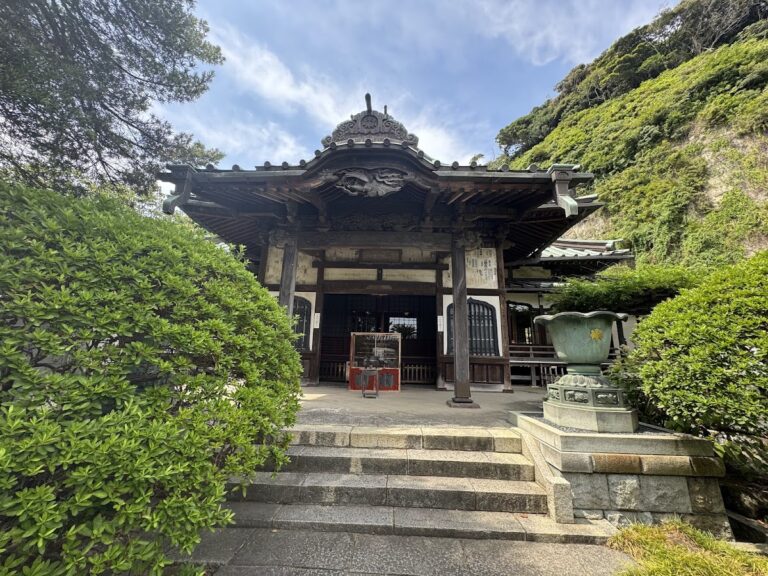
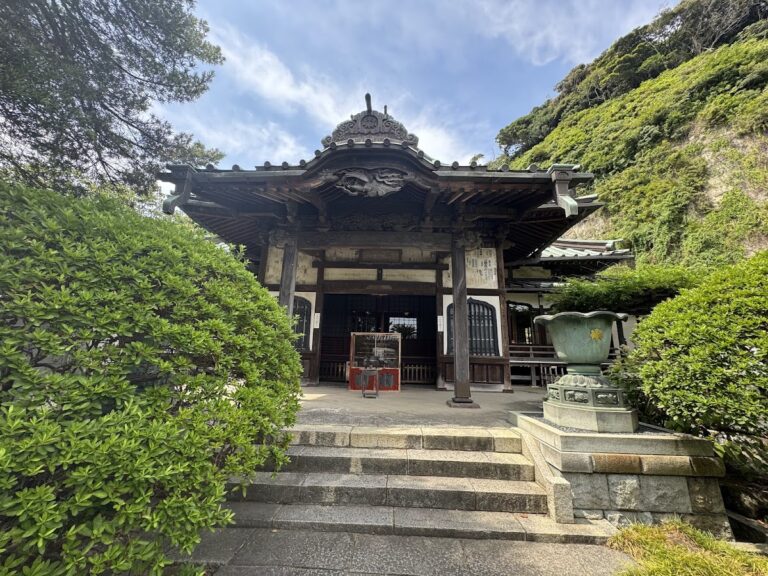
The main hall of Anyo-in Temple is a tranquil wooden structure. Inside, the principal image of Amida Buddha and the Senju Kannon Bodhisattva (Tashiro Kannon), the principal image of the 33 Kannon pilgrimage sites of Bando, are enshrined. In front of the main hall, an incense burner is placed for worshippers to offer incense, creating a peaceful atmosphere.
Temple Gate
The temple gate, which leads into the temple grounds, has a simple yet dignified structure. Upon passing through the gate, the main hall immediately comes into view, and the compact yet orderly layout of the temple grounds is impressive.
Hojo Masako’s Tomb (Hokyoin Pagoda)
Behind the main hall stands a Hokyoin pagoda, believed to be the tomb of Hojo Masako. This pagoda is considered the oldest in Kamakura and is an important cultural property representing Kamakura period stone art. The stone pagoda is approximately 2 meters tall and consists of a finial, a roof, a body, and a base.
Based on its form and style, it is estimated to have been created in the late Kamakura period. While it is not definitively confirmed that it is Hojo Masako’s actual tomb, it has been revered as her tomb for many years. Its high historical value makes it a popular spot for history enthusiasts.
Famous Azalea Spot
An’yoin Temple is known as one of Kamakura’s premier azalea spots. Every year from late April to early May, approximately 200 azalea bushes planted around the temple gate and beside the main hall bloom simultaneously. The sight of vibrant red and pink azaleas adorning the temple grounds is breathtaking, attracting many worshippers and photography enthusiasts during this season.
During the peak azalea season, the spot where you can photograph the temple gate and azaleas together is particularly popular. The contrast between the old temple gate and the vibrant azaleas creates a picturesque scene typical of Kamakura.
Podocarpus Tree
Within the temple grounds stands a magnificent Podocarpus tree estimated to be several hundred years old. This ancient tree is designated as a natural monument of Kamakura City and is a symbolic presence of Anyoin Temple, which boasts a long history. Podocarpus trees are evergreens, maintaining their deep green color throughout the year and contributing to the tranquil atmosphere of the temple grounds.
Cultural Properties
Anyoin Temple in Kamakura houses several important cultural properties.
Hokyoin Pagoda (Tomb of Hojo Masako)
As mentioned above, the Hokyoin Pagoda located behind the main hall is considered the oldest in Kamakura and is a masterpiece of Kamakura period stone art. While not designated as a National Important Cultural Property, it is protected as a cultural property of Kamakura City.
Thousand-Armed Kannon Bodhisattva Statue (Tashiro Kannon)
The Thousand-Armed Kannon statue, enshrined as the principal image of the 33 Kannon pilgrimage sites of Bando, was originally the principal image of Tashiro-dera Temple. This intricately carved wooden statue of Kannon attracts many worshippers.
Amida Buddha Statue
The Amida Buddha statue, the principal image of the main hall, possesses a majestic appearance befitting a Jodo sect temple.
Location and Visiting Information
Location
3-1-22 Omachi, Kamakura City, Kanagawa Prefecture 248-0007
Visiting Hours
8:00 AM – 4:30 PM (Closed December 29th – 31st)
Admission Fee
100 yen (Donation)
Inquiries
Tel: 0467-22-0806
Access
By Train/Bus
- Approximately 12-minute walk from the East Exit of Kamakura Station (JR Yokosuka Line/Enoshima Electric Railway)
- Take the Keikyu Bus bound for Nagoe from bus stop #3 at the Kamakura Station East Exit bus terminal, get off at the Nagoe bus stop, and walk for 1 minute.
Walking Route
From the East Exit of Kamakura Station, head south along Wakamiya-oji Street, turn left at the Omachi intersection, and proceed along Omachi Street. You will see the main gate of Anyoin Temple on your right. There are many other temples and shrines along the way, making it a pleasant place to visit while enjoying a stroll through Kamakura.
By Car
Approximately 20 minutes from the Asahina Interchange on the Yokohama-Yokosuka Expressway. However, there is no parking on the temple grounds, so you will need to use a nearby coin-operated parking lot. Kamakura’s roads are narrow and can be crowded during peak tourist season, so using public transportation is recommended.
Previous and Next Temples
An’yoin Temple is the 3rd temple on the Bandō Thirty-Three Kannon Pilgrimage.
Previous Temple
2nd Temple: Iwadono-ji Temple (Zushi City, Kanagawa Prefecture)
Next Temple
4th Temple: Hase-dera Temple (Kamakura City, Kanagawa Prefecture)
Hase-dera Temple is within walking distance of An’yoin Temple and is a representative Kannon pilgrimage site in Kamakura, attracting many visitors. Many pilgrims visit both temples together.
Anyoin Temple, Koyasan
Overview and History
Located in Koya-cho, Ito-gun, Wakayama Prefecture, Anyoin Temple is one of the temple lodgings (shukubo) of Koyasan, the head temple of the Shingon sect of Buddhism. Situated in the center of Koyasan, it boasts excellent access to Okunoin, Danjo Garan, and the head temple, Kongobu-ji.
Anyoin Temple is known as a temple lodging with a long tradition and history, characterized by its tranquil environment, beautiful gardens, and clean buildings. Because it is set back slightly from the street, you can escape the noise of the city and experience the ethereal atmosphere of a sacred place while listening to the sound of the bells of the pagoda.
Characteristics as a Temple Lodging
Anyoin Temple, as a temple lodging, accepts general visitors and tourists. While temple lodgings were originally accommodations for monks and pilgrims, they are now popular with general travelers as accommodations where they can experience temple life, such as vegetarian meals and morning prayers.
Accommodation Features
- Shojin Ryori (Vegetarian Cuisine): Enjoy traditional Buddhist cuisine that does not use meat or fish.
- Morning Service: Participate in early morning chanting (optional).
- Sutra Copying and Meditation Experience: Sutra copying and meditation experiences are available for those who wish.
- Garden: Enjoy a peaceful time while gazing at the beautifully maintained Japanese garden.
Location and Access
Location
412 Koyasan, Koya-cho, Ito-gun, Wakayama Prefecture 648-0211
Access
- Take the Nankai Koyasan Cable Car from Gokurakubashi Station on the Nankai Koyasan Line and get off at Koyasan Station.
- Take the Nankai Rinkan Bus from Koyasan Station and get off at the Senjuinbashi bus stop, then walk for about 3 minutes.
Reservations and Inquiries
Phone: 0736-56-2006
Website: http://www.annyouin.com/
Advance reservations are required for accommodation at the temple lodging. Especially during the autumn foliage season (late October to early November) and long holidays, it gets crowded, so early reservations are recommended.
Anyoin Temple, Shinagawa Ward
History and Overview
Anyoin Temple, located in Nishi-Oi, Shinagawa Ward, Tokyo, is a Tendai sect temple. It is an ancient temple said to have been founded in the early Heian period by Jikaku Daishi Ennin, and was restored in 1624 (Kanei 1) by Shogaku Choon.
Principal Image and Cultural Property
The principal image of Anyoin Temple in Shinagawa Ward is a statue of the reclining Buddha, affectionately known as “Sleeping Buddha.” The reclining Buddha statue depicts the Buddha at the time of his death, and is characterized by its reclining posture. This statue is believed to be from the Edo period and is designated as a cultural property of Shinagawa Ward.
Furthermore, the temple grounds retain stone Buddha statues and stone pagodas from the Edo period, making them valuable cultural heritage sites that convey the history of the region.
Location and Access
Location
4-13-26 Nishi-Oi, Shinagawa-ku, Tokyo 140-0015
Access
- Approximately 8 minutes on foot from Nishi-Oi Station on the JR Yokosuka Line and Shonan-Shinjuku Line
- Approximately 12 minutes on foot from Nakanobu Station on the Tokyu Oimachi Line
The temple grounds are located in a quiet residential area, maintaining a tranquil atmosphere despite being in the heart of the city.
Anyoin Temple in Honjo City
History and Overview
Anyoin Temple, located in Honjo City, Saitama Prefecture, is officially called “Soto Zen Wakazumi-zan Anyoin Muryoji Temple.” It was founded in 1475 (Bunmei 7) by Honjo Nobuaki of the Kodama clan, one of the seven clans of Musashi Province.
Known as the largest wooden building in Honjo-juku, the main gate, mountain gate, and main hall are designated cultural properties of Honjo City. During the Edo period, it flourished as the central temple of Honjo-juku, attracting many worshippers.
Bushu Honjo Seven Lucky Gods Pilgrimage
An’yoin Temple in Honjo City enshrines Hotei, one of the deities on the “Bushu Honjo Seven Lucky Gods Pilgrimage.” The Seven Lucky Gods pilgrimage is a popular event, especially around New Year’s, attracting many worshippers, and An’yoin Temple is an important point on the pilgrimage route.
Cultural Properties
Main Gate
The main gate, believed to have been built in the mid-Edo period, is a designated cultural property of Honjo City. Its imposing structure demonstrates the temple’s status.
Mountain Gate
The mountain gate, located beyond the main gate, is also a designated cultural property of the city and features intricate carvings.
Main Hall
The main hall, the largest wooden building in Honjo-juku, boasts a magnificent structure characteristic of a Soto Zen temple. Inside, the principal image, a statue of Shakyamuni Buddha, is enshrined.
Location and Access
Location
3-2-37 Honjo, Honjo City, Saitama Prefecture 367-0051
Access
- Approximately 15 minutes on foot from JR Takasaki Line “Honjo Station”
- Approximately 15 minutes by car from Kan-Etsu Expressway “Honjo-Kodama IC”
There is a parking lot on the temple grounds, making it easily accessible by car.
Other An’yoin Temples
Many other An’yoin temples exist throughout Japan besides the one listed above.
Garyuzan An’yoin (Hikari Ryōen)
Garyuzan An’yoin operates the temple cemetery known as Hikari Ryōen/Hikari no Sono. Combining modern cemetery management with traditional temple functions, it boasts a large number of parishioners.
For location and details, we recommend checking the official website or contacting each temple directly.
Regional Characteristics
While the name “An’yoin” is found throughout Japan, each temple possesses unique characteristics that reflect the history and culture of its respective region.
- Kanto Region: Many temples have historical backgrounds from the Kamakura and Edo periods.
- Kinki Region: Many ancient temples from the Heian and Muromachi periods, with abundant cultural assets.
- Regional Cities: Many temples were founded by influential local figures and are closely intertwined with local history.
Summary of Access Methods to Each Anyoin Temple
Anyoin Temple in Kamakura City
- Nearest Station: JR Yokosuka Line/Enoshima Electric Railway “Kamakura Station”
- Travel Time: Approximately 12 minutes on foot from Kamakura Station, or 1 minute on foot after getting off at “Nagoe” bus stop.
- Recommended Time: Best time to see azaleas (late April to early May)
Anyoin Temple in Koyasan
- Nearest Station: Nankai Koyasan Line “Gokurakubashi Station” → Cable car to “Koyasan Station”
- Travel Time: Approximately 10 minutes by bus from Koyasan Station
- Accommodation: Accommodation available as a temple lodging (reservations required)
Anyoin Temple, Shinagawa Ward
- Nearest Station: JR Yokosuka Line “Nishi-Oi Station”
- Travel Time: Approximately 8 minutes on foot from Nishi-Oi Station
- Features: Good access from the city center
Anyoin Temple, Honjo City
- Nearest Station: JR Takasaki Line “Honjo Station”
- Travel Time: Approximately 15 minutes on foot from Honjo Station
- Parking: Available (convenient access by car)
Points to Note When Visiting Anyoin Temple
Manners for Visiting Temple
When visiting Anyoin Temple, please observe the following basic manners for visiting temples.
- Bow at the Temple Gate: Bow before passing through the temple gate.
- Purification at the Water Basin: If there is a water basin, purify your hands and mouth.
- Worship at the Main Hall: Join your hands in prayer in front of the main hall and offer your prayers quietly.
- Photography: Photography is generally permitted on the temple grounds, but consideration for the interior of the main hall and other visitors is necessary.
- Respect: Please be quiet on the temple grounds and refrain from loud conversations.
About Goshuin (Temple Seals)
Many Anyoin temples offer Goshuin. In particular, Anyoin in Kamakura is a pilgrimage site for the Bando Thirty-Three Kannon Pilgrimage, and therefore offers Goshuin specifically for pilgrims.
To receive a Goshuin, bring your Goshuincho (stamp book) and request it at the temple office or sutra copying office after your visit. The Goshuin fee is generally around 300 yen.
Nearby Attractions
Around Anyoin Temple in Kamakura
- Hase-dera Temple: The 4th temple of the Bando Thirty-Three Kannon Pilgrimage, within walking distance
- Myohon-ji Temple: The head temple of the Nichiren sect, known for its beautiful flowers throughout the seasons
- Zaimokuza Beach: A beach where you can enjoy the sea of Kamakura
Around Anyoin Temple in Koyasan
- Okunoin: The sacred site of Koyasan where Kobo Daishi’s mausoleum is located
- Danjo Garan: The central religious complex of Koyasan
- Kongobu-ji Temple: The head temple of the Shingon sect
Seasonal Ways to Enjoy
Spring (March-May)
Azaleas are in full bloom at Anyoin Temple in Kamakura from late April to early May. The temple is especially crowded with visitors during this time. Cherry blossoms bloom beautifully on Koyasan.
Summer (June-August)
A beautiful season of fresh greenery. In Kamakura, it’s recommended to visit nearby temples during the hydrangea season (June).
Autumn (September-November)
This is the season when the autumn leaves at Koyasan are particularly beautiful. The best time to see them is from late October to early November, and you can enjoy the autumn colors at your leisure while staying at a temple lodging.
Winter (December-February)
This is a season for quiet worship. However, Anyoin Temple in Kamakura is closed to visitors from December 29th to 31st.
Summary
There are temples named Anyoin throughout Japan, each with its own unique history and charm. Anyoin Temple in Kamakura is a temple associated with Hojo Masako and attracts many visitors as one of Kamakura’s premier azalea viewing spots. Anyoin Temple in Koyasan is a popular lodging facility where you can experience temple life, such as vegetarian meals and morning prayers.
The Anyoin temples in Shinagawa Ward and Honjo City also possess important cultural assets that convey the history of their respective regions and are cherished by the local people.
When visiting Anyoin temples, researching the history and cultural assets of each temple beforehand will allow for a deeper understanding and a more fulfilling pilgrimage experience. Furthermore, visiting seasonal attractions and nearby tourist spots in conjunction with your visit will create even richer travel memories.
By observing proper pilgrimage etiquette and offering prayers in the tranquil grounds, you will be able to connect with the long history and spirituality of Anyoin temples.