
Complete Guide to Banshoin Temple: A Thorough Explanation of Tsushima’s History and the So Family’s Family Temple
What is Banshoin Temple?
Banshoin Temple is a Soto Zen Buddhist temple located in Izuhara-cho, Tsushima City, Nagasaki Prefecture. It is known as the family temple of the So family, who ruled Tsushima, and is famous for housing the tombs of successive lords of the Tsushima domain and their families.
It was founded in 1615 (Genna 1) by So Yoshinari, the 20th head of the So family, to commemorate his father, So Yoshitoshi, the 19th head of the family. Since then, for over 400 years, it has played a vital role as a central figure in Tsushima’s history and culture.
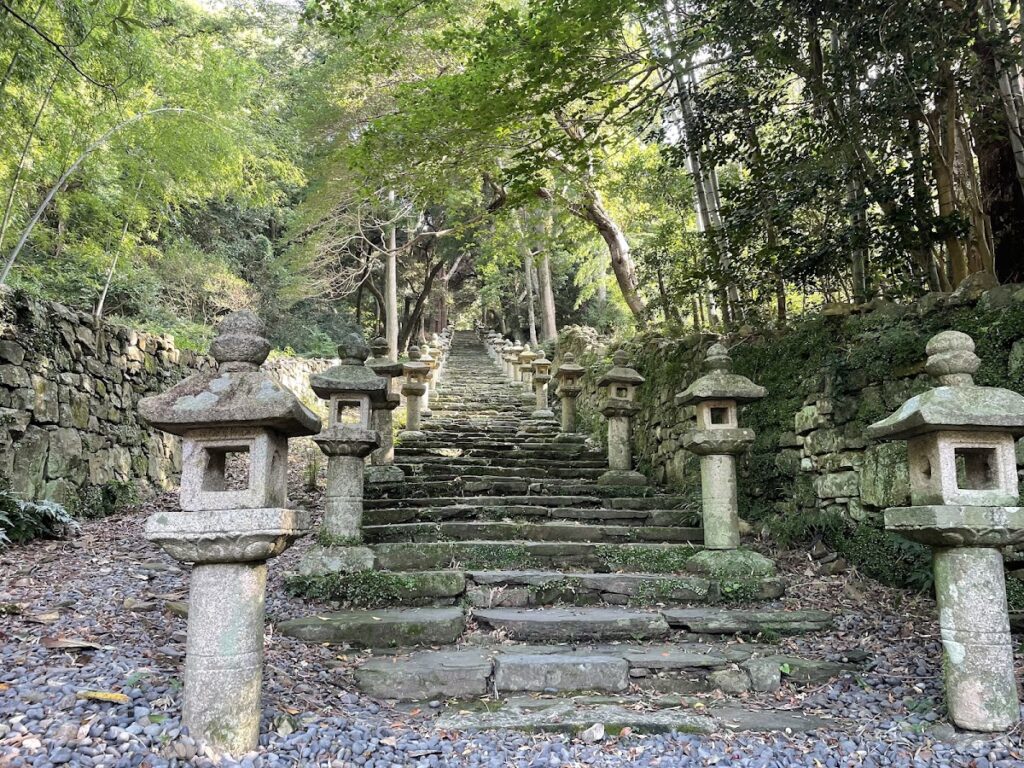
Within the temple grounds, there are 132 stone steps called Hyakugangi, at the top where the tombs of successive lords stand quietly. It is a must-see spot for tourists visiting Tsushima, and especially recommended for those interested in Japanese history and culture.
History of Banshoin Temple
Background of its Founding
The early Edo period, when Banshoin Temple was founded, was a crucial turning point for the Tsushima So family. So Yoshitomo dedicated himself to restoring Japan-Korea relations after Toyotomi Hideyoshi’s invasion of Korea (the Bunroku-Keicho War) and established the Tsushima Domain under the Tokugawa Shogunate.
After Yoshitomo’s death, his son, Yoshinari, built Banshoin Temple to honor his father’s achievements and enshrine his spirit. The temple’s name, “Bansho,” originates from Yoshitomo’s posthumous Buddhist name, “Banshoin-dono.” This founding established the temple’s status as the So family’s ancestral temple, and subsequent lords of the domain were also buried here.
Development during the Edo Period
Throughout the Edo period, Banshoin Temple flourished under the patronage of the Tsushima Domain. As the ancestral temple of the domain lord, it enjoyed high status, numerous temple buildings were constructed, and its temple grounds expanded.
Of particular note is the unique position of the Tsushima Domain, which held a monopoly on diplomacy and trade with Korea. Korean envoys sometimes visited Banshoin Temple, and it functioned as a stage for Japan-Korea exchange. Therefore, cultural artifacts demonstrating exchange with the Korean Peninsula remain on the temple grounds.
After the Meiji Restoration
With the abolition of the feudal domain system following the Meiji Restoration, Banshoin Temple underwent significant changes. Although it lost the patronage of the main family, it continued to exist as a temple of high historical and cultural value.
After World War II, part of the temple grounds was renovated, and it gained attention as a tourist destination. Currently, it is one of Tsushima’s leading tourist spots, attracting many worshippers and tourists throughout the year.
Highlights of Banshoin Temple
Hyakugangi (Hundred Steps)
The first thing you see when visiting Banshoin Temple is the stone staircase called Hyakugangi. This staircase has 132 steps, and the name “Hyakugangi” comes from the meaning of “more than 100 steps (steps).”
On both sides of the stone steps stand rows of cedar trees hundreds of years old, creating a solemn atmosphere. Especially in the early morning and at dusk, the sunlight filtering through the trees is beautiful, making it a popular spot for photography.
Climbing the stone steps itself is an experience akin to a spiritual discipline, and the sense of accomplishment upon reaching the top, along with the tranquility of the grounds, leaves a deep impression on visitors.
The Sō Family Mausoleum
At the top of the Hyakugangi staircase lies the mausoleum of the successive lords of the Sō family. A total of 132 tombstones, belonging to the lords from the first to the 20th generation and their families, are neatly arranged.
These tombstones feature a unique design influenced by Korean style, differing in shape from typical Japanese tombstones. The sight of these approximately 2-meter-tall tombstones lined up in order is breathtaking, telling the story of the deep historical connection between Tsushima and the Korean Peninsula.
The mausoleum is designated a national historical site and is a valuable cultural asset for learning about Japanese history. The tranquil cemetery is a sacred space that evokes the weight of history and the passage of time.
Main Hall and Temple Grounds Architecture
The main hall of Banshoin Temple is a magnificent building exhibiting the characteristics of Soto Zen temple architecture. Inside, the principal image, a statue of Shakyamuni Buddha, is enshrined, allowing visitors to quietly offer their prayers.
Besides the main hall, the temple grounds also contain buildings such as the priest’s quarters (kuri) and bell tower, preserving the style of Edo period temple architecture. These buildings, while undergoing repeated restorations, retain the atmosphere of their founding.
Temple Crest of the Three-Leaf Aoi
The temple crest of Banshoin Temple is the “three-leaf hollyhock,” the family crest of the Tokugawa family. This signifies the special trust the main family enjoyed from the Tokugawa shogunate, and it was a crest not permitted for use by ordinary daimyo families.
This temple crest can be seen throughout the temple grounds, serving as important evidence of the special relationship between the main family and the Tokugawa shogunate.
Seasonal Scenery
Banshoin Temple is a place where you can enjoy the beautiful scenery of each season.
In Spring, cherry blossoms bloom, painting the area around the stone steps in a soft pink hue. In the season of fresh greenery, the cedar trees display a vibrant green, and the air is filled with freshness.
In Summer, deep green covers the temple grounds, and the cool shade of the trees welcomes visitors. Visiting the temple amidst the sound of cicadas evokes the atmosphere of a Japanese summer.
In Autumn, the autumn leaves are beautiful, and the scenery around Hyakuganki is particularly magnificent. The leaves, colored in red and yellow, adorn the stone steps, creating a photogenic scene.
In Winter, the temple grounds, covered in snow, exude a solemn atmosphere. Tsushima has a relatively mild climate, but on cold days, frost can form, creating a fantastical landscape.
Cultural Properties of Banshoin Temple
National Historic Site
The So family burial grounds are designated as a national historic site. This recognizes the importance of the role played by the Tsushima So family in Japanese history and the cultural value of the burial grounds.
Korean-Style Tombstones
The design of the tombstones shows a strong influence from the Korean Peninsula. This reflects the history of Tsushima’s function as a bridge between Japan and Korea. The shape, arrangement, and decoration of the tombstones exhibit Korean-style characteristics, making them valuable evidence of cultural exchange.
Temple Treasures
Banshoin Temple houses items related to successive feudal lords. These include calligraphy, paintings, Buddhist implements, and ancient documents, providing valuable resources for studying the history of Tsushima.
The Tsushima So Family and Banshoin Temple
History of the So Family
The So family ruled Tsushima for approximately 700 years, from the Kamakura period to the Meiji Restoration. Especially during the Edo period, the So family, as lords of Tsushima Domain, played a crucial role in exclusively handling diplomacy and trade between Japan and Korea.
The So family held a special status known as “Kokushu” (provincial lord), possessing privileges different from other daimyo (feudal lords). This was due to Tsushima’s location on Japan’s border and its importance as a diplomatic hub.
The Window of Japan-Korea Diplomacy
During the Edo period, under Japan’s isolationist policy, the Tsushima Domain maintained formal diplomatic relations with Korea. The So family was responsible for receiving Korean envoys and managing trade, contributing to the maintenance of peaceful relations between the two countries.
Manshoin Temple functioned as the spiritual pillar of the So family, underpinning these diplomatic activities. Successive lords of the domain worshipped their ancestors at Manshoin Temple, praying for the peace and prosperity of the domain and the smooth functioning of Japan-Korea relations.
The So Family’s Cultural Contributions
The So family also dedicated themselves to the promotion of Tsushima’s culture. Manshoin Temple played a central role in this, serving as a center for the dissemination of Buddhist culture, education, and cultural exchange.
Access Information
How to Get to Tsushima
By Plane
- Approximately 35 minutes from Fukuoka Airport to Tsushima Yamaneko Airport
- Approximately 40 minutes from Nagasaki Airport to Tsushima Yamaneko Airport
By Ferry
- Approximately 2 hours 15 minutes by high-speed boat or 4 hours 30 minutes by ferry from Fukuoka (Hakata Port) to Tsushima (Izuhara Port)
- Approximately 4 hours 30 minutes from Nagasaki Port to Tsushima (Izuhara Port)
Access to Banshoin Temple
From Izuhara Port
- Approximately 15 minutes on foot
- Approximately 5 minutes by taxi
From Tsushima Yamaneko Airport
- Approximately 30 minutes by car
- Take the bus bound for Izuhara, get off at “Izuhara” bus stop, and walk for 15 minutes
Address
〒817-0016 192 Izuhara Nishizato, Izuhara-cho, Tsushima City, Nagasaki Prefecture
Parking
Free parking available on the temple grounds (approximately 20 regular cars)
Visiting Information
Visiting Hours
- Regular: 8:00 AM – 5:00 PM (may vary depending on the season)
- Open all year round (however, visits may be closed for memorial services, etc.)
Admission Fee
- Adults: 300 yen
- Junior and Senior High School Students: 150 yen
- Elementary School Students: 100 yen
*Group discounts available (20 or more people)
Estimated Time Required
If you want to leisurely explore the temple grounds, approximately 40 minutes to 1 hour is a good guideline. A common route involves climbing the Hyakugangi stone steps, visiting the graves, and paying respects at the main hall.
Manners and Points for Visiting
Clothing and Preparation
Since you will be climbing the Hyakugangi stone steps, we recommend wearing comfortable shoes. Please be especially careful during rainy weather and winter, as the stone steps can become slippery.
In summer, the sun is strong, so it’s a good idea to bring a hat, parasol, and drinks. In winter, please dress warmly.
Photography
Photography is generally permitted on the temple grounds, but photography inside the main hall and during memorial services is prohibited. Also, please maintain silence and take respectful photographs in the cemetery.
Etiquette for Visiting
Banshoin Temple is a Soto Zen temple, so please follow the general etiquette for visiting a Buddhist temple. Before the main hall, clasp your hands together and quietly offer your prayers.
In the cemetery, it is important to remember to show respect to the deceased and observe quietly.
Nearby Tourist Attractions
Izuhara Townscape
Banshoin Temple is located in Izuhara, the central town of Tsushima. Izuhara retains the atmosphere of a castle town, with historical buildings and sites scattered throughout. Exploring Izuhara in conjunction with Banshoin Temple will give you a deeper understanding of Tsushima’s history.
Tsushima Historical and Folk Museum
Located within walking distance of Banshoin Temple, this facility offers insights into Tsushima’s history and culture. It displays materials related to the So family and the history of Japan-Korea exchanges. Visiting before or after your visit to Banshoin Temple will deepen your understanding.
Kaneshi Castle Ruins
These are the ruins of Kaneshi Castle, the residence of the So family. The castle gate and gardens have been restored, and admission is free. It’s approximately a 10-minute walk from Banshoin Temple.
Monument to the Korean Envoys
Located near Izuhara Port, this monument commemorates the history of Japan-Korea diplomacy during the Edo period. You can learn about the history of the Korean envoys’ visit to Tsushima.
Best Season to Visit Banshoin Temple
Spring (March-May)
The temple grounds are beautifully adorned with cherry blossoms. The best time to visit is especially from early to mid-April. The season of fresh greenery is also refreshing, and the pleasant weather makes it ideal for sightseeing.
Summer (June-August)
The lush green grounds of the temple feel relatively cool even in summer. However, due to the frequent rain during the rainy season (June), caution is advised regarding the weather.
Autumn (September-November)
The autumn foliage season is one of the most beautiful times to visit Banshoin Temple. The leaves are at their peak from mid- to late November. The weather is mild and suitable for sightseeing.
Winter (December-February)
This is a season with fewer tourists, allowing for a peaceful visit. While Tsushima is relatively mild, there are still cold days, so warm clothing is necessary.
Banshoin Temple Events and Activities
Spring and Autumn Grand Festivals
Grand festivals are held twice a year, in spring and autumn. Special memorial services are held during these times, attended by descendants and related parties of the head family. General visitors are welcome, but silence is required during the memorial services.
Tsushima Izuhara Port Festival
The Izuhara summer festival, held in August, envelops the area around Banshoin Temple in a festive atmosphere. Visiting in conjunction with this local traditional event is a wonderful experience.
Tsushima Sightseeing and Banshoin Temple
Model Course
Half-Day Course
- Visit Banshoin Temple (1 hour)
- Visit Tsushima Historical and Folk Museum (30 minutes)
- Stroll around Kaneshi Castle Ruins (30 minutes)
- Stroll through Izuhara townscape and lunch (1 hour)
Full-Day Course
Morning: Banshoin Temple, Kaneshi Castle Ruins, Historical and Folk Museum
Afternoon: Watatsumi Shrine, Eboshidake Observatory, Tsushima Wildlife Conservation Center
Tsushima Local Products
When visiting Banshoin Temple, please also enjoy Tsushima’s local products. Tsushima soba noodles, Tsushima honey, seafood (conger eel, squid, etc.), and Tsushima soba shochu are famous.
Fun Facts about Banshoin Temple
Meaning of the Number of Steps in the Hyakugangi Steps
The number of steps, 132, matches the total number of tombstones in the family cemetery. This is not a coincidence, but is believed to have been intentional during the design process.
Age of the Cedar Trees
Among the cedar trees lining both sides of the Hyakugangi Steps, some are over 300 years old. These giant trees are living witnesses that have watched over the history of Banshoin Temple.
Cultural Exchange with Korea
Not only the design of the tombstones, but also the layout of the temple grounds and the architectural style show influences from the Korean Peninsula. This indicates that Tsushima is a unique region where Japanese and Korean cultures have blended.
Points to Note When Visiting Banshoin Temple
Consideration of Physical Fitness
Climbing the 132 stone steps requires a certain level of physical fitness. Those with health concerns or elderly visitors are advised to climb slowly at their own pace. There are places to rest along the way.
Weather Precautions
The stone steps become slippery in rainy weather. Visiting on rainy days requires extra caution. Also, be aware that branches may fall from the cedar trees during strong winds.
Insect Control
During the summer months, there are many insects such as mosquitoes, so we recommend using insect repellent spray. Insects are especially abundant in the early morning and evening.
Summary
Banshoin Temple is an important temple symbolizing the history and culture of Tsushima. With a history of over 400 years as the family temple of the So clan, it boasts numerous attractions, including the Hyakugangi stone steps, the tombs of successive feudal lords, and beautiful grounds.
It is a must-see spot when visiting Tsushima and a valuable place to learn about the historical connections between Japan and the Korean Peninsula. Reflecting on history in a solemn atmosphere and quietly offering prayers will provide a truly refreshing experience.
Why not spend some time relaxing at Banshoin Temple while enjoying Tsushima’s rich nature and historical heritage? It will surely be an unforgettable memory.

