Daihoji Temple Complete Guide | History, Highlights, and Access Information for the 44th Temple of the Shikoku 88 Temple Pilgrimage
About Daihoji Temple
Daihoji Temple is a Shingon sect (Toyozan branch) temple located in Sugou, Kumakogen-cho, Kamiukena-gun, Ehime Prefecture. Its formal names are Sugouzan and Daikakuin, and it enshrines an eleven-faced Kannon Bodhisattva as its principal image.
As the 44th temple of the Shikoku 88 Temple Pilgrimage, it is known as the “Middle Temple” due to its location exactly halfway along the pilgrimage route, and holds special significance for pilgrims. Nestled in the mountains at an altitude of 579 meters, the temple grounds are surrounded by giant cedar trees hundreds of years old, creating a sacred space imbued with deep silence and a dignified atmosphere.
Embraced by the rich nature of the Shikoku Mountains, this temple offers an atmosphere of another world, far removed from the hustle and bustle of the city, and has provided peace of mind to many visitors.
History of Daihoji Temple
Legend of the Founding and Construction
An interesting legend surrounds the founding of Daihoji Temple. According to temple tradition, two brothers, Myojin Ukyo and Hayato, hunters who lived in this area, witnessed a mysterious light while hunting one day. Following the source of the light, they found a beautiful eleven-faced Kannon Bodhisattva standing there.
Deeply moved by this miraculous encounter, the brothers repented of their killing and decided to dedicate themselves to Buddhism. They built a temple to enshrine this Kannon statue, and this is considered the beginning of Daihoji Temple. The founders are said to be the Myojin Ukyo and Hayato brothers, and the temple developed as a center of local faith.
Connection with Kobo Daishi
In 807 (Daido 2), Kobo Daishi (Kukai), who was traveling around Shikoku, visited this area. It is said that Kobo Daishi (Kukai) was so impressed by the miraculous power of the Kannon statue discovered by the Myojin Ukyo and Hayato brothers that he himself carved an eleven-faced Kannon Bodhisattva statue.
This Kannon statue, attributed to Kobo Daishi, became the current principal image of the temple, and Daiboji Temple was designated as one of the 88 sacred sites of Shikoku. It is believed that Kobo Daishi practiced asceticism here, laying the foundation for this sacred site to save many people.
Historical Changes
From the medieval to the early modern period, Daiboji Temple developed under the patronage of local influential figures and feudal lords. Although it was caught in the ravages of war during the Sengoku period (Warring States period), it was rebuilt with the support of the local people’s faith and has continued to uphold its religious traditions to this day.
In 1934 (Showa 9), a gilded bronze Kannon statue was unearthed from the mountainside within the temple grounds. This discovery, confirming the historical importance of Daiboji Temple, attracted archaeological attention.
Highlights of the Temple Grounds
Approach and Temple Gate
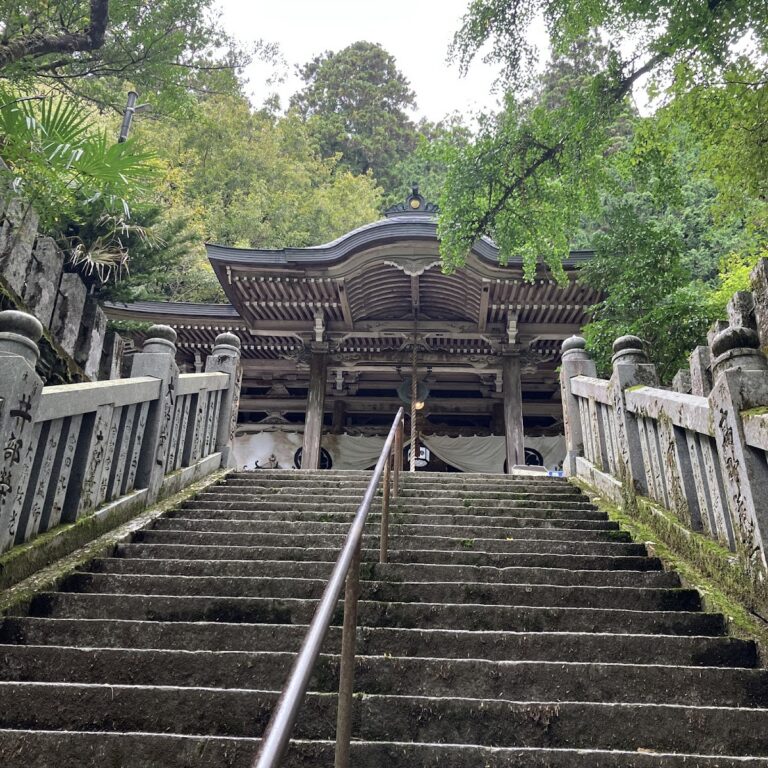
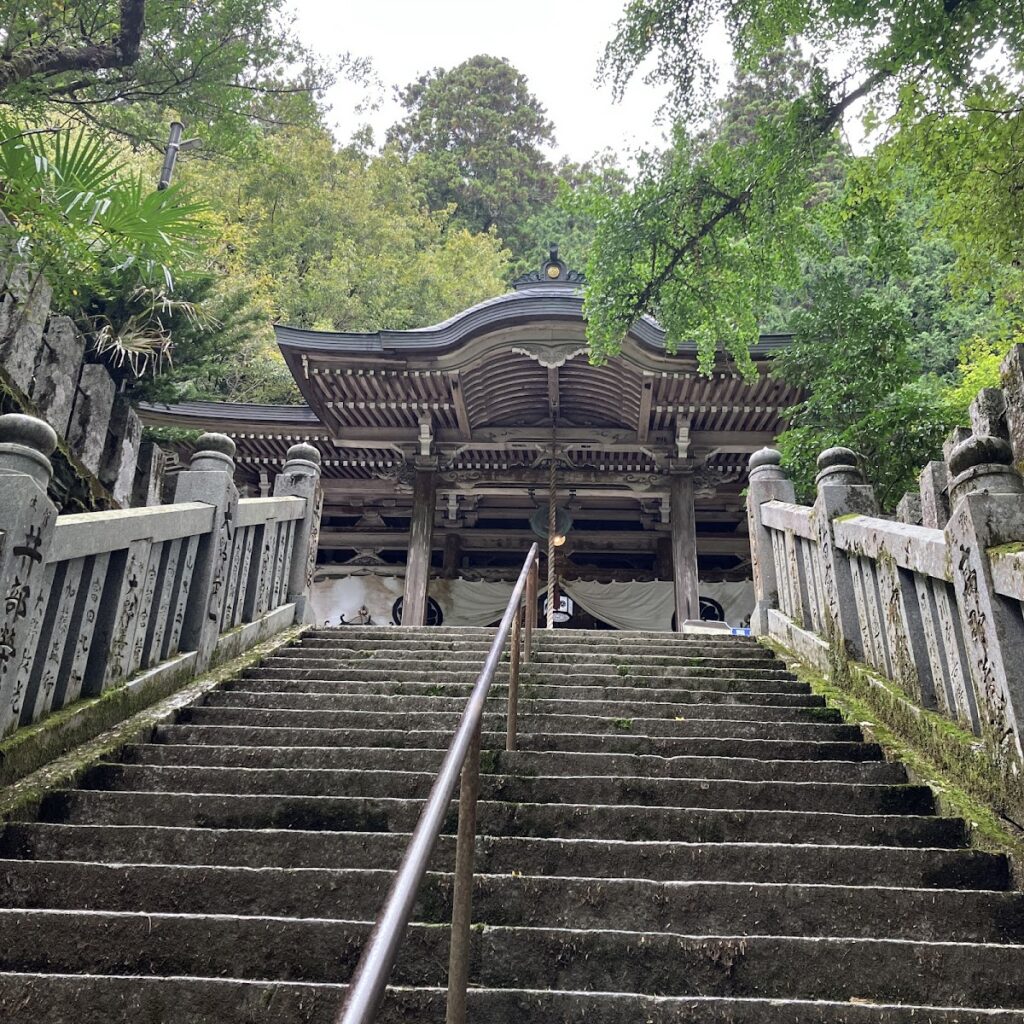
The approach to Daihoji Temple is a majestic path lined with giant cedar trees, some hundreds of years old. As you ascend the moss-covered stone steps, you are transported to a world of tranquility, far removed from the hustle and bustle of everyday life. The path, bathed in dappled sunlight, displays different expressions in each season, captivating visitors.
Passing through the temple gate, an open space unfolds, offering a panoramic view of the entire temple grounds. The gate, though simple, possesses a dignified structure, conveying the dignity of a sacred site.
Main Hall
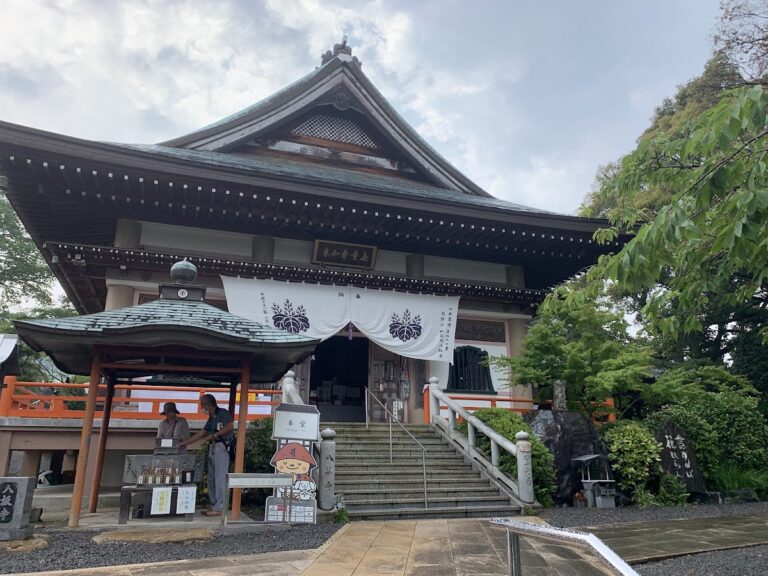
The main hall is located in the center of the temple grounds and houses the principal image, the Eleven-Faced Kannon Bodhisattva. The hall is enveloped in a solemn atmosphere, and many worshippers offer their prayers. The architectural style of the main hall is based on traditional Japanese architecture, with meticulous attention to detail.
The principal image, the Eleven-Faced Kannon Bodhisattva, is considered a hidden Buddha and is usually enshrined in a shrine, but its compassionate form has attracted many worshippers.
Daishi Hall
Adjacent to the main hall stands the Daishi Hall, which houses a statue of Kobo Daishi. Pilgrims also visit here to express their gratitude to the Daishi and pray for safe passage. Many offerings and origami cranes adorn the front of the Daishi Hall, testifying to the depth of people’s faith.
Bell Tower and Bell
A magnificent bell tower stands on the temple grounds, and the sound of its bell resonates beautifully through the mountains. Visitors can ring the bell, and its pure sound is believed to purify the mind and dispel worldly desires.
Temple Lodgings
Daihoji Temple has temple lodgings, where pilgrims and general visitors can stay. At the temple lodging, you can enjoy vegetarian cuisine and rest your mind and body in a tranquil environment. You can also participate in morning prayers, making it a popular place for a deeper religious experience.
Nature within the Temple Grounds
The grounds of Daihoji Temple are surrounded by the rich nature of the Shikoku Mountains. In spring, the fresh greenery is beautiful; in summer, the deep green provides coolness; in autumn, the autumn leaves color the grounds; and in winter, a serene snowscape unfolds. The giant cedar trees, hundreds of years old, exude an overwhelming presence, making visitors feel the grandeur of nature.
Significance as a Middle Temple
Daihoji Temple is called a “middle temple” because it is located exactly halfway through the Shikoku 88 Temple Pilgrimage. It symbolically marks the halfway point of the pilgrimage, which began at Temple No. 1, Ryozenji Temple, to Temple No. 44, Daihoji Temple.
For many pilgrims, reaching Daihoji Temple is a major milestone. This place holds significant spiritual meaning as a place to reflect on the journey so far and renew one’s resolve for the remaining half of the journey.
Located approximately 60-70 kilometers from the previous temple, Akashi-ji (Temple No. 43), it is known as a difficult section that takes over 20 hours for pilgrims on foot. Reaching Daibo-ji after this long journey provides a special sense of accomplishment and relief.
Cultural Properties and Temple Treasures
Principal Image: Eleven-Faced Kannon Bodhisattva
The principal image of Daibo-ji, the Eleven-Faced Kannon Bodhisattva, is a hidden Buddha said to have been carved by Kobo Daishi. The Eleven-Faced Kannon is considered a symbol of compassion, looking out in all directions to save all sentient beings, and is especially believed to offer blessings for healing illnesses and protection from disaster.
Gilt Bronze Kannon Statue
The gilded bronze Kannon statue, unearthed in 1934 from the temple grounds, is a valuable cultural asset that tells the history of Daihoji Temple. This statue holds significant academic value as it reveals traces of faith from ancient to medieval times.
Other Temple Treasures
Daihoji Temple houses many temple treasures, including successive sutra books, ancient documents, and Buddhist implements. These are valuable historical materials that demonstrate the temple’s long history and the depth of local faith.
Annual Events
Daihoji Temple holds various Buddhist services and events throughout the year.
New Year’s: The temple is bustling with many worshippers during the New Year’s visit and the Shusho-e ceremony.
Spring and Autumn Equinox: Memorial services for ancestors are held.
Kobo Daishi Memorial Service: A memorial service is held around the 21st day of the 3rd month of the lunar calendar, the anniversary of Kobo Daishi’s death.
Obon Festival: During the Obon period, memorial services are held to honor the spirits of ancestors.
Many local people participate in these events, and the temple plays a vital role as a place of worship.
Preceding and Following Temples
Knowing about the preceding and following temples will make planning your pilgrimage easier when visiting Daihoji Temple.
Temple No. 43, Akashi-ji: This temple is located in Seiyo City, Ehime Prefecture, and is the temple before Daihoji Temple. The journey from here to Daihoji Temple is a long one, approximately 60-70 kilometers.
Temple No. 45, Iwaya-ji: This is the next temple after Daihoji Temple, located in Kumakogen Town. It is known as a cave temple reached by climbing a steep mountain path.
Access by Public Transportation
Access by Public Transportation
By Train and Bus:
- Take the Iyo Railway Bus bound for “Kumakogen” from JR Matsuyama Station.
- Get off at the “Kumakogen Junior High School” bus stop (approximately 1 hour 20 minutes).
- From the bus stop, it’s about a 15-minute walk to Daihoji Temple.
Since bus services are limited, it is recommended to check the timetable in advance.
Access by Car
From Matsuyama:
- Via National Route 33 from Matsuyama IC on the Matsuyama Expressway.
- Approximately 50 minutes.
- There is a parking lot for visitors on the temple grounds (free).
From Kochi:
- Head north on National Route 33.
- Travel time varies depending on your starting point.
For Pilgrimage on Foot
The distance from the previous temple, Akashi-ji, is approximately 60-70 kilometers, and the journey takes 2-3 days on foot. There are accommodations and rest areas along the way, so it’s important to plan your steps carefully.
Etiquette and Manners for Visiting a Temple
Basic Etiquette for Visiting a Temple
- Bow at the Temple Gate: Before entering the temple grounds, bow and clasp your hands together at the temple gate.
- Purify at the Water Basin: Purify your hands and mouth.
- Visit the Main Hall: Place your votive slip, offer candles and incense, and chant sutras.
- Visit the Daishi Hall: Visit the hall in the same way as the main hall.
- Receive a Stamp at the Sutra Office: Receive a stamp in your pilgrimage notebook.
Clothing and Belongings
While it is desirable to wear pilgrimage attire, it is acceptable for general visitors to wear everyday clothes. However, avoid revealing clothing and dress respectfully.
Belongings include a pilgrimage notebook, prayer beads, votive slips, and offerings.
Regarding Photography
Photography is generally permitted on the temple grounds, but consideration must be given to avoiding disturbing the interior of the main hall or other visitors. Please refrain from taking photographs, especially during religious ceremonies.
Nearby Attractions
Temple No. 45, Iwaya-ji Temple
Located approximately 10 kilometers from Daiho-ji Temple, Iwaya-ji Temple is a mystical temple built in a cave in the rugged mountains. Many pilgrims visit both temples, and it is known as one of the most impressive temples on the Shikoku Pilgrimage.
Tourist Attractions in Kumakogen Town
Omogo Gorge: A scenic spot boasting one of Japan’s most beautiful gorges, where you can enjoy the spectacular scenery created by the emerald green stream and strangely shaped rocks.
Kumakogen Astronomical Observatory: A facility where you can observe the beautiful starry sky unique to Kumakogen Town, which is at a high altitude.
Michi-no-Eki Tenku no Sato Sansan: A rest stop where you can purchase local specialties and fresh vegetables.
Accommodation Information
Daihoji Temple’s Temple Lodging
Daihoji Temple has temple lodgings available by reservation. Enjoying vegetarian cuisine and participating in morning services offers a deeper religious experience. Recommended for those who want to rest their mind and body in a quiet environment.
Nearby Accommodations
Kumakogen Town offers a variety of accommodations, including guesthouses, inns, and business hotels. Many facilities have a long history as pilgrim lodgings and warmly welcome pilgrims.
Experiences at Daihoji Temple
Sutra Copying/Buddhist Image Copying Experience
With prior reservation, it may be possible to experience sutra copying or Buddhist image copying. Taking up a brush in a quiet environment can bring spiritual peace.
Morning Services
If you stay at the temple lodgings, you can participate in the early morning service. As the chanting resonates throughout the temple grounds, you can calm your mind while feeling the refreshing morning air.
Strolling Through the Temple Grounds
Even just strolling through the natural surroundings of the temple grounds offers a truly refreshing experience. Walking through the forest of giant cedars and listening to the birdsong, you can enjoy a tranquility unattainable in the city.
The History of the Shikoku Pilgrimage and Daiboji Temple
The Shikoku 88 Temple Pilgrimage, a pilgrimage following in the footsteps of Kobo Daishi, boasts a history of over a thousand years. Daiboji Temple, as a midpoint on this pilgrimage, has long welcomed many pilgrims.
During the Edo period, the pilgrimage spread among commoners, and Daiboji Temple was bustling with many visitors. Pilgrimage diaries and travelogues from that time record experiences at Daiboji Temple, revealing its importance as a sacred site.
Even today, many people visit the temple in various forms—walking, driving, or taking the bus—each with their own thoughts and feelings.
About Kumakogen Town
Kumakogen Town, where Daihoji Temple is located, is a plateau town situated almost in the center of Ehime Prefecture, within the Shikoku Mountains. It is characterized by its high altitude and cool climate even in summer, and is sometimes called “Shikoku’s Karuizawa.”
It is a region where forestry thrives and is known as a source of high-quality timber. Highland vegetables are also cultivated, and the town boasts one of the highest tomato production volumes in the prefecture.
With its rich natural environment and numerous historical temples and shrines, Kumakogen Town is an attractive tourist destination and well worth visiting along with Daihoji Temple.
Visitor Feedback
Many visitors to Daihoji Temple have shared comments such as, “It’s quiet and peaceful,” “The forest of giant cedars is overwhelming,” and “It’s deeply moving as a mid-point temple on the pilgrimage route.”
Many pilgrims, especially those walking the pilgrimage, comment on the exceptional sense of accomplishment upon reaching this point after the long journey from the previous temple, and how the halfway point motivated them to continue on.
Those who stayed at the temple lodgings gave positive feedback, such as “The vegetarian meals were delicious,” “The morning service cleansed my soul,” and “I slept well in the quiet environment.”
Summary
Daihoji Temple is the 44th temple of the Shikoku 88 Temple Pilgrimage, holding a special position as a “middle temple.” Located in the mountains of Sugao, Kumakogen-cho, Kamiukena-gun, Ehime Prefecture, at an altitude of 579 meters, the temple grounds, surrounded by centuries-old cedar trees, are enveloped in a deep silence and sacred atmosphere.
With a legend of its founding by the Myojin brothers, Ukyo and Hayato, and the creation of the principal image by Kobo Daishi, it has attracted the faith of people for over a thousand years. The temple has well-equipped facilities including a main hall, a Daishi hall, and temple lodgings, warmly welcoming visitors. As a midpoint on the Shikoku pilgrimage, Daiboji Temple is a significant milestone for many pilgrims, a place to reflect on their journey so far and renew their resolve for the remainder of their trip.
Located about 50 minutes by car from Matsuyama city, and accessible by bus and on foot, it is also close to tourist attractions such as Omogokei Gorge. Whether you’re planning a Shikoku pilgrimage, seeking a peaceful environment to calm your mind, or simply want to visit a historic temple, Daiboji Temple is well worth a visit.
Why not find peace of mind and spiritual fulfillment at Daiboji Temple, nestled amidst the rich natural beauty of the Shikoku Mountains?