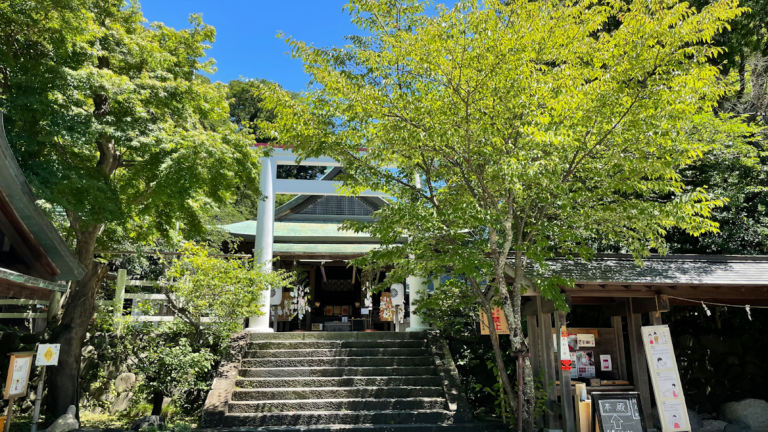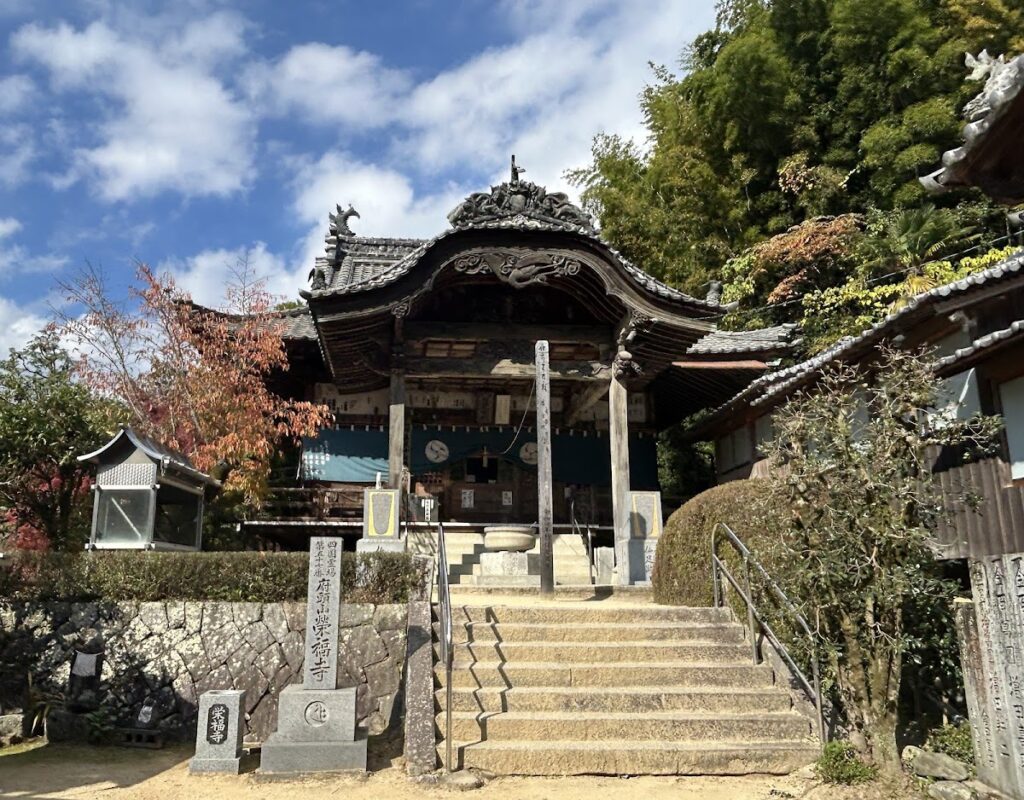
Complete Guide to Eifuku-ji Temple: A Thorough Explanation from the Legendary Grand Temple of Kamakura to Eifuku-ji Temples Nationwide
The name Eifuku-ji (永福寺) refers to several temples located throughout Japan. Among them, the most historically significant is the Eifuku-ji Temple ruins in Kamakura City, Kanagawa Prefecture, built by Minamoto no Yoritomo in the early Kamakura period. This article provides a detailed explanation of the history, architecture, and cultural significance of Eifuku-ji Temples throughout Japan, focusing on the Kamakura Eifuku-ji Temple ruins.
History and Importance of the Kamakura Eifuku-ji Temple Ruins
Background of Founding by Minamoto no Yoritomo
The Eifuku-ji Temple ruins, located in Nikaido, Kamakura City, are the remains of a grand temple built by Minamoto no Yoritomo in 1192. Behind the construction of this temple were Yoritomo’s deep remorse and desire for memorial services.
Yoritomo suffered many casualties during the Oshu War (1189) when he defeated Fujiwara no Yasuhira. Furthermore, in the preceding Genpei War, many warriors and soldiers, including his younger brother Minamoto no Yoshitsune, lost their lives. It is said that Yoritomo feared the vengeful spirits of those who died in these battles and built Eifuku-ji Temple to appease them.
A magnificent temple complex modeled after the two-story main hall of Chuson-ji Temple
The architecture of Eifuku-ji Temple was modeled after the two-story main hall (Daichoju-in) of Chuson-ji Temple in Hiraizumi, Oshu. Yoritomo was deeply impressed by the magnificent temple architecture of Hiraizumi, which he saw during the Oshu War, and decided to build a similar grand temple in Kamakura.
The central temple complex consisted of the following three main halls:
- Nikaido (Main Hall): The central building, a magnificent two-story structure
- Amida-do: A hall dedicated to Amida Buddha, located on the west side
- Yakushi-do: A hall dedicated to Yakushi Buddha, located on the east side
These halls were situated within a Pure Land style garden centered around a pond, boasting a scale that made it one of the three major temples and shrines of Kamakura, along with Tsurugaoka Hachimangu Shrine and Shōchōjuin Temple.
The Role of Eifuku-ji Temple in the Kamakura Shogunate
Eifuku-ji Temple was not merely a memorial temple, but an important religious facility where official ceremonies of the Kamakura Shogunate were held. The *Azuma Kagami* contains numerous records of successive shoguns, including Yoritomo, performing memorial services and rituals at Eifuku-ji Temple.
In particular, prayers were offered at Eifuku-ji Temple for annual memorial services, memorial ceremonies, and even during important political decisions of the shogunate, demonstrating its role as a spiritual pillar of the Kamakura Shogunate. ### A History of Decline and Abandonment
Eifuku-ji Temple flourished throughout the Kamakura period, but gradually declined after the fall of the Kamakura Shogunate. A fire in 1405 destroyed its main buildings, and it was never rebuilt.
From the Muromachi period onward, Eifuku-ji Temple completely fell into disuse, and its magnificent temple complex was buried in history. By the Edo period, almost all traces of the temple had been lost, and it was only remembered as a “phantom great temple.”
Excavation and Restoration Project of the Eifuku-ji Temple Site
Full-Scale Excavation Survey Begins in 1983
Full-scale academic research on the Eifuku-ji Temple site began in 1983. Excavations conducted by the Kamakura City Board of Education gradually revealed the true nature of Eifuku-ji Temple, which had previously been considered a “phantom.”
The excavation yielded the following important discoveries:
- Remains of the foundations of three main temple buildings
- Remains of a garden centered around a pond
- Architectural components such as foundation stones and roof tiles
- Artifacts such as ceramics and Buddhist implements
These excavation results provided detailed information about the scale, structure, and architectural style of Eifuku-ji Temple.
Designation as a Historic Site and Preservation and Development
Following the results of the excavation, the Eifuku-ji Temple site was designated a national historic site. Subsequently, Kamakura City began a development project aimed at preserving and utilizing the historic site.
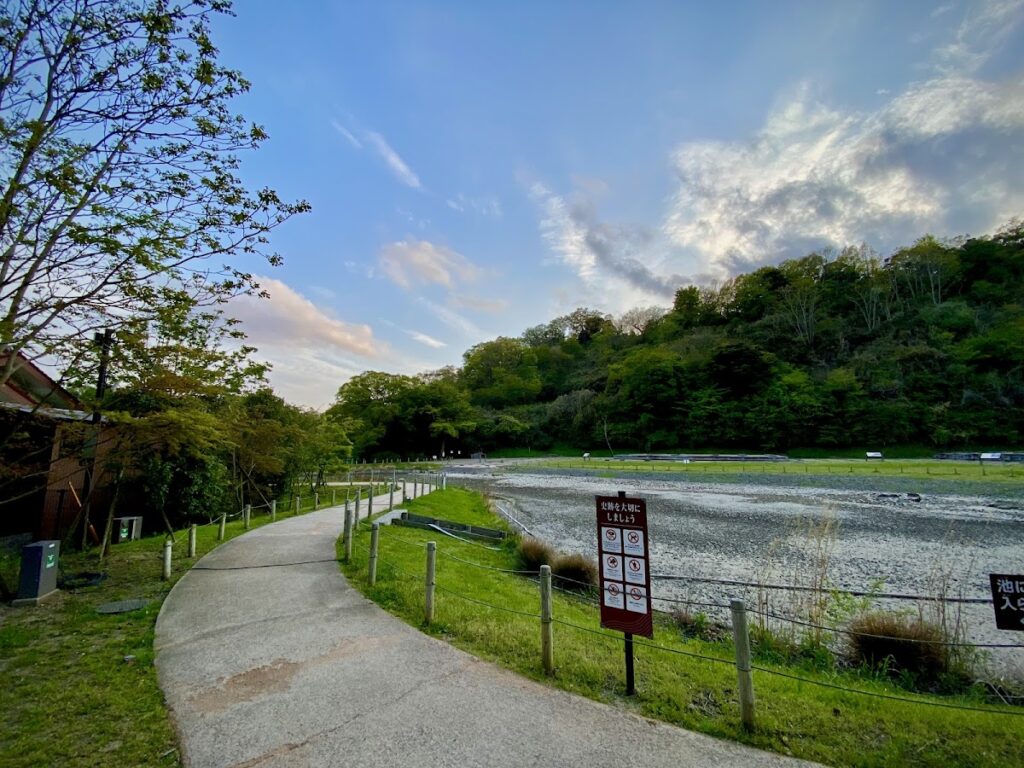
The development project involved protecting the remains revealed by the excavation, while restoring the foundations and pond to allow for a visual understanding of the original temple layout. While the buildings themselves have not been restored, the outlines of the foundations and the locations of the foundation stones are marked on the ground surface, allowing visitors to imagine the magnificent appearance of the temple in its heyday.
Open to the Public as a Historical Park
In July 2017, the Eifuku-ji Temple site was opened to the public as a vast historical park covering approximately 16,000 square meters. Currently, it is a popular tourist spot and historical learning site in Kamakura, attracting many visitors.
The park features exhibits of remains revealed through archaeological excavations and panels explaining the history of Eifuku-ji Temple, allowing visitors to experience Kamakura-period temple architecture and the era of Minamoto no Yoritomo.
Access and Highlights of Eifuku-ji Temple Ruins
Access Methods
Public Transportation:
- Approximately 10 minutes by Keikyu Bus bound for “Daitomiya” from the East Exit of JR Kamakura Station, then a 5-minute walk from the “Daitomiya” bus stop.
- Approximately 5 minutes on foot from Kamakura-gu Shrine.
Location: Nikaido, Kamakura City, Kanagawa Prefecture
Points to Note During Your Visit
- Restored Foundation: The foundations of Nikaido, Amida-do, and Yakushi-do have been restored, allowing you to experience the scale of the temple in its heyday.
- Pure Land Style Garden: The remains of the garden, centered around a pond, allow you to feel the aesthetic sensibilities of the Heian and Kamakura periods.
- View: There is an observation point on a small hill where you can overlook the entire historical site and get a panoramic view of the temple layout.
- Nearby Historical Sites: Kamakura-gu Shrine and Zuisen-ji Temple are among the many historical sites from the Kamakura period scattered around the area.
Notes for Visitors
- Opening Hours: 9:00 AM – 5:00 PM (Hours may vary depending on the season)
- Admission Fee: Free
- Parking: No dedicated parking (Please use nearby paid parking lots)
- Estimated Visit Time: 30 minutes to 1 hour
Eifuku-ji Temples Across Japan
The name “Eifuku-ji” exists in various locations throughout Japan, not just Kamakura. Each temple has its own unique history and characteristics.
Eifuku-ji Temple (Takoyakushi-do) in Kyoto City
Eifuku-ji Temple, located in Shinkyogoku, Nakagyo-ku, Kyoto City, is a temple of the Jodo-shu Seizan Fukakusa sect and is widely known as “Takoyakushi-do.”
History and Origin:
- Founded in 1181 (Yōwa 1)
- Mountain name: Jōruri-zan
- Principal image: Yakushi Nyorai (Tako Yakushi)
The legend of “Tako Yakushi,” which gives the temple its name, is based on the story of a monk who bought an octopus for his sick mother. Although he was forbidden from killing, he was reprimanded for possessing the octopus. However, through the protection of Yakushi Nyorai, the octopus miraculously transformed into a sutra scroll.
Located in the bustling Shinkyōgoku area, it remains one of Kyoto’s famous temples, attracting many worshippers even today.
Eifuku-ji Temple, Shinjuku Ward, Tokyo
Eifuku-ji Temple, located in Shinjuku Ward, is a Sōtō Zen temple said to have been founded in 1648 (Keian 1).
Features:
- The temple’s mountain name is Okuyama.
- The temple grounds contain an open-air statue of Dainichi Nyorai and a statue of Jizo Bodhisattva (both designated cultural properties of Shinjuku Ward).
- As a historical temple dating back to the Edo period, it serves as a center of local faith.
The temple has deep ties to Edo’s common people’s culture, including its connection to the Suzuki family, who were gardeners during the Kaei era.
Eifuku-ji Temple, Suginami Ward, Tokyo
Eifuku-ji Temple, located in Eifuku-cho, Suginami Ward, is the temple from which the town’s name originates.
History:
- Mountain name: Manzaizan
- Founded in 1522 (Daiei 2) according to temple records
- Founded by Abbot Shūten Keijitsu
- A Soto Zen Buddhist temple
Features:
- Principal image: Eleven-faced Kannon standing statue
- Flanking Buddhas: Fudo Myoo and Bishamonten
- Adjacent to Eifuku Inari Shrine
- Approximately 7 minutes’ walk from Eifuku-cho Station
As the temple that gave rise to the place name “Eifuku,” it holds an important position in the history of the region.
Eifuku-ji Temple, Kakegawa City, Shizuoka Prefecture
Eifuku-ji Temple, located in Kakegawa City, Shizuoka Prefecture, is known as “Eifuku-ji Temple of Good Fortune” and is famous for its ceiling paintings of dragons and phoenixes.
Features:
- The main hall’s ceiling is adorned with magnificent paintings of dragons and phoenixes.
- As expressed in the phrase, “Look up and see the dragons and phoenixes. In your heart, the compassionate Kannon,” the temple has a warm and welcoming atmosphere for visitors.
- It also functions as a place for local community activities, hosting events such as the “Temple Market.”
As a new role for temples in modern times, it is developing activities that value connections with the local community.
Eifuku-ji Temple, Kochi City, Kochi Prefecture
Eifuku-ji Temple, located in Iguchi-cho, Kochi City, is a temple connected to a historical event from the end of the Edo period.
Historical Background:
- In March 1861 (Bunkyu 1), a stabbing incident known as the “Iguchi Incident,” involving a high-ranking and low-ranking samurai, occurred in front of the Eifuku-ji Temple gate.
- This incident is considered important in the study of the history of the end of the Edo period as it symbolizes the contradictions of the social class system in the Tosa Domain.
As a historical site that tells the story of the social conditions of Tosa during the turbulent period of the end of the Edo period, it is a temple of historical value. ## Architectural Style and Cultural Value of Eifuku-ji Temple
Characteristics of Temple Architecture in the Kamakura Period
Excavations at the Eifuku-ji Temple site in Kamakura have revealed the actual state of temple architecture in the early Kamakura period.
Architectural Characteristics:
- Two-Story Structure: The main hall, Nikaido, was, as its name suggests, a two-story building.
- Pure Land Garden: It adopted the style of a Pure Land garden, with the temple buildings arranged around a pond.
- Symmetrical Arrangement: The Yakushi-do and Amida-do halls were symmetrically arranged to the east and west, with the Nikaido in the center.
- Large-Scale Foundation: Each building was built on a large foundation, boasting an imposing presence.
These characteristics are important evidence of the development of temple architecture from the late Heian period to the early Kamakura period.
Connection to Hiraizumi Culture
The architectural style of Eifuku-ji Temple is modeled after the Nikaido, the two-story main hall of Chuson-ji Temple in Hiraizumi, Oshu. This fact holds significant cultural and historical importance in the following ways:
- Cultural Dissemination: It demonstrates that the culture of the Oshu Fujiwara clan, which flourished in Hiraizumi, was transmitted to Kamakura.
- Transmission of Architectural Techniques: Hiraizumi’s architectural techniques influenced Kamakura’s temple architecture.
- Development of Pure Land Buddhism: It served as a catalyst for the spread of Pure Land style gardens throughout eastern Japan.
Eifuku-ji Temple occupies a special place in Japanese architectural and cultural history as an important bridge connecting Hiraizumi culture and Kamakura culture.
Excavated Cultural Properties
The excavation of the Eifuku-ji Temple site unearthed numerous valuable artifacts:
- Roof Tiles: Materials demonstrating the style of roof tiles from the Kamakura period, including round and flat roof tiles.
- Ceramics: Artifacts indicating trade at the time, including ceramics imported from China.
- Buddhist Altar Fittings: Metal Buddhist altar fittings and ornaments.
- Building Materials: Building materials such as foundation stones and pillars.
These artifacts are valuable resources for understanding life, rituals, and the technological level of temples in the Kamakura period.
Eifuku-ji Temple and the Spiritual World of Minamoto no Yoritomo
Belief in Vengeful Spirits and the Idea of Appeasing Spirits
The background to the construction of Eifuku-ji Temple lies in Minamoto no Yoritomo’s deep belief in vengeful spirits. From the Heian period to the Kamakura period, the belief in vengeful spirits—that the spirits of those who died tragically would cause trouble—was widely held.
The vengeful spirits that Yoritomo feared:
- Minamoto no Yoshitsune: His younger brother, with whom he clashed and ultimately drove to suicide.
- Fujiwara no Yasuhira: The head of the Oshu Fujiwara clan, whom he defeated in the Oshu War.
- The Taira Clan: Members of the Taira clan, whom he annihilated in the Genpei War.
- Other fallen soldiers: Warriors and soldiers who lost their lives in numerous battles.
To appease the spirits of these people and atone for his own sins, Yoritomo built the magnificent memorial temple, Eifuku-ji.
Religious Policy in the Samurai Government
The construction of Eifuku-ji was not merely an expression of personal faith, but also part of the religious policy of the samurai government.
Political Significance:
- Symbol of Authority: Demonstrating the authority of the Kamakura Shogunate through the construction of a magnificent temple.
- Spiritual Integration: Spiritually unifying samurai groups through religious facilities.
- Securing Legitimacy: Claiming legitimacy for rule by force through memorial services and appeasement of spirits.
Eifuku-ji Temple functioned as an important mechanism for the newly emerging samurai government to justify and stabilize its rule.
Modern Significance and Use of the Eifuku-ji Temple Site
As a Site for History Education
Currently, the Eifuku-ji Temple site is being used as an important site for history education. The development of the site as a historical park is expected to have the following educational effects:
- Understanding the Kamakura Period: A place to learn concretely about the establishment and development of the Kamakura Shogunate.
- Learning Architectural History: An opportunity to visually understand the reality of medieval temple architecture.
- Interest in Archaeology: Stimulating interest in archaeology through the results of archaeological excavations.
Local schools contribute to regional history education by conducting field trips to the Eifuku-ji Temple ruins.
Value as a Tourism Resource
The Eifuku-ji Temple ruins are also attracting attention as an important tourist spot in Kamakura. In particular, the broadcast of the 2022 NHK Taiga drama “The 13 Lords of Kamakura” increased interest in Minamoto no Yoritomo and the Kamakura Shogunate, leading to a large influx of tourists.
Tourist Attractions:
- The vast landscape of the historical park
- A space where you can experience the atmosphere of the Kamakura period
- A sightseeing route connecting to nearby Kamakura-gu Shrine, Zuisen-ji Temple, etc.
- The beauty of nature in all four seasons
A Model Example of Cultural Property Protection
The preservation and development project of the Eifuku-ji Temple ruins is highly regarded as an excellent example of cultural property protection and utilization.
Key Points of Success:
- Long-Term Excavation: The actual state of the ruins was clarified through meticulous investigations spanning over 30 years.
- Scientific Preservation: Utilization of techniques to appropriately protect and open the remains to the public.
- Visual Restoration: Exhibition methods that allow visitors to imagine the appearance of the time without restoring the buildings.
- Collaboration with the Community: Preservation activities in cooperation with local residents and researchers.
This case study is also being used as a reference for the preservation and development of other historical sites.
Latest Trends in Eifuku-ji Temple Research
Progress in Archaeological Research
Archaeological research on the Eifuku-ji Temple ruins is still ongoing. Recent research has yielded the following new insights:
- Detailed Garden Structure: Clarification of pond embankment techniques and water management systems
- Analysis of Architectural Techniques: Details of architectural techniques revealed through the arrangement of foundation stones and the structure of the base
- Refinement of Dating: Analysis of excavated artifacts provides a more accurate dating from construction to abandonment
Integrated Research with Documentary History
Research integrating archaeological findings with documentary sources such as the *Azuma Kagami* is also progressing. This is leading to a more detailed understanding of the specific rituals and ceremonies at Eifuku-ji Temple, as well as the actual religious policies of the Kamakura Shogunate.
Restoration Using Digital Technology
A virtual restoration project of Eifuku-ji Temple using the latest digital technology is also underway. Attempts are being made to visually recreate the magnificent appearance of the temple complex using 3DCG and VR technology, providing the general public with an opportunity to experience Eifuku-ji Temple as it once was.
Summary: Diverse Aspects of Eifuku-ji Temple
The name Eifuku-ji refers to a variety of temples, from historical sites in Kamakura to existing temples throughout Japan. Each Eifuku-ji possesses its own unique history and cultural value.
The Kamakura Eifuku-ji Temple Ruins occupy an extremely important position in Japanese medieval history as a site symbolizing the spiritual world of Minamoto no Yoritomo and the religious policies of the Kamakura Shogunate. Through archaeological excavations and restoration, this “legendary temple” has been revived in the modern era, continuing to convey the culture and history of the Kamakura period to many people.
Eifuku-ji Temples throughout Japan have played unique roles in their respective regions. From Kyoto’s Takoyakushi-do to Tokyo’s Eifuku-ji and Shizuoka’s Eifuku-ji, these temples continue to be centers of local faith and witnesses to history, remaining an integral part of people’s lives today.
Learning the history of Eifuku-ji will be a valuable opportunity to understand the changes in religious culture from the medieval to the early modern period and into the present day in Japan. When you visit Kamakura, be sure to stop by the site of Eifuku-ji Temple and experience the remnants of the magnificent temple built by Minamoto no Yoritomo.