Complete Guide to Iseyama Kōtaijingu Shrine | History, Visiting Information, and Access Explained in Detail
What is Iseyama Kōtaijingu Shrine?
Iseyama Kōtaijingu Shrine is a Shinto shrine located in Miyazaki-cho, Nishi-ku, Yokohama City, Kanagawa Prefecture, and is widely known as “Kanto’s Ise Shrine.” Founded in 1870 (Meiji 3) with national funds, it is a prestigious shrine that has attracted the faith of citizens as the guardian shrine of Yokohama.
With Amaterasu Ōmikami as its enshrined deity, it attracts many worshippers every year for Hatsumode (first shrine visit of the year), and also plays an important role as a place of prayer for life’s milestones such as Shichi-Go-San (children’s festival), safe childbirth, and Shinto wedding ceremonies. Despite being located in the heart of the city, close to the Minato Mirai district, the shrine grounds are enveloped in a tranquil atmosphere, making it a valuable place that conveys Yokohama’s history and culture to the present day.
The Founding and History of Iseyama Grand Shrine
Circumstances of its Founding in the Early Meiji Era
The founding of Iseyama Grand Shrine is deeply intertwined with the development of Kanagawa Prefecture after the Meiji Restoration. In 1870 (Meiji 3), it was founded with national funds at the request of the then Governor of Kanagawa Prefecture, Iseki Moritome. It was positioned as a spiritual pillar for Yokohama, which had just opened as a port, and as the principal shrine of Kanagawa Prefecture.
The hill of Iseyama, the site of its founding, was a historically significant location, formerly the site of the Kanagawa Magistrate’s Office. The enshrinement of Amaterasu Omikami from Ise Grand Shrine as the guardian deity of Yokohama marked the beginning of Iseyama Grand Shrine.
Role as the Principal Shrine of Kanagawa Prefecture
Since its founding, Iseyama Kōtaijingu Shrine has been designated as the principal shrine of Kanagawa Prefecture, functioning as the central shrine within the prefecture. Yokohama in the Meiji era was a rapidly developing international port city, a place where many people gathered. Iseyama Kōtaijingu Shrine played a crucial role as the spiritual center of this new city.
Especially in the early Meiji period, sericulture flourished, and in Yokohama, a center of the raw silk trade, the shrine was revered as the guardian deity of sericulture.
From the Post-War Period to the Present
Although it suffered damage during World War II, the shrine buildings were rebuilt with the post-war reconstruction. The current shrine buildings, constructed in 1978, are a dignified architectural style modeled after the Shinmei-zukuri style of Ise Grand Shrine.
Even now, in the Reiwa era, it remains a beloved guardian shrine of Yokohama, attracting many worshippers throughout the year.
Deities and Beliefs
Main Deity: Amaterasu Omikami
The main deity of Iseyama Kōtaijingu Shrine is Amaterasu Omikami, the supreme deity in Japanese mythology. She is the personification of the sun and is revered as the ancestral deity of the Imperial Family and the tutelary deity of all Japanese people. Because the same deity enshrined here is the same as that enshrined in the Inner Shrine of Ise Grand Shrine, it is known as “Kanto’s Ise-sama.”
Amaterasu Omikami is worshipped as a deity who grants all wishes, including national peace and security, family safety, and good fortune.
Deities Enshrined in Subsidiary Shrines
Several subsidiary shrines are located within the grounds of Iseyama Kōtaijingu Shrine.
Kizuki-no-miya enshrines Ōkuninushi-no-mikoto. Originally the tutelary shrine of the Noge area, its buildings were destroyed in World War II. After the war, it was enshrined within the grounds of Iseyama Kōtaijingu Shrine. It is worshipped as a god of matchmaking, business prosperity, and abundant harvests.
Toyouke-hime no Ōkami is also enshrined here. In the early Meiji era, it was particularly revered for its association with sericulture, and was worshipped as the guardian deity of raw silk and silkworm eggs. As a god who presides over food and grains, it is an object of worship for the development of industry.
Highlights of the Shrine Buildings and Grounds
Shinmei-zukuri Main Hall
The main hall of Iseyama Kōtaijingu Shrine is built in the same Shinmei-zukuri architectural style as Ise Grand Shrine. Shinmei-zukuri is one of the oldest shrine architectural styles in Japan, characterized by its gable roof, flat entrance, and the majestic appearance of its chigi (ornamental roof finials) and katsuogi (decorative roof beams). The current shrine building, constructed in 1978, is a dignified structure made of cypress wood. Worshippers approach the main shrine from the worship hall.
Atmosphere of the Shrine Grounds
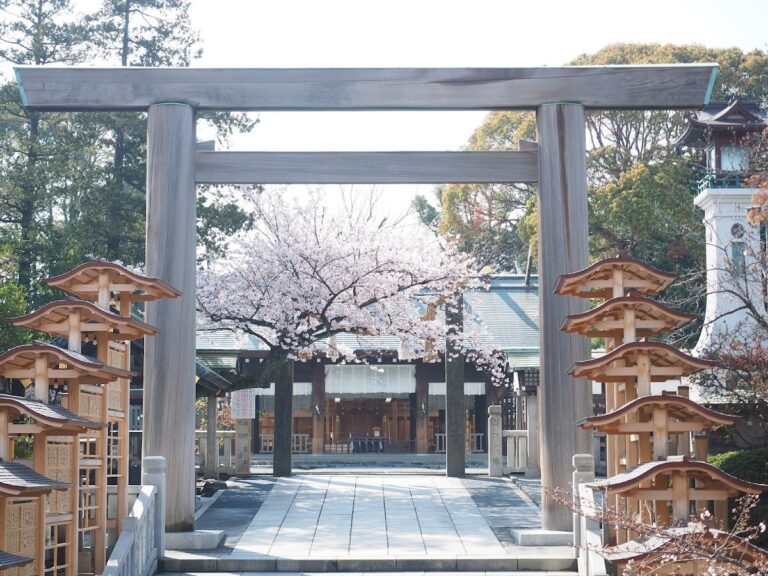
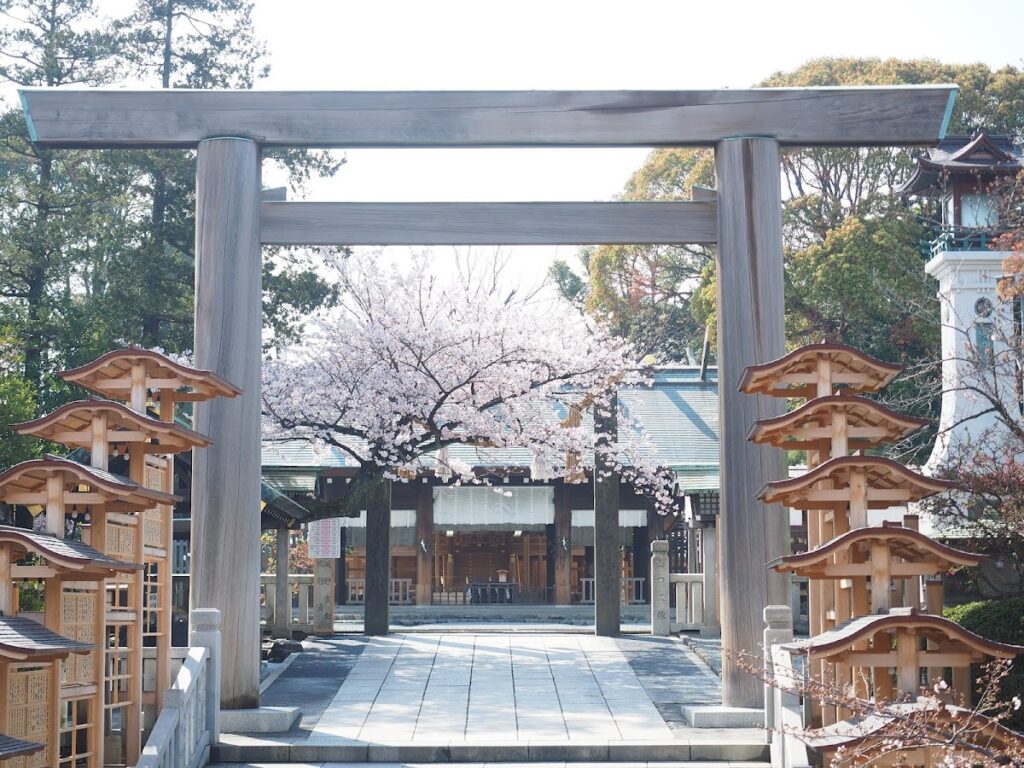
Despite its central location, approximately a 10-minute walk from Sakuragicho Station, the shrine grounds offer a tranquil space surrounded by greenery. Climbing the stone steps and entering the grounds, one can feel a sacred atmosphere, far removed from the hustle and bustle of Yokohama.
From within the grounds, one can enjoy views of Yokohama Port and the Yokohama Bay Bridge, earning it the nickname “Ise Shrine where you can hear ship whistles.” The contrast between the modern port city landscape and the traditional shrine architecture creates a unique Yokohama-esque scenery.
Cherry Blossom Spot
In spring, the cherry blossoms on the shrine grounds bloom beautifully, making it a popular spot for cherry blossom viewing. Many worshippers visit during cherry blossom season to celebrate the arrival of spring.
How to Worship and Prayers
Basic Worship Etiquette
Worship at Iseyama Kōtaijingu Shrine follows the same etiquette as at any other shrine.
- Bow before passing through the torii gate.
- Purify your body and mind at the temizuya (water basin) (purify your left hand, then your right hand, then your mouth, and finally your left hand).
- Offer your donation in front of the main hall.
- Worship using the two bows, two claps, and one bow ritual.
- When leaving, turn around and bow after exiting the torii gate.
Types of Prayers
At Iseyama Kōtaijingu Shrine, you can receive prayers tailored to various milestones in your life and your wishes.
- First Shrine Visit: Giving thanks for the baby’s birth and praying for their healthy growth.
- Shichi-Go-San (7-5-3 Festival): Celebrating a child’s growth and praying for their future health.
- Prayer for Safe Delivery: Praying for the health of mother and child and a safe delivery on the Day of the Dog in the fifth month of pregnancy.
- Exorcism: Praying for protection from misfortune during the unlucky year and for peace.
- Family Safety: Praying for the health and happiness of the family.
- Business Prosperity: Praying for the development and prosperity of the business.
- Traffic Safety: Praying for the blessing of the car and for safe travel.
- Prayer for Success: Praying for success in exams and tests.
Prayers may require advance reservations or be accepted on the day. Please contact the shrine directly for details.
Goshuin (Shrine Seal)
Goshuin (shrine seals) can be obtained at Iseyama Kōtaijingu Shrine. You leave your goshuincho (seal book) at the shrine office and receive it after your visit. The offering fee is generally around 300 to 500 yen. Original goshuincho (stamp books) are also available.
Annual Events and Festivals
Major Festivals
Iseyama Kōtaijingu Shrine holds various festivals throughout the year.
Annual Festival (May 15th)
This is the most important festival at Iseyama Kōtaijingu Shrine. It is a festival commemorating the shrine’s founding, and celebratory events such as a portable shrine procession are held. In recent years, the portable shrine procession has taken place from Iseyama Kōtaijingu Shrine to Pacifico Yokohama, and the shrine widely recruits bearers and participants. Not only adult portable shrines but also children’s portable shrines are carried out, and the sight of them parading through the streets of Yokohama is magnificent.
New Year’s Visit (January 1st-3rd)
Many worshippers visit the shrine every year for the New Year’s visit. The shrine is bustling with people praying for the safety of their families, business prosperity, and academic success in the new year.
Setsubun Festival (February 3rd)
Beans are scattered, and prayers are offered for protection against evil and for good fortune.
Shichi-Go-San (November)
Many families visit the shrine during Shichi-Go-San, a celebration of children’s growth.
Monthly Festival
Monthly festivals are held on the 1st and 15th of each month, praying for the peace and security of the nation and the well-being of parishioners and worshippers.
Shinto Wedding Ceremony
Wedding Ceremony at Iseyama Kōtaijingu Shrine
Iseyama Kōtaijingu Shrine is a popular venue for Shinto wedding ceremonies, representing Yokohama. A wedding ceremony at this prestigious shrine offers a solemn and moving experience.
Shinto wedding ceremonies include shrine maiden dances and gagaku (ancient court music) performances, allowing you to experience the beauty of a traditional Japanese wedding. Weddings in traditional Japanese attire such as shiromuku or iro-uchikake are exceptionally photogenic.
Wedding Support System
At Iseyama Kōtaijingu Shrine, a dedicated salon is located within the shrine’s memorial hall, providing comprehensive support from wedding consultations to assistance on the day of the wedding. You can receive one-stop service, including dress fittings, dressing, hair and makeup, photography, and arrangement of the reception venue.
The adjacent “Iseyama Hills” is a reception venue directly connected to Iseyama Kōtaijingu Shrine, accommodating everything from post-ceremony meals to large-scale receptions.
About the Reverence Association
Iseyama Kōtaijingu Shrine has a Reverence Association, which plays a vital role in supporting the shrine. The Reverence Association supports the maintenance and operation of the shrine and the execution of rituals, and engages in activities to deepen fellowship among its members.
Membership in the Reverence Association offers benefits such as special prayers, information from the shrine, and distribution of newsletters. For those who deeply believe in and wish to support Iseyama Kōtaijingu Shrine, joining the Reverence Association would be a meaningful choice.
Access Information
Access by Train
Iseyama Kōtaijingu Shrine is easily accessible by public transportation.
From JR/Yokohama Municipal Subway Sakuragicho Station
Approximately 10 minutes on foot. From Sakuragicho Station, head towards Momijizaka and walk up the hill to reach the shrine.
From Keikyu Hinodecho Station
Approximately 10 minutes on foot. There is also a route via Nogeyama from Hinodecho Station.
From Minatomirai Line Minatomirai Station
Approximately 15 minutes on foot. It is accessible on foot from the Minatomirai area.
Access by Car
Shuto Expressway Yokohane Line
Approximately 5 minutes from the Minatomirai exit.
A limited number of parking spaces are available on the shrine grounds, but it can get crowded on holidays and during festivals. We recommend using public transportation whenever possible.
Address and Contact Information
Address
64 Miyazaki-cho, Nishi-ku, Yokohama City, Kanagawa Prefecture 220-0031
Phone Number
045-241-1122
For detailed information on visiting hours and prayer reservations, please contact the shrine directly.
Nearby Tourist Attractions
Nogeyama Zoo
A free-admission zoo within walking distance of Iseyama Grand Shrine. An ideal spot for a family visit after your shrine visit.
Minato Mirai District
A 15-minute walk will take you to the Minato Mirai district, a representative tourist area of Yokohama. There are plenty of attractions, including the Landmark Tower, Red Brick Warehouse, and Cup Noodles Museum.
Yokohama Noh Theater
An authentic Noh theater located near Iseyama Grand Shrine, where you can enjoy traditional Japanese performing arts.
Works Set at Iseyama Kōtaijingu Shrine
Due to its history and dignified atmosphere, Iseyama Kōtaijingu Shrine has been used as a setting and filming location for various works. As a representative shrine of Yokohama, it often appears in dramas, movies, and novels.
In works depicting the history of Yokohama, Iseyama Kōtaijingu Shrine is sometimes featured as a spiritual pillar during the Meiji era’s opening of the port.
Precautions and Manners When Visiting
Attire
Please dress neatly when visiting the shrine. Especially if you are receiving prayers, it is desirable to wear attire that is not too casual. It is best to avoid light clothing such as sandals and tank tops.
Photography
Photography is generally permitted on the shrine grounds, but photography inside the main hall and during prayers is prohibited. Please be considerate of other visitors.
Pets
Since the shrine grounds are a sacred place, it is generally considered good manners to refrain from bringing pets.
Summary
Iseyama Kōtaijingu Shrine is a prestigious shrine that has been cherished by the citizens of Yokohama as the guardian shrine of the city since its founding in 1870 (Meiji 3). Known as “the Ise Shrine of the Kanto region,” it enshrines Amaterasu Ōmikami as its main deity and plays an important role as a place of prayer for life’s milestones, such as New Year’s visits, Shichi-Go-San (a traditional rite of passage for children), prayers for safe childbirth, and Shinto wedding ceremonies.
Despite its convenient location, approximately a 10-minute walk from Sakuragicho Station, the shrine grounds are enveloped in a tranquil atmosphere, allowing visitors to forget the hustle and bustle of Yokohama. It offers seasonal charms, such as the beautiful cherry blossoms in spring and the portable shrine procession during the annual festival.
When sightseeing in Yokohama, why not visit Iseyama Kōtaijingu Shrine and experience Yokohama’s history and culture? The time spent offering prayers in this oasis in the city will surely be a memorable experience.