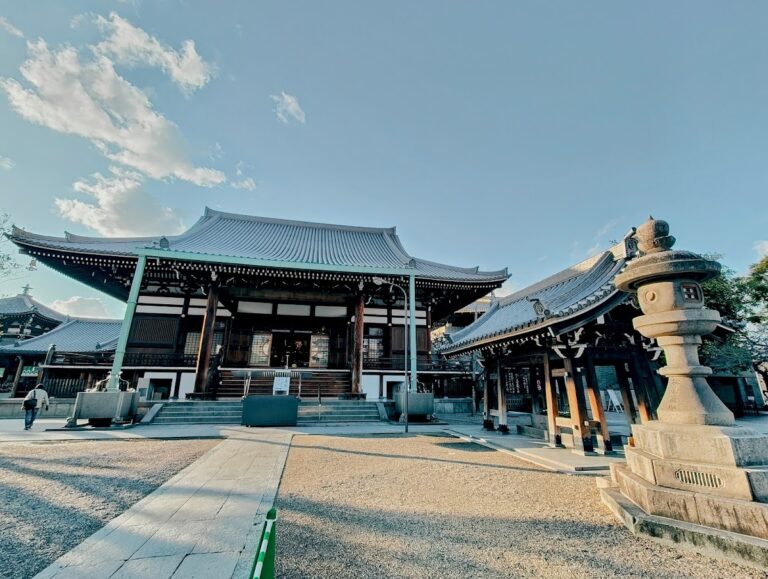
Complete Guide to Isshinji Temple | A Thorough Explanation of the Temple of the Bone Buddha: History, Interment Methods, Access, and Highlights
Isshinji Temple, located in Tennoji Ward, Osaka City, is a Jodo sect temple nationally known as the “Temple of the Bone Buddha.” Many visitors come every year to perform ancestral memorial services through interment and memorial services. This article provides detailed information useful for those considering a visit, including the history of Isshinji Temple, its unique bone Buddha beliefs, interment methods, highlights within the temple grounds, and access information.
What is Isshinji Temple? | Basic Information and Overview
Isshinji Temple is a Jodo sect temple located in Osaka 2-chome, Tennoji Ward, Osaka City. Its official mountain name is Banshozan. The principal image is Amida Buddha, and it stands on the cliff line of the Uemachi Plateau adjacent to Tennoji Park, boasting vast temple grounds.
Basic Data
- Sect: Jodo-shu (Pure Land Buddhism)
- Principal Image: Amida Buddha
- Mountain Name: Sakamatsu-san
- Location: 2-8-69 Osaka, Tennoji-ku, Osaka City, Osaka Prefecture
- Visiting Hours: 9:00 AM – 4:00 PM (Open all year round)
- Admission Fee: Free entry to the grounds
The most distinctive feature of Isshinji Temple is the “Okotsubutsu” (Buddha made from cremated remains). Due to this unique form of worship, Isshinji Temple is widely known as the “Temple of Okotsubutsu” and the “Temple of Cremation and Osegaki (Buddhist memorial service).”
History of Isshinji Temple | Deep Connection with Honen Shonin
Founding and Honen Shonin
The history of Isshinji Temple dates back to the first year of Bunji (1185). It is said that the temple’s origins lie in the hermitage built by Jien, the head priest of the Tendai sect, on the slope near the west gate of Shitennoji Temple.
In 1190, Honen Shonin, the founder of the Jodo sect, visited this area and performed the Nissokan practice at the west gate of Shitennoji Temple. Nissokan is a form of Nembutsu practice in which one worships the setting sun while contemplating the Western Pure Land. Because of this connection, Honen Shonin stayed at Isshinji Temple and spread the teachings of Nembutsu.
Development during the Edo Period
During the Edo period, Isshinji Temple developed as a temple that attracted the faith of ordinary people. In particular, after Hon’yo Zonmu Shonin became the head priest in 1623, the temple’s foundation was solidified. During this period, it became a center of Osaka’s townspeople’s culture, bustling with many worshippers.
Modern Trials and Reconstruction
Isshinji Temple suffered immense damage during the anti-Buddhist movement after the Meiji Restoration and the Osaka air raids of World War II. Many buildings, including the main hall, were destroyed in the 1945 air raids, but it has been rebuilt after the war and reached its current form.
What is the Bone Buddha? | Isshinji Temple’s Unique Form of Worship
The Origin of the Bone Buddha
Isshinji Temple became known as the “Temple of the Bone Buddha” in 1887. It began when the then-chief priest collected numerous cremated remains and created an Amida Buddha statue.
This bone Buddha is made by grinding the cremated remains of believers into powder, kneading it, and shaping it into a Buddha statue. Creating one bone Buddha requires approximately 10 years and tens of thousands of cremated remains, and it has become established as a unique form of worship for the repose of the deceased and for their peaceful passage to paradise. ### Existing Bone Buddhas
Currently, Isshinji Temple houses several bone Buddhas. The oldest is the first bone Buddha, created in 1887 (Meiji 20). Since then, new bone Buddhas have been created approximately every 10 years. While some were lost in the war, the creation of bone Buddhas continued after the war and has been passed down to the present day.
Old and new bone Buddhas can be distinguished by their color. Older bone Buddhas have a dark brown hue, while newer ones are relatively lighter in color. This is due to the aging of the cremated remains.
Bone Buddha Consecration Ceremony
Approximately once every 10 years, when a new bone Buddha is completed, a grand “Consecration Ceremony” is held. Many worshippers from all over the country visit this ceremony to pray for the repose of the deceased and their own peaceful rebirth. Most recently, a consecration ceremony was held in the Reiwa era, with many believers in attendance.
Methods of Interment and Memorial Services
Interment Procedures at Isshinji Temple
Isshinji Temple accepts interment regardless of religious affiliation. This is based on the Jodo sect’s teaching of “salvation for all,” and anyone can have their ashes interred here.
Interment Process
- Fill out the application form at the interment reception desk.
- Pay the interment fee.
- Deposit the remains.
- Receive the interment certificate.
The interred remains are carefully stored for the future construction of a bone Buddha and will become part of a new bone Buddha approximately 10 years later. In other words, the deceased will be enshrined eternally at Isshinji Temple in the form of Amida Buddha.
Interment Fees and Memorial Service Forms
Interment fees vary depending on the time of year and the form of memorial service. We recommend checking the details on Isshinji Temple’s official website or contacting them directly. Please note that interment fees were revised in April 2022, so please check for the latest information.
Osegaki (Feeding of Hungry Ghosts) Memorial Service
At Isshinji Temple, not only is the interment of ashes important, but the Osegaki (Feeding of Hungry Ghosts) memorial service is also a significant event. Segaki is a Buddhist ritual to offer prayers for spirits that have fallen into the realm of hungry ghosts and for those without relatives. Isshinji Temple holds Segaki services throughout the year.
Annual Grand Memorial Service for Interment of Ashes
Every year on April 26th and 27th, the “Annual Grand Memorial Service for Interment of Ashes” is held. During this period, a grand service is held at Isshinji Temple, attracting many worshippers from all over the country. Please note that all regular operations will be suspended for three days from April 25th to 27th for preparation.
Temple Grounds Highlights | Architecture and Cultural Properties
Main Gate (Nio-mon Gate)
The main gate, considered the face of Isshinji Temple, is known for its unique design incorporating ancient Indian architectural styles. The innovative design, which blends elements of traditional Buddhist architecture with modern reinforced concrete construction, attracts the attention of many visitors.
A magnificent Nio statue is enshrined at the main gate, welcoming visitors. With its powerful expression and muscular physique, this Nio statue plays a role in warding off evil spirits and protecting the temple.
Main Hall
Rebuilt after the war, the main hall maintains a solemn atmosphere while incorporating modern architectural styles. Inside, the principal image, a statue of Amida Buddha, is enshrined, and many visitors offer their prayers.
Black Gate (Front Gate)
Isshinji Temple has a front gate called the “Black Gate.” This gate was formerly used as the entrance to the approach road from the Imasato and Hirano-go areas. This historically valuable gate is a precious relic that conveys the long history of Isshinji Temple.
Stone Monuments and Memorials on the Temple Grounds
Various stone monuments and memorials are scattered throughout the spacious temple grounds. Numerous valuable historical artifacts remain at Isshinji Temple, including monuments commemorating the achievements of Honen Shonin and those recording the accomplishments of successive chief priests, telling the story of the temple’s history.
Isshinji Theater Club (Theater)
Within the grounds of Isshinji Temple is a small theater called the “Isshinji Theater Club.” Various cultural events are held here, including the “Isshinji Temple Gatefront Rōkyoku Performance.” As a facility demonstrating Isshinji Temple’s commitment to preserving and promoting traditional performing arts, it serves as a hub for local culture.
The Rōkyoku performance is held regularly, featuring performances by professional Rōkyoku storytellers. It is a valuable opportunity to enjoy traditional performing arts in the sacred setting of a temple, and is popular with many fans.
Access and Transportation Information
Access by Train
Isshinji Temple is within walking distance of major train stations in Osaka City, making it easily accessible by public transportation.
Nearest Station and Travel Time
- Ebisucho Station (Sakaisuji Subway Line): Approximately 8 minutes on foot (closest)
- Shitennoji-mae Yuhigaoka Station (Tanimachi Subway Line): Approximately 12 minutes on foot
- Tennoji Station (Midosuji Subway Line, JR, Kintetsu): Approximately 15 minutes on foot
- Tennoji-ekimae Station (Hankai Tramway): Approximately 12 minutes on foot
Access by Bus
If using Osaka City Bus, get off at the “Tennoji Koen-mae” bus stop and walk approximately 100 meters east to reach Isshinji Temple.
Access by Car and Parking
Isshinji Temple has a parking lot for visitors, but spaces are limited. Especially during memorial services and events, congestion is expected, so we recommend using public transportation whenever possible.
There are also parking lots in Tennoji Park and coin-operated parking lots nearby, which you can use.
Nearby Tourist Attractions
Shitennoji Temple
Shitennoji Temple, located within walking distance of Isshinji Temple, is the first official Buddhist temple in Japan, established by Prince Shotoku. It’s a must-visit spot when visiting Isshinji Temple.
Tennoji Park
Adjacent to Isshinji Temple, Tennoji Park is a beloved urban oasis. The park also houses Tennoji Zoo and the Osaka City Museum of Fine Arts, making it a great place to spend a whole day.
Abeno Harukas
Abeno Harukas, known as Japan’s tallest building, is also within walking distance. From its observation deck, you can enjoy panoramic views of Osaka city, making it a perfect addition to your Osaka sightseeing experience after visiting Isshinji Temple.
Shinsekai/Tsutenkaku Tower
Shinsekai, a representative tourist area of Osaka, is also nearby, offering delicious Osaka cuisine such as kushikatsu (deep-fried skewers). It’s about a 15-minute walk from Isshinji Temple.
Annual Events at Isshinji Temple
Major Ceremonies and Events
Isshinji Temple holds various ceremonies and events throughout the year.
Main Annual Events
- January: Shusho-e (New Year’s Day – 3rd)
- April: Annual Memorial Service for the Burial of Ashes (26th – 27th)
- August: Segaki Memorial Service
- December: New Year’s Eve Bell Ringing
Many worshippers visit these events, making Isshinji Temple lively throughout the year.
Rakugo Performances in Front of Isshinji Temple
The Rakugo performances held regularly at the Isshinji Theater Club are popular events for fans of traditional performing arts. The schedule can be found on the Isshinji Temple official website.
Manners and Precautions for Visiting
Clothing and Items to Bring
Isshinji Temple is a religious facility, so please dress appropriately when visiting. Especially when attending a memorial service, formal attire such as mourning clothes or a black suit is recommended.
Regarding Photography
Photography is generally permitted on the temple grounds, but there are areas where photography is restricted, such as inside the main hall and the area where the ossuary Buddha is enshrined. Please check before taking photos or follow the signs.
Precautions Regarding Interment
If you wish to inter ashes, it is recommended that you contact Isshinji Temple in advance to confirm the necessary documents and procedures. Please check the latest information, especially regarding restrictions on interment and reception hours.
Isshinji Temple Live Camera
Isshinji Temple has a live camera on its official website, allowing you to check the temple grounds in real time. This can be used to check the crowd situation before visiting or as an alternative to visiting from afar.
Cultural Significance of Isshinji Temple
Center of Popular Faith
From the Edo period to the present day, Isshinji Temple has played an important role as a temple that attracts the faith of ordinary people. Its open stance of accepting interment regardless of sect embodies the Jodo sect’s teaching of universal salvation.
Connection to Osaka Culture
Isshinji Temple is deeply intertwined with Osaka’s culture. Its commitment to preserving and promoting traditional performing arts, such as holding traditional storytelling performances in front of the temple gate, is highly valued culturally.
Role in Modern Times
In today’s society, characterized by nuclear families and urbanization, Isshinji Temple’s bone Buddha belief is gaining attention as a new form of ancestor worship. For those whose family temples are far away or who find managing cemeteries difficult, interment at Isshinji Temple is a practical option.
Summary | Points to Consider When Visiting Isshinji Temple
Isshinji Temple is a leading Jodo sect temple in Osaka, possessing a unique form of worship known as the “Temple of Bone Buddhas.” Its deep connection to Honen Shonin, its bone Buddha belief dating back to the Meiji era, and the memorial services held throughout the year offer many points of interest and attractions.
Located in Tennoji, the heart of Osaka city, Isshinji Temple maintains a tranquil atmosphere and is a place open not only to those who wish to honor their ancestors but also to many who seek peace of mind. When sightseeing in Osaka, be sure to visit Isshinji Temple and experience its deep history and faith.
If you are considering interment or memorial services, we recommend checking the latest information on Isshinji Temple’s official website or contacting them directly. The temple is open year-round from 9:00 AM to 4:00 PM, so please visit at your convenience.