Complete Guide to Kagoshima Prefecture Gokoku Shrine | Thorough Explanation of History, Goshuin (Shrine Seals), Access, and Festival Information
Kagoshima Prefecture Gokoku Shrine, located in Kusomuta, Kagoshima City, is a shrine dedicated to those from Kagoshima Prefecture who sacrificed their lives for the nation after the Meiji Restoration. Founded in 1868 (Meiji 1), it is a historic shrine and is cherished by local people as a “familiar guardian deity of their hometown.”
This article comprehensively introduces information useful for visiting Kagoshima Prefecture Gokoku Shrine, including its history, enshrined deities, goshuin (shrine seals), annual festivals, access methods, and highlights within the shrine grounds.
History and Origins of Kagoshima Prefecture Gokoku Shrine
Circumstances of Founding and the Birth of the Seikensha (Founding Shrine)
The history of Kagoshima Prefecture Gokoku Shrine dates back to January 1868 (Meiji 1). The origins of the shrine lie in the fact that, at the behest of Emperor Meiji, 500 ryo were bestowed upon Lord Shimazu Tadayoshi, the feudal lord, who established the “Isatama-sha” shrine in Yamanokuchi Baba, Kagoshima City.
This was the first Gokoku Shrine (shrine dedicated to the war dead) to be established throughout Japan, and it was a facility to commemorate the Satsuma samurai who sacrificed their lives in the turmoil of the Meiji Restoration, including the Boshin War. The name Isatama-sha embodies the meaning of peacefully enshrining the souls of those who dedicated their lives to their country.
Renaming and Relocation to Isatama-sha Shrine
In 1869 (Meiji 2), Isatama-sha was relocated to a newly constructed building in Yamashita-cho (present-day Terukuni-cho) and renamed “Isatama-sha Shrine.” This relocation allowed for a larger number of visitors to be accommodated, strengthening its role as a central place of remembrance in Kagoshima.
Elevation to Official Kagoshima Shokonsha Shrine
In June 1874 (Meiji 7), Seiken Shrine was elevated to an official shrine and became known as “Kagoshima Shokonsha Shrine.” An official shrine is one managed and operated by the state, and this elevation established its status as a national memorial facility.
Renaming to Kagoshima Prefecture Gokoku Shrine
In 1939 (Showa 14), it was renamed “Kagoshima Prefecture Gokoku Shrine” as a Gokoku Shrine designated by the Minister of Home Affairs, and remains so to this day. This renaming was part of the nationwide development of the Gokoku Shrine system, implemented as part of the process of establishing Gokoku Shrines in each prefecture.
Relocation to Current Location
After the shrine building was destroyed in the Kagoshima air raid of 1945 (Showa 20), it was rebuilt in 1958 (Showa 33) at its current location: 2-60-7 Kusomuta, Kagoshima City. This site is located on lush, rolling hills, offering a tranquil environment for worship.
Deities and Enshrined Heroes
Over 77,000 Heroes
Kagoshima Prefectural Gokoku Shrine enshrines the spirits of over 77,000 people from Kagoshima Prefecture who sacrificed their lives for the country, from the Meiji Restoration to the Greater East Asia War (Pacific War). This number reflects the immense sacrifices made by the Satsuma and Osumi regions during Japan’s modernization and wartime.
Main War Dead Enshrined
Related to the Meiji Restoration
- Satsuma samurai who died in the Boshin War
- Fallen soldiers (government forces) in the Satsuma Rebellion
Modern Wars
- Fallen soldiers in the First Sino-Japanese War
- Fallen soldiers in the Russo-Japanese War
- Fallen soldiers in World War I
- Fallen soldiers in the Manchurian Incident and the Second Sino-Japanese War
- Fallen soldiers in the Greater East Asia War (Pacific War)
Self-Defense Force Personnel, Police Officers, and Firefighters Who Died in the Line of Duty
In addition to war dead, Self-Defense Force personnel, police officers, and firefighters who died in the line of duty after the war are also enshrined here. This shows that Kagoshima Prefectural Gokoku Shrine is not merely a war memorial, but a place to honor all those who sacrificed their lives for their homeland.
Highlights of the Shrine Grounds
Main Hall and Worship Hall
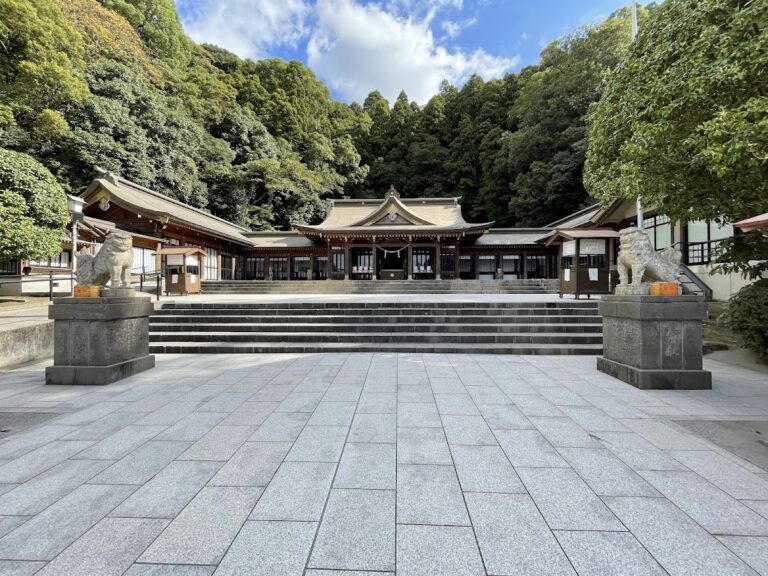
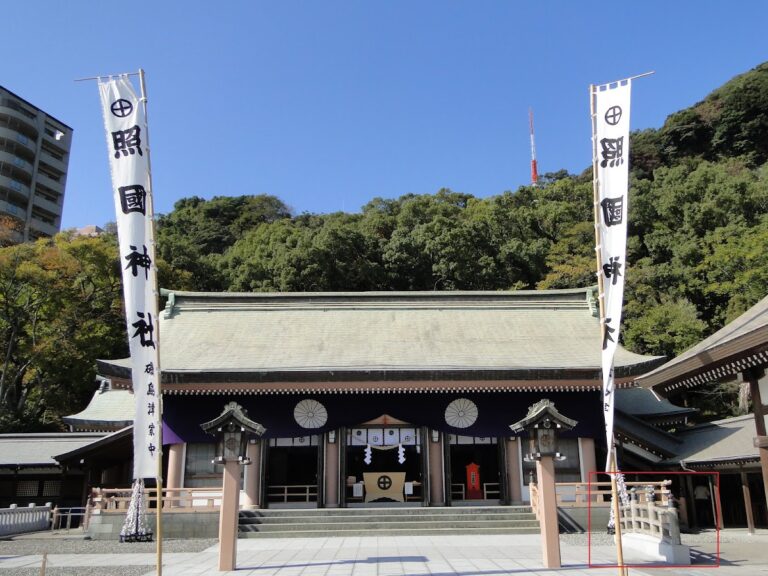
The main hall and worship hall, rebuilt in 1958, follow traditional shrine architectural styles while possessing a fresh atmosphere characteristic of post-war reconstructions. A spacious approach leads to the main hall, providing a quiet space for worship.
Shrine Office and Amulet Shop
The shrine office offers Goshuin (stamped seals), various amulets, and accepts requests for prayers. Known for its courteous service, it provides helpful guidance even to first-time visitors.
Gokoku no Mori (Forest of the Nation)
The shrine grounds are surrounded by a lush green environment called “Gokoku no Mori” (Forest of the Nation), allowing visitors to experience the changing seasons. Cherry blossoms in spring, fresh greenery in early summer, and autumn leaves in fall offer different views depending on the time of year.
Memorials and Monuments
The shrine grounds are dotted with memorials and monuments commemorating various wars and incidents, allowing visitors to learn about their historical context. Reading the inscriptions on these monuments allows one to truly understand the modern history of Kagoshima Prefecture.
About Goshuin
Regular Goshuin
Kagoshima Gokoku Shrine offers Goshuin as proof of worship. The goshuin (temple/shrine stamp) features the words “Kagoshima Prefecture Gokoku Shrine” in calligraphy in the center, “Homage” (拝拝) in the upper right, the date of visit in the lower left, and the shrine’s seal.
Seasonal Limited Edition Goshuin
The shrine also distributes limited edition goshuin stamps that correspond to the four seasons, and these are popular among collectors. Various designs of goshuin stamps appear throughout the year, such as during cherry blossom season, Tanabata (Star Festival), and autumn foliage season.
The official Instagram account (@kagoshimakengokoku.official) is updated regularly with information on limited edition goshuin stamps, so following it will allow you to get the latest information.
Goshuin Stamping Hours
Goshuin stamps are available at the shrine office at any time. However, reception hours may change during festivals and events, so it is recommended to check in advance.
Annual Festivals and Events
Major Festivals
Saitansai (January 1st)
This festival celebrates the New Year and prays for the peace and security of the nation.
Kigensai (February 11th)
A festival held to coincide with National Foundation Day.
Spring Grand Festival (April)
A major spring festival attracting many worshippers.
Mitama Matsuri (July)
An important summer festival commemorating the spirits of war dead.
Autumn Grand Festival (October)
A major autumn festival with various dedication ceremonies held on the shrine grounds.
Meiji Festival (November 3rd)
A festival commemorating the virtues of Emperor Meiji.
Gokoku no Mori Market
In recent years, the “Gokoku no Mori Market” has been held on the shrine grounds. Stalls selling local handmade goods and food and drinks line the grounds, and it has been well-received as an initiative to make the shrine feel more accessible. The dates are announced on the official website and social media.
Prayers on the Day of the Dog
Many expectant mothers and their families visit on the Day of the Dog to pray for a safe delivery. Special prayers are held on the Day of the Dog each month.
Prayers and Weddings
Various Prayers
Kagoshima Prefectural Gokoku Shrine offers the following prayers:
- Family Safety
- Business Prosperity
- Traffic Safety
- Protection from Evil
- Safe Delivery
- First Shrine Visit for a Newborn
- Shichi-Go-San (7-5-3 Festival)
- Success in Exams
- Recovery from Illness
Advance reservations are recommended for prayers. Especially on holidays and festival days, crowds are expected, so early reservations are advised.
Shinto Weddings
Traditional Shinto weddings are also held. A ceremony in a serene atmosphere will be solemn and memorable. Detailed consultations regarding weddings are available at the shrine office.
Access Methods
Location
Address: 2-60-7 Kusomuta, Kagoshima City, Kagoshima Prefecture 892-0871
Access by Public Transportation
By Bus
- Get off at the “Gokoku Jinja-mae” bus stop (JR Kyushu Bus), approximately 5 minutes on foot.
- Get off at the “Gokoku Jinja-mae” bus stop (City Bus), approximately 5 minutes on foot.
Multiple bus routes operate from Kagoshima Chuo Station and Tenmonkan, making access relatively convenient.
Access by Car
From Kagoshima Chuo Station
Approximately 10 minutes by car
From Kagoshima Airport
Approximately 40 minutes by car
From Kagoshima IC on the Kyushu Expressway
Approximately 20 minutes by car
Parking
Free parking for visitors is available on the shrine grounds. However, congestion is expected on festival days and during the New Year’s visit period, so please consider using public transportation.
Shrine Visit Manners and Etiquette
Basic Shrine Visit Etiquette
- When passing through the torii gate: Bow before entering the shrine grounds.
- Purification at the water basin: Purify your left hand, right hand, and mouth in that order.
- Worship at the main hall: Worship using the two bows, two claps, and one bow method.
- When leaving: After passing through the torii gate, turn around and bow.
Etiquette Specific to Gokoku Shrines
Gokoku shrines are also places of remembrance for war dead. When visiting, it is important to worship quietly with gratitude and respect for those who sacrificed their lives for their homeland.
Nearby Tourist Attractions
Terukuni Shrine
Terukuni Shrine, located in the center of Kagoshima City, is a shrine dedicated to Shimazu Nariakira, and many people visit it along with Kagoshima Prefecture Gokoku Shrine.
Tsurumaru Castle Ruins (Kagoshima Prefectural Historical Materials Center Reimeikan)
These are the ruins of the castle of the Satsuma Domain, and now serve as a historical materials center where you can learn about the history of Kagoshima.
Shiroyama Observatory
A popular observation spot offering panoramic views of Kagoshima city and Sakurajima volcano. It’s about a 10-minute drive from Gokoku Shrine.
Modern Initiatives of Kagoshima Prefectural Gokoku Shrine
Information Dissemination via Social Media
Kagoshima Prefectural Gokoku Shrine actively disseminates information through social media such as Instagram and X (formerly Twitter).
Instagram: @kagoshimakengokoku.official (Over 6,500 followers)
X (formerly Twitter): @kagoshima559
These accounts feature photos of festivals, seasonal changes, and information on limited-edition goshuin (shrine stamps), making them useful for gathering information before visiting.
Connections with the Community
As a “familiar guardian deity of the local area,” we value our interactions with local residents. Through events such as the Gokoku-no-Mori Market, we continue our efforts to make the shrine more accessible to younger generations.
The Preciousness of Peace Conveyed by Kagoshima Prefecture Gokoku Shrine
Kagoshima Prefecture Gokoku Shrine is not merely a tourist spot. It is a place that teaches us that today’s peace and prosperity are built upon the sacrifices of those who dedicated their lives to their country and homeland, from the Meiji Restoration to the present day.
The enshrinement of over 77,000 war dead speaks volumes about the significant role Kagoshima Prefecture played in Japan’s modernization, and the weight of the sacrifices it made.
We hope that through your visit, you will have the opportunity to connect with the thoughts of our ancestors and reaffirm the preciousness of peace.
Summary
Kagoshima Prefecture Gokoku Shrine has a long history, dating back to its founding in 1868 (Meiji 1), and is an important memorial facility enshrining over 77,000 war dead from Kagoshima Prefecture. This shrine possesses both historical significance as one of the first Gokoku Shrines established nationwide, and a modern stance as a “familiar local guardian deity,” continuing its activities rooted in the community.
There are many reasons to visit, including seasonal limited-edition goshuin (shrine stamps), year-round festivals, and events such as the Gokoku no Mori Market. When you visit Kagoshima, we highly recommend you stop by and offer your gratitude to our ancestors in the tranquil grounds.
The official website and social media accounts are updated regularly with the latest information, so we recommend checking them before your visit. We hope your visit to Kagoshima Gokoku Shrine will be a meaningful one.