Complete Guide to Kamayama Shrine | History and Visiting Information for Wakayama’s Ancient Shrine Famous for Baby Naming
Kamayama Shrine, located in Wada, Wakayama City, Wakayama Prefecture, is a venerable ancient shrine dedicated to Hikoitsuse-no-Mikoto, the eldest brother of Emperor Jimmu. As a Shikinaisha (a shrine listed in the Engishiki, an ancient Japanese legal text) and formerly a Kanpei Taisha (a high-ranking government-supported shrine), it attracts many worshippers not only from Wakayama but from all over Japan.
It is particularly known as a shrine famous for “baby naming,” and many parents visit every year for its nearly 100-year-old naming consultation service. Along with Hinokuma-gu and Itakiso Shrine, it is counted as one of the “Three Shrines of Wakayama,” and is especially lively during the New Year’s visit season.
This article comprehensively covers everything you need to know before visiting Kamayama Shrine, including its history, the origins of its enshrined deity, its blessings, details on naming consultations, how to worship, and access information.
History and Origins of Kamayama Shrine
The Story of the Enshrined Deity, Hikogose-no-Mikoto
Hikogose-no-Mikoto, the enshrined deity of Kamayama Shrine, is an important member of the imperial family, recorded in the *Nihon Shoki* and *Kojiki* as the eldest brother of Emperor Jimmu, Japan’s first emperor. Hikogose-no-Mikoto, who accompanied Emperor Jimmu on his eastern expedition from Hyuga (present-day Miyazaki Prefecture) to Yamato (present-day Nara Prefecture), played a crucial role in the great undertaking of pacifying Yamato, the founding of Japan.
During the eastern expedition, at Kusaka-no-Saka in Kawachi Province, Hikogose-no-Mikoto was seriously wounded by a stray arrow during a fierce battle with the forces of Nagasunehiko. Afterward, Prince Hikogose retreated to Onominato in Kii Province (near present-day Suimon Fukiage Shrine in Wakayama City), where he died after letting out a roar, “How dare I, a brave man, be wounded by the enemy!”
Prince Hikogose’s remains were buried in the Kamayama area, and his mausoleum is the origin of the present-day Kamayama Shrine. This site has been designated as “Kamayama Mausoleum” by the Imperial Household Agency, and the mausoleum is located within the shrine grounds.
Promotion to Kanpei Taisha and Historical Changes
Kamayama Shrine has long been revered by the local community, but with the Meiji Restoration, the national government’s shrine system was reformed. In 1873 (Meiji 6), it was ranked as a prefectural shrine, and then in 1882 (Meiji 15), it was promoted to Kanpei Taisha (Grand Imperial Shrine). Kanpei Taisha was one of the highest ranks of shrines bestowed upon those considered particularly important by the state, and was limited to shrines with deep ties to the Imperial Family.
After World War II, the shrine ranking system was abolished due to reforms in the shrine system, but it continues to preserve its prestige and traditions as a Beppyo Jinja (special shrine) of the Association of Shinto Shrines. The shrine grounds are surrounded by lush green forests, allowing visitors to enjoy the beauty of nature throughout the seasons, making it a spiritual haven for the citizens of Wakayama.
Benefits and Faith of Kamayama Shrine
Diverse Benefits
At Kamayama Shrine, it is believed that various benefits are bestowed through the divine virtues of the enshrined deity, Hikogose no Mikoto.
Main Benefits:
- Removal of Calamities and Protection from Evil: The divine virtue of Hikogose-no-Mikoto, who faced difficulties head-on
- Traffic Safety: The power to protect those on their eastern journey
- Fulfillment of Wishes: Support for those who move forward with determination
- Matchmaking: The power to forge good relationships
- Prayer for Safe Childbirth: Protection for the birth of new life
- Abundant Harvest: Praying for the prosperity of the land
- Family Safety: Peace and safety for the family
- National Security: As a shrine dedicated to the Imperial Family, prayers for national peace are offered
- Healing from Illness: Praying for health and recovery
Because the enshrined deity is Hikogose-no-Mikoto, a member of the Imperial Family, the shrine is also revered as a place to pray for national security and to protect world peace and development.
One of the Three Shrines of Wakayama Pilgrimage
Since ancient times, it has been customary in Wakayama to visit the “Three Shrines of Wakayama” for the first shrine visit of the year. The three shrines are as follows:
- Hinokuma-gu – An ancient shrine consisting of two shrines: Hinokuma-jingu and Kunikake-jingu
- Kamayama-jinja – A shrine dedicated to Hikogose-no-Mikoto
- Itakiso-jinja – A shrine dedicated to Isotakeru-no-Mikoto
Visiting these three shrines is a deeply rooted custom for praying for peace and happiness throughout the year, and many worshippers visit these three shrines especially during the New Year. Because each shrine has a different enshrined deity and blessings, it is believed that one can receive comprehensive protection from all three.
Kamayama Shrine, Famous for Baby Naming Services
A Baby Naming Consultation Service with Nearly 100 Years of History
One of the reasons Kamayama Shrine is known nationwide is its “baby naming” service. This naming consultation service has a history of nearly 100 years, and every year many parents visit to receive a name for their precious child.
A baby’s name is the first gift from parents and a precious thing that will stay with them throughout their life. At Kamayama Shrine, the priests connect the child with the gods, offering prayers of gratitude for the safe birth and for the child’s healthy growth, while carefully choosing the name.
Features of the Naming Consultation
At Kamayama Shrine, the following considerations are taken into account during the naming consultation:
- Professional Naming by Shinto Priests: Experienced Shinto priests consider factors such as onomastics, phonetics, and stroke count.
- Reflection of Parents’ Wishes: Naming is done while carefully listening to the family’s wishes and desires.
- Integration with Prayer: Not just naming, but also praying to the gods for the healthy growth of the child.
- Detailed Explanation: The meaning and origin of the name are explained in detail.
Those wishing to have a naming consultation are advised to contact the shrine in advance and make a reservation. Providing information such as the expected due date, information about the newborn baby, and the parents’ wishes will allow for a better naming process.
Life Rituals Other Than Naming
At Kamayama Shrine, in addition to naming ceremonies, prayers and purification rituals are also performed for various milestones in life:
- Prayer for Safe Childbirth: A prayer performed on the Day of the Dog in the fifth month of pregnancy
- Shrine Visit for Newborns: A prayer for the healthy growth of the baby around one month after birth
- Shichi-Go-San Ceremony: A celebration of the child’s growth and a prayer for their future health
- Prayer for Protection from Misfortune: A prayer for the removal of misfortune for those entering their unlucky year
- Wedding Ceremony: A Shinto wedding ceremony
- Prayer for Traffic Safety: A blessing and prayer for safety for the vehicle
Highlights of the Shrine Grounds
Kamayama Mausoleum (Imperial Mausoleum)
The most sacred place on the shrine grounds is the Kamayama Mausoleum, where Prince Hikogose is buried. Managed by the Imperial Household Agency, this mausoleum holds significant meaning in Japanese history and is enveloped in a solemn atmosphere. In front of the mausoleum, you can quietly clasp your hands together and express your gratitude and respect to the enshrined deity.
Main Hall and Worship Hall
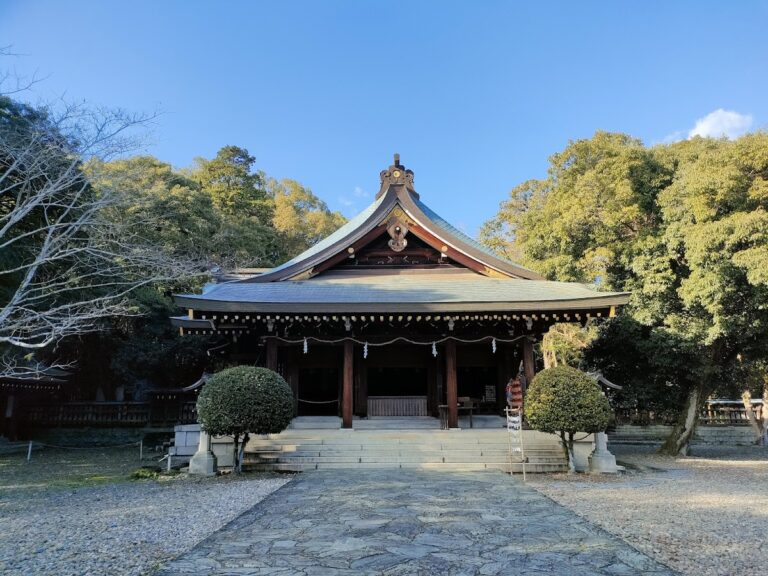
The shrine buildings of Kamayama Shrine convey the beauty of traditional shrine architecture. The main hall is the most sacred place where the enshrined deity resides, and the worship hall is where worshippers offer their prayers. The vermilion-lacquered shrine buildings create a beautiful contrast with the surrounding greenery.
Nature of the Shrine Grounds
The grounds of Kamayama Shrine are surrounded by a lush forest, maintaining a tranquil and sacred space despite being in an urban area. Cherry blossoms bloom in spring, deep green vegetation thrives in summer, the autumn leaves are beautiful, and a crisp, clean air envelops the grounds in winter. Visiting while experiencing the changing seasons will be a precious time to purify your soul.
Shizuhi Shrine
Within the grounds of Kamayama Shrine stands Shizuhi Shrine as a subsidiary shrine. It is believed that visiting this shrine in conjunction with others will bring even deeper blessings.
Annual Events and Festivals
New Year’s Events
At Kamayama Shrine, various Shinto rituals are performed to welcome the New Year:
December 31st (New Year’s Eve)
- 15:00~ Shiwasu no Oharae-shiki (Great Purification Ceremony of the Year): A Shinto ritual to purify and cleanse away the sins and impurities of the past year.
- Followed by a prayer ceremony for the safety of the family.
January 1st (New Year’s Day)
- 8:00~ Saitansai (New Year’s Day Festival): A Shinto ritual to celebrate the New Year and pray for the prosperity of the Imperial Family and the peace of the nation.
January 3rd
- 10:00~ Genshisai (Beginning of the Year Festival): A Shinto ritual to celebrate the beginning of the Imperial throne.
During the Hatsumode (first shrine visit of the year) period, the shrine is bustling with many worshippers. In particular, as one of the three shrines visited in Wakayama, many people visit along with Hinokuma-gu and Itakiso Shrine. ### Other Annual Events
Kamayama Shrine holds various festivals and ceremonies throughout the year. In addition to important events such as the Spring and Autumn Grand Festivals, monthly festivals are also held regularly. Participating in these ceremonies allows you to feel a deeper connection to the shrine.
How to Visit and Etiquette
Basic Worship Etiquette
When visiting Kamayama Shrine, please observe the following etiquette:
- Bow before passing through the torii gate: Show respect before entering the sacred area.
- Purify yourself at the water basin: Purify your left hand, then your right hand, then your mouth.
- Walk along the edge of the path: The center is considered the path of the gods.
- Worship at the main hall: Follow the ritual of two bows, two claps, and one bow.
- Worship at the mausoleum: Quietly put your hands together and refrain from talking.
Receiving a Prayer
If you wish to receive a prayer (ritual), please register at the shrine office. For naming consultations or special prayers, it is recommended to make a reservation by phone in advance. The prayer fee (offering) varies depending on the content of the prayer, so it is a good idea to check in advance.
Items Offered
At Kamayama Shrine, you can receive items such as amulets and Goshuin (stamped seals). Various types of amulets are available, including those for traffic safety, family safety, safe childbirth, and academic success. Goshuin are popular as mementos of your visit and are carefully written.
Access and Basic Information
Location
Address: 438 Wada, Wakayama City, Wakayama Prefecture 641-0014
Telephone Number
TEL: 073-471-1457
For inquiries regarding naming consultations, prayer reservations, and visits, please call the above number.
Visiting Hours
- Visiting the Shrine: Open year-round
- Shrine Office Hours: Generally 9:00 AM to 5:00 PM on weekdays, weekends, and holidays (may vary depending on the season)
*If you wish to consult about naming or request prayers, we recommend calling ahead to confirm and make a reservation.
Access by Public Transportation
Using Trains and Buses:
- Take a Wakayama Bus from JR Wakayama Station or Nankai Wakayamashi Station
- Get off at the “Kamayama Shrine” bus stop and it’s a short walk from there
- Travel Time: Approximately 15-20 minutes
While there are relatively frequent buses, the schedule varies depending on the time of day, so we recommend checking the Wakayama Bus timetable in advance.
Access by Car
By Car:
- Approximately 15 minutes from the Hanwa Expressway “Wakayama IC”
- Accessible from National Route 24
- Parking: Free parking available for visitors on the shrine grounds (limited spaces available)
During New Year’s visits and festivals, the parking lot may be crowded, so please allow ample time for your visit or consider using public transportation.
Route for Visiting the Three Shrines
For those planning a pilgrimage to the three shrines of Wakayama, the following route is efficient:
- Hinokuma Shrine → 2. Kamayama Shrine → 3. Itakiso Shrine
Alternatively, the reverse order is also acceptable. The three shrines are relatively close to each other and can be visited in about half a day by car.
Nearby Tourist Attractions
Here are some nearby spots you might want to visit in conjunction with your visit to Kamayama Shrine.
Hinokuma Shrine (Hinokuma Jingu and Kunikake Jingu)
Located about a 10-minute drive from Kamayama Shrine, Hinokuma Shrine is one of the three shrines visited during the Wakayama pilgrimage. It’s a rare example of two shrines standing side-by-side: Hinokuma Jingu and Kunikake Jingu. The sacred objects enshrined here are the Nichizo-kagami and Nichihoko-kagami mirrors, considered to be the divine representations of Amaterasu Omikami.
Itakiso Shrine
Also a member of the three shrines visited during the pilgrimage, Itakiso Shrine enshrines Isotakeru-no-Mikoto, the god of trees. Known for its blessings of protection against misfortune and healing from illness, it features a unique ritual called “Kinokuchi-kuguri” (passing through a tree’s fork).
Wakayama Castle
Located in the heart of Wakayama City, Wakayama Castle is a famous castle that flourished as the residence of the Kishu Tokugawa family, one of the three main branches of the Tokugawa clan. From the castle tower, you can enjoy a panoramic view of Wakayama City, and it’s also a popular spot for cherry blossoms in spring.
Kimii-dera Temple
Kimii-dera Temple, the second temple on the Saigoku Thirty-Three Kannon Pilgrimage, is famous for its cherry blossoms. From the temple grounds, a magnificent view of Wakayama Bay unfolds.
Guidelines for Visiting Kamayama Shrine
Cherish Silence
Kamayama Shrine is a sacred place containing an imperial tomb. Please refrain from talking within the grounds and strive for quiet worship. Especially in front of the tomb, it is important to clasp your hands together with a solemn attitude.
With Gratitude
Worship is not simply a place to make requests. The true meaning of worship is to express gratitude for daily peace and health, and to show respect to the enshrined deity. Let us worship with heartfelt gratitude for the divine virtues of Hikogose-no-Mikoto.
Plan Your Naming Consultation Carefully
If you wish to consult about naming your baby, it is recommended to plan ahead and make a reservation well in advance, before the birth. Things will become hectic after the birth, so consulting with the shrine during pregnancy will ensure a smoother process. ### Enjoying the Beauty of the Seasons
The grounds of Kamayama Shrine are beautiful with nature in every season, offering different charms depending on the time of year you visit. From the cherry blossoms of spring, the fresh greenery of summer, the autumn leaves, to the tranquility of winter, you can enjoy the diverse expressions of the shrine by visiting in each season.
Summary
Kamayama Shrine is a venerable ancient shrine dedicated to Hikogose-no-Mikoto, the eldest brother of Emperor Jimmu, and is one of the most important shrines representing Wakayama Prefecture. It boasts many attractions, including its high status as a Kanpei Taisha (a high-ranking shrine), its unique service of naming babies with a history of nearly 100 years, and its position as one of the three shrines visited during the Wakayama pilgrimage.
It offers various blessings, including protection from disaster, traffic safety, matchmaking, and safe childbirth, making it a shrine worth visiting at various milestones in life. The lush grounds display beauty in every season, maintaining a tranquil and sacred space despite its urban location.
When visiting Wakayama City, be sure to visit Kamayama Shrine and experience the divine blessings of its enshrined deity. This shrine is especially recommended for parents considering naming their baby, those planning a three-shrine pilgrimage for New Year’s, and those seeking prayers at important life milestones.
Phone: 073-471-1457 (Open year-round, weekdays, weekends, and holidays)
Address: 438 Wada, Wakayama City, Wakayama Prefecture
May your heartfelt visit bring good fortune and blessings to your life.