Complete Guide to Jinnoji Temple: History, Benefits, and Visiting Information for Kanto’s Oldest Temple
Jinnoji Temple, located on Mt. Kano in Kimitsu City, Chiba Prefecture, is said to be the oldest temple in the Kanto region, founded by Prince Shotoku in 598 AD (the 6th year of Empress Suiko’s reign). With a history of over 1400 years, this temple is known as a sacred site visited by many worshippers seeking protection from misfortune, traffic safety, and memorial services for aborted fetuses. This article provides a detailed introduction to Jinnoji Temple’s history, highlights within the temple grounds, benefits, and visiting information.
History and Origins of Jinnoji Temple
Founding Legend by Prince Shotoku
Jinnoji Temple is said to have been founded by Prince Shotoku in 598 AD (the 6th year of Empress Suiko’s reign). This makes it the fourth temple to be founded in Japan and the oldest temple in the Kanto region. It is said that Prince Shōtoku chose this location on Mount Kano to establish temples throughout Japan to promote Buddhism.
The temple’s official name is “Kanozan Rinshōin Jinnoji,” and it belongs to the Chizan branch of the Shingon sect. The mountain name, “Kanozan,” is said to be derived from Rokuyōen (Deer Park), the sacred site where Buddha first preached.
History of Restoration and Development
Jinnoji Temple has undergone numerous changes since its founding. Records indicate that it was restored during the Eishō era (1504-1521) by the Shingon Buddhist monk Kōhan. During this period, the temple’s buildings were renovated, and its character as a sacred site for Shugendō (mountain asceticism) became stronger.
Mount Kano, along with Mount Tsukuba in Ibaraki Prefecture and Mount Haruna in Gunma Prefecture, is counted as one of the three major mountains of Shugendo (mountain asceticism) in the Kanto region, and became a sacred site visited by many ascetics for training. During the Edo period, it received the patronage of the Tokugawa shogunate and flourished as one of the most renowned temples in the Kanto region.
History since the Modern Era
Despite the impact of the anti-Buddhist movement after the Meiji Restoration, Jinnoji Temple continued to exist as a center of local faith. From the Showa to the Heisei era, it attracted many worshippers and became particularly known as a temple for warding off evil and praying for traffic safety.
In 2019, it suffered extensive damage from Typhoon No. 15, with damage to the main hall and other buildings on the temple grounds. However, restoration work is underway, and it continues to welcome many worshippers. This recovery from the typhoon damage is being carried out with the support of the local community and parishioners, demonstrating Jinnoji Temple’s deep roots in the region as a place of faith.
Principal Deities and Faith
Characteristics of the Two Principal Deities
The most distinctive feature of Kannoji Temple is its rare “two principal deities” arrangement. The two deities, Yakushi Nyorai (Medicine Buddha) and Gundari Myoo (Gundari Vidyaraja), are enshrined side-by-side in a shrine, and both are worshipped as principal deities.
Yakushi Nyorai is a Buddha believed to grant healing from illness and promote health and longevity. Formally called “Yakushi Rurikō Nyorai,” he is considered the principal deity of the Eastern Pure Land of Lapis Lazuli, relieving people of their suffering and bringing physical and mental health.
Gundari Myoo is one of the Five Great Wisdom Kings, presiding over the nectar (elixir of immortality). He is believed to have the power to ward off evil, protect against demons, and eliminate worldly desires, and has been revered as an important deity, especially in Shugendo (mountain asceticism).
The Goma prayer ceremony performed before these two principal deities is central to the faith at Kannoji Temple.
Character as a Sacred Site of Shugendo
Kannoji Temple, one of the three major Shugendo temples in the Kanto region, has long been a center of Shugendo, a fusion of mountain worship and esoteric Buddhism. The entire Kanoyama mountain is considered a sacred site, with numerous training grounds and sacred sites scattered throughout.
Shugendo aims for immediate enlightenment through rigorous mountain training. Kannoji Temple continues this tradition, still performing Goma rituals and various other practices. Within the temple grounds, the distinctive sounds of conch shells and chanting of sutras resonate, creating a unique spiritual atmosphere.
Highlights of the Temple Grounds
Nationally Designated Important Cultural Property: Main Gate
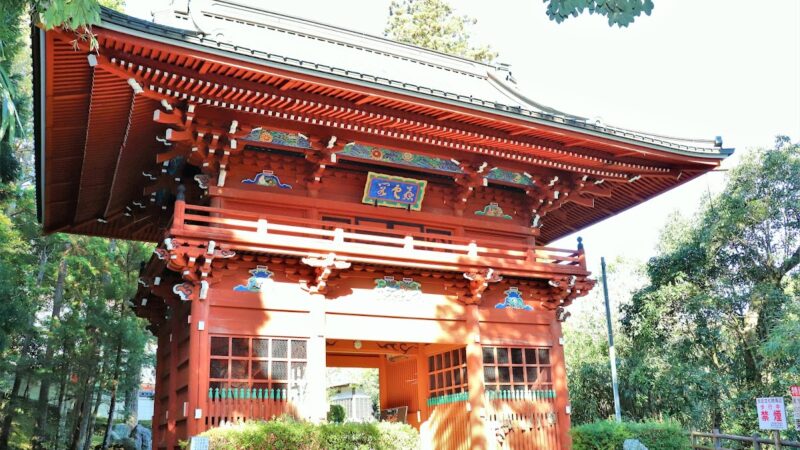
The main gate of Kannoji Temple is a valuable structure designated as a Nationally Designated Important Cultural Property. A four-legged gate retaining the architectural style of the late Muromachi period, it possesses high historical value as one of the few medieval gate structures in Chiba Prefecture.
The main gate is characterized by its simple yet powerful structure and the dignified appearance of its aged wood. The pillars and beams showcase the architectural techniques of the time, making it an important resource for the study of architectural history. Passing through this historic gate during your visit allows you to feel the long history of Jinnoji Temple firsthand.
Main Hall and Goma Hall
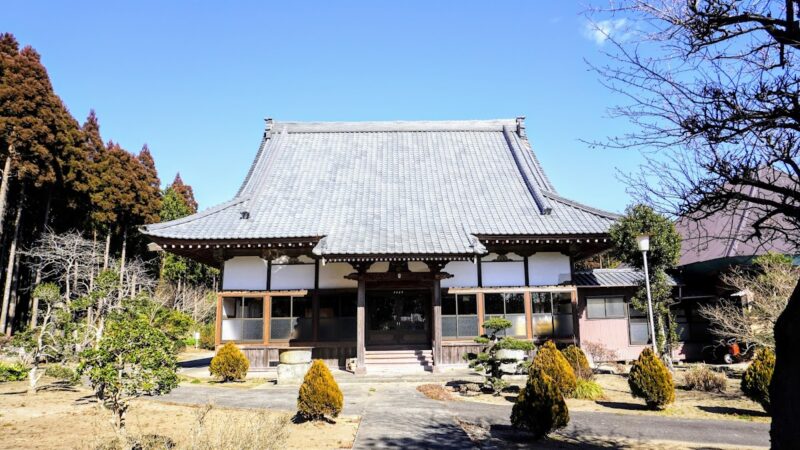
The Main Hall is the central building of Jinnoji Temple, where the two principal images are enshrined. Inside, Goma prayers are performed daily before the images of Yakushi Nyorai and Gundari Myoo. The flames of the Goma ritual, performed in the solemn atmosphere of the Main Hall, are a sacred ceremony that conveys the wishes of worshippers to the Buddha, deeply moving the hearts of many.
The Goma Hall is where various prayers are offered, particularly for protection against misfortune and traffic safety. The Goma ritual, a secret practice of Shingon Esoteric Buddhism, is an important ritual believed to burn away worldly desires with the power of fire and grant wishes.
Nature and Scenery of the Temple Grounds
Located near the summit of Mt. Kano, at an altitude of approximately 380 meters, the grounds of Jinno-ji Temple are surrounded by abundant nature. Especially during the autumn foliage season, maple and ginkgo trees vividly color the grounds, attracting many worshippers and tourists.
The vibrant red of the maple leaves is particularly spectacular, making it one of the best autumn foliage spots in Chiba Prefecture. Visiting in autumn offers a luxurious experience, allowing visitors to enjoy both faith and natural beauty simultaneously.
On clear days, the temple grounds offer views of Tokyo Bay and the Boso Peninsula, making the excellent scenery another of Jinno-ji Temple’s attractions.
Other Buildings and Facilities
Besides the main hall and front gate, the temple grounds contain various other structures, including a Kannon Hall, a bell tower, and a priest’s quarters. Each of these is an important element that tells the story of Jinno-ji Temple’s history and faith.
Stone steps lead up the approach to the temple, lined on both sides with stone Buddha statues and stone pagodas. These stone structures, too, have been dedicated over a long history, conveying the deep faith of the parishioners to this day.
Benefits and Prayers
Goma Prayer (Prayers and Various Exorcisms)
At Kannoji Temple, Goma prayers are performed daily before the two main deities. Goma prayer is a fundamental ritual of Shingon Esoteric Buddhism, where a fire is lit on the Goma altar, and mantras are chanted while throwing wooden sticks, praying for the fulfillment of all wishes.
The main prayer contents are as follows:
Exorcism (Protection from Misfortune): This prayer wards off misfortune for those in their unlucky year (main unlucky year, year before unlucky year, and year after unlucky year), and prays for a peaceful year. Many people visit, especially men aged 25, 42, and 61, and women aged 19, 33, 37, and 61, during their unlucky years.
Protection from Inauspicious Directions: This prayer is to avoid misfortune when moving or traveling in an inauspicious direction. Traffic Safety: We perform blessings for cars and motorcycles, and pray for the safety of drivers. Jinnoji Temple also accepts car blessings, and many people visit for blessings when purchasing a new car or after an accident.
Family Safety: We pray for the health and happiness of all family members and for peace in the home.
Business Prosperity: We pray for the development and prosperity of businesses.
Healing from Illness: We pray for recovery from illness through the blessings of Yakushi Nyorai (Medicine Buddha).
Prayer for Success in Exams: We pray for success in entrance exams and qualification tests.
Memorial Service for Stillborn Children
At Jinnoji Temple, memorial services for stillborn children are also performed as an important part of the memorial service. A stillborn child refers to a fetus that has died due to miscarriage, stillbirth, or abortion.
In a memorial service for stillborn children, we pray for the repose of the soul of the lost child and for healing and peace of mind for the parents. At Kannoji Temple, we offer heartfelt memorial services and rituals to comfort the spirits of unborn children and guide parents toward moving forward in their lives.
Memorial services can be conducted individually, with respect for privacy. Many find solace and a new beginning here.
New Year’s Visit and Annual Events
Kannoji Temple is also known as a popular spot for New Year’s visits, attracting many worshippers every year. People from all over Japan visit to pray for good health and safety for the year ahead.
The following events are held throughout the year:
- First three days of the New Year: First shrine visit of the year, New Year’s Goma prayer ceremony
- Setsubun Festival: Bean-throwing ceremony, prayer for warding off evil
- Spring and Autumn Equinoxes: Ancestor memorial service
- Obon Festival: Segaki memorial service, Obon memorial service
- Autumn foliage season: Special viewing (mid- to late November)
These events are firmly established as annual events for the local people, demonstrating the deep connection between Kannoji Temple and the local community.
Visiting Information
Location and Access
Location: 324-1 Kanoyama, Kimitsu City, Chiba Prefecture
Access by Car:
- Approximately 25 minutes from Kimitsu IC on the Tateyama Expressway
- Parking available (free)
- When searching with a car navigation system, search for “Kannoji” or “Kanoyama Kannoji”
Access by Public Transportation:
- Approximately 30 minutes by bus from Kimitsu Station on the JR Uchibo Line, get off at “Kanoyama” bus stop, then approximately 10 minutes on foot
- Since bus service is limited, it is recommended to check the timetable in advance.
Kanoyama is located near the summit of a mountain approximately 380 meters above sea level, and requires climbing a mountain road. Those who are not confident in their driving skills should exercise caution as the mountain road has many curves.
Visiting Hours and Admission Fee
Visiting Hours: 9:00 AM – 5:00 PM (Open year-round)
Admission Fee: Free entry to the grounds
Prayer Reception: 9:00 AM – 4:30 PM
- No reservation is required, but advance notice is recommended for groups or those requesting special prayers.
- Prayer fees vary depending on the prayer requested; please inquire at the temple office for details.
Manners and Precautions for Visiting
When visiting Kannoji Temple, please note the following:
- Clothing: As the temple is located on a mountain, comfortable clothing that allows for temperature adjustment is recommended. Especially in winter, take precautions against the cold.
- Photography: Photography is generally permitted within the temple grounds, but photography inside the main hall and during prayers is prohibited.
- Etiquette for Visiting: Bow when passing through the main gate, and avoid walking in the center of the path. At the main hall, offer your donation, clasp your hands together, and pray quietly.
- Goshuin (Temple Stamp): If you wish to receive a Goshuin, bring your Goshuincho (stamp book) and register at the temple office.
- Pet-Friendly: It is recommended to check in advance regarding bringing pets onto the temple grounds.
Places to Visit in Combination with Southern Boso Peninsula Sightseeing
Nearby Tourist Spots
Kimitsu City, where Jinnoji Temple is located, is situated in the central part of the Boso Peninsula, and there are many tourist spots in the surrounding area. Visiting these spots in conjunction with a visit to Jinnoji Temple will make for a more fulfilling trip.
Kanoyama Mother Farm: Approximately 15 minutes by car from Jinnoji Temple. A tourist farm where you can enjoy interacting with animals and seasonal flowers.
Nomizo Falls (Kameiwa Cave): A popular spot known for its mystical scenery. Great for taking Instagrammable photos.
Kururi Castle: A mountain castle from the Sengoku period, a historical spot with a magnificent view from the keep.
Shimizu Stream Plaza (Nomizo Falls & Kameiwa Cave): A walking trail along a lush stream, where you can enjoy the scenery of each season.
Enjoying the Flavors of Boso
Around Kimitsu City, you can enjoy fresh seafood and mountain delicacies from Boso. For meals after visiting the temple, the following local dishes are recommended:
- Seafood Dishes: Fresh seafood from Tokyo Bay and the outer Boso Peninsula
- Hakarime Donburi: A Boso regional dish using conger eel
- Takeoka-style Ramen: A local ramen dish originating in Futtsu City
- Peanut Products: Sweets and dishes using peanuts, a specialty of Chiba Prefecture
Accommodation
Around Mt. Kano, there are accommodations such as temple lodgings, guesthouses, and hotels. For those who want to visit the temple at a leisurely pace and fully enjoy the nature of Boso, a one-night, two-day trip is recommended. Especially during the autumn foliage season, it gets crowded, so early reservations are necessary.
Cultural Properties and Historical Value of Jinnoji Temple
Nationally Designated Important Cultural Property
As mentioned above, the main gate of Jinnoji Temple is designated as a Nationally Designated Important Cultural Property. This gate is a valuable cultural property that preserves the architectural style of the late Muromachi period and is one of the representative buildings of medieval architecture in Chiba Prefecture.
The four-legged gate style has two supporting pillars at the front and two at the back, and is used as a dignified gate for shrines and temples. The main gate of Jinnoji Temple has a simple yet beautifully balanced proportion, and the texture of the wood, aged over many years, conveys a sense of historical weight.
Value as the Oldest Temple in the Kanto Region
The fact that Jinnoji Temple is considered the “oldest temple in the Kanto region” has meaning beyond mere legend. The reign of Empress Suiko marked the full-scale introduction of Buddhism to Japan, a period when Prince Shōtoku dedicated himself to its flourishing.
The establishment of temples in the Kanto region during this period provides important clues to understanding the spread of Buddhism at the time and the relationship between the central and local governments. The existence of Jinno-ji Temple indicates that the Bōsō Peninsula was a crucial transportation hub and a culturally important region from ancient times.
Historical Center of Shugendō
As one of the three major Shugendō temples in the Kanto region, Jinno-ji Temple occupies an important position in the history of Japanese religion. Shugendō is a unique religious form that fuses ancient Japanese mountain worship with Buddhism (especially Esoteric Buddhism) and Taoism, playing a significant role in shaping Japan’s spiritual culture.
The tradition of Shugendō at Mount Kano continues to this day through Goma prayers and various rituals, preserving it as a living religious culture.
Recovery from Typhoon Damage
Typhoon No. 15 in September 2019 caused extensive damage to the Bōsō Peninsula. Jinnoji Temple was no exception, suffering significant damage to its main hall and other buildings within the temple grounds. The landscape of the temple grounds was particularly affected, with centuries-old trees being toppled.
However, thanks to the cooperation of parishioners, local residents, and supporters from across the country, restoration work progressed. This disaster served as an opportunity to reaffirm Jinnoji Temple’s irreplaceable presence in the community.
Currently, Jinnoji Temple has recovered and welcomes visitors as before. Overcoming the typhoon damage has added a new chapter to Jinnoji Temple’s history, strengthening its ties with the community.
Summary
Kanozan Jinnoji Temple, with its history spanning over 1400 years, is the oldest and most renowned temple in the Kanto region, attracting the faith of many. It possesses numerous elements of high historical and cultural value, including the legend of its founding by Prince Shotoku, its unusual form of worship with two principal images, its history as one of the three major Shugendo temples in the Kanto region, and its main gate, a nationally designated important cultural property.
Jinnoji Temple, which attracts many worshippers throughout the year seeking blessings for protection from evil, traffic safety, and memorial services for miscarried or stillborn children, continues to function as a living place of faith even today. Especially during the New Year’s pilgrimage and the autumn foliage season, it attracts many people from both a religious and tourist perspective.
Located in the naturally rich environment of Mount Kano in Kimitsu City, Chiba Prefecture, Jinnoji Temple is relatively easy to access from central Tokyo, making it perfectly suitable for a day trip. Combining a visit with sightseeing in Minami-Boso will enhance your travel experience.
Why not quietly pray at this oldest temple in the Kanto region, feeling the weight of history and the sacred atmosphere? Jinnoji Temple is a special place that offers peace and strength to its visitors.