Complete Guide to Karasawayama Shrine | History and Benefits of a Special Imperial Shrine Dedicated to Fujiwara no Hidesato
Karasawayama Shrine, located on the summit of Mt. Karasawayama in Fuji-cho, Sano City, Tochigi Prefecture, is a historically significant shrine dedicated to Fujiwara no Hidesato, a hero of the Heian period. Built on the 247-meter-high summit, on the site of the former main keep of Karasawayama Castle, this shrine is known as a prestigious shrine that was designated a Special Imperial Shrine during the Meiji era.
This article provides detailed information you should know before visiting, including the history of Karasawayama Shrine, the achievements of its enshrined deity, Fujiwara no Hidesato, highlights of the shrine grounds, and access methods.
Overview and Basic Information of Karasawayama Shrine
Karasawayama Shrine is located on the summit of Mt. Karasawayama in Sano City, Tochigi Prefecture, and is built on the site of the main keep of Karasawayama Castle, known as one of the most famous castles in the Kanto region.
Basic Data
- Official Name: Karasawayama Shrine
- Location: 1409 Fujimachi, Sano City, Tochigi Prefecture
- Deity Enshrined: Fujiwara no Hidesato (Tawara no Tōta)
- Year of Founding: September 25, 1883 (Meiji 16)
- Former Shrine Rank: Special Imperial Shrine
- Elevation: 247 meters
- Shrine Grounds Area: Approximately 194 hectares (Entire Karasawayama Castle Ruins)
Karasawayama Shrine is a relatively new shrine, but its background is rooted in the history of Karasawayama Castle, which has a history of over a thousand years, and the legend of Fujiwara no Hidesato, which dates back to the Heian period.
About the Deity Enshrined: Fujiwara no Hidesato (Tawara no Tōta)
The Life and Achievements of Fujiwara no Hidesato
Fujiwara no Hidesato, the deity enshrined at Karasawayama Shrine, was a military commander active in the mid-Heian period, also known as “Tawara no Tōta” or “Tawara no Tōta.”
Main Achievements:
- Suppression of Taira no Masakado’s Rebellion: In 940 (Tenkei 3), he defeated Taira no Masakado, who was expanding his power in the Kanto region, and quelled the rebellion. For this achievement, he was granted the rank of Junior Fourth Rank, Lower Grade by the imperial court, and served as Governor of Shimotsuke and Musashi provinces.
- Construction of Karasawayama Castle: As the governor of Shimotsuke Province, he built a castle on Karasawayama, strengthening the defenses of the Kanto region. This castle later became the residence of his descendants, the Sano clan, and functioned as an important military base until the Sengoku period.
- The Legend of the Centipede Extermination: A legend remains of a giant centipede being exterminated at the Seta no Karahashi Bridge in Omi Province (present-day Shiga Prefecture). Because of this anecdote, the shrine is also worshipped as a deity of good fortune in competitions and protection against evil.
The Hidesato-ryu Samurai Group and the Sano Clan
The descendants of Fujiwara no Hidesato spread throughout the Kanto region, forming the Hidesato-ryu samurai group. The Sano clan, in particular, flourished with Karasawayama Castle as their base, and during the Sengoku period, they were a prestigious family that engaged in battles against Uesugi Kenshin and the Hojo clan.
The History and Founding of Karasawayama Shrine
Founding of the Shrine in the Meiji Era
The founding of Karasawayama Shrine dates back to 1880 (Meiji 13). To honor the achievements of Fujiwara no Hidesato and commemorate his legacy, former retainers of the family and local volunteers initiated a movement to build a shrine on the site of the main keep of Karasawayama Castle.
The shrine was officially founded on September 25, 1883 (Meiji 16) as a shrine dedicated to the spirit of Fujiwara no Hidesato.
Promotion to Special Imperial Shrine
Just seven years after its founding, on December 1, 1890 (Meiji 23), Karasawayama Shrine was designated a Special Imperial Shrine. A Special Imperial Shrine is a prestigious rank bestowed upon shrines that enshrine individuals who have made significant contributions to the nation, and only a limited number of shrines nationwide are granted this honor.
This promotion is evidence that Fujiwara no Hidesato’s historical achievement of defeating Taira no Masakado was recognized nationally.
From Post-War to the Present
After World War II, the shrine ranking system was abolished, but Karasawayama Shrine continues to be widely revered as a guardian deity of the region and as a representative historical shrine of the Kanto region.
Relationship between Karasawayama Castle Ruins and the Shrine
Karasawayama Castle, One of Kanto’s Most Famous Castles
Karasawayama Castle is a mountain castle said to have been built by Fujiwara no Hidesato during the Heian period, and was later extensively renovated by the Sano clan. During the Sengoku period, it was known as an impregnable fortress, and records show that it repelled attacks by Uesugi Kenshin more than 10 times.
Characteristics of Karasawayama Castle:
- Selected as one of the Continued Top 100 Japanese Castles (No. 118)
- One of the Seven Famous Castles of Kanto
- National Historic Site (Designated in 1984)
- Well-preserved high stone walls and earthworks
- Clearly remaining baileys such as the main bailey, second bailey, and third bailey
Shrine Built on the Site of the Main Bailey
Karasawayama Shrine is built on the site of the main bailey of Karasawayama Castle. Visiting the shrine allows you to see remnants of the Sengoku period, such as stone walls, moats, and earthworks, making it a rare spot where you can enjoy both shrine worship and exploring castle ruins at the same time.
The stone walls of the main keep are magnificent, and the high stone walls, which are rare for mountain castles in the Kanto region, are still standing, making it a popular spot for castle enthusiasts.
Highlights and Cultural Properties within the Shrine Grounds
Shrine Building and Worship Hall
The shrine building of Karasawayama Shrine is built on the flat land of the main keep site. The worship hall is a magnificent building that retains the architectural style of the Meiji era, welcoming visitors.
Shrine Gate and Stone Steps
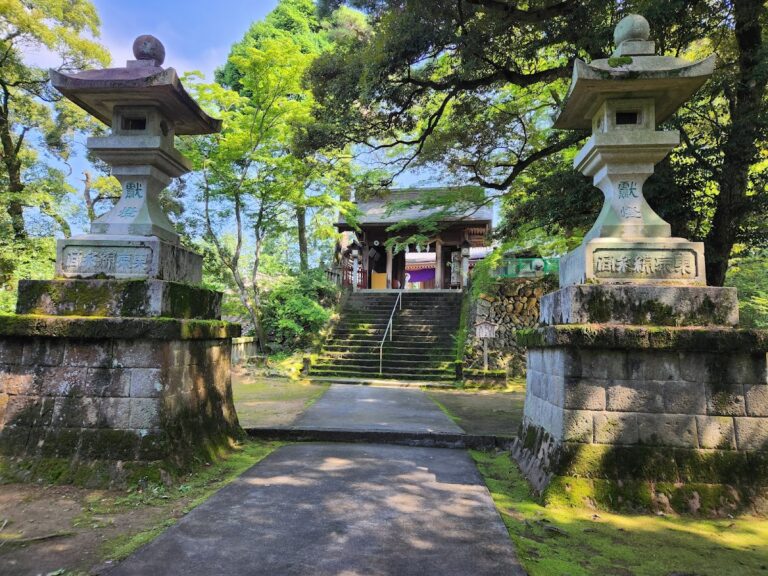
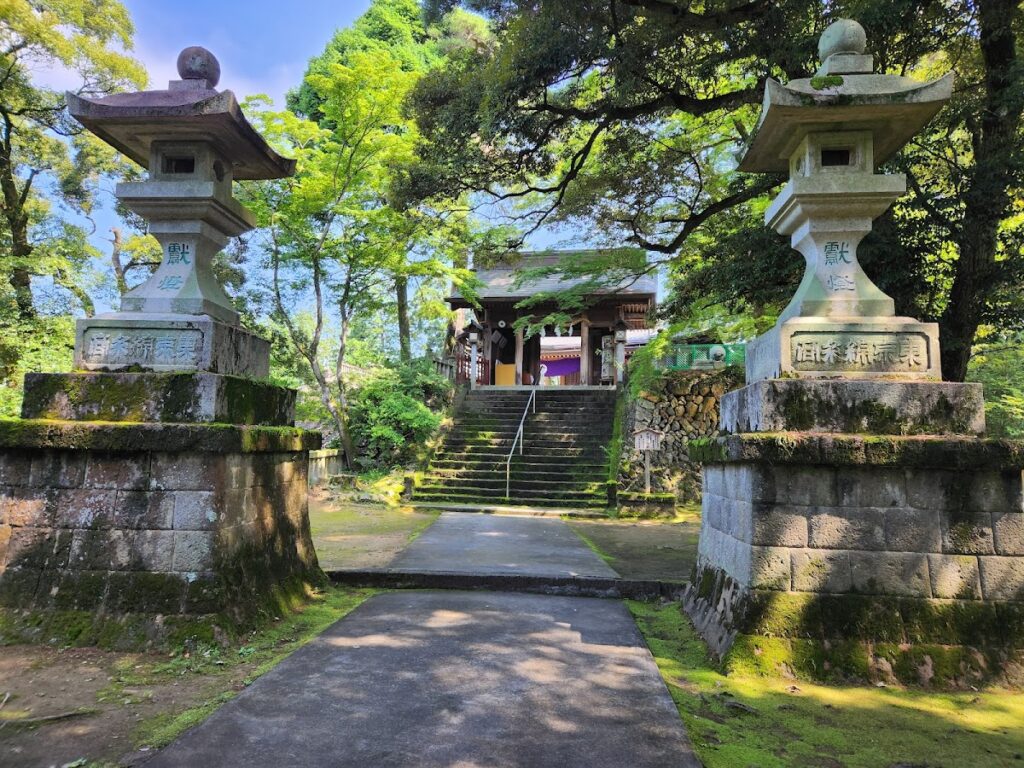
The approach to the main keep from the parking lot has a magnificent shrine gate, and climbing the stone steps from there leads to the shrine building. The castle’s stone walls remain on both sides of these steps, creating a unique landscape where the shrine and castle ruins are integrated.
Main Keep Stone Walls
One of the biggest highlights within the shrine grounds is the high stone walls surrounding the main keep. Built during the Sengoku period (Warring States period), these stone walls reach heights of over 8 meters in some places, boasting a scale rarely seen in mountain castles in the Kanto region.
The stone walls, constructed using the nozurazumi technique (rough-stone masonry), remain remarkably strong even after more than 400 years, a testament to the advanced castle-building techniques of the time.
Observation Spot
The view from the summit of Mt. Karasawayama is magnificent, offering a panoramic view of the Kanto Plain on clear days. It’s even possible to see the Tokyo Skytree and the skyscrapers of Shinjuku, making it a popular photo spot for visitors.
Remains of the Castle Site
Various remains of Karasawayama Castle can be found around the shrine:
- Yotsume-bori: A defensive structure consisting of a series of deep moats
- Otemon-mon Site: The location of the castle’s main gate
- Ido-no-satsu: A well that secured water for daily life within the main enclosure
- Dorui: Earthen defensive walls surrounding each enclosure
- Koguchi: Remains of the castle gate
By visiting these remains while paying your respects, you can experience the atmosphere of the Sengoku period.
A Aspect as a Cat Shrine
In recent years, Karasawayama Shrine has also attracted attention as a “cat shrine.” Many cats live on the grounds, bringing comfort to visitors. The shrine office also offers goshuin (shrine stamps) and amulets with cat motifs, making it a popular spot for cat lovers.
Benefits and Faith of Karasawayama Shrine
Main Benefits
Karasawayama Shrine, dedicated to Fujiwara no Hidesato, is believed to offer the following benefits:
- Good Fortune in Competitions and Victory: As the warrior who defeated Taira no Masakado, it is believed to grant prayers for victory in competitions, matches, and examinations.
- Protection from Misfortune and Disaster: Based on the legend of slaying a centipede, it is believed to have the power to ward off misfortune.
- Family Safety: Faith as a guardian deity of the region.
- Traffic Safety: As a shrine on a mountaintop, it protects travelers.
- Good Fortune and Prosperity: Comprehensive good fortune due to its status as a special government-supported shrine.
Annual Events and Festivals
Karasawayama Shrine holds various festivals throughout the year:
- New Year’s Day Festival: A festival celebrating the New Year on January 1st.
- Spring Grand Festival: An important festival held in spring.
- Autumn Grand Festival: The largest annual festival held in autumn.
- Monthly Festivals: Regular monthly festivals.
The Autumn Grand Festival, in particular, attracts many worshippers and is an important event for the community.
Access to Karasawayama Shrine
Access by Car
Although Karasawayama Shrine is located on a mountaintop, you can drive almost all the way to the parking area.
Route from Major Roads:
- From Tohoku Expressway Sano-Fujioka IC: Approximately 15 minutes
- From Kita-Kanto Expressway Sano-Tanuma IC: Approximately 20 minutes
Car Navigation Settings:
- Address: 1409 Fujimachi, Sano City, Tochigi Prefecture
- Phone Number: 0283-24-1138
Notes:
- The mountain road has narrow sections, so be careful of oncoming traffic.
- Large vehicles are advised to approach from the Tanuma direction.
- Approximately 5-10 minutes on foot from the parking lot to the shrine.
- Parking is free of charge.
Access by Public Transportation
Train + Taxi:
- Approximately 20 minutes by taxi from JR Ryomo Line/Tobu Sano Line “Sano Station”.
- Approximately 6 kilometers from Sano Station.
Train + Walking:
- Approximately 1 hour 30 minutes to 2 hours on foot from Sano Station.
- Hiking equipment is necessary as you will be using mountain trails.
Local Bus:
- There are no regular bus services, so taking a taxi is recommended.
Estimated Time Required for Visiting the Shrine
- Shrine Visit Only: 30 minutes to 1 hour
- Including Castle Ruins Exploration: 1 hour 30 minutes to 2 hours
- Thorough Exploration: 2 hours to 3 hours
If you plan to explore the entire castle ruins, comfortable walking shoes and clothing are recommended.
Nearby Tourist Attractions
Sightseeing in Sano City
When visiting Karasawayama Shrine, be sure to explore other tourist spots in Sano City:
- Sano Yakuyoke Daishi (Sōzōji Temple): One of the three major temples in the Kanto region, famous for warding off evil.
- Sano Premium Outlets: A large outlet mall where you can enjoy shopping.
- Sano Ramen: Sano City is famous for its bamboo-kneaded ramen, and there are many famous restaurants in the city.
- Izuruhara Benten Pond: A beautiful spring-fed pond selected as one of Japan’s 100 best waters by the Ministry of the Environment.
Ashikaga City Area
The neighboring city of Ashikaga also has many attractions:
- Ashikaga School: A historical site known as the oldest school in Japan.
- Bannaji Temple: A national treasure temple built on the site of the Ashikaga clan’s residence.
- Ashikaga Flower Park: A flower theme park famous for its wisteria.
Notes and Manners for Visiting the Shrine
Clothing and Items to Bring
- As it is a mountaintop location, appropriate clothing for the season (cold or hot) is necessary.
- Wear comfortable walking shoes (especially important for exploring the castle ruins).
- Be careful as the ground can be slippery in rainy weather.
- Bringing drinking water is recommended.
Manners for Visiting the Shrine
- Bow when passing through the main gate.
- Cleanse your hands and mouth at the water basin before praying.
- Pray using the two bows, two claps, and one bow method.
- Treat the cats on the shrine grounds gently and refrain from feeding them.
- The castle ruins are valuable cultural assets, so do not enter restricted areas.
Photography
- Photography is generally permitted on the shrine grounds.
- Permission may be required to photograph inside the shrine buildings.
- Remember to be considerate of other visitors.
Goshuin (Shrine Seals) and Amulets
Goshuin (Shrine Seals)
Goshuin can be obtained at the shrine office at Karasawayama Shrine. In addition to the regular goshuin (temple/shrine stamps), seasonal and cat-themed special goshuin are sometimes offered.
Reception Hours: Usually 9:00 AM – 4:00 PM (may vary)
Offering Fee: Approximately 300-500 yen
Amulets and Offerings
- Victory Amulet: An amulet for improving luck in competitions
- Exorcism Amulet: An amulet for warding off misfortune
- Traffic Safety Amulet: An amulet for praying for traffic safety
- Cat-themed Amulet: A popular offering in recent years
- Divine Talisman: A talisman for praying for family safety
The Four Seasons of Karasawayama Shrine
Spring (March-May)
During cherry blossom season, cherry blossoms bloom throughout the shrine grounds and along the approach, attracting many visitors enjoying the blossoms. It’s also a beautiful season of fresh greenery, perfect for hiking.
Summer (June-August)
The mountaintop is cooler than the city and is a popular summer resort. The temple grounds, surrounded by lush forests, are relatively comfortable to visit even in summer.
Autumn (September-November)
Known as a famous spot for autumn foliage, the best time to visit is from late October to early November. The contrast between the colorful trees and the stone walls is beautiful, attracting many photography enthusiasts. The Autumn Grand Festival is also held.
Winter (December-February)
The temple is bustling with many visitors during the New Year’s pilgrimage season. Snow sometimes accumulates, creating a fantastical atmosphere for the shrine and castle ruins amidst the snow. However, caution is needed regarding icy roads.
Related Cultural Properties and Historic Sites
National Historic Site
The Karasawayama Castle Ruins were designated a National Historic Site in 1984. The vast castle ruins, spanning approximately 194 hectares, are highly regarded as a valuable historical site that preserves the appearance of a mountain castle from the Sengoku period (Warring States period).
Continued Top 100 Japanese Castles
In 2017, Karasawayama Castle was selected as one of the Continued Top 100 Japanese Castles (No. 118). This further increased its popularity among castle enthusiasts, attracting many castle lovers from all over Japan.
Seven Famous Castles of the Kanto Region
Karasawayama Castle is counted as one of the Seven Famous Castles of the Kanto Region, along with Kawagoe Castle, Oshi Castle, Kanayama Castle, Maebashi Castle, Utsunomiya Castle, and Ota Castle (there are various theories).
Summary
Karasawayama Shrine is a historical shrine dedicated to Fujiwara no Hidesato, a hero of the Heian period, and is also a valuable spot where you can experience the remains of Karasawayama Castle, a famous castle from the Sengoku period.
Located on a mountaintop 247 meters above sea level, this shrine boasts a variety of attractions: panoramic views of the Kanto Plain, opportunities to interact with cats, the beauty of nature throughout the seasons, and the chance to explore the historically romantic castle ruins. It’s a place that can be enjoyed by a wide range of people, from history buffs and castle enthusiasts to nature lovers and cat lovers alike.
When you visit Sano City, be sure to stop by Karasawayama Shrine and experience the atmosphere of one of Kanto’s leading mountain castles while reflecting on the great achievements of Fujiwara no Hidesato. You’ll likely receive blessings for improved luck and protection from evil, while enjoying a special time where history and nature harmonize.