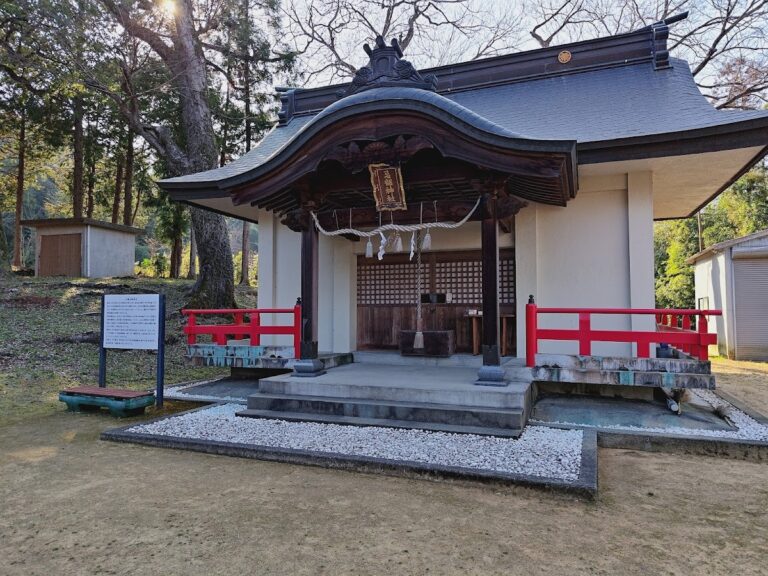
Complete Guide to Kawada Shrines | History, Deities, and Access Information for Shrines in Shiga, Tokushima, and Kagoshima
There are several shrines named “Kawada Shrine” throughout Japan. Each has a different history and characteristics, and has been revered as a center of local faith. This article provides detailed explanations of Kawada Shrines in various locations, including Kawada Shrine in Koka City, Shiga Prefecture, Kawada Hachiman Shrine in Yoshinogawa City, Tokushima Prefecture, and Kawada Shrine in Kagoshima City.
Kawada Shrine in Tongu, Tsuchiyama-cho, Koka City, Shiga Prefecture
Overview and History
Kawada Shrine, located in Tongu, Tsuchiyama-cho, Koka City, Shiga Prefecture, is known as a candidate for a Myojin Taisha (a major shrine) listed in the Engishiki Jinmyocho (a list of shrines compiled in the Heian period). It is an ancient shrine said to have been established in 885 AD (Ninna 1) when Takihara Okami was invited from Ise Province.
It is located approximately 7 km northeast of Koka Station on the Kusatsu Line and approximately 1 km north of the Koka-Tsuchiyama Interchange on the Shin-Meishin Expressway. Formerly known as “Takayasu Daimyojin” and “Kawada Taki Daimyojin,” the shrine’s name was changed to its current form in 1876 (Meiji 9).
Deities and Beliefs
The main deity is Takihara Okami, and the shrine has deep ties to Ise Grand Shrine. The place name “Tongu,” where the shrine is located, originates from the site of the Tarumi Tongu, a lodging place for the Ise Saio procession, located approximately 500 meters east of the shrine.
A legend remains that in ancient times, Princess Yamato-hime performed a purification ritual in the Shirakawa River, indicating the close relationship of this region with Ise Grand Shrine. Due to this historical background, the shrine has served as an important center of local faith as a former prefectural shrine.
Access and Visiting Information
Location: 769 Tongu, Tsuchiyama-cho, Koka City, Shiga Prefecture
Transportation Access:
- Approximately 15 minutes by car from JR Kusatsu Line Koka Station
- Approximately 3 minutes by car from Shin-Meishin Expressway Koka-Tsuchiyama IC
- Located north of National Route 1
The shrine grounds are surrounded by a tranquil natural environment, and a sacred atmosphere can be felt as you proceed along the approach. Traces of Tsuchiyama-juku, a post town that flourished on the Tokaido road, remain in the surrounding area.
Kawada Shrine in Kitanaiki, Minakuchi-cho, Koka City, Shiga Prefecture
Shrine Characteristics
Even within Koka City, there is another Kawada Shrine located in Kitanaiki, Minakuchi-cho. This is a separate shrine from the Kawada Shrine in Tsuchiyama-cho, and has its own unique deities and history.
Location: 490 Kitanaiki, Minakuchi-cho, Koka City, Shiga Prefecture
Deities Enshrined
The main deity enshrined is Amenoyukawatanagi-no-mikoto. Amenoyukawatanagi-no-mikoto is known as the ancestral deity of the ancient Tottori clan and has been revered since ancient times.
The following deities are also enshrined as subordinate deities:
- Amenokawatana-no-mikoto
- Amenokoyane-no-mikoto
- Onamuchi-no-mikoto
Divine Emblem and Shrine Rank
The divine emblem is a “descending wisteria,” indicating the shrine’s rank. Situated in a tranquil natural environment, it is revered as the local guardian deity.
Kawada Hachiman Shrine, Yoshinogawa City, Tokushima Prefecture
History and Origin
Located in Yoshinogawa City, Tokushima Prefecture, Kawada Hachiman Shrine is situated in the middle reaches of the Yoshino River, a turbulent river also known as “Shikoku Saburo.” It played an important role as the guardian shrine of the Awa Inbe clan, a group of professionals who oversaw the rituals of the ancient imperial court.
Deity
The main deity is Hondawake-no-Mikoto, and the shrine is based on Hachiman worship. Hondawake-no-Mikoto is another name for Emperor Ojin and is widely worshipped as a god of military fortune.
Annual Festival and Autumn Festival
The biggest highlight of Kawada Hachiman Shrine is the annual Autumn Festival, held on October 22nd. This festival is known as a representative traditional event of the region.
Festival Features:
- Several portable shrines, each weighing approximately 1.5 tons, make an appearance.
- Parishioners carry the shrines along a 200-meter-long approach to the shrine.
- A highlight is the magnificent sight of the shrines rushing up the 50 stone steps.
- The portable shrines are carried out.
The scene of the shrines ascending the stone steps is breathtaking and attracts many spectators. Due to the declining birthrate and aging population, some districts are no longer able to bring out shrines, instead donating “HACHIMAN” floats, demonstrating how the festival continues to preserve tradition while adapting to changing times.
Annual Festivals
In addition to the Autumn Festival, various festivals are held throughout the year:
- Ritual: 1st, 2nd, and 3rd of the Lunar New Year
- Welcoming the Gods Festival: 9th of the Lunar New Year
- Omato Ritual: 24th and 25th of the 6th lunar month
- Summer Festival: 22nd October (Gregorian calendar)
- Autumn Festival: 22nd October (Gregorian calendar)
These festivals are firmly established as annual events in the region and are deeply rooted in the lives of parishioners and local residents.
Access Information
Location: Kawada-cho, Yoshinogawa City, Tokushima Prefecture
Transportation Access:
- Within walking distance of Gaku Station on the JR Tokushima Line
- Easily accessible from the center of Yoshinogawa City
The shrine grounds are surrounded by abundant nature, and the flow of the Yoshino River can be seen from the grounds.
Kawada Shrine (Former Site of Okawa-dera Temple) in Kagoshima City
Deity and History
Kawada Shrine, located in Kawada-cho, Kagoshima City, is a shrine with a completely different character from other Kawada Shrines. The enshrined deity is Kawada Yoshiaki, a real historical figure from the 16th century.
Kawada Yoshiaki was a military strategist who served Shimazu Takahisa and Shimazu Yoshihisa. He was responsible for military strategy in numerous battles for the Shimazu family, and is credited with leading them to victory.
Location and Characteristics
The shrine is located along a mountain stream, within the former Mitsuein area of Satsuma Province. As its alternative name, Okawa-dera Temple Ruins, suggests, it is believed that the shrine was built on the site of a former temple.
It is a rare type of shrine, enshrining a military strategist from the Sengoku period, and as a place of worship deeply connected to the history of the Shimazu family, it conveys the history of the region to the present day.
Kawada Shrine in Konan City, Shiga Prefecture
There is also a Kawada Shrine in Konan City, Shiga Prefecture. This shrine is also considered a candidate for the Shikinaisha (a shrine listed in the Engishiki, an ancient Japanese legal code), and its former rank was Village Shrine. It is a separate shrine from the Kawada Shrine in Koka City, and has functioned as a center of faith in the Konan region.
The detailed deities and history are based on local traditions, and it has been revered as a shrine protecting this region since ancient times.
About the Name of Kawada Shrine
The name “Kawada” has different origins in various regions. In many cases, it originates from place names, but there are also cases where it was named after topographical features related to waterfronts or rivers.
It is not uncommon for shrines with the same name to exist throughout Japan, each developing its own unique history and beliefs. In the case of Kawada Shrine, there are distinctive shrines located in the distant regions of Shiga, Tokushima, and Kagoshima, making it a good example of the diversity of shrine faith in Japan.
Importance as a Candidate for a Shikinaisha
Among the Kawada Shrines in Shiga Prefecture, there is one considered a candidate for a Shikinaisha, a shrine listed in the Engishiki Jinmyocho (a list of shrines compiled in the Heian period, 927 AD). A Shikinaisha is a shrine listed in the Engishiki Jinmyocho, compiled in the mid-Heian period, and was considered important by the imperial court at the time.
A candidate for a Shikinaisha refers to a shrine that is a candidate when there are multiple possible locations for a Shikinaisha. The fact that Kawada Shrine is considered a candidate is evidence that an important shrine existed in this region since ancient times.
Role of Kawada Shrines in the Region
Kawada Shrines in various regions have played an important role in their respective areas.
Center of Worship
As a tutelary shrine, it has attracted the faith of local residents and functioned as a place for prayer and gratitude at important life events. It serves as a place to receive various wishes, such as for a baby’s first shrine visit, Shichi-Go-San (a traditional rite of passage for children), exorcism, and success in examinations.
Strengthening Community Bonds Through Festivals
Large-scale festivals, particularly the annual festival of Kawada Hachiman Shrine in Tokushima Prefecture, are important opportunities to strengthen community bonds. The cooperation of parishioners in carrying festival floats and conducting the festival fosters intergenerational connections.
Passing Down History and Culture
The traditions and rituals passed down at each shrine are valuable cultural heritage that transmit the history and culture of the region to future generations. A multi-layered history, including ancient forms of belief and connections to historical events of the medieval and early modern periods, is preserved through these shrines.
Manners and Etiquette for Visiting Shrines
When visiting Kawada Shrine, please observe general shrine visiting etiquette.
Basic Worship Etiquette
- Bow before passing through the torii gate.
- Walk along the approach to the shrine, avoiding the center.
- Purify your body and mind at the water basin.
- Bow twice, clap twice, and bow once in front of the main hall.
- Bow again at the torii gate when leaving.
Precautions During Festivals
Especially during large-scale festivals like the annual festival of Kawada Hachiman Shrine, many worshippers and spectators visit. Please be considerate of the parishioners and festival organizers, and view from the designated viewing areas.
Nearby Tourist Attractions
Around Koka City, Shiga Prefecture
When visiting Kawada Shrine, you can also visit nearby historical sites.
- Tarumizu Temporary Palace Site: Site of the lodging for the Ise Saio procession
- Tsuchiyama Post Town: A post town on the Tokaido Fifty-three Stations route
- Koga Ninja Village: A facility where you can learn about the history of Koga ninjas
Around Yoshinogawa City, Tokushima Prefecture
- Yoshinogawa River: A majestic river known as Shikoku Saburo
- Historical Sites Related to the Awa Inbe Clan: Traces of an ancient professional group
- Tokushima Traditional Culture Facilities: A place to experience Tokushima culture, including Awa Odori dance
Kawada Shrine in Modern Times
Declining Birthrate, Aging Population, and the Succession of Festivals
As the case of Kawada Hachiman Shrine in Tokushima Prefecture shows, many regions are experiencing a declining birthrate and aging population, making the maintenance of traditional festivals a challenge. The decrease in young people carrying festival floats has forced some districts to change the form of their festivals.
However, even under these circumstances, efforts are being made to continue participating in the festival in new forms, such as the dedication of elaborately constructed objects, demonstrating a continuous effort to adapt to the times while preserving tradition.
Value as a Tourism Resource
Kawada Shrines throughout Japan are attracting attention as tourism resources due to their historical value and the appeal of their festivals. In particular, the annual festival of Kawada Hachiman Shrine in Tokushima Prefecture is a highlight, with its magnificent procession of floats ascending the stone steps, attracting many spectators from both within and outside the prefecture.
Information Dissemination in the Digital Age
In modern times, efforts are underway to disseminate information about shrines through social media and websites. Efforts are being made to convey the charm of shrines to a wider audience by distributing videos of the annual festivals and providing detailed information about the shrines’ history and cultural assets.
Summary
Kawada Shrines located throughout Japan each possess their own unique history and characteristics, and have played an important role as centers of local faith.
Kawada Shrine in Koka City, Shiga Prefecture, is a candidate for an Engishiki-listed shrine, possessing ancient status and conveying its deep connection to Ise Grand Shrine to this day. Kawada Hachiman Shrine in Yoshinogawa City, Tokushima Prefecture, is deeply rooted in the community as the guardian shrine of the Awa Inbe clan and known for its magnificent annual festival. Kawada Shrine in Kagoshima City has a unique character, as it enshrines a military strategist who served the Shimazu family.
Visiting these shrines allows you to experience the diversity of Japanese Shinto beliefs and the unique history and culture nurtured in each region. When visiting, why not quietly offer your prayers while paying respect to the unique history and traditions of each shrine?
As a local guardian shrine, a witness to history, and a place for cultural inheritance, Kawada Shrine will continue to be a spiritual haven for many people.