
Complete Guide to Kitabatake Shrine | A Thorough Explanation of the Famous Garden, Goshuin (Shrine Seal), and Kiriyama Castle Ruins Associated with the Governor of Ise Province
Nestled quietly in the mountains of Misugi-cho, Tsu City, Mie Prefecture, Kitabatake Shrine is a historically significant shrine associated with the Kitabatake clan, the governors of Ise Province who were active during the Nanboku-cho period. With its beautiful garden designated as a national historic site and place of scenic beauty, its status as one of the fifteen shrines of the Kenmu Restoration, and the ruins of Kiriyama Castle towering behind it, it’s a must-see for history buffs and garden lovers alike.
What is Kitabatake Shrine? | A Historic Shrine Dedicated to a Loyal Retainer of the Southern Court
Kitabatake Shrine is a shrine dedicated to Kitabatake Akinori, the first governor of Ise Province, who ruled Ise Province from the Muromachi period to the Sengoku period. Located in Kamitaki, Misugi-cho, Tsu City, Mie Prefecture, it stands on the site of the Kitabatake clan’s former residence, which once flourished as the “Taki Palace of Okuichishi.” ### The Deities Enshrined and the History of the Kitabatake Clan
**The main deity enshrined is Kitabatake Akiyoshi, the first governor of Ise Province. His father, Kitabatake Chikafusa, and his elder brother, Kitabatake Akiie, are also enshrined as subordinate deities. The Kitabatake clan was a prestigious noble family descended from the Murakami Minamoto clan’s Nakain branch, and played a central role in the Southern Court during the Nanboku-cho period.
Kitabatake Chikafusa was a prominent Southern Court official known as the author of the *Jinnō Shōtōki* (Chronicle of the Legitimate Succession of the Divine Emperors), and his son, Akiie, was a renowned general who served as governor of Mutsu Province in eastern Japan. His third son, Akiyoshi, was appointed governor of Ise Province in 1336, established his residence in Taki, and became the founder of the Ise Kitabatake family. Akiyoshi built Kiriyama Castle and is remembered in history for his dedication to protecting the Southern Court.
Status as one of the Fifteen Shrines of the Kenmu Restoration
Kitabatake Shrine is counted as one of the “Fifteen Shrines of the Kenmu Restoration.” The Fifteen Shrines of the Kenmu Restoration are a collective term for shrines dedicated to the meritorious retainers of the Southern Court who contributed to the Kenmu Restoration. Interestingly, Kitabatake Shrine holds a special position as the only one of the fifteen shrines with a history dating back to before the modern era.
During the Kanbun era (1661-1673) of the early Edo period, the shrine buildings were renovated with the support of Todo Takatsugu, the lord of the Tsu Domain. After the Meiji Restoration, in 1882 (Meiji 15), it was ranked as a special government-sponsored shrine. This high status speaks to the importance of the historical role played by the Kitabatake clan.
Highlights of the Nationally Designated Scenic Spot “Kitabatake Clan Residence Garden”
One of the greatest attractions of visiting Kitabatake Shrine is the “Kitabatake Clan Residence Garden,” which is designated as a national historic site and scenic spot. This garden is an extremely valuable example of a samurai garden from the Muromachi period and is considered one of Japan’s three greatest samurai gardens.
A Famous Garden of the Muromachi Period | Designed by Hosokawa Takakuni
The garden is said to have been designed by Hosokawa Takakuni, who held the position of Kanrei (a high-ranking position second only to the Shogun) in the Muromachi Shogunate. Its skillful combination of dry landscape garden and pond-centered strolling garden style strongly reflects the characteristics of Muromachi period garden design and holds high value for garden history research.
The garden covers approximately 3,000 square meters and is a pond-centered strolling garden with a central pond around which visitors can walk. A dry landscape stone arrangement is placed at the back of the pond, and the technique of incorporating the surrounding mountains as borrowed scenery truly embodies the aesthetic sensibilities of the Muromachi period.
Seasonal Scenic Beauty
The Kitabatake Clan Residence Garden displays different expressions in each of the four seasons.
In Spring, the fresh greenery is beautiful, and the trees planted around the pond sprout new leaves, creating a vibrant landscape full of life. In Early Summer, azaleas and rhododendrons add color, and during the rainy season, the moss-covered stonework creates an even more charming atmosphere.
The autumn foliage season is particularly spectacular, with the entire garden dyed in red and yellow, attracting many tourists. The scenery of autumn leaves, including maple, ginkgo, and other trees, is truly picturesque. The best time to visit is usually from mid to late November.
In Winter, the snow-covered garden displays a serene beauty, with the stonework, pond, and mountains in the background creating an atmosphere reminiscent of an ink painting.
Detailed Information on Garden Visits
An admission fee is required to visit the garden.
- Admission Fee: Adults 300 yen, High school students 200 yen, Elementary and junior high school students 100 yen
- Visiting Hours: 9:00 AM – 5:00 PM (may vary depending on the season)
- Closed Days: Generally none (may be closed in case of severe weather)
There are rest areas within the garden, allowing visitors to enjoy the scenery at their leisure. Information boards are placed throughout the garden, making it appealing to learn about the historical background while appreciating the scenery.
Highlights and Cultural Assets within the Shrine Grounds
Besides the garden, there are many other points of interest within the grounds of Kitabatake Shrine.
Main Hall and Worship Hall
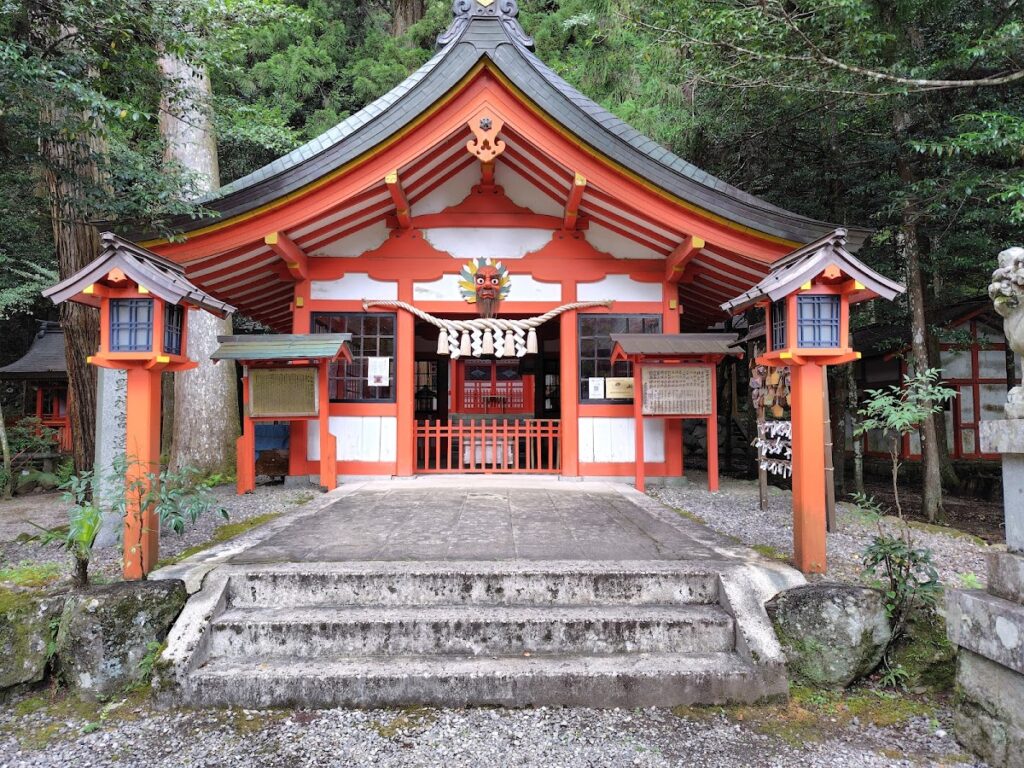
The current shrine buildings were constructed in the early Edo period. The main hall is in the style of a one-bay nagare-zukuri (stream-style) building. A carving of a tengu’s face is located above the front of the main hall, a distinctive design that catches the eye of worshippers. This tengu is thought to symbolize protection against evil and safeguarding the sacred area.
The worship hall is in the irimoya-zukuri (hip-and-gable) style, allowing for a tranquil atmosphere during worship. The area surrounding the shrine is lined with towering trees, some estimated to be hundreds of years old, creating a solemn atmosphere befitting a sacred site.
Remains of the Kitabatake Clan Residence
The entire shrine grounds are designated as a national historic site as the “Taki Kitabatake Clan Castle and Residence Site.” Remains such as stone walls, moats, and gates from the time remain at the site, carefully preserved and open to the public along with explanatory signs.
In particular, a portion of the stone wall around the entrance remains in excellent condition, allowing us to imagine the scale and structure of the residence in its heyday. These remains are valuable historical materials for understanding the realities of samurai residences during the Sengoku period.
Subsidiary Shrines and Stone Monuments
In addition to the main shrine, several subsidiary shrines are enshrined within the grounds. Originally, a Hachiman shrine was located here, and it was merged with the Kitabatake Shrine when it was founded.
Furthermore, the shrine grounds also feature stone monuments commemorating the loyal retainers who sacrificed their lives for their lord during the downfall of the Kitabatake clan, as well as memorials to successive governors of Ise Province, allowing visitors to learn about the history of the Kitabatake clan from multiple perspectives.
Popular Goshuin and Castle Seal Information
In recent years, Kitabatake Shrine has been bustling with visitors seeking goshuin (shrine seals) and castle seals.
Goshuin of Kitabatake Shrine
In addition to regular goshuin, Kitabatake Shrine also offers seasonal and monthly limited-edition designs. The monthly limited-edition goshuin are particularly popular and attract attention among collectors.
The goshuin sometimes bears the “Fifteen Shrines of the Kenmu Restoration” stamp, adding to their historical value. Both pre-printed and handwritten goshuin are often available.
Offering Fee is usually around 300 to 500 yen.
Goshuin (Castle Seal) of Kiriyama Castle
Kitabatake Shrine also offers a Goshuin for the Kiriyama Castle ruins located behind the shrine. Goshuin have become increasingly popular due to the recent castle boom, and many castle enthusiasts visit to obtain the Kiriyama Castle Goshuin.
Kiriyama Castle was a mountain castle built by Kitabatake Akinori, with its main keep located on the summit of Mt. Kiriyama at an altitude of 560 meters. The Goshuin features designs of the castle’s history and the Kitabatake family crest, making it an ideal memento of your visit.
Office Hours
Goshuin and Goshuin are available at the shrine office.
- Reception Hours: 9:00 AM – 5:00 PM (approximately)
- Closed Days: Generally none
*Please note that during peak seasons or religious ceremonies, we may not be able to accommodate requests. If you wish to be sure to receive a Goshuin, we recommend contacting us in advance.
Hiking to Kiriyama Castle Ruins | Visiting a Sengoku Period Mountain Castle
If you visit Kitabatake Shrine, a hike to the Kiriyama Castle ruins is a must-try.
History of Kiriyama Castle
Kiriyama Castle was a mountain castle built by Kitabatake Akinori around 1336 (Engen 1), and functioned as a fortified stronghold for the Ise Kitabatake clan. In peacetime, they resided in a mansion at the foot of the mountain (the current Kitabatake Shrine grounds), and in wartime, they would take refuge in Kiriyama Castle on the mountaintop.
It is a typical medieval mountain castle with its main keep at the summit of Mt. Kiriyama (560 meters above sea level), and multiple baileys arranged along the ridge. In 1576 (Tensho 4), the Kitabatake clan was destroyed by the invasion of Ise by Oda Nobunaga’s second son, Nobuo, and Kiriyama Castle’s history came to an end.
Hiking Course and Estimated Time
A hiking trail is maintained from the grounds of Kitabatake Shrine to the ruins of Kiriyama Castle’s main keep.
- Trailhead: Behind the grounds of Kitabatake Shrine
- Elevation Difference: Approximately 350 meters
- Estimated Time: Ascent approximately 60-90 minutes, Descent approximately 40-60 minutes
- Difficulty: Intermediate (The trail is well-maintained, but there are some steep sections)
The trail is relatively well-maintained, but since it is a mountain trail, wearing hiking boots or trekking shoes is recommended. Particular caution is needed after rain, as the trail can become slippery.
Views and Ruins from the Summit
From the ruins of Kiriyama Castle’s main keep, a magnificent panoramic view of the Ise Mountains unfolds. On a clear day, you can even see as far as Ise Bay, allowing you to appreciate why the Kitabatake clan chose this location.
The castle ruins retain remnants such as earthworks, moats, and baileys, allowing visitors to learn about the structure of a medieval mountain castle. An explanatory sign is also installed at the main keep site, providing detailed information about the castle’s history and structure.
When hiking, please bring drinking water, snacks, rain gear, and dress appropriately for the season.
Access and Parking Information
Here’s how to access Kitabatake Shrine.
Access by Public Transportation
Train and Bus
- Get off at Ise-Okutsu Station on the JR Meisho Line
- Approximately 10 minutes by taxi
*The Meisho Line has infrequent service, so it’s recommended to check the timetable in advance.
*Bus services from Ise-Okutsu Station are limited, so taking a taxi is more common.
Distance from the nearest major station
- Approximately 50 minutes by car from JR/Kintetsu “Tsu Station”
- Approximately 40 minutes by car from Kintetsu “Matsusaka Station”
Access by car
From the Ise Expressway
- Approximately 40 minutes from “Hisai IC” via National Route 165
- Approximately 35 minutes from “Ichishi-Ureshino IC” via Prefectural Road 43
From National Route 165
- From Matsusaka towards Tsu on National Route 165, follow the signs for “Kamitaki”
Due to the mountainous terrain, there are narrow sections of road. Please drive safely and pay attention to oncoming traffic. In winter, there is a possibility of snow and ice, so we recommend using studless tires and checking road conditions in advance.
Parking
Kitabatake Shrine has a free parking lot.
- Parking Capacity: Approximately 30 regular cars
- Fee: Free
- Large Buses: Parking available (advance notice required)
The parking lot can get crowded during peak tourist seasons such as the autumn foliage season. Early arrival is especially recommended on weekends and holidays.
Nearby Tourist Spots and Gourmet Information
Here are some nearby spots you can enjoy when visiting Kitabatake Shrine.
Tourist Spots in the Misugi Area
Kimigano Dam
A dam located about 15 minutes by car from Kitabatake Shrine. It boasts beautiful lakeside scenery and is a popular driving route.
Mitaki Cherry Blossoms
A famous cherry blossom spot selected as one of Japan’s Top 100 Cherry Blossom Viewing Spots, with approximately 500 mountain cherry trees planted along a 1.5-kilometer stretch. About 20 minutes by car from Kitabatake Shrine.
Akame Forty-Eight Waterfalls
A scenic valley located on the border of Mie and Nara prefectures, featuring a series of waterfalls of various sizes. Approximately 30 minutes by car from Kitabatake Shrine.
Local Cuisine & Dining
The Misugi area is a mountainous region rich in nature, where you can enjoy dishes made with local ingredients.
Misugi Resort
A comprehensive resort facility with hot springs and restaurants, where you can savor dishes made with local ingredients. Day-use bathing is also available.
Misugi Roadside Station
You can purchase fresh local vegetables and specialty products, and there is also a snack corner. It is also convenient for gathering information about the Misugi area.
Annual Events & Festivals
Kitabatake Shrine holds various festivals and events throughout the year.
Main Annual Events
Grand Festival
- The most important festival, held every October, featuring a portable shrine procession and dedication ceremonies.
New Year’s Visit
- Many worshippers visit from New Year’s Day through the third day of the year.
Autumn Foliage Illumination
- During the autumn foliage season in November, the garden may be illuminated (this varies by year).
Crowds During Events
The shrine is especially crowded during the annual festival and on weekends during the autumn foliage season. For those who wish to visit at a leisurely pace, weekdays or early morning visits are recommended.
Etiquette and Manners for Visitors
Here are some basic manners to observe when visiting Kitabatake Shrine.
Etiquette for Visiting the Shrine
- Bow before passing through the torii gate.
- Walk on the path, avoiding the center.
- Purify yourself at the water basin.
- Perform “two bows, two claps, one bow” in front of the main hall.
Precautions When Visiting the Garden
- Smoking is prohibited in the garden.
- Please refrain from touching plants or stonework.
- Please refrain from bringing pets.
- Please be considerate of other visitors when using tripods for photography.
Precautions When Climbing Kiriyama Castle
- Please take all your trash with you.
- Please stay on the hiking trail.
- Do not provoke wild animals if you encounter them.
- Do not damage the ruins or take stones or other objects.
Summary | Enjoy the Charms of Kitabatake Shrine
Kitabatake Shrine is a valuable historical site where you can feel the historical romance of the Nanboku-cho period, and it is a representative tourist spot in Mie Prefecture with a beautiful garden designated as a national scenic spot. With its diverse attractions—the beauty of nature throughout the seasons, the ruins of a Sengoku period mountain castle, and popular goshuin (temple/shrine stamps)—this shrine is recommended not only for history buffs but also for all those who love nature and gardens.
Located in the mountains of Tsu City, it offers a tranquil environment away from the hustle and bustle of the city, allowing you to quietly contemplate history. Following in the footsteps of the Kitabatake clan, who flourished as governors of Ise Province, strolling through a famous garden from the Muromachi period, and gazing at the Ise mountains from the ruins of Kiriyama Castle—this is the kind of fulfilling day you can expect at Kitabatake Shrine.
When visiting Mie Prefecture, be sure to visit Kitabatake Shrine and experience its unique atmosphere created by the harmony of history and nature. Its beauty, especially during the autumn foliage season, is exceptional, making it a place you’ll want to visit again and again.

