Complete Guide to Kōonji Temple | History, Goshuin (Temple Seal), and Access Information for the 61st Temple of the Shikoku 88 Temple Pilgrimage
About Kōonji Temple
Kōonji Temple is an independent Shingon Buddhist temple located in Minamikawa, Komatsu-cho, Saijo City, Ehime Prefecture. Its official name is Sendansan Kyōōin, and it is the 61st temple of the Shikoku 88 Temple Pilgrimage, beloved by many pilgrims. The principal image is Dainichi Nyorai, and it is particularly known nationwide as the “Koyasu Daishi” temple, attracting a constant stream of visitors praying for safe childbirth and fertility.
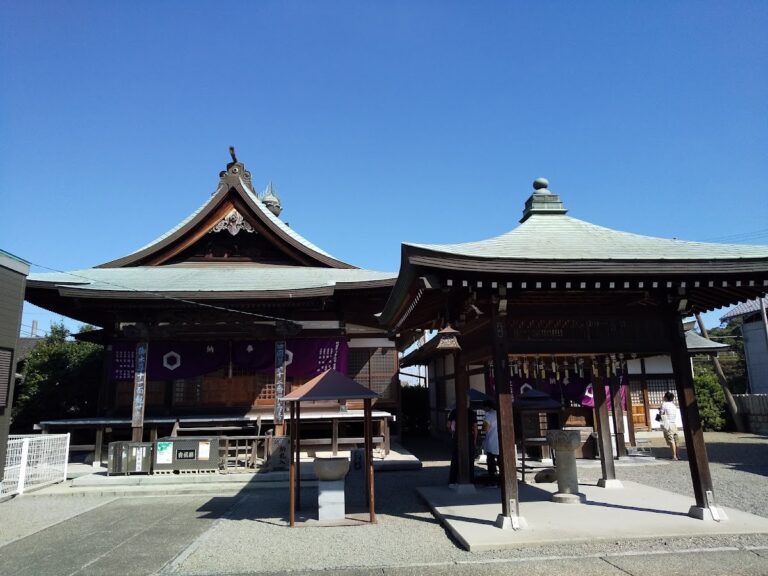
The temple’s most distinctive feature is its modern cathedral built on a vast 10,000-tsubo (approximately 33,000 square meters) site. Constructed of brown reinforced concrete, its imposing 16-meter-tall building stands out even among the Shikoku pilgrimage sites. The first floor houses the main lecture hall, while the second floor serves as both the main hall and the Daishi Hall. The main hall has over 620 seats, providing facilities that meet the needs of modern worshippers.
History of Kōenji Temple
Founded by Prince Shōtoku
Kōenji Temple is one of the oldest temples on the Shikoku Pilgrimage, founded by Prince Shōtoku (574-622). According to legend, when Emperor Yōmei (reigned 585-587) was suffering from illness, Prince Shōtoku built the temple to pray for his father’s recovery. Because of this history, Kōenji Temple has a history as an imperial prayer temple of Emperor Yōmei and has been known as a temple with deep ties to the Imperial family since ancient times.
From its founding, this site has attracted worshippers as a place of great spiritual power. The location, chosen by Prince Shōtoku himself, is situated at the foot of a mountain, in a quiet environment surrounded by nature.
Gyōki and the Development During the Tenpyō Era
During the Tenpyō era (729-749), the renowned monk Gyōki Bodhisattva visited this temple and dedicated himself to its development and improvement. Gyōki is known as a high-ranking monk who, under the orders of Emperor Shōmu, traveled throughout Japan and was involved in the construction and improvement of many temples. At Kōenji Temple, Gyōki also improved the temple grounds, establishing its foundation as a temple.
The Origin of Kōbō Daishi and Koyasu Daishi
During the Daidō era (806-810), when Kōbō Daishi Kūkai, who was traveling through Shikoku, visited this area, he encountered a pregnant woman suffering from labor pains in front of the temple gate. It is said that Kōbō Daishi, out of compassion, performed prayers and blessings, and the woman safely gave birth to a healthy baby boy.
This miraculous event led Kōbō Daishi to designate Kōenji Temple as a pilgrimage site on the Shikoku Pilgrimage. Since then, Kōenji Temple has become widely known as “Koyasu Daishi” (Great Master of Safe Childbirth), and has become a temple visited by women and couples from all over Japan seeking prayers for safe childbirth and fertility. This tradition has been passed down to the present day and remains the most important pillar of faith at Kōenji Temple.
History of War and Reconstruction
Throughout its long history, Kōenji Temple has faced numerous trials. During the Sengoku period (Warring States period), it suffered the tragedy of its temple buildings being destroyed by fire, but each time it was rebuilt with the support of local people and believers. This history of destruction and reconstruction speaks to the deep roots Kōenji Temple has in the community.
During the Edo period, it received protection from the Iyo-Saijo Domain, solidifying its foundation as a temple. It also survived the wave of anti-Buddhist movement after the Meiji Restoration and continues to function as an important pilgrimage site of the Shikoku Pilgrimage to this day.
Modernization and the Construction of the Grand Cathedral
In 1976 (Showa 51), Kōenji Temple underwent a major turning point. Replacing the traditional wooden structure, a modern reinforced concrete cathedral was built. This architecture sparked both praise and criticism, but it garnered attention for its practicality in accommodating many worshippers and as a symbol of the modern temple’s role.
The cathedral features a unique structure integrating the main hall and the Daishi Hall, and its design prioritizes visitor convenience, including barrier-free access and air conditioning. This architecture, aiming for a harmony between tradition and innovation, symbolizes a new era for Koenji Temple.
About Koyasu Daishi
Origin of Koyasu Faith
The origin of Koenji Temple’s affectionate name, “Koyasu Daishi,” dates back to the miraculous power of Kobo Daishi granting safe childbirth. Stories of pregnant women who gave birth safely after Kobo Daishi’s prayers spread rapidly, and since then, Koenji Temple has attracted worshippers as a sacred site for safe childbirth.
Koyasu faith is an ancient Japanese belief in seeking the protection of Buddha during the crucial moment of childbirth, the birth of a new life. The Koyasu Daishi faith at Koenji Temple extends beyond simple prayers for safe childbirth, encompassing a wide range of wishes related to life and family, including fertility, child-rearing, and family health.
The Spread of the Koyasu-ko (Koyasu Association)
The Koyasu-ko, founded by Koenji Temple, is the central organization of the temple’s faith. Formed by women praying for safe childbirth and child-rearing, the Koyasu-ko aims for mutual assistance and deepening of faith. This association has spread beyond the local area and now extends overseas, with over 20,000 members.
The Koyasu-ko holds regular memorial services and study sessions, fostering active interaction among members. Furthermore, special prayers are performed on the Day of the Dog, attracting many pregnant women and their families. The existence of this association makes Koenji Temple more than just a pilgrimage site; it functions as a place of faith deeply integrated into daily life.
Prayer for Safe Childbirth and Goma Ritual
At Koenji Temple, a special Goma ritual is performed for prayers for safe childbirth. The Goma ritual is an important ceremony in Shingon Esoteric Buddhism, in which prayer sticks are burned in a fire to convey the prayers of worshippers to the Buddha. The Goma ritual at Kōenji Temple is considered particularly miraculous, and many worshippers have experienced its efficacy.
For prayers for safe childbirth, blessings are made to the maternity belt and amulets are given. Furthermore, after a safe delivery, it is customary to visit the temple with the child as a thank-you offering, demonstrating the transmission of faith across generations.
Kōenji Temple Grounds Guide
Cathedral (Main Hall/Daishi Hall)
The central cathedral of Kōenji Temple is a reinforced concrete building constructed in 1976. Standing 16 meters tall, its brown exterior is striking even from afar. The building is two stories high, with the first floor serving as the main lecture hall and the second floor housing both the main hall and the Daishi Hall.
The main hall on the second floor houses the principal image, Dainichi Nyorai. Dainichi Nyorai is the highest Buddha in Esoteric Buddhism, symbolizing the very truth of the universe. The hall has over 620 seats, ensuring comfortable worship for the elderly and those with mobility issues.
The Daishi Hall houses a statue of Kobo Daishi, and the air is constantly filled with the scent of incense. Many worshippers clasp their hands together before the statue, entrusting their various wishes to the deity.
Highlights of the Temple Grounds
Besides the main hall, the grounds of Koenji Temple, spanning approximately 10,000 tsubo (about 33,000 square meters), offer numerous points of interest. The grounds are beautifully maintained, and seasonal flowers delight visitors.
The temple office offers Goshuin (temple stamps) and amulets. The Koyasu Daishi amulet, in particular, is popular with worshippers praying for safe childbirth and successful child-rearing. A rest area is also provided on the temple grounds, offering a place for pilgrims to take a break.
The parking lot is spacious and can accommodate large buses. The temple grounds are increasingly barrier-free, making it accessible for wheelchair users.
Inner Sanctuary
Kōenji Temple has an inner sanctuary, visited by those seeking deeper faith. Located in a quiet area slightly away from the main hall, the inner sanctuary is enveloped in a solemn atmosphere. Special prayers are sometimes performed here, allowing visitors to calm their minds and offer prayers in silence.
The path to the inner sanctuary is surrounded by nature, offering a refreshing and cleansing experience. In contrast to the modern atmosphere of the main hall, it retains the charm of a traditional place of worship, showcasing the multifaceted nature of Kōenji Temple.
Principal Image and Temple Treasures
Dainichi Nyorai
The principal image of Kōenji Temple is Dainichi Nyorai. Dainichi Nyorai, known as Mahavairocana in Sanskrit, means “Great Light.” It is the highest-ranking Buddha in Esoteric Buddhism, symbolizing the fundamental principle of the universe itself.
The statue of Dainichi Nyorai at Kōenji Temple is enshrined in a solemn manner, warmly welcoming visitors. Many visitors say that when they clasp their hands together before the statue, they feel a sense of power welling up from deep within their hearts.
Other Buddhist Statues and Temple Treasures
In addition to the principal image of Dainichi Nyorai, Kōenji Temple houses many Buddhist statues, including a statue of Kōbō Daishi. The statue of Kōbō Daishi, especially revered as the “Great Master of Safe Childbirth,” attracts the devotion of many visitors.
The temple also possesses ancient documents and Buddhist implements as treasures, telling the story of the temple’s long history. These treasures are sometimes displayed on special occasions.
Information on Prayers
Prayer for Safe Childbirth
The most representative prayer at Kōenji Temple is the prayer for safe childbirth. It is common to visit the temple on the Day of the Dog in the fifth month of pregnancy and receive blessings on the maternity belt. The dog (inu) is considered a symbol of safe childbirth due to its fertility and easy delivery.
During the prayer for safe childbirth, a Buddhist monk performs chanting and incantations. The maternity belt is stamped with the seal of “Koyasu Daishi” (a Buddhist deity associated with safe childbirth), and prayers are offered for the safety of both mother and child. After the prayer, a safe childbirth amulet and talisman are given.
Reservations can be made by phone in advance, and same-day registration is also possible. The prayer fee can be confirmed at the temple office.
Prayer for Conception
Prayers for conception, wishing to be blessed with children, are also an important prayer at Koenji Temple. Many couples visit the temple believing in the miraculous powers of Koyasu Daishi.
For prayers for conception, it is recommended that both spouses visit together. A Goma ritual is performed, and a fertility amulet is given. Many couples who have actually been blessed with children return to the temple to give thanks, and their joyful voices reach the temple.
Memorial Service for Stillborn Children
Koenji Temple also respectfully performs memorial services for stillborn children. This service commemorates the unborn children who were unable to be born for various reasons, and prays for their peaceful repose.
Mizuko Kuyo (memorial service for aborted or stillborn children) is an important ceremony that also brings healing to the hearts of the parents. A monk will respectfully chant sutras and pray for the peaceful repose of the unborn child. After the service, a visit to the Mizuko Jizo (guardian deity of aborted or stillborn children) is also made.
Individual memorial services are also available, respecting privacy, allowing for a quiet and heartfelt service.
Other Prayers
Besides prayers for safe childbirth and conception, Koenji Temple accepts a variety of prayers. We address various wishes related to daily life, such as family safety, good health, academic success, and business prosperity.
In particular, prayers for the healthy growth of children during Shichi-Go-San (a traditional Japanese rite of passage for children) are popular. As a temple dedicated to Koyasu Daishi (a Buddhist monk), the temple receives strong devotion for all prayers related to children.
Annual Events
New Year’s Events
At the start of the new year, the temple grounds are bustling with visitors for Hatsumode (the first shrine visit of the year). From New Year’s Day through the third day of the year, many believers and local residents visit to pray for peace and prosperity in the new year. The first Goma fire ritual of the year is also performed, praying for safety throughout the year.
Spring and Autumn Grand Festivals
Twice a year, in spring and autumn, grand festivals are held. These festivals feature special religious services and attract many believers. Goma fire rituals and sermons are also held, providing an opportunity to deepen one’s faith.
Dog Day Memorial Service
On the Dog Day of each month, a special memorial service for safe childbirth is held. On this day, many pregnant women and their families visit the temple, filling the grounds with activity.
Kobo Daishi Memorial Service
On March 21st (according to the old calendar), the anniversary of Kobo Daishi’s death, a memorial service called Miekū is held. This is an important event expressing gratitude and appreciation to Kobo Daishi, and many worshippers visit.
Access Information
Location
19 Minamikawa-ko, Komatsu-cho, Saijo City, Ehime Prefecture 799-1101
Access by Train
Approximately a 3-minute walk from JR Yosan Line’s “Iyo-Komatsu Station,” making it one of the closest temples to a train station among the Shikoku Pilgrimage sites. Upon exiting the station and turning right, you will immediately see the main hall of Koenji Temple. This high level of accessibility is a major attraction for pilgrims.
Access by Car
Approximately 3 minutes from the Matsuyama Expressway’s “Iyo-Komatsu Interchange.” It is also easily accessible from National Route 11. The parking lot is large enough to accommodate approximately 50 regular cars and several large buses, and is free of charge.
Distance to Previous and Next Temples
- Approximately 10km from Temple No. 60, Yokomine-ji (approx. 30 minutes by car)
- Approximately 1km from Temple No. 62, Hoju-ji (approx. 15 minutes on foot)
The path from Yokomine-ji to Koen-ji is a downhill mountain trail with a significant elevation change. For those walking the pilgrimage, it is recommended to plan with ample time and physical stamina.
Visiting Information
Visiting Hours
7:00 AM – 5:00 PM (may vary depending on the season)
The same applies to the hours for receiving the temple stamp; however, it is recommended to allow ample time for your visit.
Admission Fee
Entry to the temple grounds is free. A separate fee is required for receiving temple stamps and amulets.
Temple Lodging
Koen-ji does not have temple lodging facilities, but there are many guesthouses and hotels in the surrounding area. Accommodation is also available around Iyo-Komatsu Station, which can be used as a base for your pilgrimage.
Etiquette for Visiting the Temple
As this is a temple on the Shikoku Pilgrimage, please observe basic visiting etiquette. Bow at the temple gate before entering the grounds, and purify your hands and mouth at the water basin. The general order is to chant sutras at the main hall and the Daishi Hall, and then receive a temple stamp at the temple office.
Photography is permitted, but please be considerate of other visitors. In particular, refrain from taking photos during prayers.
Nearby Attractions
Mount Ishizuchi
Mount Ishizuchi, a symbol of Saijo City, is a sacred mountain and the highest peak in western Japan (1,982m). It has been an object of mountain worship since ancient times, and many ascetic monks have trained there. It is about an hour’s drive from Koenji Temple, and is worth visiting if you have the time.
Saijo City Center
A short trip from Iyo-Komatsu Station will take you to the center of Saijo City. Saijo City is famous for its natural springs called “Uchinuki,” where pure groundwater gushes forth in various locations throughout the city. In autumn, the magnificent Saijo Festival is held, attracting many tourists.
Temple No. 62: Hoju-ji Temple
This is the next temple on the pilgrimage route, located about a 15-minute walk from Koen-ji Temple. Situated in the heart of Komatsu town, it is a temple with a tranquil atmosphere. It is common to visit both Koen-ji and Hoju-ji together.
The Charm of Koen-ji Temple
Harmony of Tradition and Innovation
The greatest charm of Koen-ji Temple lies in the coexistence of its ancient history, dating back to the time of Prince Shotoku, and the innovation of its modern cathedral. With a history of over 1300 years, its commitment to meeting the needs of modern worshippers demonstrates a new model for Buddhist temples.
While cherishing traditional faith, it also provides a comfortable environment for all visitors, including barrier-free access and air conditioning, a feature not found in other temples on the pilgrimage route.
Prayers for Life and Family
Kōenji Temple, known as Koyasu Daishi, is a place where people pray for the safe birth of life and the happiness of families. It’s not merely a tourist spot, but a temple deeply intertwined with people’s lives. Couples who visit to pray for safe childbirth often return with their children after a successful delivery to offer thanks. And those children, having grown up, visit Kōenji Temple again. This generational transmission of faith is a major attraction of Kōenji Temple.
Easy Access
Its location, just a 3-minute walk from the station, is particularly noteworthy among the Shikoku Pilgrimage sites. This convenience is especially helpful for pilgrims walking or using public transportation. It’s also easily accessible by car, ensuring it can accommodate a wide range of visitors.
Summary
Kōenji Temple, as the 61st temple of the Shikoku 88 Temple Pilgrimage, is an ancient temple boasting a history of over 1300 years since its founding by Prince Shōtoku. Widely revered as “Koyasu Daishi” (Safe Childbirth Daishi) due to the miraculous power of Kobo Daishi in granting safe childbirth, Koenji Temple continues to attract many worshippers seeking prayers for safe delivery and fertility.
With its innovative architecture as a modern cathedral harmoniously blending ancient traditional beliefs, Koenji Temple stands out among the Shikoku pilgrimage sites. Its excellent accessibility, just a 3-minute walk from the station, is another attractive feature.
The Koyasu-ko (childbirth association) has spread internationally, and with over 20,000 members, Koenji Temple functions as more than just a pilgrimage site, a place of faith deeply integrated into daily life. Koenji Temple has been a source of spiritual support for many people during the crucial moment of life’s birth. Understanding its history and present will lead to a deeper pilgrimage experience.
When undertaking the Shikoku pilgrimage, be sure to visit Koenji Temple and experience the compassion of Koyasu Daishi. We hope this will be an opportunity for you to reaffirm the preciousness of life and the importance of family bonds.