
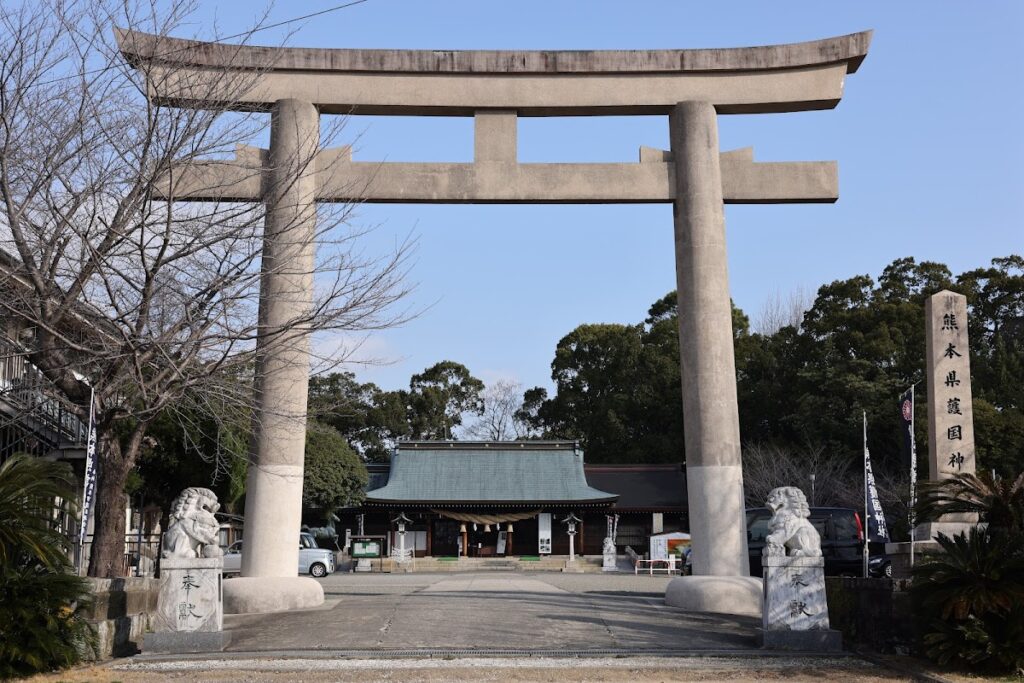
Complete Guide to Kumamoto Prefecture Gokoku Shrine | Thorough Explanation of History, Goshuin (Shrine Seals), Access, and Highlights
Located in Chuo-ku, Kumamoto City, Kumamoto Prefecture Gokoku Shrine is a shrine of special significance within the prefecture, enshrining approximately 65,000 war dead from Kumamoto Prefecture or with ties to the region who perished in national crises from the Meiji Restoration to the Pacific War. Adjacent to Fujisakidai Baseball Stadium and located west of Kumamoto Castle Park, this shrine is a tranquil place to comfort the souls of the war dead. However, it also houses the Shingu Kaso Shrine, dedicated to the “God of Sweets,” attracting a diverse range of visitors.
This article comprehensively covers everything you need to know before visiting Kumamoto Prefecture Gokoku Shrine, from its detailed history and origins to information on goshuin (shrine seals), highlights of the grounds, and access methods.
Overview and Basic Information of Kumamoto Prefecture Gokoku Shrine
Kumamoto Prefecture Gokoku Shrine is a Gokoku Shrine located in Miyauchi, Chuo-ku, Kumamoto City, Kumamoto Prefecture. The current shrine buildings were completed in 1957. The vast grounds include the main hall, worship hall, a war history museum, various memorial monuments, and the Shingu Shrine, the ancestral shrine of confectionery.
Basic Data
- Official Name: Kumamoto Prefecture Gokoku Shrine
- Location: 3-1 Miyauchi, Chuo-ku, Kumamoto City, Kumamoto Prefecture
- Deities Enshrined: Approximately 65,000 war dead from or with ties to Kumamoto Prefecture
- Founded: Meiji 2 (1869)
- Shrine Rank: Gokoku Shrine (Former Gokoku Shrine designated by the Minister of Home Affairs)
- Annual Festival Dates: Spring Grand Festival (late April), Autumn Grand Festival (late October)
- Visiting Hours: Grounds are freely accessible (Shrine office is usually open from 9:00 to 17:00)
- Parking: Available (free)
Deities Enshrined and Benefits
The deities enshrined at Kumamoto Prefecture Gokoku Shrine are the spirits of approximately 65,000 war dead who sacrificed their lives in national crises from the Meiji Restoration to the Pacific War (Greater East Asia War). Specifically, the following individuals are enshrined here:
- Patriots of the Meiji Restoration (150 individuals including Miyabe Teizo)
- Fallen soldiers of the Satsuma Rebellion
- Fallen soldiers of the First Sino-Japanese War and the Russo-Japanese War
- Fallen soldiers of World War I
- Fallen soldiers of the Manchurian Incident and the Second Sino-Japanese War
- Fallen soldiers of the Pacific War
- Special public servants who died in the line of duty
The main benefits offered are prayers for peace, national security, local prosperity, and gratitude and remembrance for the war dead. Furthermore, for the bereaved families and relatives of the war dead, it is an important place to communicate with the spirits of their ancestors and loved ones.
History and Origins of Kumamoto Prefecture Gokoku Shrine
Founding of Hanaokayama Shokonsha Shrine (1869)
The history of Kumamoto Prefecture Gokoku Shrine dates back to 1869 (Meiji 2). The shrine’s origins lie in the construction of a Shokonsha (shrine for the war dead) on Hanaokayama Hill by Lord Hosokawa Akikuni and Lord Hosokawa Morihisa, lords of the Kumamoto domain, at the behest of Emperor Meiji. At this time, 150 spirits of samurai who perished in the Meiji Restoration, particularly Miyabe Teizo, were initially enshrined.
Miyabe Teizo was a renowned loyalist during the late Edo period and a Kumamoto samurai who lost his life in the Ikedaya Incident. This shrine was founded to honor the achievements of him and other samurai of the Restoration, and to comfort their spirits.
Relocation from Hanaokayama Hill to the Current Location
Initially located on Hanaokayama Hill, the shrine was officially designated as “Kumamoto Prefecture Gokoku Shrine” in 1939 by a Ministry of Home Affairs ordinance. This was part of a movement to unify all Shokonsha shrines nationwide under the name Gokoku Shrine.
Subsequently, in 1957 (Showa 32), the shrine was relocated to its current location in Miyauchi, Chuo-ku, Kumamoto City, and a new shrine building was completed. This location is situated on the west side of Kumamoto Castle Park, adjacent to Fujisakidai Baseball Stadium, and remains a popular site for worshippers.
Post-War Development and the Present
After the war, Kumamoto Prefectural Gokoku Shrine enshrined those who died in the Pacific War, significantly increasing the number of enshrined deities. Currently, approximately 65,000 spirits of fallen soldiers are enshrined there.
Various memorial monuments for the war dead have been erected within the shrine grounds, and a war history museum was established in the Heisei era. These facilities play a crucial role in passing on the memories of war to future generations and emphasizing the importance of peace.
Monthly festivals are held on the 10th of each month, and grand festivals are held in spring and autumn, continuing its function as an important site for religious ceremonies in Kumamoto Prefecture.
Site of the Shinpuren Uprising Headquarters
Within the grounds of Kumamoto Prefectural Gokoku Shrine stands a stone monument marking the “Site of the Shinpuren Uprising Headquarters.” The Shinpuren were a group of samurai from Kumamoto who launched the “Shinpuren Rebellion” (also known as the Keishinto Rebellion) in 1876 (Meiji 9).
This site is a historical location where the Shinpuren established their headquarters during their uprising, and is an indispensable historical site for understanding Kumamoto’s modern history. The Shinpuren patriots were later enshrined at the Gokoku Shrine.
Highlights and Facilities on the Shrine Grounds
The grounds of Kumamoto Prefectural Gokoku Shrine are vast, with various facilities and memorial monuments. Here are some of the main highlights.
Main Hall and Worship Hall
Completed in 1957 (Showa 32), the current shrine building is a magnificent structure that follows traditional shrine architectural styles. A wide approach path leads to the main hall, allowing visitors to pray in a tranquil atmosphere.
The main hall enshrines approximately 65,000 war dead, and is visited daily by bereaved families and general worshippers. It is particularly crowded during the spring and autumn festivals, the anniversary of the end of the war, and the New Year’s visit.
Shingu Shrine (Shingu Kasojin)
Within the grounds of Kumamoto Prefecture Gokoku Shrine, the Shingu Shrine (Shingu Kasojin) is particularly noteworthy. This shrine is known as the “God of Sweets” and attracts worshippers from the confectionery industry and students studying confectionery.
Shingu Shrine enshrines Tajimamori-no-Mikoto and Rinjoin-no-Mikoto, who are said to be the first to make sweets in Japan. Rinjoin is considered the founder of Japanese manju (steamed buns), and is believed to have come to Japan from China during the Muromachi period and spread manju making in Nara. Not only people in the confectionery industry, but also ordinary people praying for improvement in their confectionery-making skills visit the shrine. Despite being a solemn place, it has a comforting atmosphere.
War History Museum
The shrine grounds house a War History Museum, displaying war-related materials and artifacts, primarily from the Pacific War. Through valuable materials such as last wills, military uniforms, photographs, and weapons, visitors can learn about the realities of war.
The museum also plays an educational role in conveying the tragedy of war and the preciousness of peace to future generations. Many students visit as part of school trips or peace education programs.
Various Memorials
Various memorials for war dead are erected on the shrine grounds.
- Memorial for Kamikaze Pilots
- Memorial for Fallen Student Soldiers
- Memorial for Fallen Nurses
- Memorials for Units
- Memorial for Overseas War Dead
These memorials were erected by their respective bereaved families’ associations and related organizations, and memorial services are held annually.
Plum Blossom Park
In front of the shrine is a park planted with plum trees, where beautiful plum blossoms bloom in early spring. This park is also a popular place of relaxation for local residents, and people can be seen enjoying walks and resting on benches.
During plum blossom season, the tranquil atmosphere of remembrance and prayer for peace is enhanced by the vibrant colors that herald the arrival of spring, creating a unique charm.
Information on Goshuin (Shrine Seals) at Kumamoto Prefectural Gokoku Shrine
Types and Designs of Goshuin
Kumamoto Prefectural Gokoku Shrine offers standard goshuin. The Goshuin (temple/shrine stamp) features the name of “Kumamoto Prefecture Gokoku Shrine” written in ink, and is stamped with the shrine’s seal. It features a simple yet powerful calligraphy style, creating a solemn atmosphere befitting a Gokoku Shrine.
Location and Hours of Goshuin Distribution
Goshuin are distributed at the shrine office within the grounds.
- Location: Shrine Office
- Hours: Usually 9:00 AM to 5:00 PM (may vary due to festivals, etc.)
- Fee: Usually around 300-500 yen
Goshuin of Shingu Kaso Shrine
The Goshuin for Shingu Kaso Shrine, a subsidiary shrine within the grounds, may also be distributed at the same shrine office. Its charming design, befitting a shrine dedicated to the god of sweets, makes it popular among those in the confectionery industry.
Those wishing to receive a Goshuin should inquire at the shrine office after their visit. Even if you do not have a Goshuin book, you may be given a pre-printed Goshuin. ## Access Methods
Kumamoto Prefectural Gokoku Shrine is easily accessible by both public transport and private car.
Access by Public Transport
Using the City Tram
The nearest tram stops are “Shogyo Koukoumae” (Commercial High School) or “Hatchobaba.”
- Take the City Tram Line A (bound for Kengunmachi) from JR Kumamoto Station.
- Get off at “Shogyo Koukoumae” and walk approximately 5 minutes.
- Or get off at “Hatchobaba” and walk approximately 7 minutes.
Using the Bus
Kumamoto City Buses and Sanko Buses are available.
- Get off at the “Gokoku Jinja-mae” bus stop, approximately 2 minutes on foot.
- Get off at the “Fujisakidai” bus stop, approximately 3 minutes on foot.
Access by Private Car
From Kumamoto City Center
- Use National Route 3 or Prefectural Route 28.
- Approximately 10-15 minutes.
From the Kyushu Expressway
- Approximately 20 minutes from Kumamoto IC.
- Approximately 30 minutes from Mashiki Kumamoto Airport IC.
Parking Information
Kumamoto Prefectural Gokoku Shrine has a free parking lot for visitors.
- Number of Parking Spaces: Approximately 50
- Fee: Free
- Operating Hours: Same as the shrine grounds’ opening hours.
The parking lot may be full during peak times such as New Year’s Day or major festivals. In such cases, please consider using the parking lot at the nearby Fujisakidai Baseball Stadium or other coin-operated parking lots in the surrounding area.
Landmarks in the vicinity
- Adjacent to Fujisakidai Baseball Stadium (Prefectural Baseball Stadium)
- Approximately 15 minutes on foot west from Kumamoto Castle Park
- Approximately 10 minutes on foot from Kumamoto City Central Ward Office
Annual Events and Festivals
Kumamoto Prefectural Gokoku Shrine holds various festivals and events throughout the year.
Major Festivals
Monthly Festival
- Held on the 10th of each month
- Expressing gratitude to the war dead and praying for peace
Spring Grand Festival
- Late April (usually around April 29th)
- One of the most important annual events
- Attracts many attendees, including bereaved families’ associations
Autumn Grand Festival
- Late October
- An important festival, comparable to the Spring Grand Festival
End of War Memorial Service
- August 15th
- A special day to commemorate those who died in the war
New Year’s Visit
- January 1st-3rd
- Bustling with many New Year’s visitors
- Prayers for peace, family safety, business prosperity, etc.
Special Events
In some years, special memorial services and dedication ceremonies may be held. Please check the shrine’s official website or the shrine office for detailed dates.
Manners and Etiquette for Visiting a Shrine
While the same worship etiquette as for any other shrine is acceptable at a Gokoku Shrine, remember that it is a sacred place dedicated to the spirits of those who died in war, and worship with reverence.
Basic Worship Etiquette
- Bow before passing through the torii gate.
- Purify yourself at the water basin.
- Hold the ladle in your right hand and purify your left hand.
- Switch the ladle to your left hand and purify your right hand.
- Switch the ladle back to your right hand, receive water in your left hand, and rinse your mouth.
- Finally, hold the ladle upright and purify the handle.
- Worship in front of the main hall.
- Quietly place your offering in the offering box.
- Ring the bell (if present).
- Bow twice, clap twice, and bow once.
- Bow again at the torii gate when leaving.
Mindset Unique to Gokoku Shrines
Gokoku Shrines are places dedicated to the spirits of those who died in war. When visiting the shrine, please quietly offer your prayers, expressing gratitude to the war dead and praying for peace. Please refrain from loud conversations or making noise within the shrine grounds, and strive to maintain a solemn atmosphere.
Information on the surrounding area of Chuo Ward, Kumamoto City
There are many tourist attractions and facilities around Kumamoto Prefectural Gokoku Shrine.
Kumamoto Castle
Kumamoto Castle, located about a 15-minute walk from Gokoku Shrine, is a famous castle considered one of Japan’s three most famous castles. Although it suffered significant damage in the 2016 Kumamoto earthquake, reconstruction work is currently underway, and the main keep has been rebuilt. Many tourists visit both Gokoku Shrine and Kumamoto Castle.
Fujisakidai Baseball Stadium (Prefectural Baseball Stadium)
Fujisakidai Baseball Stadium, adjacent to the shrine, has long been a popular Kumamoto Prefectural baseball stadium. It hosts professional baseball games and high school baseball matches, making it a familiar place for baseball fans.
Commercial Area in Kumamoto City’s Chuo Ward
Just a few tram stops from Gokoku Shrine are bustling shopping and dining areas such as Torichosuji and Shimotori. Exploring Kumamoto after your visit is highly recommended.
Suizenji Jojuen Garden
Located about 20 minutes away by tram, Suizenji Jojuen Garden is a Japanese garden associated with the Hosokawa family. Since the Hosokawa family was also involved in the founding of Gokoku Shrine, visiting while feeling the historical connection is quite interesting.
Recovery from the Kumamoto Earthquake and the Present
The Kumamoto earthquake in April 2016 caused immense damage throughout Kumamoto Prefecture. Kumamoto Prefecture Gokoku Shrine was also damaged, but thanks to the efforts of those involved, restoration is progressing, and it is now possible to visit as usual.
Memorials for the victims of the Kumamoto earthquake are held on the shrine grounds, and visitors come to offer prayers for recovery from the disaster and for disaster prevention. As one of the symbols of Kumamoto’s recovery, the Gokoku Shrine serves as a spiritual anchor for the local people.
Summary: The Charm of Kumamoto Prefecture Gokoku Shrine
Kumamoto Prefecture Gokoku Shrine is a historic shrine that has enshrined the spirits of those who died in war in Kumamoto Prefecture for over 150 years since its founding in 1869 (Meiji 2). This place, where approximately 65,000 war dead are enshrined, plays a vital role in passing on the memory of war to future generations and advocating the preciousness of peace.
In addition to the main hall and worship hall, the shrine grounds contain a variety of facilities, including a war history museum, various memorial monuments, and the unique Kaso Shingu Shrine, welcoming visitors for various purposes. Goshuin (shrine stamps) are also available, making it a great choice for those who enjoy visiting shrines.
With convenient access via tram and bus, and ample parking, it attracts many visitors from both within and outside the prefecture. Its proximity to Kumamoto Castle and the city center makes it an ideal stop as part of sightseeing.
Please visit Kumamoto Prefectural Gokoku Shrine to express your gratitude to those who died in the war and to offer your prayers for peace. By joining your hands in prayer in the tranquil grounds, you will be able to feel anew the preciousness of peace and the weight of life.

