Complete Guide to Aekuni Shrine | History, Deities, Grounds Highlights, and Access Information for Iga Province’s Ichinomiya
About Aekuni Shrine
Aekuni Shrine is a historic shrine located in Ichinomiya, Iga City, Mie Prefecture. It is the only Shikinai-Taisha (a shrine listed in the Engishiki, an ancient Japanese legal code) in Iga Province and has long been revered as the Ichinomiya of Iga Province. According to shrine tradition, it was founded in the 4th year of Empress Saimei’s reign (658 AD), giving it a history of over 1300 years.
Its former shrine rank was Kokuhei Chusha (a national shrine of the second rank), and it is currently designated as a Beppyo Jinja (a special shrine) by the Association of Shinto Shrines. As a center of faith in the Iga region, it is an important presence that conveys the history and culture of the area to the present day.
Conveniently located about 5 minutes by car from the Meihan Expressway’s “Iga Ichinomiya IC,” it attracts many visitors for New Year’s prayers, various blessings, and exorcisms. Located in Iga, a region known as the home of ninjas, this shrine is attracting attention for its deep connection to ninja culture.
Deities and Divine Virtues
Main Deity: Ōbiko-no-Mikoto
The main deity of Akuni Shrine is Ōbiko-no-Mikoto. Ōbiko-no-Mikoto was the first son of Emperor Kōgen (the 8th emperor) and is known as a warrior who pacified the Hokuriku region as one of the Four Generals. He is a historical figure mentioned in the *Nihon Shoki* and *Kojiki*, and is revered as a god of war and pioneering due to his achievements.
The descendants of Ōbiko-no-Mikoto resided in the Abai district of Iga Province and called themselves the Abe clan. It is believed that the Abe clan’s worship of their ancestral deity, Ōbiko-no-Mikoto, is the origin of Akuni Shrine. The Abe clan later developed into a powerful local clan in the Iga region and made significant contributions to the region’s development.
Enshrined Deities
Sukunahikona-no-Mikoto
Sukunahikona-no-Mikoto is a deity known as the god of medicine, hot springs, and sake brewing. He is famous for the myth of nation-building alongside Okuninushi-no-Mikoto, and is believed to grant blessings for healing illnesses and good health.
Kanayama-hime-no-Mikoto
Kanayama-hime-no-Mikoto is the goddess of mining, metalwork, and blacksmithing. She was enshrined here in 977 AD. Because mining and blacksmithing have flourished in the Iga region since ancient times, she is worshipped as a guardian deity of industry.
Divine Virtues and Benefits
At Akuni Shrine, a wide range of benefits are believed to be available, including long-lasting military fortune, good luck and protection from evil, family safety, good health, business prosperity, and traffic safety. In particular, due to Okuninushi-no-Mikoto’s character as a god of war, the shrine is revered as a place to receive blessings for success in competitions and a pioneering spirit.
History of Akuni Shrine
Founding and Ancient Times
According to shrine tradition, Akuni Shrine was founded in the 4th year of Empress Saimei’s reign (658 AD). This period corresponds to the Asuka period, a crucial time when Japan’s ancient state system was being established.
It is believed that the shrine’s origins lie in the Abe clan, descendants of Ōhiko-no-Mikoto, who held power in Abai District, Iga Province, and built a shrine to enshrine their ancestral deity. The Abe clan was a powerful family that promoted the development of the Iga region and contributed to the advancement of agriculture and industry.
Development during the Heian Period
The “Engishiki Jinmyōchō,” compiled during the Heian period, lists “Akuni Shrine, Ō,” in Abai District, Iga Province, recognizing its high status as the only Engishiki-listed Ōsha (Great Shrine) in Iga Province. During this period, it established its position as the Ichinomiya (first-ranked shrine) of Iga Province and received deep reverence from provincial governors and influential local figures.
Development during the Heian Period
The “Engishiki Jinmyōchō,” compiled during the Heian period, lists Akuni Shrine as “Ō” (Great), indicating its high status as the only Engishiki-listed Ōsha in Iga Province. During this time, it established its position as the Ichinomiya of Iga Province and received fervent reverence from provincial governors and local influential figures. In 977 (Ten’en 1), Kanayamahime-no-Mikoto was enshrined alongside the other deities, adding to the worship of the god of mining and blacksmithing. This is closely related to the industrial development of the Iga region.
Medieval Period: Spread of Suwa Faith
During the medieval period, Suwa faith spread to Akuni Shrine. A small shrine dedicated to Koga Saburo was established within the grounds, giving rise to a unique form of worship that fused with Suwa faith. During this period, exchanges between Iga and Koga flourished, deepening the cultural ties between the two regions.
Connection to Ninja Culture
As Iga developed as a ninja village, Akuni Shrine also developed deep connections to ninja culture. Particularly noteworthy is the “Kuroto Festival” held by the Hattori clan. The costumes used in this festival are considered the origin of ninja attire.
The Hattori clan was a core family of Iga ninjas, and their connection to Akuni Shrine is a valuable example of the fusion of ninja culture and local beliefs. Even today, ninja-related items are available, giving the shrine an aspect of being a sacred site for ninjas.
From the Early Modern Period Onward
During the Edo period, under the patronage of the Todo clan, it became the principal guardian shrine of Iga Province, attracting local devotion. Under the Meiji era’s shrine ranking system, it was designated a National Shrine of the second rank, recognized as a nationally important shrine.
After World War II, it became a special shrine of the Association of Shinto Shrines, and to this day, it continues to welcome many worshippers as a center of faith in the Iga region.
Shrine Grounds Guide and Highlights
Shrine Architecture
The shrine buildings of Akuni Shrine exhibit characteristics of traditional shrine architecture in the Iga region. The main hall is in the nagare-zukuri style, and together with the worship hall, it creates a solemn atmosphere.
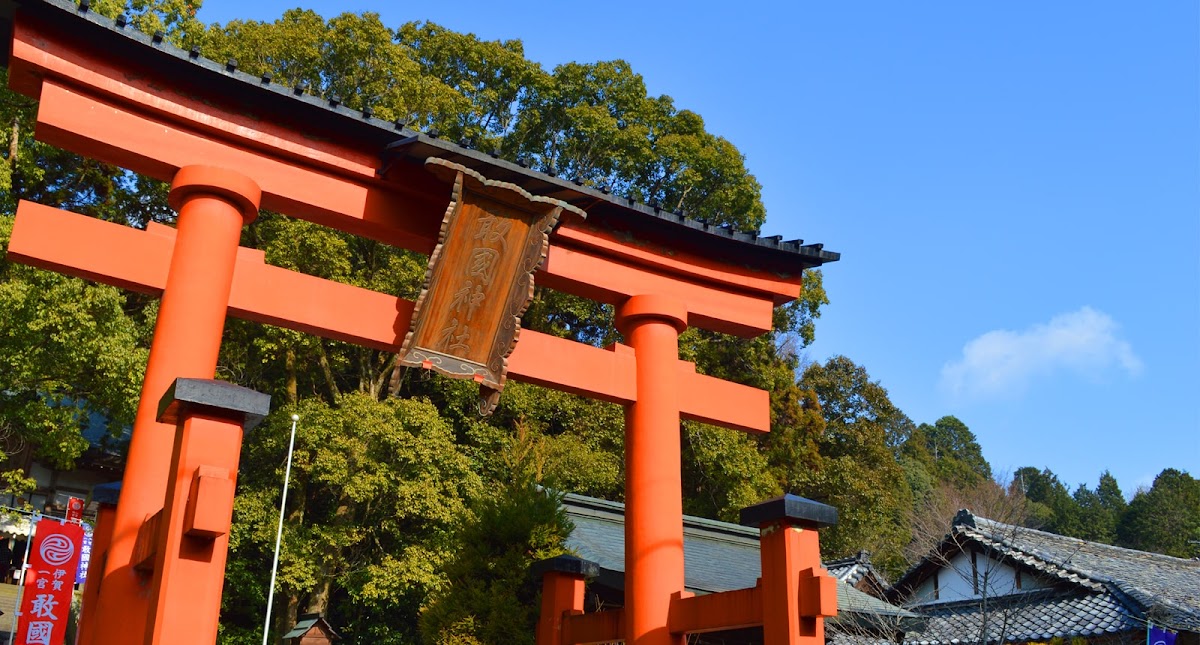
The entire shrine grounds are surrounded by forest, and a tranquil atmosphere prevails. As you proceed along the approach to the shrine, you are greeted by stone steps and torii gates that evoke a long history.
Subsidiary Shrines
Several subsidiary shrines are located within the grounds. Each attracts its own unique devotion and bestows various divine blessings.
Suwa Shrine
This shrine preserves the Suwa faith that spread during the Middle Ages. There is also a small shrine dedicated to Koga Saburo, demonstrating the historical connection between Iga and Koga.
Other Subsidiary Shrines
The subsidiary shrines scattered throughout the grounds enshrine a variety of deities, including gods of agriculture, industry, and guardian deities of the region. These represent forms of faith closely intertwined with the lives of the local people.
Sacred Tree and Nature
Within the grounds stands a sacred tree, said to be several hundred years old, quietly watching over the history of the shrine. The forest within the grounds maintains a rich natural environment, allowing visitors to enjoy the beautiful scenery of each season.
In spring, cherry blossoms bloom in profusion; in summer, the deep greenery provides coolness; and in autumn, the autumn leaves color the shrine grounds. Visiting in the quiet of winter also offers a unique charm.
Festivals and Annual Events
Grand Festival
The most important festival at Akuni Shrine is the Grand Festival. It is held grandly every year, attracting many worshippers. Traditional festival rituals, such as the portable shrine procession and the dedication of Kagura (sacred dance), are performed.
Lion Dance
The Lion Dance of Akuni Shrine is a valuable traditional performing art designated as an Intangible Folk Cultural Property of Mie Prefecture. It is said to have continued since the Keicho era (1596-1615), boasting a history of over 400 years.
This Lion Dance is considered the prototype for Lion Dances throughout Iga and occupies an important position in the region’s performing arts culture. The magnificent dance and unique music captivate viewers.
Monthly Festival
The monthly festival, held regularly each month, prays for the peace and well-being of parishioners and worshippers. It is an important festival that preserves a form of faith rooted in the local community.
New Year’s Visit
Many worshippers visit the shrine for their first shrine visit of the new year. As a popular spot for New Year’s visits in the Iga region, it is bustling from New Year’s Day through the third day. Prayers are offered for family safety, business prosperity, traffic safety, and more.
Other Annual Events
Various festivals are held throughout the year, including the Setsubun Festival, the Summer Purification Ceremony, and the Autumn Festival. These events also play a role in strengthening the bonds of the local community.
Cultural Properties
Mie Prefecture Designated Intangible Folk Cultural Property: Lion Dance
As mentioned above, the Lion Dance of Akuni Shrine is a Mie Prefecture Designated Intangible Folk Cultural Property. Its preservation and transmission are considered important as the origin of the performing arts culture of the Iga region. ### Other Cultural Assets
The shrine grounds contain historically valuable items such as ancient documents, offerings, and ritual implements. These are precious materials that tell the story of the shrine’s long history and the deep faith of the local people.
Prayers and Offerings
Types of Prayers
Various prayers are performed daily at Akuni Shrine.
- Vehicle Blessing (Prayer for Traffic Safety): Prayers for safety when purchasing a new car or for regular check-ups.
- First Shrine Visit: Prayers for the healthy growth of a baby.
- Exorcism: Prayers for protection against misfortune during unlucky years.
- Prayer for Safe Childbirth: Prayers for the health of mother and child and for a safe delivery.
- Family Safety: Prayers for the health and peace of the family.
- Physical Health: Prayers for recovery from illness and maintaining good health.
- Business Prosperity: Prayers for the development of a business.
- Prayer for Success in Exams: Prayers for success in exams and tests.
On-site Ceremonies
Akuni Shrine also offers on-site ceremonies.
- Groundbreaking Ceremony
- Ridgepole Raising Ceremony
- New Building Blessing Ceremony
- Company-related Ceremonies
- Personal Exorcisms
We can provide services in a variety of situations.
Items Offered
Various items are available, such as amulets, talismans, and Goshuin (shrine stamps). In particular, ninja-related souvenirs are popular as unique items specific to Iga.
Many people receive Goshuin (temple/shrine stamps) as a memento of their visit; the carefully written calligraphy and red stamp create a wonderful memory of the pilgrimage.
Access Information
Basic Information
Location
877 Ichinomiya, Iga City, Mie Prefecture 518-0003
Phone Number
0595-23-3061
Access by Car
Using the Meihan Expressway
- Approximately 5 minutes from the Iga-Ichinomiya IC on the Meihan Expressway
- Parking available (free)
The location is easily accessible from both Osaka and Nagoya via the Meihan Expressway. It’s located right off the Iga-Ichinomiya IC, making it easy to find even for first-time visitors.
Access by Public Transportation
By Train
- Approximately 20 minutes on foot from Iga Railway’s “Sanagu Station”
- Approximately 4 km east from JR/Iga Railway’s “Iga-Ueno Station”
Taking a taxi from Iga-Ueno Station is convenient. The journey takes approximately 10 minutes.
Precautions When Visiting
- The shrine grounds are a sacred place, so please behave respectfully.
- Photography is permitted, but please be considerate of those performing ceremonies or other visitors.
- If you wish to receive prayers, it is recommended to confirm by phone in advance.
- The shrine is expected to be crowded during long holidays and the New Year’s period, so please allow ample time for your visit.
Nearby Tourist Attractions
Iga-Ueno Castle
A famous castle built by Todo Takatora, known for its high stone walls. Located approximately 15 minutes by car from Akuni Shrine, it is a classic Iga sightseeing spot.
Iga-ryu Ninja Museum
This museum allows you to learn about the history and techniques of ninjas. The demonstration shows are popular, making it enjoyable for families.
Ueno Tenjin Shrine
Known as the guardian shrine of Iga, the Ueno Tenjin Festival in October is designated as a National Important Intangible Folk Cultural Property.
Danjiri Hall
This facility exhibits the magnificent danjiri floats used in the Ueno Tenjin Festival. You can experience the excitement of the festival throughout the year.
Role as the Ichinomiya of Iga Province
Akuni Shrine, as the Ichinomiya of Iga Province, has played a role as a spiritual pillar of the region from ancient times to the present day. An Ichinomiya is the shrine with the highest rank in a province, and it was also the first shrine visited by the provincial governor upon their arrival.
As the only Shikinai-Taisha (a major shrine listed in the Engishiki) in Iga Province, it was highly regarded by the imperial court and deeply revered by the local people. This tradition continues to this day, and many people visit Kokuni Shrine during important local events and life milestones.
Collaboration with the Iga Ueno Tourism Association
Kokuni Shrine collaborates with the Iga Ueno Tourism Association, contributing to the promotion of tourism in the Iga region. In Iga, known as the home of ninjas, the shrine, as a historical site, holds significant value as a tourist resource, attracting many visitors.
It is also featured as a spot for “Goshuin pilgrimages,” visiting shrines and temples associated with Iga ninjas, showcasing the charm of Iga from both the perspectives of ninja culture and shrine worship.
Involvement with the Local Community
Kokuni Shrine is not merely a tourist spot; it also plays a central role in the local community. The shrine is maintained through the cooperation of local people, including the operation of festivals by parishioners and devotees, cleaning of the shrine grounds, and the preservation of traditional performing arts.
In particular, young people from the community participate in the preservation of the Shishi Kagura (lion dance), ensuring the transmission of culture across generations. Through these activities, community bonds are deepened, and traditional culture is passed down to future generations.
Etiquette for Visiting a Shrine
Basic Worship Etiquette
- Bow before passing through the torii gate: This is a greeting before entering the sacred area.
- Walk along the edge of the path: The center is considered the path of the gods.
- Purify yourself at the water basin: Purify your left hand, then your right hand, then your mouth.
- Worship at the main hall: Two bows, two claps, and one bow is the basic procedure.
Attire
There are no specific rules, but please dress neatly as it is a sacred place. If you are receiving a prayer, somewhat formal attire is desirable.
Summary
Akuni Shrine, with a history of over 1300 years, continues to be the center of faith and culture in the region as the Ichinomiya (first-ranked shrine) of Iga Province. It enshrines Ōhiko-no-Mikoto as its main deity, and is a comprehensive shrine that enshrines not only the god of war and pioneering, but also the gods of medicine and industry.
This shrine, with its unique charm including the Shishi Kagura (lion dance), a Mie Prefecture-designated intangible folk cultural property, and its deep connection to ninja culture, attracts the faith of local residents and many tourists.
Easily accessible from the Meihan Expressway, it’s a must-visit spot when sightseeing in Iga. While it’s a familiar shrine where people can pray for various occasions in life, such as exorcism, prayers, and New Year’s visits, it also possesses the dignity of a prestigious Ichinomiya (first-ranked shrine) of Iga Province.
Please visit Kuni Shrine to experience the history and culture of Iga. The time spent calming your mind in the tranquil grounds and reflecting on its long history will surely be a valuable experience.