Complete Guide to Kyogyoji Temples: A Thorough Explanation from History and Origin to How to Visit
Kyogyoji Temples are the names of Jodo Shinshu Buddhist temples found throughout Japan. Many of these temples have deep connections to Rennyo Shonin, and have etched their history as important centers of faith in their respective regions. This article provides a detailed explanation of the history, characteristics, and visiting information for major Kyogyoji temples.
What is Kyogyoji Temple?
The name Kyogyoji originates from Shinran Shonin’s main work, *Kyogyoshinsho*. These temples, bearing the name of a book that represents the core teachings of Jodo Shinshu Buddhism, exist in multiple locations throughout Japan, each with its own unique history and ties to its region.
In Jodo Shinshu Buddhism, “Kyo” refers to scriptures, and “Gyo” refers to the practice of nembutsu (recitation of Amida Buddha’s name). This temple name embodies the deep meaning of cherishing the teachings and practices of Buddhism. Even today, many Kyogyoji temples continue to walk alongside local people as places to preserve and transmit the teachings of nembutsu.
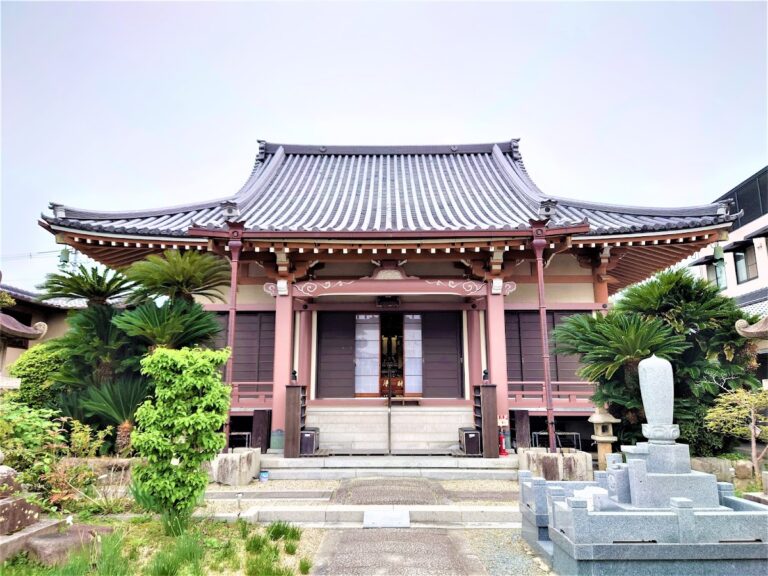
Kyogyoji Temple, Takatsuki City, Osaka Prefecture
The Origins and History of Kyogyoji Temple
Kyogyoji Temple, located in Tomita-cho, Takatsuki City, Osaka Prefecture, is a temple of the Shinshu Otani sect (Higashi Honganji), and its mountain name is Anseizan. The principal image is Amida Buddha.
According to temple tradition, it was founded around 1476 (Bunmei 8) by Rennyo Shonin, the 8th head of Honganji, on land granted by Hosokawa Katsumoto, who was a shogunal deputy of the Muromachi shogunate. Rennyo Shonin is known as the restorer of Jodo Shinshu Buddhism and dedicated himself to spreading the teachings to the common people. Takatsuki is located midway between Kyoto and Osaka, making it an important transportation hub.
From its founding, it held the status of an Inke temple of Honganji and was also known as Tomita Kyogyoji. Inke is a title given to temples related to Honganji by blood or those of particularly high status, indicating Kyogyoji’s important position within Jodo Shinshu Buddhism. ### Main Hall and Temple Grounds
The current main hall has been rebuilt several times throughout its long history. While maintaining the dignity of temple architecture, it has been carefully preserved as a place of worship for the local people. In addition to the main hall, the temple grounds include the priest’s quarters and bell tower, presenting a tranquil atmosphere.
The Tomita district of Takatsuki City retains its old townscape, and Kyogyoji Temple is part of this historical landscape. Other temples and shrines are scattered throughout the surrounding area, making it a popular route for historical walks.
Access and Visiting Information
Location: 6-10-1 Tomita-cho, Takatsuki City, Osaka Prefecture
Phone Number: 072-696-3182
Transportation Access:
- Approximately 10 minutes on foot from JR Kyoto Line “Settsu-Tomita Station”
- Approximately 12 minutes on foot from Hankyu Kyoto Line “Tomita Station”
Visiting is generally free, but it is recommended to check in advance for religious services and events. Please contact the temple directly regarding parking availability.
Kyogyoji Temple in Nara City
A Temple with Over 400 Years of History
Kyogyoji Temple, located in Nara City, is a temple of the Shinshu Otani sect (Higashi Honganji) and boasts a history of over 400 years. Despite its convenient location, just a 5-minute walk from Kintetsu Nara Station, it maintains a tranquil environment.
Nara has long flourished as a center of Japanese Buddhism, and Kyogyoji Temple has supported the faith of the people of Nara for many years. Even in an urban area, it provides a space where visitors can quietly connect with Buddhist teachings.
Access and Features
Transportation Access:
- Approximately 5-minute walk from Kintetsu Nara Station
- Approximately 15-minute walk from JR Nara Station
Its convenient location makes it easy to visit during Nara sightseeing, and it is easily accessible from major tourist attractions such as Todaiji Temple and Kofukuji Temple.
Kyogyoji Temple, Tawaramoto-cho, Nara Prefecture
From Tendai Buddhism to Jodo Shinshu Buddhism
Kyogyoji Temple, located in Tawaramoto-cho, Shiki-gun, Nara Prefecture, is a temple with an interesting historical history. Originally a Tendai sect temple, it is believed to have been located in Kudara Village, Hirose-gun (present-day Koryo-cho).
During the Kamakura period, it converted to Jodo Shinshu Buddhism and received the name Mukaeda Ganjoji Temple. This is a valuable example illustrating the spread of Jodo Shinshu Buddhism among the common people.
After being damaged by fire during the Sengoku period, it was relocated to its current location, and new buildings were constructed using old materials. It is believed that the temple’s name was changed to Kyogyoji Temple at that time. Its history of overcoming war and rebuilding is a testament to the strong faith of this temple.
Kyogyoji Temple, Nishinomiya City (Najio)
A Temple Affectionately Known as Najio Gobo
Kyogyoji Temple, located in Najio, Shiose-cho, Nishinomiya City, Hyogo Prefecture, is a temple of the Jodo Shinshu Honganji sect (Nishi Honganji), and is also known as Najio Gobo. Its principal image is Amida Buddha.
It is said to have originated in 1475 (Bunmei 7), when the villagers of Najio invited Rennyo Shonin to build a temple and hermitage. Rennyo Shonin traveled throughout the Hokuriku and Kinki regions, spreading his teachings and establishing many dojos and temples. Kyogyoji Temple in Najio is one of them.
Located on the left bank of the middle reaches of the Najio River, a tributary of the Mukogawa River, it is situated in a rich natural environment. The nickname “Gobo” is an honorific title for a high-ranking temple, indicating that it has been cherished by the local people.
Kyogyoji Temple, Kagoshima City
Missionary Work and Freedom of Religion in the Meiji Era
Kyogyoji Temple, located in Kagoshima City, has a history of missionary work dating back to the Meiji era. After freedom of religion was granted in Kagoshima in 1876 (Meiji 9), missionary work immediately began to spread the teachings of Nembutsu.
During the Edo period, the propagation of the Ikkō-shū (Jōdo Shinshū) sect was strictly restricted in the Satsuma domain. With the granting of freedom of religion after the Meiji Restoration, missionary activities could finally be openly carried out. Kyogyoji Temple has walked alongside people seeking the teachings of Nembutsu within this historical context.
Even today, together with its parishioners, it carefully preserves and passes on the teachings of Nembutsu. The temple’s website also features activities that resonate with modern people, such as “Temple Messages” and “Temple Consultation Services.”
About Perpetual Interment (Perpetual Memorial Service)
Kyogyoji Temple in Kagoshima accepts perpetual interment (perpetual memorial service). With the declining birthrate, aging population, and increasing number of nuclear families, many families are finding it difficult to pass on their family graves. Perpetual memorial service is a system where the temple takes responsibility for continuing memorial services indefinitely, providing peace of mind to many people.
Guidelines for Visiting Kyogyoji Temple
How to Visit a Jodo Shinshu Temple
Here are the basic manners for visiting Kyogyoji Temple, a Jodo Shinshu temple.
Visiting the Main Hall:
- Bow before entering the main hall.
- Join your hands in prayer facing the principal image, Amida Buddha.
- Recite the Nembutsu, “Namu Amida Butsu.”
- Bow deeply and exit.
In Jodo Shinshu Buddhism, clapping hands is not practiced. Also, offerings are considered “donations” and are voluntary, not compulsory.
Annual Events
Many Kyogyoji temples hold the following annual events:
- Spring Eternal Sutra Recitation Service (Spring Equinox)
- Birth Day Celebration (Gotan-e) – A memorial service celebrating the birth of Shinran Shonin (May)
- Obon Memorial Service
- Autumn Eternal Sutra Recitation Service (Autumn Equinox)
- Ho-on-ko – The most important memorial service commemorating the anniversary of Shinran Shonin’s death (November)
The dates of these events vary by temple, so please contact each temple directly if you wish to participate.
Kyogyoji Temple and the Local Community
Bonds with Temple Members
Jodo Shinshu temples are bound by strong ties with their parishioners, known as “monto.” Kyogyoji temples are no exception, having walked alongside the local community throughout their long history.
From the Taisho era to the present day, many Kyogyoji temples have walked alongside the changes in the local community, becoming a spiritual haven for people. It functions as an “open temple,” providing support not only for weddings and funerals but also for everyday worries and consultations.
Role in Modern Times
Currently, Kyogyoji Temple, in addition to its traditional religious activities, is undertaking various initiatives to meet the needs of modern society:
- Dharma Talks – A place to convey Buddhist teachings in an easy-to-understand manner
- Children’s Clubs – Passing on teachings to the next generation
- Consultation Services – Consultations regarding life’s worries and end-of-life planning
- Cultural Activities – Sutra copying sessions, Buddhist music gatherings, etc.
Through these activities, the temple is not merely a religious facility but also plays a role as a center of the local community.
Sankyozuka and Cultural Properties
Some parts of Kyogyoji Temple have historical sites called Sankyozuka (three sutra mounds). Sankyozuka are mounds where Buddhist scriptures such as the Lotus Sutra are buried, and they were actively constructed from the late Heian period to the Kamakura period under the influence of the Mappō (Age of Degenerate Dharma) ideology.
These cultural properties and historical sites are valuable legacies that tell the story of the temple’s long history. When visiting, paying attention not only to the architecture but also to these historical legacies will lead to a deeper understanding.
The Significance of Visiting Kyogyoji Temple
Seeking Peace of Mind
Modern society is an information-overloaded and stressful environment. Visiting a historical temple like Kyogyoji Temple is a valuable opportunity to escape from daily life and calm the mind.
By quietly joining your hands in prayer and chanting the Nembutsu in the main hall, you can regain inner peace. The teachings of Jodo Shinshu Buddhism, exemplified by the “theory of salvation for the wicked,” are based on the idea of accepting oneself as one is, without imperfection. The teaching of not blaming oneself too much and entrusting oneself to the compassion of Amida Buddha resonates deeply with modern people.
Experiencing History and Culture
Visiting Kyogyoji Temple is also an opportunity to experience Japanese history and culture. The temple’s history, which dates back to the time of Rennyo Shonin, is itself a part of Japan’s religious and social history.
In particular, the Kyogyoji temples in Takatsuki, Nara, and Nishinomiya are deeply intertwined with the history of their respective regions and are important places for understanding local history. Visiting them as part of sightseeing or historical walks will allow you to gain a deeper understanding of the cultural background of the area.
Summary
Kyogyoji temples are Jodo Shinshu temples located throughout Japan, each with its own unique history and characteristics. Many are associated with Rennyo Shonin and have a long history, dating back to their founding in the Bunmei era (late 15th century).
The Kyogyoji temple in Takatsuki City, Osaka Prefecture, holds the status of a branch temple of Honganji, while the Kyogyoji temple in Nara City boasts a history of over 400 years. The Kyogyoji temple in Tawaramoto Town has a history of conversion from the Tendai sect, and the Kyogyoji temple in Nishinomiya City is affectionately known as Najio Gobo. The Kyogyoji temple in Kagoshima City has a history of walking hand in hand with religious freedom during the Meiji era.
All Kyogyoji temples cherish the teachings of Nembutsu and have walked hand in hand with the people of their respective regions. Through visits and prayers, you can experience Japanese religious culture and find peace of mind.
For details on access and events, we recommend contacting each temple directly. Why not join your hands in prayer in the tranquil grounds and listen to the teachings that have been passed down through a long history?