
Complete Guide to Morioka Hachimangu Shrine | Thorough Explanation of History, Benefits, Festivals, and Visiting Information
Located in Morioka City, Iwate Prefecture, Morioka Hachimangu Shrine is a shrine with over 300 years of history, serving as the guardian shrine of Morioka and affectionately known as “O-Hachiman-san” by the local people. Established by the Nanbu clan lord, it has garnered immense reverence as a deity presiding over the foundations of human life, including agriculture, industry, commerce, and learning. This article thoroughly explains everything you need to know before visiting Morioka Hachimangu Shrine, from its history and benefits to its rituals such as the annual festival and Yabusame (mounted archery), and visiting information.
History and Origins of Morioka Hachimangu Shrine
From Founding to the Present: 300 Years with the Castle Town of Morioka
The history of Morioka Hachimangu Shrine begins in 1680 (Enpo 8), when it was established by the 29th Nanbu Shigenobu. However, its origins are even older, and it is said that during the Former Nine Years’ War, in 1062 (Kōhei 5), Minamoto no Yoriyoshi and his son Yoshiie founded the shrine to pray for victory.
The Nanbu clan originally revered Hachiman-jin as their tutelary deity. Along with the development of the Morioka castle town, they designated a vast 15,000-tsubo (approximately 50,000 square meters) shrine grounds as the principal tutelary shrine protecting the Nanbu domain. Construction, which began in 1671 (Kanbun 11), took about eight years, and by 1670 (Enpō 8), the main hall and other major buildings and facilities, including the Yabusame (mounted archery) grounds, were completed.
The Great Morioka Fire and the Reconstruction of the Shrine
Throughout its long history, Morioka Hachiman-gu Shrine has suffered numerous disasters. In particular, the Great Morioka Fire of 1884 (Meiji 17) caused significant damage, with many of the shrine buildings being destroyed. Subsequently, despite suffering damage from wind and snow over many years, the shrine buildings were rebuilt thanks to the faith and reverence of the local people.
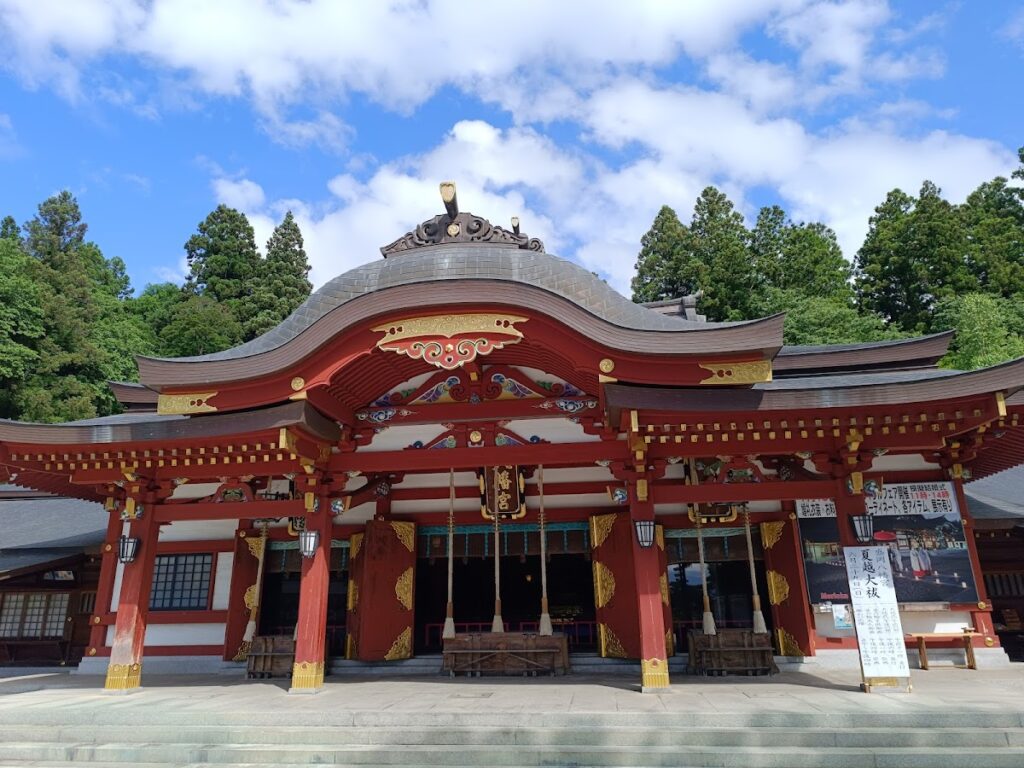
The current shrine buildings inherit traditional architectural styles while featuring exquisite carvings and the beauty of vermilion paint. In addition to the main shrine, numerous subsidiary shrines are located within the grounds, creating a solemn atmosphere in Hachiman-cho, Morioka City, Iwate Prefecture.
Former Shrine Rank and Current Status
Morioka Hachiman-gu Shrine was formerly ranked as a prefectural shrine and is currently listed as a special shrine by the Association of Shinto Shrines. A special shrine is a historically significant shrine designated by the Association of Shinto Shrines, indicating that Morioka Hachiman-gu Shrine is an important shrine representing Iwate Prefecture.
Deities and Benefits
Main Deity: Hondawake-no-Mikoto (Emperor Ojin)
The main deity enshrined at Morioka Hachiman-gu Shrine is Hondawake-no-Mikoto, also known as the 15th Emperor Ojin. Emperor Ōjin, enshrined as Hachiman-jin at Hachiman shrines throughout Japan, is widely worshipped not only as a god of war but also as a deity who governs the fundamental aspects of human life, including agriculture, industry, commerce, learning, and daily life.
Diverse Blessings
The blessings offered at Morioka Hachiman-gū are extremely diverse:
Industrial Development and Business Prosperity
As the god of agriculture, industry, and commerce, many worshippers visit to pray for business prosperity and success.
Academic Achievement and Success in Exams
As the god of learning, students and those preparing for exams visit to pray for success. A special prayer ceremony for success on the day of the exam is also held, allowing worshippers to pray for success on that day.
Family Safety and Peace of Mind
As the god of the fundamental aspects of human life, including daily life, worshippers can pray for the health and stability of their family.
Protection from Evil and Good Fortune
As the guardian shrine of the region, it offers protection from evil and good fortune.
Highlights of the Shrine Grounds
Main Hall and Worship Hall
The main hall of Morioka Hachimangu Shrine preserves the beauty of traditional shrine architecture. The vermilion-lacquered building is adorned with intricate carvings, and its majestic presence captivates visitors. Every day, many worshippers join their hands in prayer at the worship hall, offering their wishes to the deities.
Subsidiary Shrines
Within the vast grounds, numerous subsidiary shrines are located in addition to the main hall. Each enshrines a different deity, bestowing various blessings. Visiting each shrine while strolling through the grounds is one of the pleasures of visiting Morioka Hachimangu Shrine.
Yabusame (Horseback Archery) Grounds
A horse riding ground for Yabusame (horseback archery) is located within the shrine grounds. At this horse riding ground, the magnificent Nanbu Yabusame (mounted archery) ritual is performed during the annual festival. While normally a quiet space, during the festival, the galloping horses and the sound of arrows resonate, creating a powerful and impressive scene.
Stone Monuments and Bronze Statues
Historical stone monuments and bronze statues are scattered throughout the shrine grounds. Valuable cultural assets that convey the history and culture of Morioka, such as the statue of Yonai Mitsumasa and the Tamura Ryosaku haiku monument, are preserved, allowing visitors to experience the region’s history while paying their respects.
Annual Events and Festivals of Morioka Hachimangu Shrine
Morioka Hachimangu Shrine Annual Festival (September 13th-16th)
The most important festival at Morioka Hachimangu Shrine is the annual festival, held from September 13th to 16th. During this period, the town of Morioka is immersed in the festival atmosphere, bustling with many worshippers and tourists.
Float Procession (Morioka Floats)
The highlight of the annual festival is the procession of magnificent floats. Each float, brought from its respective neighborhood, is adorned with elaborate decorations and traditional designs, parading through the town. Morioka floats are designated as an Intangible Folk Cultural Property of Iwate Prefecture, and their artistry and tradition are highly regarded.
Nanbu Yabusame Ritual
At the annual festival, the magnificent Nanbu Yabusame is performed. Yabusame, where archers shoot at targets from horseback while galloping, is a valuable ritual that preserves the traditions of samurai culture. Loud cheers erupt at the moment of impact, bringing the festival to its peak.
Chagu Chagu Umakko (Second Saturday of June)
Morioka Hachimangu Shrine is also known as the finish line for the Chagu Chagu Umakko, a representative folk event of Iwate Prefecture. This Shinto ritual, held annually on the second Saturday of June, involves approximately 100 horses adorned in colorful costumes, marching about 13 kilometers from Onikoshi Sozen Shrine in Takizawa City, accompanied by the sound of bells, before arriving at Morioka Hachimangu Shrine.
The name “Chagu Chagu” originates from the sound of the bells on the horses’ harnesses, a sound that has been selected as one of “100 Soundscapes of Japan to Preserve.” This traditional event, which expresses gratitude to the horses and prays for safety in agricultural work, was designated a National Intangible Folk Cultural Property in 1978.
Other Annual Events
Morioka Hachimangu Shrine holds various events and festivals throughout the year:
- Hatsumode (January 1st-3rd): The shrine grounds are bustling with worshippers praying for happiness in the new year.
- Setsubun Festival (February 3rd): Bean-throwing wards off evil and invites good fortune.
- Shichi-Go-San (October-November): A life ritual celebrating the growth of children.
- Year-End Grand Purification Ceremony (December 31st): A Shinto ritual to purify and cleanse away the sins and impurities of the past year.
Life Rituals and Prayers
Wedding Ceremonies (Shinto Weddings)
Morioka Hachimangu Shrine offers traditional Shinto wedding ceremonies. The ceremony in the magnificent shrine is enveloped in a solemn atmosphere befitting a new beginning in life. The shrine is happy to assist couples planning their weddings and welcomes consultations and visits in advance.
Information about Shichi-Go-San (7-5-3 Festival)
Shichi-Go-San, a celebration of children’s growth, is an important life ritual at Morioka Hachimangu Shrine. Every year from October to November, many families visit for Shichi-Go-San prayers. The shrine grounds are filled with the smiles of children in their finest attire, creating a joyous atmosphere for families.
Various Prayers and Blessings
Morioka Hachimangu Shrine offers various prayers and blessings:
- First Shrine Visit: A baby’s first visit to a shrine
- Exorcism Prayer: Protection from misfortune during unlucky years
- Success Prayer: Prayers for success in exams and examinations (a prayer ceremony for success on the day of the exam is also held)
- Business Prosperity Prayer: Prayers for the development of one’s business
- Traffic Safety Prayer: Prayers for the safety of vehicles and family members
- Safe Childbirth Prayer: Prayers for the health of mother and child and a safe delivery
Reception hours are from 9:00 AM to 5:00 PM.
Omiya’s Lifelong Rice Cake
Morioka Hachimangu Shrine offers a special gift called “Omiya’s Lifelong Rice Cake” every year (availability varies by year, so please check the shrine’s announcements).
Goshuin (Shrine Seal) and Gifts
Goshuin (Shrine Seal)
At Morioka Hachimangu Shrine, you can receive a goshuin as proof of your visit. It is available at the shrine office and is one of the most popular gifts among visitors. Even if you don’t have a goshuincho (seal book), you can receive one at the shrine.
Amulets and Gifts
The shrine’s gift shop offers a variety of amulets and gifts:
- Academic Success Amulet
- Business Prosperity Amulet
- Traffic Safety Amulet
- Protection from Evil Amulet
- Safe Childbirth Amulet
- Family Safety Amulet
Each amulet is imbued with the divine power of Morioka Hachimangu Shrine and protects your daily life.
Visiting Information
Visiting Hours
The grounds of Morioka Hachimangu Shrine are open for worship all day. However, the shrine office and prayer services are only open from 9:00 AM to 5:00 PM.
Admission Fee
Entry to the shrine grounds is free. A donation is required for prayer services.
Access and Parking
Location
Address: 13-1 Hachiman-cho, Morioka City, Iwate Prefecture
Phone: 019-652-5211
Access by Public Transportation
From JR Morioka Station
- Bus: Take an Iwate Kotsu bus from Morioka Station Bus Terminal, get off at the “Hachiman-gu-mae” bus stop, and it’s a short walk.
- Taxi: Approximately 10 minutes
- Walking: Approximately 20-25 minutes
Access by Car
- Approximately 15 minutes from the Tohoku Expressway “Morioka IC”
- Approximately 5 minutes from the center of Morioka City
Parking
Morioka Hachiman-gu Shrine has a parking lot for visitors. However, it gets very crowded during major festivals such as the annual grand festival, so using public transportation is recommended. There are also paid parking lots nearby. A detailed map of nearby paid parking lots can be found on the shrine’s official website.
Photography within the Shrine Grounds
The grounds of Morioka Hachimangu Shrine are a popular photography spot, known for their beautiful shrine buildings and seasonal natural scenery. However, there are manners to observe when taking photographs within the grounds:
- Be considerate and avoid disturbing other worshippers.
- Remember that this is a sacred place and photograph with respect.
- Commercial photography requires prior permission.
- Refrain from taking photographs during Shinto rituals such as weddings.
Especially if you wish to have pre-wedding photos taken or commemorative photos taken for Shichi-Go-San (a traditional Japanese rite of passage for children), it is recommended to contact the shrine in advance.
Nearby Spots to Visit Alongside Morioka Sightseeing
When visiting Morioka Hachimangu Shrine, exploring nearby tourist spots will allow you to experience the charm of Morioka more deeply:
Morioka Castle Ruins Park (Iwate Park)
This is the site of Morioka Castle, the former residence of the Nanbu clan, and is now a place of relaxation for citizens. The park, with its remaining stone walls, is also known as a famous cherry blossom viewing spot.
Morioka History and Culture Museum
This facility allows you to learn about Morioka’s history and culture, providing detailed information about the history of the Nanbu Domain and the castle town.
Zaimokucho and Konyamachi
This area retains Morioka’s traditional townscape, with old merchant houses and storehouses lining the streets. You can feel the atmosphere of a castle town while strolling through the area.
Iwate Bank Red Brick Building
This Western-style building from the Meiji era is designated as a National Important Cultural Property. Interior tours are available.
Morioka Hachimangu Shrine’s Faith and Connection to the Community
Morioka Hachimangu Shrine has been rooted in the community for over 300 years as the guardian shrine of Morioka. The affectionate nickname “O-Hachiman-san” reflects its deep connection to the local people.
As a deity presiding over the fundamentals of human life—agriculture, industry, commerce, learning, and daily life—the Morioka Hachimangu Shrine continues to attract unwavering reverence across generations. This is undoubtedly because the shrine has always been close to the lives of the local people and has responded to their wishes.
Even today, many people visit Morioka Hachimangu Shrine at significant life events, from first shrine visits for newborns to Shichi-Go-San (a traditional rite of passage for children), coming-of-age ceremonies, weddings, and exorcisms. Furthermore, traditional events such as the annual festival and the Chagu-Chagu Umakko festival are important cultural assets that shape the region’s identity.
Summary
Morioka Hachimangu Shrine is a historic shrine that has served as the guardian shrine of Morioka for over 300 years since its establishment in 1680, attracting the faith of the local community. Its main deity is Hachiman-no-Mikoto (Emperor Ojin), and it bestows blessings on all aspects of human life, including agriculture, industry, commerce, learning, and daily life.
During the annual festival in September, magnificent Morioka floats and the spirited Nanbu Yabusame (mounted archery) are dedicated to the shrine, and in June, a colorful procession of horses arrives at the grounds for the Chagu Chagu Umakko festival. Within the vast grounds stand majestic shrine buildings, including the main hall, offering beautiful scenery throughout the seasons.
When visiting Morioka City in Iwate Prefecture, be sure to visit Morioka Hachimangu Shrine and experience its history, traditions, and the deep faith of the local people. It’s easily accessible from Morioka Station, and there are many other tourist attractions nearby, such as Morioka Castle Ruins Park. Morioka Hachimangu Shrine, affectionately known as “O-Hachiman-san,” is sure to enrich your Morioka sightseeing experience.

