Complete Guide to Murōji Temple | A Thorough Explanation of the History, National Treasures, Access, and Highlights of “Women’s Kōya”
What is Murōji Temple?
Murōji Temple is the head temple of the Murōji branch of the Shingon sect, located in Murō, Uda City, Nara Prefecture. Its mountain name is Ben’ichi-san or Murō-san, and its principal image is Nyoirin Kannon Bodhisattva. Widely known by the alternative name “Women’s Kōya,” it has attracted many female worshippers because it permitted women to visit during a time when Kōyasan was off-limits to women.
Located in Murō, east of the Nara Basin and near the border with Mie Prefecture, it is a mountain temple with scattered halls and pagodas on the foothills and mid-slope of Mt. Murō, situated on the north bank of the Murō River, a tributary of the Uda River. It preserves numerous buildings and Buddhist statues from the early Heian period, and many national treasures and important cultural properties remain on its grounds today.
Famous for its rhododendrons, the temple grounds cultivate approximately 3,000 rhododendron bushes, attracting many visitors in the spring. The beautiful scenery, where nature and history harmonize, continues to captivate visitors throughout the seasons.
History and Founding of Murō-ji Temple
Origin of Founding and Kenkei (Kenkei)
The official history of Murō-ji Temple begins at the end of the Nara period. During the Enryaku era (782-806), when Prince Yamabe (later Emperor Kanmu, 737-806), the Crown Prince at the time, fell ill, Kenkei (705-793), a high-ranking priest of Kōfuku-ji Temple, performed prayers for his recovery on Mount Murō. Because these prayers proved effective, it is said that Kenkei founded the temple by imperial decree of Emperor Kanmu.
Shūen (771-835), a disciple of Kenkei, carried on his master’s wishes and proceeded with the construction of the temple buildings, laying the foundation for the present-day temple complex. This region has long been known as a sacred site, and the dragon’s lair in Mount Murō was believed to be inhabited by a dragon god, making it a sacred place where prayers for rain were offered.
Relationship and Development with Kōfuku-ji Temple
Throughout the Heian period, Murō-ji Temple strongly functioned as a branch temple of Kōfuku-ji Temple, serving as a place for ascetic training in the mountains, far removed from the secular world. It also served as a center of learning for various Buddhist sects, attracting many monks for training. Its deep connection with Kōfuku-ji Temple greatly contributed to Murō-ji Temple’s development.
Relationship with Kūkai
Regarding the relationship between Murō-ji Temple and Kūkai (Kōbō Daishi), the founder of the Shingon sect, there are existing traditions. There is a theory that Kukai was involved in the reconstruction of Murō-ji Temple, and as Murō-ji Temple strengthened its esoteric Buddhist influence from the medieval period onward, the devotion to Kukai deepened. Even today, a memorial service for Kobo Daishi is held on the 21st of every month, and the statue of Kobo Daishi is unveiled at the Okunoin (inner sanctuary).
Faith as a Women’s Koyasan
While Kongōbu-ji Temple on Mount Koya maintained a ban on women until the Meiji era, Murō-ji Temple permitted women to visit from an early stage. For this reason, it was called “Women’s Koyasan,” attracting the faith of women who were unable to visit Mount Koya. As a precious sacred site where women could practice and worship Buddhist practices, many female believers from all over the country began to visit.
This open attitude is a major characteristic of Murō-ji Temple and remains one of the reasons why many female visitors come today.
Highlights of the Temple Grounds
The grounds of Murō-ji Temple are arranged along the slope of the mountain, and visitors ascend the approach path, visiting each hall as they go. The layout, which utilizes the natural terrain, evokes a profound sense of spirituality in visitors.
Niomon Gate
The Niomon Gate, the entrance to the temple grounds, is the first structure welcoming visitors. Climbing the stone steps from here leads into a sacred area enveloped in silence.
Kondo Hall (National Treasure)
The Kondo Hall, built in the early Heian period, is designated a National Treasure. This elegant building, with its cypress bark roof, houses precious Buddhist statues from the Heian period, including the central standing statue of Shakyamuni Buddha (National Treasure), as well as standing statues of Yakushi Nyorai (Medicine Buddha) and Monju Bosatsu (Manjushri Bodhisattva).
The various Buddhas within the Kondo Hall possess a dignified and powerful form, conveying the essence of early Heian period Buddhist art. Encountering these statues in the tranquil atmosphere of the hall leaves a deep impression on visitors.
Five-Storied Pagoda (National Treasure)
The five-storied pagoda, a symbol of Murō-ji Temple, is believed to have been built in the late Nara period. At approximately 16 meters tall, it is the smallest five-storied pagoda standing outdoors in Japan. It is the second oldest pagoda after the five-storied pagoda of Hōryū-ji Temple and is designated a National Treasure.
Its cypress bark roof and vermilion pillars are beautiful, and its appearance harmonizes with the surrounding nature, displaying different expressions in each of the four seasons. Especially during the rhododendron season in spring and the autumn foliage season, a spectacular view unfolds with the pagoda as a backdrop.
Although it suffered significant damage from a typhoon in 1998, restoration was completed in 2000, restoring it to its current beautiful state.
Main Hall (Kanjōdō, National Treasure)
Climbing further up the stone steps from the five-storied pagoda, you arrive at the main hall, the Kanjōdō. This building, constructed in 1308 during the Kamakura period, is also a National Treasure. It features a cypress bark roof and is the site of the Kanjo, an important Shingon Buddhist ritual.
Inside the hall is enshrined a statue of Nyoirin Kannon Bodhisattva, one of the three most famous Nyoirin Kannon Bodhisattvas in Japan, and is revered as the principal image of Murō-ji Temple. Nyoirin Kannon is a Bodhisattva holding a wish-granting jewel (Nyoi Hoju) and a Dharma wheel that crushes worldly desires, and is especially believed to grant the wishes of women.
Miroku-dō (Important Cultural Property)
The Miroku-dō is a Kamakura period building and is designated as a National Important Cultural Property. Inside is enshrined a statue of Miroku Bodhisattva, and it is revered as the Buddha of the future. The building’s structure and decorations offer many points of interest, making it a valuable historical site that conveys medieval architectural techniques.
Okunoin (Inner Sanctuary)
After climbing approximately 400 more stone steps from the main hall, you will arrive at Okunoin. Here you will find the Mikage-do, a hall dedicated to Kobo Daishi, and the statue of Kobo Daishi is unveiled on the 21st of each month. Located deep in the mountains, Okunoin retains a strong atmosphere of a place of ascetic training, giving visitors a special spiritual feeling.
Climbing the stone steps requires physical strength, but walking along the tranquil mountain path itself is a kind of spiritual experience.
Flower Information and Rhododendron Blooming Season
Muro-ji Temple is also famous as the “Temple of Rhododendrons,” with approximately 3,000 rhododendron bushes planted on the temple grounds.
Rhododendron Blooming Season
The best time to see the rhododendrons is usually from late April to early May. The rhododendrons blooming around the five-story pagoda and along the approach to the temple, with their pink and white blossoms, create a beautiful contrast with the ancient architecture. During this time, many worshippers and photography enthusiasts from all over Japan visit, and the temple grounds are enveloped in a vibrant atmosphere.
Other Flowers
Besides rhododendrons, you can enjoy flowers throughout the seasons at Murō-ji Temple.
- Spring: Cherry blossoms (late March to early April), azaleas (mid-April to early May)
- Summer: Hydrangeas (June), fresh greenery
- Autumn: Autumn leaves (mid-November to late November)
- Winter: Snowscape (during snowfall)
Especially during the autumn foliage season, the entire temple grounds are dyed in red and yellow, creating a spectacular view in combination with the national treasure architecture.
Basic Information and Access
Basic Information
- Official Name: Yōichisan Murōji Temple
- Sect: Shingon-shu Murōji-ha Grand Head Temple
- Principal Image: Nyoirin Kannon Bodhisattva
- Address: 78 Murō, Uda City, Nara Prefecture 633-0421
- Phone: 0745-93-2003
- Visiting Hours:
- April 1st to November 30th: 8:30 AM to 5:00 PM
- December 1st to March 31st: 9:00 AM to 4:00 PM
- Admission Fee:
- Adults (Junior High School Students and above): 600 yen
- Children (Elementary School Students): 400 yen
- Parking: Paid parking available (approximately 100 regular cars)
Access Method
Access by Train and Bus
- Using the Kintetsu Osaka Line
- Get off at Kintetsu “Muroguchi-Ono Station”
- Take the Nara Kotsu bus bound for “Muro-ji-mae” (approx. 15 minutes)
- Get off at the “Muro-ji-mae” bus stop and walk for about 5 minutes
- Regarding Bus Service
- Since the number of buses is limited, it is recommended to check the timetable in advance.
- Please note that there are especially few buses on weekdays.
Access by Car
- Using the Meihan Expressway
- Approximately 30 minutes from “Hari IC” on the Meihan Expressway via National Route 369
- From Osaka
- Approximately 60 minutes from “Tenri IC” on the Nishi-Meihan Expressway via National Routes 25, 165, and 369
- From Kyoto
- Approximately 90 minutes from “Kizu IC” on the Keina-Wa Expressway via National Routes 163 and 369
Nearby Parking
There are several paid parking lots near the temple. It gets crowded during the rhododendron and autumn foliage seasons, so early arrival is recommended.
Nearby Shrines and Temples
There are several historical temples and shrines scattered around Murōji Temple that are worth visiting.
Ryūketsu Shrine
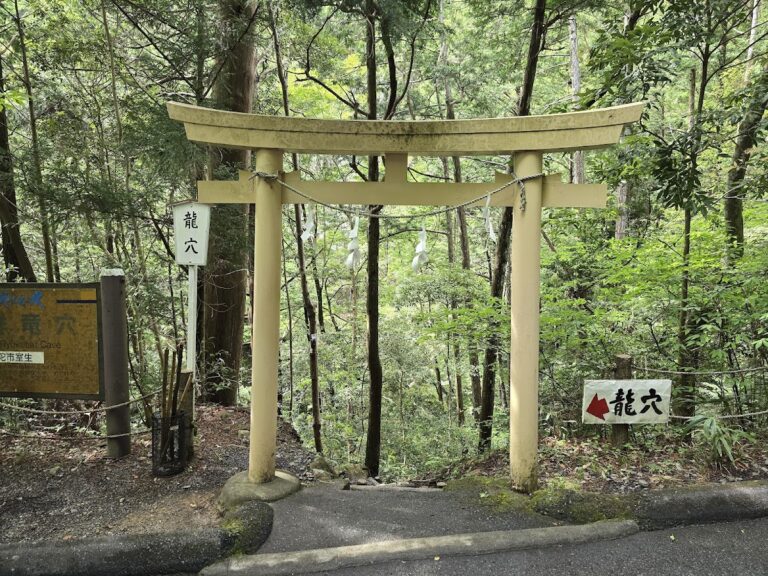
Located about a 15-minute walk from Murōji Temple, Ryūketsu Shrine is a sacred site known as Murō Ryūketsu (Murō Dragon Cave). It has been revered since ancient times as a god of rain, and enshrines a dragon god that was worshipped even before the founding of Murōji Temple. In the back of the grounds is a dragon cave, said to be inhabited by a dragon, creating a mystical atmosphere.
This shrine is deeply connected to the origins of Murōji Temple, and visiting both together will give you a deeper understanding of the history of faith in this area.
Ōno-dera Temple
Located about a 5-minute walk from Kintetsu “Murōguchi Ōno Station,” Ōno-dera Temple is an ancient temple said to have been founded by En no Gyōja. The Miroku Buddha carved into the cliff face on the opposite bank of the Uda River (a national historic site and scenic spot) stands approximately 13.8 meters tall and is truly impressive.
In spring, the weeping cherry tree, over 300 years old, is beautiful, and the Jizo Bodhisattva, known as the “Substitute Kannon,” also attracts worshippers. Its convenient location makes it easy to stop by on your way to or from Murō-ji Temple.
Butsuryū-ji Temple
Located about 15 minutes by car from Murō-ji Temple, Butsuryū-ji Temple is an ancient Shingon Buddhist temple said to have been founded by Ken’e, a senior disciple of Kūkai. It is famous for its large Katsura tree (a Nara Prefecture designated natural monument) over 900 years old, which displays magnificent yellow foliage in autumn.
The stone steps leading to the temple and the tranquil atmosphere of the mountainside share the charm of a mountain temple with Murō-ji Temple, allowing visitors to experience the history of Nara’s mountain Buddhism.
Anzanji Temple
Located in Uda City, Anzanji Temple is, as its name suggests, a temple known for prayers for safe childbirth. Many people visit it along with Murōji Temple, which attracts female worshippers, allowing them to experience the local religious culture.
Today’s Events and Hidden Treasures
Murōji Temple holds various Buddhist services and events throughout the year.
Regular Memorial Services
- 21st of every month: Memorial service for the image of Kobo Daishi, unveiling of the statue of Kobo Daishi (Okunoin)
- Spring Special Viewing: Buddhist statues and temple treasures that are usually not open to the public may be displayed.
- Autumn Special Viewing: Special viewings may be held to coincide with the autumn foliage season.
Annual Events
- January 1st-3rd: Shusho-e (New Year’s service)
- Mid-April to early May: Rhododendron Festival
- November: Autumn foliage illumination (held depending on the year)
We recommend checking the latest event information on the official website or by contacting the temple before your visit.
Points to Note and Manners When Visiting
Clothing and Preparation
- The temple grounds are built on a mountain slope and have many stone steps, so we recommend wearing comfortable shoes.
- If you are going to the Okunoin (inner sanctuary), you will be climbing approximately 400 stone steps, so please do not overexert yourself if you are not confident in your physical strength.
- Please dress appropriately for the season, taking sufficient precautions against the heat in summer and the cold in winter.
Photography
- Photography is generally permitted within the temple grounds, but photography of Buddha statues inside the halls is prohibited.
- The use of tripods may be restricted during crowded times.
- Please be considerate of other visitors.
Other Manners
- Please maintain silence and refrain from loud conversations.
- Smoking is only permitted in designated areas.
- Bringing pets is generally prohibited.
- Please take all your trash with you.
Cultural Properties of Murōji Temple
Murōji Temple preserves numerous national treasures and important cultural properties.
National Treasure Buildings
- Main Hall
- Five-Storied Pagoda
- Main Hall (Kanjo-do)
National Treasure Sculptures
- Standing Statue of Shakyamuni Buddha in the Main Hall
- Other Buddhist Statues from the Heian Period
Important Cultural Properties
- Miroku-do Hall
- Niomon Gate
- Numerous Buddhist Statues, Paintings, and Crafts
These cultural properties occupy an extremely important position in the history of Japanese Buddhist art and possess high academic value.
Summary
Murō-ji Temple is a representative temple of Nara, blending a history of accepting female worship as “Women’s Kōya,” valuable cultural properties such as the National Treasure Five-Storied Pagoda and Main Hall, and the seasonal beauty of nature, including rhododendrons.
Located deep in the mountains east of the Nara Basin, its location evokes a sense of tranquility and spirituality, far removed from the secular world, bringing profound spirituality to visitors. With a long history dating back to the Heian period and a vibrant religious atmosphere that continues to this day, Murō-ji Temple is a precious place where you can experience Japanese Buddhist culture.
While access may take some time, the feeling of awe you experience upon arrival is all the more profound. Murō-ji Temple displays different expressions in each of the four seasons: rhododendrons in spring, fresh greenery in summer, vibrant autumn leaves, and snowy winter landscapes. We highly recommend visiting it at least once.
By visiting nearby Ryuketsu Shrine, Ōno-ji Temple, and Butsuryū-ji Temple in conjunction with Murō-ji, you can gain a deeper understanding of the rich history and culture of the Uda region. As a women’s version of Kōyasan, Murō-ji Temple has attracted the faith of people for over a thousand years, and even today, it continues to provide healing and inspiration to many.