Complete Guide to Shokaiji Temple | History, Cultural Assets, and Access Information for the Hydrangea Temple in Inazawa City, Aichi Prefecture
About Shokaiji Temple
Shokaiji Temple is a Shingon sect Chizan school temple located in Otsuka Minami, Inazawa City, Aichi Prefecture. Its mountain name is Otsuka-san, and its principal image is a Zenkoji-style Amida Triad statue. It is an ancient temple said to have been founded approximately 1200 years ago by Kobo Daishi Kukai, and its grounds contain many valuable cultural assets, including the main hall, pagoda, and multi-storied pagoda, all designated as important national cultural properties.
It is widely known as the “Hydrangea Temple,” and the adjacent Otsuka Shokaiji Historical Park is home to approximately 10,000 hydrangea plants of about 90 varieties. Every June, the “Inazawa Hydrangea Festival” is held, attracting many worshippers and tourists from within and outside the prefecture.
The current location is 1-33 Otsuka Minami, Inazawa City, Aichi Prefecture, and it is conveniently located within walking distance of Meitetsu Konomiya Station.
History of Seikaiji Temple
Founding and Temple Tradition
According to temple tradition, Seikaiji Temple was founded during the Konin era (810-824) by Kobo Daishi Kukai, with Aizen Myoo as the principal deity. A legend remains that Kukai stopped at this location on his way to visit Atsuta Shrine in Nagoya, built a large mound within the temple grounds, and buried a cast statue of Daishō Kangiten.
During the Jisho era (1177-1181), the current principal deity, a Zenkoji-style Amida Triad, was enshrined, and it is believed that the temple’s form was established during this period.
Changes from the Medieval to the Early Modern Period
From the medieval period onward, Seikaiji Temple developed under the patronage of many influential figures. During the Kamakura period, Hojo Tokiyori and, during the Muromachi period, Ashikaga Takauji were patrons of the temple, contributing to its prosperity.
From the Sengoku period to the early Edo period, the temple received protection from warlords who ruled the Owari region, including Asano Nagamasa, Matsudaira Tadayoshi (fourth son of Tokugawa Ieyasu), and Tokugawa Yoshinao (first lord of the Owari Tokugawa family). Its relationship with the Owari Tokugawa family was particularly deep, receiving support throughout the Edo period in the form of land security and building repairs.
Developments since the Modern Era
Despite the impact of the anti-Buddhist movement after the Meiji Restoration, Shokaiji Temple successfully preserved its valuable cultural assets. In 1954, the main hall, pagoda, and multi-storied pagoda were designated as important national cultural properties, and the temple came to be recognized as an important temple from the perspective of cultural property preservation.
In 1992 (Heisei 4), the city of Inazawa developed the Otsuka Seikaiji Historical Park, opening approximately 5,000 square meters of land, including the temple grounds, to the public as a park. This created a unique space where a historical temple and a place of relaxation for citizens are fused together.
Cultural Properties of Seikaiji Temple
Nationally Designated Important Cultural Property
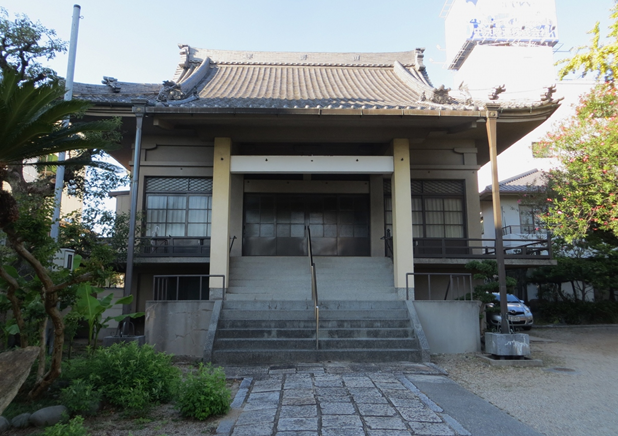
Main Hall
The main hall of Seikaiji Temple is a building rebuilt during the Keian era (1648-1652) and was designated a National Important Cultural Property in 1954 (Showa 29). It is a magnificent building with a five-bay by five-bay hip-and-gable roof and tiled roof.
While the exterior is a reconstruction from the early Edo period, the interior’s altar, raigo-mawari (a surrounding area for welcoming the deceased), and the majority of the ceiling reuse materials from the medieval period, making it a valuable historical structure that conveys the architectural style of the Muromachi period. The main image, a Zenkoji-style Amida Triad, is enshrined in the inner sanctuary, creating a solemn atmosphere. #### Pagoda
The pagoda of Shōkai-ji Temple, like the main hall, is a stone pagoda designated as an Important Cultural Property in 1954. Made of granite and standing approximately 3 meters tall, it is estimated to have been constructed between the late Kamakura period and the Nanboku-chō period.
It is a typical pagoda structure, consisting of a base, body, roof, and finial, with intricate carvings on each part. In particular, Sanskrit characters are inscribed on the body, suggesting it was built as an object of esoteric Buddhist worship. It is in excellent condition and is highly regarded as a fine example of medieval stone art.
Multi-storied Pagoda
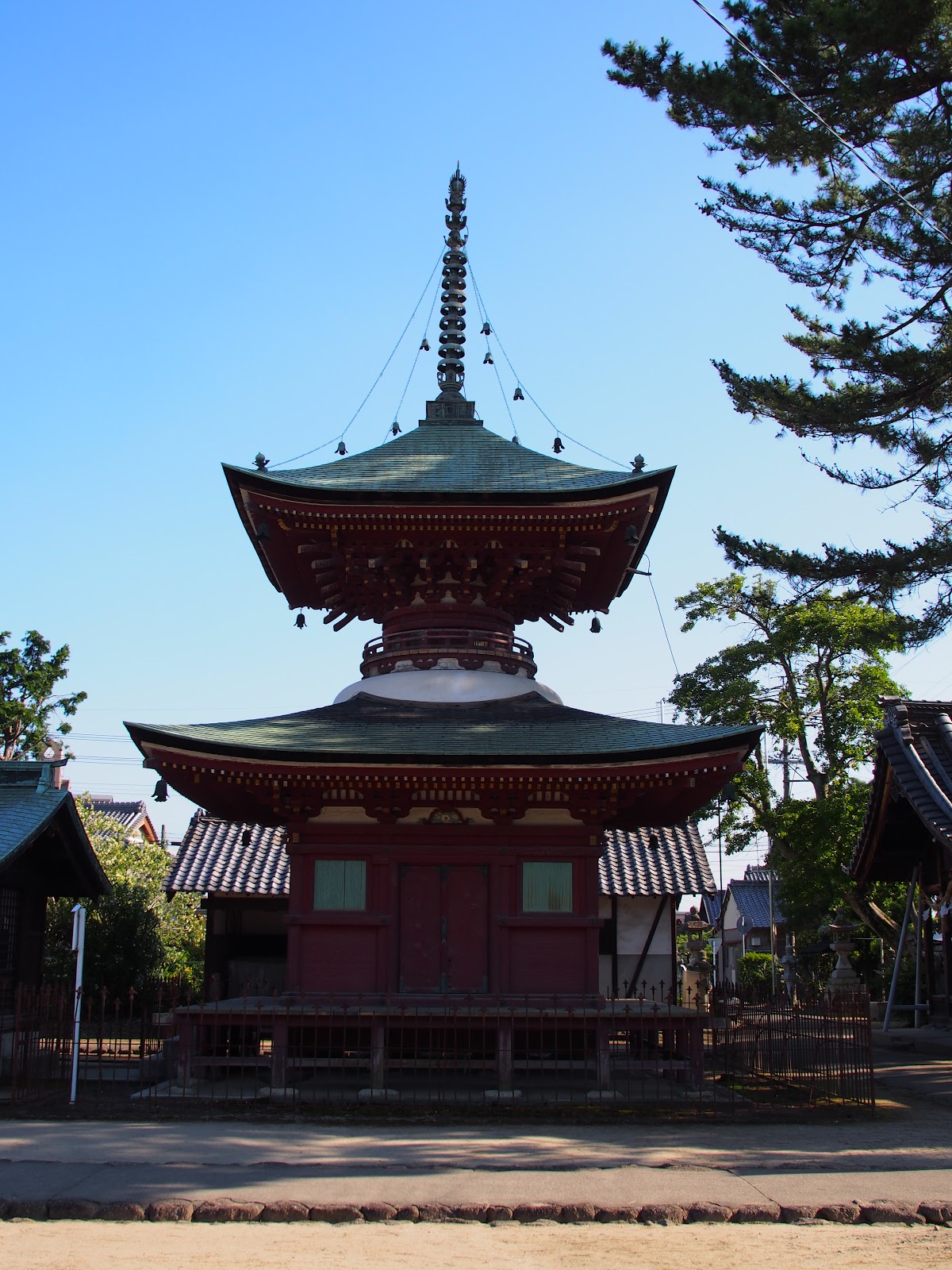
The multi-storied pagoda of Shōkai-ji Temple is a strikingly elegant structure within the temple grounds. It was designated an Important Cultural Property in 1954. It is estimated to have been built in the mid-Muromachi period and features a three-bay multi-storied pagoda structure with a shingle roof.
The pagoda features the distinctive form of a multi-storied pagoda, with a square lower level and a circular upper level, and the details of the brackets and carvings are magnificent. Its overall proportions are beautiful, and it is known as an outstanding example of Japanese multi-storied pagoda architecture. Located in front of the main hall, it plays an important role in the landscape of the temple grounds.
Aichi Prefecture Designated Cultural Property
In addition to nationally designated cultural properties, Shōkaiji Temple also possesses several cultural properties designated by Aichi Prefecture. Valuable materials that tell the story of the temple’s long history, such as Buddhist statues and ancient documents, are preserved here and are subject to regular research and investigation.
Inazawa City Designated Cultural Property
Shōkaiji Temple has also received several designations from Inazawa City as cultural properties that convey the history of the region. These cultural properties serve as important evidence of the role that Shōkaiji Temple has played in the local community.
Shōkaiji Temple as a Hydrangea Temple
Hydrangeas at Ōtsuka Shōkaiji Historical Park
Shōkaiji Temple became widely known as a “hydrangea temple” due to the large hydrangea garden planted in the adjacent Ōtsuka Shōkaiji Historical Park. The sight of approximately 10,000 hydrangea plants of about 90 varieties blooming all at once during the rainy season in June is truly spectacular.
The park is planted with a diverse range of hydrangea varieties, from traditional Japanese varieties to Western hydrangeas, lacecap hydrangeas, and mountain hydrangeas, creating a vibrant display of blue, purple, pink, and white flowers. Because the blooming periods vary slightly depending on the variety, visitors can enjoy the flowers for an extended period, from early to late June.
Inazawa Hydrangea Festival
The Inazawa Hydrangea Festival is held annually from around June 1st, attracting many tourists from both within and outside the prefecture. Various events are planned during the festival, and stalls selling local specialties and food and drinks are set up.
The scenery created by the combination of the important cultural property buildings and the hydrangea blossoms is a beautiful sight symbolizing early summer in Japan, making it a popular spot for many photography enthusiasts. The hydrangeas with the pagoda in the background are a particularly excellent photo spot.
Seasonal Charms
Even outside of hydrangea season, Shōkaiji Temple and its historical park are worth visiting. Cherry blossoms bloom in spring, and autumn leaves color the temple grounds. The important cultural property buildings viewed in the tranquil atmosphere of winter are also exceptional. The temple grounds, which show different expressions throughout the seasons, offer new discoveries with every visit.
Guide to Shōkaiji Temple Grounds
Temple Gate and Approach
Visiting Shōkaiji Temple begins with passing through the temple gate. The approach leading from the gate to the main hall is a quiet space surrounded by ancient trees, maintaining a peaceful atmosphere despite being in an urban area.
Main Hall Area
As you proceed along the approach, the main hall comes into view. This magnificent building, designated as an important cultural property, preserves the style of the early Edo period. Inside the main hall, you can pay your respects to the principal image, a Zenkoji-style Amida Triad statue.
In front of the main hall stands a multi-storied pagoda, its elegant form a symbol of the temple grounds. Especially during hydrangea season, the combination of flowers and the pagoda creates a breathtaking view.
Pagoda and Otsuka Tumulus
Within the temple grounds is a medieval stone pagoda, telling the story of Seikaiji Temple’s history as a Shingon Buddhist temple. Furthermore, the “Otsuka” mentioned in temple tradition is believed to be related to the Otsuka Tumulus, a structure from the Kofun period, suggesting the deep history of this region from ancient times.
Priest’s Quarters and Temple Office
The temple grounds also contain buildings such as the priest’s quarters and temple office, where daily temple operations are conducted. Inquiries regarding temple stamps and visits are handled here.
Access to Seikaiji Temple
Access by Public Transportation
By Train
- Get off at Konomiya Station on the Meitetsu Nagoya Main Line, approximately 25 minutes on foot
- Get off at Osato Station on the Meitetsu Nagoya Main Line, approximately 20 minutes on foot
By Bus
- Get off at the Otsuka bus stop on the Meitetsu Bus, approximately 5 minutes on foot
During the hydrangea festival, temporary buses may operate from Konomiya Station.
Access by Car
By Expressway
- Approximately 15 minutes from Ichinomiya IC on the Meishin Expressway
- Approximately 20 minutes from Kanie IC on the Tomeihan Expressway
By General Road
- Approximately 30 minutes from central Nagoya via National Route 22
Parking Information
Otsuka Seikaiji Historical Park has a dedicated parking lot. It is usually free, but congestion is expected during the hydrangea festival, so early arrival is recommended. During the festival period, temporary parking may be available.
However, parking spaces are limited, so we recommend considering using public transportation.
Visiting Information
Visiting Hours and Admission Fees
Visiting Hours
- Free access to the temple grounds (Otsuka Seikaiji Historical Park area)
- Prior confirmation is required for viewing the interior of the main hall
Admission Fees
- Generally free (a donation may be requested during the hydrangea festival)
Annual Events
Seikaiji Temple holds various Buddhist services and events throughout the year.
- January: Shusho-e (New Year’s service)
- Spring: Spring Equinox service
- June: Inazawa Hydrangea Festival
- Autumn: Autumn Equinox service
- December: New Year’s Eve bell ringing
The hydrangea festival, in particular, is the largest annual event and a local tradition.
Goshuin (Temple Seal)
Shōkaiji Temple offers Goshuin. While this is handled at the temple office, staff may be absent due to religious services, etc. Therefore, if you wish to receive a Goshuin, it is recommended to contact the temple in advance.
Nearby Tourist Attractions
Historical Spots in Inazawa City
Shōkaiji Temple is surrounded by several historical sites in Inazawa City.
Kōnomiya Shrine (Owari Ōkunitama Shrine)
A representative ancient shrine of the Owari region, located within walking distance of Shōkaiji Temple. It is nationally known for its “Hadaka Matsuri” (Naked Festival) held every February.
Yagō Kannon
An ancient Shingon Buddhist temple, also known as a famous spot for autumn foliage.
Inazawa City Ogisu Memorial Museum
A museum primarily exhibiting works by Ogisu Takanori, a Western-style painter from Inazawa City. His works depicting Parisian street corners are a must-see.
Nature Along the Kiso River
The Kiso River flows through the northern part of Inazawa City, and the riverbanks are a place of relaxation for citizens. Perfect for cycling and walking.
The Relationship Between Shokaiji Temple and Inazawa City
Historical Center of the Region
Shokaiji Temple boasts a history of approximately 1200 years and has been deeply intertwined with the local community as a central figure in Buddhist culture in Inazawa City. From the medieval to the early modern period, a temple town formed around the temple, becoming the core of the local economy.
Cultural Property Preservation and Tourism Promotion
Inazawa City is actively working to preserve the cultural properties of Shokaiji Temple, and the development of the Otsuka Shokaiji Historical Park in 1992 is part of this effort. This initiative, which preserves historical heritage while utilizing it as a space open to citizens and tourists, is a good example of balancing cultural property preservation and tourism promotion.
Hydrangea Festival and Regional Revitalization
The Inazawa Hydrangea Festival, held annually, has become a major tourist event in Inazawa City. During the festival, local shopping districts and farmers participate, contributing to the revitalization of the local economy through the sale of local products.
To fully enjoy the charm of Shokaiji Temple
Recommended time to visit
June (Hydrangea season)
This is the time when the most tourists visit. The sight of 10,000 hydrangea plants of 90 varieties in full bloom is breathtaking. However, it will inevitably be crowded, so visiting on weekdays or early in the morning is recommended.
Spring (Cherry blossom season)
This is a beautiful time when the combination of cherry blossoms blooming in the temple grounds and surrounding areas and the important cultural property buildings is stunning.
Autumn (Autumn leaves season)
Enjoy the autumn leaves in a quiet atmosphere. There are relatively few tourists, allowing for a leisurely visit.
Photography tips
Shokaiji Temple is a popular spot for photography. The following are particularly recommended photography spots:
- The combination of the pagoda and hydrangeas (June)
- A full view of the main hall from the front
- The temple gate viewed from the approach
- A close-up of the pagoda
When photographing cultural property buildings, please be considerate of other visitors.
Estimated Time Required
- Visiting the temple grounds only: 30 minutes to 1 hour
- Including viewing the hydrangeas in the historical park: 1 hour to 1 hour 30 minutes
- Thoroughly viewing the cultural artifacts: 2 hours or more
Due to crowds during the hydrangea festival, we recommend planning with ample time.
Summary
Shōkaiji Temple is an ancient temple of the Shingon Chizan sect, said to have been founded by Kūkai (Kūkai), and is a representative historical temple of Inazawa City, Aichi Prefecture. It possesses valuable cultural assets, including the main hall, pagoda, and multi-storied pagoda, all designated as important national cultural properties, and occupies an important position in the history of Japanese Buddhist architecture.
Also widely known as the “Hydrangea Temple,” the approximately 10,000 hydrangea plants of about 90 varieties planted in the Ōtsuka Shōkaiji Historical Park attract many people every June. The landscape, where historical buildings and beautiful flowers harmonize, is a valuable tourist resource for Inazawa City.
With a history spanning over 1200 years, Shōkaiji Temple remains deeply connected to the local community, successfully balancing cultural heritage preservation with tourism promotion. Its appeal lies beyond mere sightseeing; it’s a precious place where one can experience Japanese history and culture firsthand.
Its convenient location, just about 30 minutes from Nagoya, is another attractive feature. Why not visit Shōkaiji Temple and experience its ever-changing beauty throughout the seasons?