Complete Guide to Moro Shrine | A Thorough Explanation of the History of the Shikinaisha, the Jingaramochi Ritual, and the Three Candidate Shrines
Moro Shrine is a historically significant Shikinaisha shrine with three locations in Chiba Prefecture. As an ancient shrine listed in the Engishiki Jinmyocho (a collection of laws from the Heian period), it has long been a center of local faith. This article provides a detailed explanation of the historical background, enshrined deities, distinctive rituals, and the unique charms of the three candidate shrines.
What is Moro Shrine?
Moro Shrine is a Shikinaisha shrine listed in the Engishiki Jinmyocho, compiled in 927 AD, as “Moro Shrine, Katsushika District, Shimosa Province.” A Shikinaisha is a historically significant shrine listed in the Engishiki Jinmyocho, a collection of laws from the Heian period, indicating its importance and recognition by the imperial court at that time.
The name “Moro” (茂呂) is believed to originate from “Moro,” the former name of Mount Miwa in Yamato Province, Nara Prefecture. This name comes from “Mimoro,” meaning “mountain where the gods reside,” and is deeply connected to sacred mountain worship.
Currently, there are three Moro Shrines in Chiba Prefecture: in Nagareyama City, Matsudo City, and Funabashi City. All three are considered candidates for the Shikinaisha (shrines listed in the Engishiki Jinmyocho).
History of Moro Shrine
Ancient Beliefs
While the exact founding date of Moro Shrine is unclear, its inclusion in the Engishiki Jinmyocho confirms its existence at least as early as the Heian period. It is an ancient shrine that has attracted the faith of the people of this region for over 1000 years.
According to one theory, Toyoki-no-Mikoto, the ancestor of the Shimotsuke-no-Kimi clan, climbed Mount Mimoro (in this area) and named the shrine Moro Shrine after the mountain’s name, Moro.
Relationship with Miwa Faith
Moro Shrine has a deep connection with Omiwa Shrine in Nara Prefecture. Omiwa Shrine is one of the oldest shrines in Japan, with Mount Miwa as its sacred object, and Moro Shrine is said to enshrine a divided spirit of it.
Moro Shrine in Nagareyama City was formerly called “Miwa Shrine,” and the plateau on which it is located is also called “Mount Miwa” or “Miwanoyama.” This is important evidence that the Miwa Mountain faith of Nara Prefecture spread to the eastern provinces.
Prosperity in the Edo Period
During the Edo period, Moro Shrine in Nagareyama City received a shuinjo (official document granting land) of 25 koku from the shogunate. This indicates that the shrine was officially recognized by the shogunate, illustrating its importance at the time.
Furthermore, there are records indicating that Tokugawa Mitsukuni (Mito Kōmon), the lord of the Mito domain, visited the Shigemoto Shrine in Matsudo City and considered it to be the Shigemoto Shrine mentioned in the Engishiki. Letters from his retainers and the history of Kurigazawa Village at the time also mention this shrine, indicating that the identification of the Shikinaisha shrine was debated from the Edo period onward.
Modern Era
Under the Meiji era’s shrine ranking system, the Shigemoto Shrine in Nagareyama City was ranked as a village shrine. From the Showa and Heisei eras to the present day, it continues to be revered as the local tutelary deity.
There are also records of an elevation in divine rank during the Jōgan era (859-877), suggesting a deep relationship with the imperial court since the Heian period.
Deities and Divine Virtues
Main Deity
The main deity of Shigemoto Shrine varies depending on the specific shrine.
Moro Shrine in Nagareyama City
- Ōmononushi-no-Mikoto: The deity enshrined at Ōmiwa Shrine on Mount Miwa in Nara Prefecture, known as the god of nation-building and the guardian deity of agriculture, commerce, and industry.
Moro Shrine in Matsudo City
- Ōmononushi-no-Mikoto is the main deity, and it is believed to have been established by inviting the deity from Ōmiwa Shrine in Miwa, Yamato Province.
Moro Shrine in Funabashi City
- Konohanasakuya-hime-no-Mikoto: The daughter of Ōyamatsumi-no-Kami, known as the goddess of beauty in Japanese mythology, and revered as the god of matchmaking, safe childbirth, and child-rearing.
Divine Virtues
The divine virtues of Moro Shrines vary depending on the enshrined deity, as follows:
- Abundant Harvests and Business Prosperity: Ōmononushi-no-Mikoto is worshipped as the guardian deity of agriculture, commerce, and industry.
- Matchmaking, Safe Childbirth, and Child-Rearing: These divine virtues are particularly emphasized at the Moro Shrine in Funabashi City, which enshrines Konohanasakuya-hime no Mikoto.
- Protection from Evil and Good Fortune: Since ancient times, it has been worshipped as a guardian deity of the region, protecting people from various calamities.
Moro Shrine (Miwa Moro Shrine) in Nagareyama City
Location and Grounds
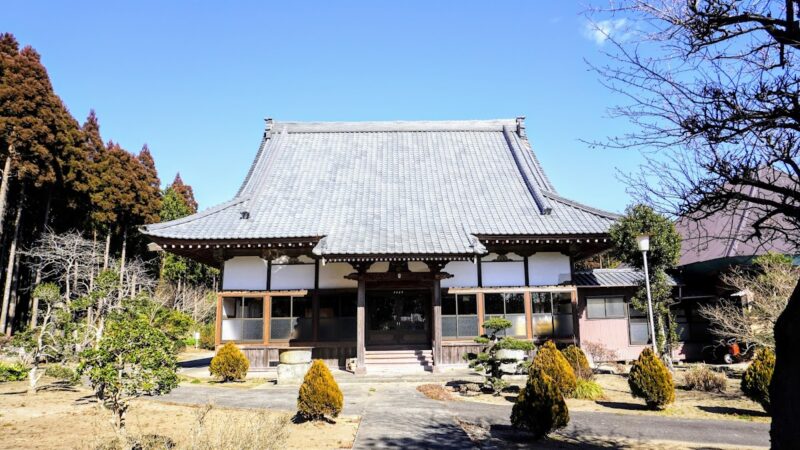
Moro Shrine in Nagareyama City is located at 5-619 Miwanoyama, Nagareyama City, Chiba Prefecture. Situated in the center of a semi-circular plateau jutting out from the north side of Miwanoyama, the shrine grounds are surrounded by abundant nature despite being in a residential area.
The plateau is called “Miwayama” or “Miwanoyama,” and is an important place name indicating a connection to Mount Miwa in Nara Prefecture. Stepping onto the shrine grounds, one is enveloped in a tranquil atmosphere despite being in an urban area, and the air is refreshing enough to make you want to take a deep breath.
The Jingara Mochi Ritual
The most distinctive festival at the Moro Shrine in Nagareyama City is the “Jingara Mochi Ritual,” held annually on January 8th. This ritual is designated as a Nagareyama City Intangible Folk Cultural Property and is protected as a valuable regional traditional culture.
The Jingara Mochi Ritual is performed as part of the Obisha (New Year’s Festival). The ritual begins with offering kagami mochi (rice cakes) to the gods and offering prayers. Following this, a unique ceremony takes place where parishioners tear apart the offered kagami mochi.
This act of “tearing” is based on the belief that whoever takes the most mochi will enjoy a bountiful harvest and good fortune that year. The parishioners compete for the mochi seriously, yet with enjoyment. There are various theories about the origin of the name “Jingara,” but it is said to describe the sound or appearance of tearing the mochi.
This ritual also plays a role in strengthening community bonds and is a beloved New Year’s tradition.
Access
Access by Train
- Approximately 24 minutes on foot from the west exit of Nagareyama-Ōtakanomori Station on the Tsukuba Express and Tobu Urban Park Line
- Bus access is also available (please contact the Nagareyama City Tourism Association for details)
Access by Car
- Approximately 15 minutes from the Nagareyama IC on the Jōban Expressway
- Parking: Limited space available on the shrine grounds (public transportation is recommended due to limited capacity)
Address: 5-619 Miwanoyama, Nagareyama City, Chiba Prefecture
Shigemoto Shrine in Matsudo City
Relationship with Mito Mitsukuni
Shigemoto Shrine in Matsudo City is a shrine located in the Kurigazawa area. The most distinctive feature of this shrine is its deep connection with Tokugawa Mitsukuni (Mito Kōmon).
It is said that Mito Mitsukuni was the first to believe that this shrine was one of the 11 Shimōsa shrines listed in the Engishiki. Letters left by Mitsukuni’s retainers and the history of Kurigazawa Village at the time both mention that this shrine corresponds to the Moro Shrine listed in the Engishiki Jinmyocho (a list of shrines compiled in the Heian period).
However, there is also a theory that it is the Moro Shrine in Nagareyama City, and there is still no conclusive evidence as to which is the true Shikinaisha (shrine listed in the Engishiki). This debate itself demonstrates the historical importance of both shrines.
Relationship with Omiwa Shrine
Matsudo City’s Moro Shrine is also believed to have been established by inviting the deity from Omiwa Shrine in Yamato-Miwa, Nara Prefecture. The enshrined deity is Omononushi-no-Mikoto, and it is an important shrine that demonstrates the spread of Miwa faith to the eastern provinces.
Regarding the name “Moro,” there are theories that it comes from “Moro” of Mimoro, or that it is a corruption of “Mori,” meaning “where the gods reside.” Both are understood to be words indicating a sacred place.
Local Information
Matsudo City’s Moro Shrine continues to be revered as the local tutelary shrine. While basically an unmanned shrine, it is carefully maintained by local residents, and the grounds are kept clean.
Moro Shrine in Funabashi City
A Shrine Dedicated to Konohanasakuya-hime
Moro Shrine, located in Higashi-Funabashi, Funabashi City, differs from the other two shrines in that it enshrines Konohanasakuya-hime as its main deity. Konohanasakuya-hime is the daughter of Oyamatsumi-no-kami, a powerful clan leader of Ata, and is considered a goddess symbolizing Japanese womanhood.
The Engishiki Jinmyocho (a list of shrines compiled in the Heian period) lists “Two shrines in Katsushika District, Shimosa Province: Moro Shrine and Ofuhi Shrine,” suggesting that Moro Shrine in Funabashi City has been located in this area for over 1060 years.
A Deity of Matchmaking, Safe Childbirth, and Child-Rearing
Moro Shrine in Funabashi City has long been revered by locals as a deity of matchmaking, safe childbirth, and child-rearing. Konohanasakuya-hime is a symbol of beauty in Japanese mythology and is also known as a goddess of safe childbirth.
In mythology, there is an anecdote that when the princess’s sudden pregnancy was doubted, she set fire to the birthing hut and gave birth safely inside. This is the origin of the shrine’s worship as a god of safe childbirth.
Connections to the Community
The Moro Shrine in Funabashi City also plays an important role as the local tutelary shrine. Many parishioners gather during festivals, and traditional Shinto rituals are performed.
Comparison of Three Candidate Shrines
Positioning as a Candidate Shrine for the Shikinaisha (Engishiki Shrine Listed in the Engi Era)
It remains undetermined which shrine the “Moro Shrine in Katsushika District, Shimosa Province” listed in the Engishiki Jinmyocho (Register of Shrines in the Engi Era) refers to. Three shrines—one in Nagareyama City, one in Matsudo City, and one in Funabashi City—have each come forward as candidates, and each has some basis in fact.
Evidence for the Moro Shrine in Nagareyama City
- The place name Miwanoyama indicates a direct connection to the Miwa faith.
- It received a shuinjo (official seal) from the shogunate during the Edo period.
- A unique Shinto ritual called Jingaramochi is passed down.
Evidence for the Moro Shrine in Matsudo City
- It has a history of being recognized as a Shikinaisha (a shrine listed in the Engishiki) by Mito Mitsukuni.
- It is also listed as a Shikinaisha in the Kurigazawa Village History.
- A clear connection to Omiwa Shrine is passed down through tradition.
Evidence for the Moro Shrine in Funabashi City
- Its location in Katsushika District as listed in the Engishiki Jinmyocho (a list of shrines compiled in the Heian period).
- It is an ancient shrine with a history of over 1000 years.
- It has its own unique deity and has been a center of local faith.
How to Choose When Visiting
The choice of which Moro Shrine to visit should depend on the visitor’s purpose and interests.
- Want to experience a traditional Shinto ritual?: Moro Shrine in Nagareyama City (Jingara Mochi ritual on January 8th)
- Want to feel the romance of history?: Moro Shrine in Matsudo City (a place associated with Mito Mitsukuni)
- Prayers for matchmaking and safe childbirth?: Moro Shrine in Funabashi City (Konohanasakuya-hime)
- Interested in Miwa faith?: Moro Shrine in Nagareyama City or Matsudo City (Omononushi-no-Mikoto)
Of course, a “Moro Shrine pilgrimage” visiting all three shrines would also be an interesting experience that delves into the mysteries of the Shikinaisha (shrines listed in the Engishiki).
Cultural Properties of Moro Shrine
Nagareyama City Designated Intangible Folk Cultural Property
The “Jingara Mochi ritual” at Moro Shrine in Nagareyama City was designated as a Nagareyama City Designated Intangible Folk Cultural Property during the Heisei era. This designation officially recognizes that the ritual is a valuable traditional culture of the region and has value to be passed down to future generations.
Intangible Folk Cultural Properties refer to particularly important customs, practices, and folk performing arts related to clothing, food, shelter, livelihoods, beliefs, and annual events. The Jingara Mochi ritual, while possessing the characteristics of an agricultural ritual praying for a bountiful harvest in the new year, also serves a social function of strengthening community bonds, making it a valuable example from a folkloric perspective.
Other Cultural Values
The three Moro Shrines all occupy an important position in historical and Shinto history research as candidates for the Shikinaisha (shrines listed in the Engishiki Jinmyocho). In particular, they attract the interest of researchers as valuable examples showing how the Miwa faith of Nara Prefecture spread to eastern Japan.
Furthermore, they provide important clues in ancient history research, such as the relationship between place names (Miwanoyama, Kurigazawa, etc.) and the shrines, and the extent of the ancient Katsushika County.
The Charm of Visiting Moro Shrine
Experiencing Ancient Romance
The greatest charm of visiting Moro Shrine lies in the opportunity to reflect on ancient times, over 1000 years ago. Its inclusion in the Engishiki Jinmyocho (a list of shrines compiled in the Heian period) indicates that the Heian court recognized and valued this shrine.
Just imagining the thoughts and feelings of the people who visited this shrine at that time, and the kinds of festivals held there, evokes a sense of historical romance.
The Spread of Miwa Faith to Eastern Japan
Mount Miwa in Nara Prefecture is the sacred object of worship for Omiwa Shrine, one of Japan’s oldest shrines, and has attracted special devotion since ancient times. The fact that this Miwa faith spread as far east as Shimosa Province (present-day Chiba Prefecture) and took root as Moro Shrine is valuable evidence of the breadth of cultural exchange in ancient Japan.
The fact that the surrounding area of Moro Shrine in Nagareyama City is called “Miwanoyama” (Miwanoyama) also indicates that the people of this region were strongly aware of Mount Miwa in Nara.
Experiencing Local Traditions
Traditional festivals, including the Jingara Mochi ritual, have been carefully passed down by the local people. Participating in or observing these rituals allows you to experience the local history and culture firsthand.
Witnessing how the bonds of community, which are gradually disappearing in modern society, are still maintained through shrine festivals will be a valuable experience.
Healing in a Tranquil Space
In Chiba Prefecture, where urbanization is progressing, the grounds of Moro Shrine function as a valuable green space. In particular, Moro Shrine in Nagareyama City, while located in a residential area, is surrounded by abundant nature, offering visitors a tranquil time.
Escaping the hustle and bustle of everyday life and calming your mind in the refreshing air of the shrine will be a precious time of healing for modern people.
Tourist Information Around Moro Shrine
Around Nagareyama City
When visiting Moro Shrine in Nagareyama City, we recommend also visiting the surrounding tourist spots.
Around Nagareyama-Ōtakanomori Station
- Nagareyama-Ōtakanomori S.C.: A large commercial facility where you can enjoy shopping and dining.
- Ichinoya Forest: A forest park rich in nature.
Nagareyama Honmachi Area
- Issa Sōju Memorial Museum: A place associated with the haiku poet Kobayashi Issa.
- Kondō Isami’s Fortified Residence Site: The site of the last fortified residence of Kondō Isami, commander of the Shinsengumi.
- Nagareyama City Museum: A facility where you can learn about the history and culture of Nagareyama.
Around Matsudo City
The following spots are recommended around Shigemoto Shrine in Matsudo City:
- Tojō-tei: The villa of Tokugawa Akitake (the last lord of the Mito domain).
- Hondōji Temple: An ancient temple also known as the “Hydrangea Temple.”
- Yagiri no Watashi: A traditional ferry crossing the Edogawa River.
Around Funabashi City
The following tourist spots are located around Shigemoto Shrine in Funabashi City.
- Funabashi Andersen Park: A large, comprehensive park.
- Funabashi Grand Shrine (Ofuhi Shrine): A representative ancient shrine of Funabashi City.
- Lalaport TOKYO-BAY: A large shopping mall.
Summary
Moro Shrine is a venerable shrine with over 1000 years of history, listed in the Engishiki Jinmyocho (a list of shrines compiled in the Heian period). Three candidate shrines exist in Chiba Prefecture, each preserving its own unique history and traditions.
The Moro Shrine in Nagareyama City is known for its deep connection to the Miwa faith and its Jingara Mochi ritual; the Moro Shrine in Matsudo City is associated with Tokugawa Mitsukuni; and the Moro Shrine in Funabashi City is revered as a god of matchmaking and safe childbirth, each attracting local devotion.
While it remains uncertain which Moro Shrine is the true Engishiki shrine, the fact remains that each has walked hand in hand with the local people throughout its long history. Visiting all three shrines will allow you to experience the form of faith that has continued from ancient times to the present day.
The fact that the Miwa faith still thrives in this eastern region, far removed from Mount Miwa in Nara Prefecture, demonstrates the depth and breadth of Japanese shrine worship. A visit to Moro Shrine is not merely sightseeing; it’s a valuable opportunity to experience Japanese history and culture.
Moro Shrine in Nagareyama City is particularly easy to visit, with relatively good access from Nagareyama-Ōtakanomori Station. Visiting around January 8th, during the Jingara Mochi ritual, allows you to directly experience a traditional event designated as an Intangible Folk Cultural Property of Nagareyama City.
If you’re interested in the history and culture of Chiba Prefecture, enjoy visiting shrines, or want to feel the romance of ancient history, please visit Moro Shrine. In its tranquil grounds, you’ll feel the passage of time.